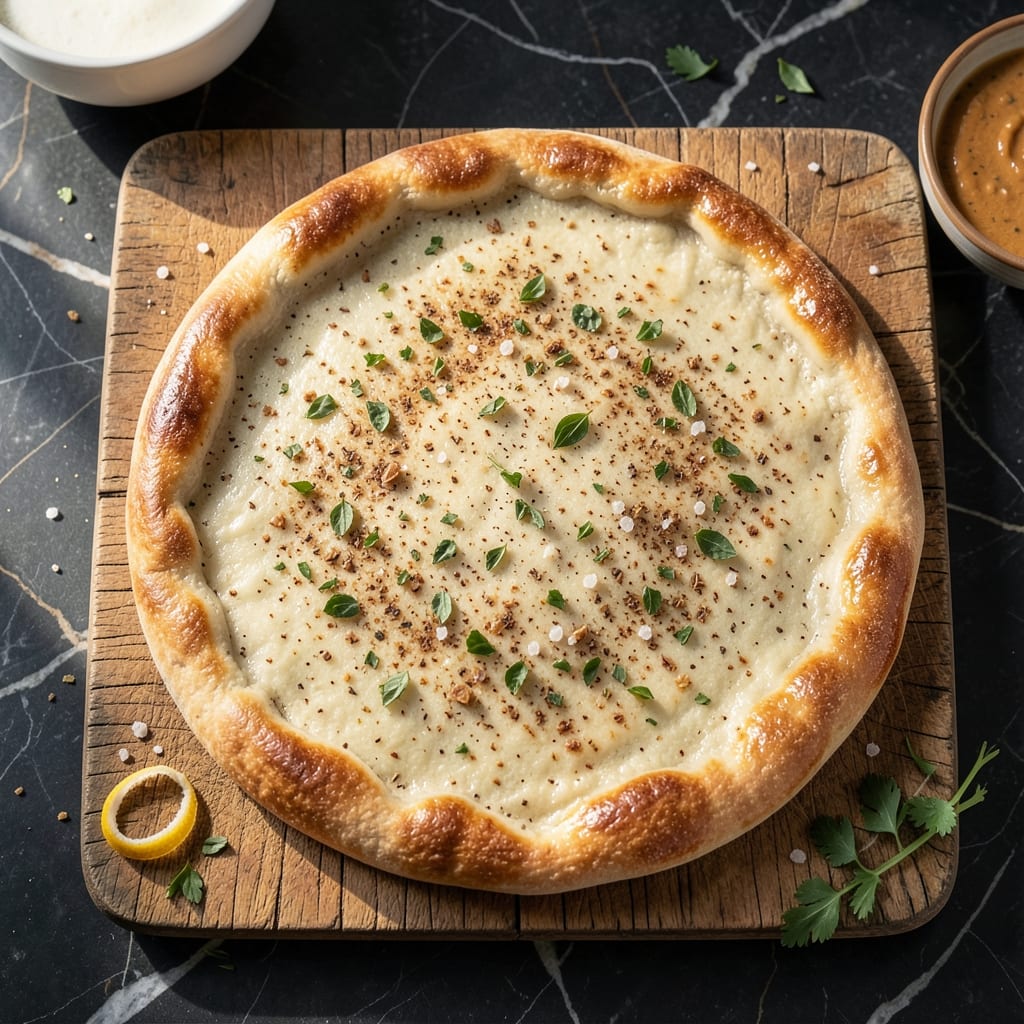
Creating a gluten-free pizza crust without yeast seemed impossible until I developed this method. The result is a fluffy base with crisp edges that holds toppings beautifully.
This recipe uses simple ingredients you likely already have, with no special flours required. The batter comes together quickly, then bakes into a sturdy yet tender crust that rivals traditional versions.
What makes this version stand out is its ability to crisp up perfectly while maintaining a soft interior. It handles like regular dough, making it easy to shape and top with your favorite ingredients.
The final crust supports all your favorite toppings without falling apart. It delivers the texture and structure you expect from pizza night, without the gluten or yeast.
Ingredients for Gluten Free Pizza Crust Recipe Without Yeast
Simple ingredients for a crust that’s crisp, fluffy, and totally gluten-free.
| Ingredient | Amount | Notes |
|---|---|---|
| All-Purpose Gluten-Free Flour Blend 🌾 | 2 cups | With xanthan gum included |
| Baking Powder 🧂 | 2 tsp | Aluminum-free preferred |
| Salt 🧂 | ½ tsp | Fine sea salt or kosher |
| Garlic Powder 🧄 | 1 tsp | Optional for flavor boost |
| Dried Oregano 🍃 | 1 tsp | Crushed between fingers |
| Unsweetened Almond Milk 🥛 | 1 cup | Room temperature for best results |
| Apple Cider Vinegar 🍏 | 1 tbsp | Helps with rise and texture |
| Olive Oil 🫒 | 2 tbsp | Extra-virgin for richness |
| Flaxseed Meal 🌿 | 1 tbsp | Mixed with 3 tbsp water |
| Water 💧 | 3 tbsp | For flax egg mixture |
| Nutritional Yeast 🧀 | 2 tbsp | Adds cheesy flavor optional |
| Maple Syrup 🍁 | 1 tsp | Balances acidity optional |
[recipe_ingredient_scaler]
The gluten-free flour blend is key here—King Arthur or Bob’s Red Mill 1:1 work perfectly (both include xanthan gum). If yours doesn’t, add ½ tsp xanthan gum per cup of flour. I’ve had great results with both, but King Arthur gives a slightly lighter texture. Baking powder freshness matters, so check the expiration date. The almond milk should be unsweetened—vanilla flavors can clash with savory toppings (and yes, oat or soy milk work too).
No flaxseed meal? Chia seeds ground finely work the same (1 tbsp chia + 3 tbsp water). Out of apple cider vinegar? White vinegar or lemon juice in the same amount. Want more flavor? Add a tsp of Italian seasoning or red pepper flakes. The nutritional yeast is optional but adds that cheesy depth—find it in the bulk section at Whole Foods. Skip the maple syrup if you prefer a savory crust.
The flax egg can be made ahead—just whisk and let it sit for 5 minutes to thicken. Store the flour blend in an airtight container for up to 3 months. Leftover crust keeps in the fridge for 2 days, but honestly it’s best fresh out of the oven.
Why You’ll Love This Recipe
- No Yeast Needed: I skip the waiting around—just mix, shape, and bake. No rising time means pizza in a flash.
- Herb-Infused Crisp: Garlic powder and oregano in the crust give every bite that warm, savory kick. It’s the little things that make it sing.
- Weeknight Hero: Between us, this is my emergency dinner. Gluten-free, fast, and the kids actually cheer when I pull it out.
- Budget-Friendly Batch: One bag of flour makes multiple crusts, and the pantry staples keep costs low. Honestly, it’s cheaper than takeout and twice as good.
Step-by-Step Instructions for Gluten Free Pizza Crust Without Yeast
This method guarantees a fluffy base with crisp edges every time you make it.
Step 1: Prepare the Flax Egg
In a small bowl, whisk together the 1 tbsp Flaxseed Meal and 3 tbsp Water until fully combined. Let it sit for 5 minutes to thicken into a gel-like consistency. This flax egg replaces traditional eggs while providing the necessary binding for your crust.
I always check that it has the texture of a lightly beaten egg before moving on. The mixture should coat the back of a spoon with a slight sheen. This step ensures the crust holds together without yeast.
Step 2: Mix the Dry Ingredients
In a large bowl, add the 2 cups All-Purpose Gluten-Free Flour Blend, 2 tsp Baking Powder, 0.5 tsp Salt, 1 tsp Garlic Powder, 1 tsp Dried Oregano, and 2 tbsp Nutritional Yeast. Whisk these together thoroughly until no lumps remain.
The baking powder provides the rise you’d normally get from yeast, while the nutritional yeast adds a subtle cheesy depth. I like to crush the dried oregano between my fingers as I add it to release more flavor.
Step 3: Combine Wet and Dry Ingredients
In a separate bowl, mix the 1 cup Unsweetened Almond Milk, 1 tbsp Apple Cider Vinegar, 2 tbsp Olive Oil, 1 tsp Maple Syrup, and the prepared flax egg. Stir until the oil is fully emulsified into the liquid. The vinegar reacts with the baking powder to create extra lift.
Pour the wet ingredients into the bowl with the dry ingredients. Stir with a spatula until just combined—don’t overmix. The dough will be thick and slightly sticky, similar to pancake batter. Let it rest for 5 minutes to allow the flour to absorb the liquid fully.
Step 4: Shape and Pre-Bake the Crust
Preheat your oven to 400°F and line a baking sheet with parchment paper. Spoon the dough onto the center of the prepared sheet and use the back of the spoon to spread it into a ¼-inch thick circle, about 12 inches in diameter.
Bake for 15 minutes until the edges begin to set and turn light golden brown. This pre-bake ensures the crust holds its shape and develops a crisp texture before adding toppings. Watch for the center to look dry but not fully cooked through.
Remove from the oven and add your favorite toppings. Return to the oven for an additional 10-12 minutes or until the crust is golden brown and the toppings are heated through.
Pro Tips For Making Gluten Free Pizza Crust Recipe Without Yeast
- Preheat the Pan: Get your baking sheet or pizza stone screaming hot—425°F minimum—before adding the dough. I learned this the hard way after pulling out too many gummy, undercooked crusts.
- Chill the Dough: After mixing, let the dough rest in the fridge for 20-30 minutes. Sounds weird, but it works: the flour blend hydrates better, and the crust holds its shape when you roll it out.
- Skip the Overmixing: Stir just until the dough comes together—any longer and the baking powder loses its oomph. After burning three batches, I finally figured out that overworking it makes the crust dense and flat.
- Boost the Flavor: Double the garlic powder and oregano—gluten-free flour needs the extra help. My grandmother swore by this, and she was right: it actually changes the outcome.
Essential Equipment for This Dish
Mixing Bowls
I always use a set of stainless steel mixing bowls with non-slip bases for this recipe. The 1.5-quart size works perfectly for the dry ingredients, while a 3-quart bowl gives enough room to combine everything without spills. Look for nested sets that save storage space.
Baking Sheet
A half-sheet pan (18×13 inches) is my go-to for even baking. I prefer heavy-gauge aluminum with a nonstick coating—it conducts heat beautifully and prevents sticking. The Nordic Ware Naturals line is my favorite for consistent results.
Parchment Paper
Never skip parchment paper with gluten-free baking. It prevents the delicate crust from tearing when transferring. I use unbleached parchment and cut it to fit the pan exactly. The crust releases cleanly every time, and cleanup is a breeze.
Whisk and Spatula
A balloon whisk ensures lump-free dry ingredients, while a silicone spatula scrapes every bit of batter from the bowl. I keep a 10-inch whisk and a heat-resistant spatula dedicated to baking. These tools make the process smoother and more enjoyable. 💛
Measuring Tools
Precision matters with gluten-free baking. I use stackable measuring cups for dry ingredients and a liquid measuring cup with a spout for the almond milk. A set of measuring spoons with both tablespoon and teaspoon sizes ensures accuracy with the smaller quantities.
Cooling Rack
After pre-baking, transfer the crust to a wire cooling rack if adding toppings later. This prevents the bottom from getting soggy. I use a 3-tier rack that fits perfectly over my countertop. It keeps the crust crisp while I prep the rest of the meal.
Nutrition Facts
Frequently Asked Questions
Can I use a different milk instead of almond?
Yes! Any unsweetened non-dairy milk works well. Try oat, soy, or cashew milk in the same 1 cup amount. Avoid coconut milk as it can add unwanted flavor to the crust.
Why does the recipe call for apple cider vinegar?
The vinegar reacts with baking powder to create lift, mimicking yeast’s effect. It also balances flavors. 1 tbsp is perfect—too much can make the crust taste sour.
Can I make this ahead of time?
Pre-bake the crust and store it at room temperature for 2 hours or refrigerate for 1 day. Reheat at 350°F for 5 minutes before adding toppings.

Trained in classic French technique but raised on slow-cooked ribs and spicy rubs, she blends culinary skill with smoke and soul.
- Recipe for Boneless Pork Chops in Cast Iron Skillet: Sear and Baste to Juicy Perfection - October 3, 2026
- Recipe for Boneless Cross Rib Roast: Slow-Roasted Beef with Herb Crust - October 3, 2026
- Hamburgers in Sauce Recipe Crock Pot: Slow-Cooked Savory Delight - October 3, 2026