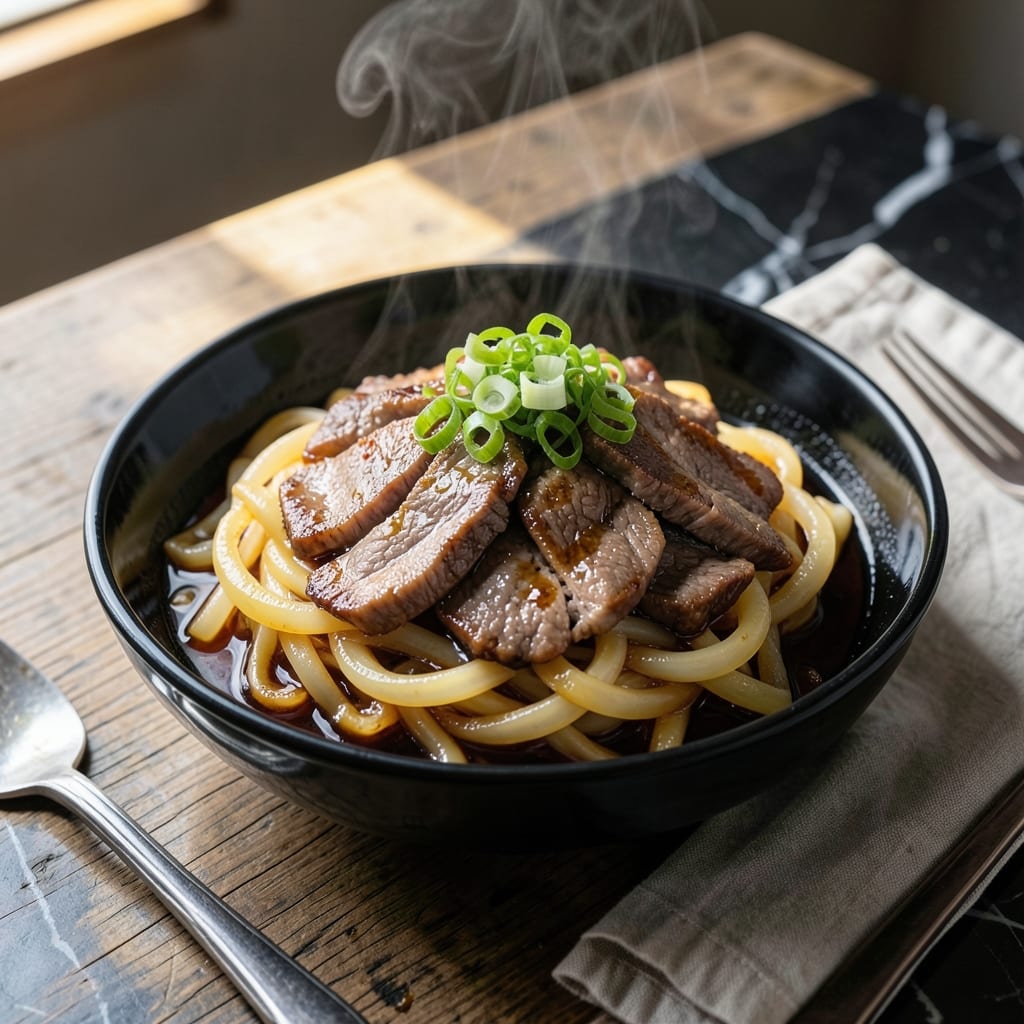
This Japanese beef bowl delivers perfect comfort in every bite, with thinly sliced beef and onions simmered in a savory-sweet dashi-based sauce. I developed this version to bring authentic flavor to home kitchens without complicated techniques.
The secret lies in the balance of ingredients—tender beef absorbs the rich, umami-packed broth while onions soften into silky sweetness. Thinly sliced beef cooks quickly, making this a 15-minute meal that tastes like hours of simmering.
Serve it over steamed rice with a soft-boiled egg on top for the ultimate weeknight dinner. The sauce clings to each grain, creating layers of flavor that feel anything but ordinary.
Simple ingredients, restaurant-quality results. This is Japanese home cooking at its most satisfying.
Ingredients for Gyudon Recipe Cooking with Dog
Thin beef, sweet onions, and umami-rich sauce over rice. Simple but deeply satisfying.
| Ingredient | Amount | Notes |
|---|---|---|
| Thinly Sliced Beef 🥩 | 1 lb | Ribeye or chuck preferred |
| Yellow Onions 🧅 | 2 whole | Thinly sliced into half-moons |
| Dashi Stock 🍜 | 1 ½ cups | Homemade or instant granules |
| Soy Sauce 🫒 | ¼ cup | Japanese variety preferred |
| Mirin 🍶 | 2 tbsp | Sweet rice wine for cooking |
| Sake 🍶 | 2 tbsp | Dry Japanese rice wine |
| Granulated Sugar 🧂 | 1 tbsp | Balances savory flavors |
| Steamed Japanese Short-Grain Rice 🍚 | 4 cups | Cooked, for serving |
| Soft-Boiled Eggs 🥚 | 4 whole | Optional, for topping |
| Green Onions 🌱 | 2 whole | Thinly sliced for garnish |
| Pickled Red Ginger 🌶️ | ¼ cup | Benishoga, for serving |
| Vegetable Oil 🫒 | 1 tbsp | Neutral flavor for cooking |
| Garlic Cloves 🧄 | 2 cloves | Minced for depth |
| Fresh Ginger 🌿 | 1 tbsp | Grated, for aroma |
[recipe_ingredient_scaler]
The beef is non-negotiable here. Ribeye or chuck offers the right marbling for quick cooking without drying out. Japanese grocery stores often sell pre-sliced beef for hot pot (shabu-shabu style) which works perfectly. Dashi stock is the foundation—instant dashi granules from Kikkoman are shelf-stable and reliable. For authentic flavor, avoid low-sodium soy sauce; the saltiness is part of the balance.
No dashi? Combine 1.5 cups water with 1.5 tsp dashi powder. Mirin can be replaced with 1 tbsp sugar + 1 tbsp water in a pinch. Sake is trickier to sub, but dry white wine works as a last resort. For gluten-free, use tamari instead of soy sauce. The eggs are optional but add richness—soft-boil for exactly 6.5 minutes for that perfect jammy center.
Leftovers keep 3-4 days in the fridge, but the beef is best eaten fresh. Freeze the sauce base without beef for up to 1 month. Reheat gently to avoid overcooking the meat. Always serve over freshly steamed rice—day-old rice won’t absorb the flavors as well.
Why You’ll Love This Recipe
- One Pot Meal: I love how it all comes together in a single pan—just beef, onions, and that dashi-mirin-soy sauce combo simmering away.
- Umami Bomb: The thinly sliced beef soaks up the sweet-savory broth like a sponge, Honestly, first bite and I’m already planning the next batch.
- Weeknight Hero: Between us, this is my Tuesday night lifesaver—ready before the rice cooker finishes.
- Stretches Far: Leftovers taste even better the next day, and a little beef goes a long way with all those onions bulking it up.
Step-by-Step Instructions for Japanese Simmered Beef Bowl
Master the technique that transforms simple ingredients into a deeply flavorful, comforting dish.
Step 1: Sauté Aromatics and Beef
Heat the 1 tbsp Vegetable Oil in a wide pot or deep skillet over medium-high heat. Add the 2 whole Yellow Onions, sliced into half-moons, and cook for 5 minutes until softened and just beginning to turn translucent.
Push the onions to one side and add the 1 lb Thinly Sliced Beef, the 2 cloves Garlic Cloves (minced), and the 1 tbsp Fresh Ginger (grated). Sear the beef for 2-3 minutes until it loses its raw color but doesn’t fully cook through—this builds the foundation of flavor.
Step 2: Deglaze and Build the Broth
Pour in the 2 tbsp Sake and 2 tbsp Mirin, using a wooden spoon to scrape up any browned bits from the bottom of the pot. These caramelized bits, or fond, dissolve into the liquid, adding depth to the sauce.
Add the 1.5 cups Dashi Stock, 0.25 cup Soy Sauce, and 1 tbsp Granulated Sugar. Stir to combine and bring the mixture to a gentle simmer. The sugar balances the saltiness of the soy sauce, creating that signature sweet-savory profile.
Step 3: Simmer Until Tender
Reduce the heat to medium-low and let the mixture simmer uncovered for 10-12 minutes. You’ll notice the onions become meltingly soft and the liquid reduces slightly, thickening into a glossy, umami-rich sauce.
Stir occasionally to prevent sticking, and taste the broth after 8 minutes. Adjust seasoning if needed, though the initial balance of dashi, soy, and sugar should be spot-on. The beef should be tender and fully cooked by this point.
Step 4: Serve Over Rice with Garnishes
Divide the 4 cups Steamed Japanese Short-Grain Rice among four bowls. Spoon the beef and onion mixture generously over each portion, ensuring every bowl gets plenty of the flavorful broth.
Top each serving with a Soft-Boiled Egg, a sprinkle of the 2 whole Green Onions (thinly sliced), and a small portion of the 0.25 cup Pickled Red Ginger. The egg yolk, when broken, enriches the dish, while the ginger cuts through the richness with its tangy crunch.
Pro Tips For Making Gyudon Recipe Cooking With Dog
- Slice Onions Thin: Use a sharp knife to cut the yellow onions paper-thin so they melt into the dish—this saves time and makes the texture perfect.
- Preheat the Pan: Get your pan screaming hot before adding the beef to prevent it from steaming instead of searing, which makes the meat chewy.
- Don’t Overcrowd: Cook the beef in a single layer so it browns properly instead of releasing too much liquid and turning gray.
- Simmer Low and Slow: Once the sauce is in, keep the heat low and let it gently reduce for 5-7 minutes so the flavors deepen without burning.
Dietary Considerations for This Recipe
Gluten-Free Adaptation
For a gluten-free version, swap regular soy sauce with tamari. It delivers the same umami depth without wheat. I’ve tested this with San-J Tamari and the flavor difference is negligible. Always check labels, as some tamari brands may contain trace gluten. 💡
Dairy-Free by Nature
This dish is naturally dairy-free, making it perfect for lactose-intolerant diners. The rich, savory broth comes from dashi stock and soy sauce, so no substitutions are needed. I love how the beef and onions create such satisfying depth without any dairy at all.
Lower Sodium Option
To reduce sodium, use low-sodium soy sauce and homemade dashi (simmer 1 piece kombu and ½ cup bonito flakes in 2 cups water for 10 minutes). This cuts sodium by about 40% while keeping the dish flavorful. I find it tastes just as rich with a little less salt.
Vegetarian Twist
Replace beef with thinly sliced mushrooms or tofu. Shiitake or cremini mushrooms absorb the sauce beautifully. Press and drain extra-firm tofu before slicing to ensure it soaks up the flavors. Cook for the same 10-12 minutes to achieve a similar texture.
Egg-Free Serving
Skip the soft-boiled egg or replace it with avocado slices for creaminess. The dish remains hearty and satisfying without it. I often serve it this way for a lighter, yet still flavor-packed, meal. ✨
Allergen Awareness
This recipe contains soy and potentially wheat (unless using tamari). For nut allergies, ensure your dashi and soy sauce are processed in nut-free facilities. Always verify ingredient labels to be safe.
Nutrition Facts
Frequently Asked Questions
Can I use a different cut of beef?
Ribeye or chuck are ideal for their marbling, but flank or sirloin work too. Freeze the beef for 30 minutes to make slicing thinner easier. Avoid lean cuts like tenderloin—they dry out quickly.
What if I don’t have dashi stock?
Combine 1.5 cups water with 1.5 tsp dashi powder for an instant substitute. In a pinch, use chicken or beef broth with 1 tsp soy sauce added for depth.
How do I prevent the beef from overcooking?
Sear it just until it loses its raw color, then let it finish in the simmering broth. Thin slices cook in 2-3 minutes total. Remove from heat once the sauce thickens to avoid toughness.
Can I make this ahead of time?
Prepare the sauce base and slice the beef/onions in advance. Store separately in the fridge for up to 24 hours. Cook just before serving for the best texture and flavor.

Trained in classic French technique but raised on slow-cooked ribs and spicy rubs, she blends culinary skill with smoke and soul.
- Recipe for Boneless Pork Chops in Cast Iron Skillet: Sear and Baste to Juicy Perfection - October 3, 2026
- Recipe for Boneless Cross Rib Roast: Slow-Roasted Beef with Herb Crust - October 3, 2026
- Hamburgers in Sauce Recipe Crock Pot: Slow-Cooked Savory Delight - October 3, 2026