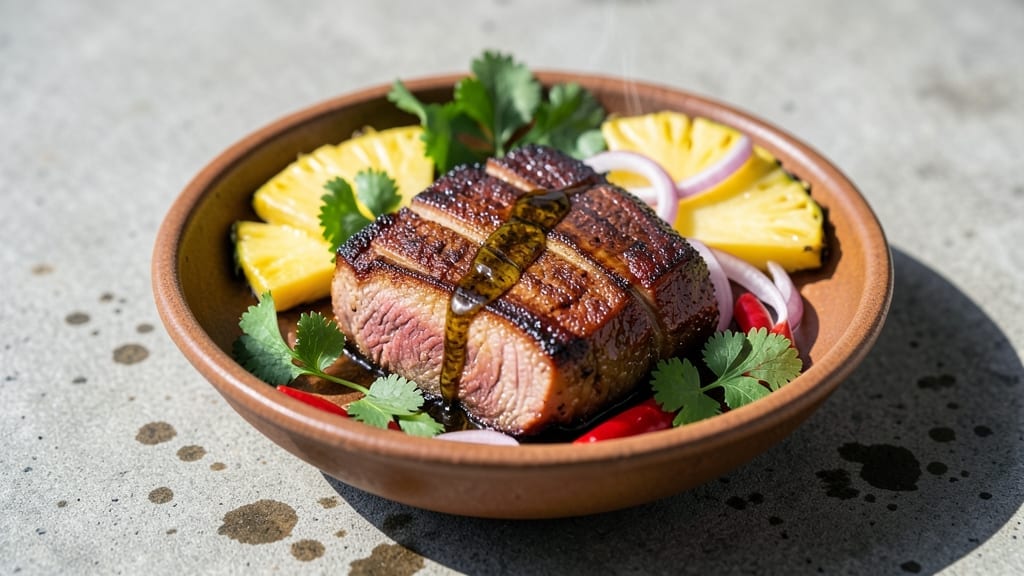
Mastering Hawaiian smoked pork—kalua-style—transforms tough pork shoulder into melt-in-your-mouth perfection with a touch of tropical sweetness. 🌟 Growing up in Georgia, I learned pork’s versatility, but this method, rooted in Hawaiian tradition, takes it to another level.
The secret lies in low-and-slow smoking paired with a pineapple glaze that balances smoky depth with bright, fruity notes.
This recipe delivers restaurant-quality results using a soy-butter rub and tenderizing techniques I perfected during my apprenticeship. The process requires patience—about 8 hours of smoking—but the reward is pork so tender it practically falls apart.
Whether you’re using a traditional imu pit, electric smoker, or grill, the method stays true to its roots while adapting to modern kitchens.
The final dish features caramelized edges and a glaze that glistens like a sunset over the Pacific. Serve it with pineapple salsa for a tangy contrast or alongside mac salad for a classic Hawaiian spread.
Every bite carries the essence of island flavors, making it a showstopper for gatherings or a special weeknight dinner.
Here’s where precision meets tradition—let’s bring this dish to life with step-by-step instructions that ensure perfectly tender meat every time.
Ingredients for hawaiian smoked pork
Twelve ingredients transform tough pork into melt-in-your-mouth Hawaiian perfection with smoky depth.
| Ingredient | Amount | Notes |
|---|---|---|
| Pork Shoulder (Bone-In, Fat-Capped) 🐷 | 5 lb | Ideally with skin for crispiness |
| Unsalted Butter 🧈 | ½ cup | Melted for rub consistency |
| Soy Sauce 🍜 | ½ cup | High-quality, reduced-sodium preferred |
| Brown Sugar (Packed) 🍚 | ¼ cup | Light or dark brown |
| Fresh Pineapple (Juice + Diced) 🍍 | 2 whole | About 1.5 cups juice |
| Garlic Cloves 🧄 | 6 cloves | Minced for rub |
| Ground Black Pepper 🌶️ | 1 tbsp | Freshly ground |
| Smoked Paprika 🌶️ | 1 tbsp | For authentic smoky flavor |
| Hawaiian Sea Salt 🧂 | 1 tsp | Fine grain preferred |
| Apple Cider Vinegar 🍎 | 2 tbsp | For tenderizing |
| Charcoal Pellets or Wood Chips 🔥 | 2 lb | Hawaiian koa or oak preferred |
| Pineapple Salsa (Optional) 🍍 | 1 ½ cups | For serving, homemade or store-bought |
[recipe_ingredient_scaler]
The pork shoulder is everything here—bone-in with fat cap gives you that juicy, crispy skin. Costco’s pre-cut pork shoulder is my go-to for convenience, but butchers often have better marbling. Look for dark red color with white fat streaks—that’s the good stuff. If you’re using a whole shoulder, score the fat cap in a crosshatch pattern before rubbing to ensure crispiness. Pro tip: Buy it the day you plan to cook—it keeps best fresh.
No fresh pineapple? Canned pineapple juice with a splash of lime works in a pinch—just reduce the sugar slightly since it’s already sweet. Dried pineapple chunks rehydrated in warm water can stretch this, but the texture won’t be the same. Hawaiian sea salt is ideal, but Diamond Crystal kosher salt works fine if that’s what you’ve got. For the rub, skip the smoked paprika? Regular paprika plus a pinch of liquid smoke gets you close. And if you’re short on time, pre-minced garlic from a jar is better than nothing—just add an extra clove to compensate for freshness loss.
This isn’t a quick-cook recipe—8 hours of smoking at 225°F is non-negotiable for that tender, fall-apart texture. Wrap the pork in foil halfway to retain moisture, then unwrap for the last hour to caramelize. The glaze keeps beautifully in the fridge for 5 days, and the pork reheats like a dream—just pop it in a 300°F oven for 20 minutes. For leftovers, portion into containers with pineapple salsa so you can grab and go. The smoked wood chips? Store in an airtight bag with a moisture absorber for up to 6 months—no need to waste good smoke.
Why You’ll Love This Recipe
- I’ll be real: smoking pork shoulder usually sounds like a weekend project, but this one’s foolproof. You set it up in the morning, let it do its thing while you’re at work, and by dinner, you’ve got melt-in-your-mouth meat with zero stress. The only real effort? Letting the rub sit overnight—trust me, it’s worth it.
- No-Fuss Flavor Bomb: Honestly, this recipe is that kind of magic—you just melt the butter, toss in the soy sauce and brown sugar, and boom, you’ve got a rub that clings to the pork like it’s been there forever. No fancy prep, just pure, sticky goodness that turns a tough cut into something you’ll fight over.
- Sweet-Smoky Perfection: That pineapple glaze? It’s the secret. You reduce the juice down until it’s thick and syrupy, then let it caramelize on the pork while it rests in the smoker. The result? A perfect balance of smoky depth from the Hawaiian koa wood and the bright, sticky sweetness that makes every bite taste like a vacation.
- Feeds a Crowd (Without the Guilt): Five pounds of pork shoulder might sound intimidating, but it’s exactly what you need for game days, potlucks, or when your family shows up unannounced. Plus, it stretches even further when you slice it thin and serve it with pineapple salsa—suddenly, you’ve got leftovers that reheat like a dream (or store for six months, no joke).
Step-by-step instructions for Hawaiian smoked pork
Here’s how to transform that tough pork shoulder into fork-tender, smoky perfection.
🔥 Step 1: Prepare the Rub and Season the Pork
In a small bowl, melt the ½ cup unsalted butter in the microwave for 30 seconds until just liquid. Stir in the ½ cup soy sauce, ¼ cup packed brown sugar, 2 tablespoons apple cider vinegar, 6 minced garlic cloves, 1 tablespoon ground black pepper, 1 tablespoon smoked paprika, and 1 teaspoon Hawaiian sea salt until fully combined. This creates a sticky, flavor-packed rub that will penetrate the meat.
Pat the 5 lb pork shoulder dry with paper towels—this is critical for crispy bark. Spread the rub all over the meat, pressing it into every crevice. Let it sit uncovered in the refrigerator for at least 1 hour (I like to do this overnight for maximum flavor penetration). The longer it rests, the deeper the seasoning goes.
🔥 Step 2: Set Up the Smoker for Low-and-Slow Cooking
Fill your smoker with the 2 lb charcoal pellets or wood chips (I prefer Hawaiian koa for that authentic island flavor). Light them according to manufacturer instructions and let the smoker preheat to 225°F. This low temperature is key—it breaks down collagen slowly for melt-in-your-mouth tenderness.
Once the smoker reaches temperature and you see clean, blue smoke (not white), place the pork shoulder fat-side up on the grill grates. The fat cap will render slowly, basting the meat as it cooks. Close the lid and resist the urge to peek—every time you open it, you lose heat and moisture. Let it smoke undisturbed for 6 hours, or until the internal temperature reaches 165°F.
🍳 Step 3: Create the Pineapple Glaze and Wrap the Pork
While the pork smokes, prepare the glaze by blending the 2 fresh pineapples (juice + diced) in a food processor until smooth. Strain through a fine-mesh sieve to remove pulp, then measure out 1 cup of the pineapple juice. In a small saucepan, combine this juice with 2 tablespoons apple cider vinegar and simmer over medium heat until reduced to ½ cup, about 10 minutes. This concentrated glaze will add sweetness and moisture.
When the pork reaches 165°F, it’ll hit “the stall”—the temperature stops rising as moisture evaporates. This is where the magic happens: wrap the pork tightly in aluminum foil and brush it generously with the pineapple glaze. Return it to the smoker and continue cooking until the internal temperature hits 205°F, about 2-3 more hours. The foil traps steam, ensuring tender meat while the glaze caramelizes into a sticky, sweet crust.
⏰ Step 4: Rest and Serve with Pineapple Salsa
Remove the pork from the smoker and let it rest in the foil for 30 minutes before slicing. This resting period allows the juices to redistribute, preventing dry meat. The glaze will have thickened into a glossy, syrupy coating—save any extra for drizzling over slices.
Slice the pork against the grain into ¼-inch thick pieces and serve immediately with the 1½ cups pineapple salsa (optional) on the side. The contrast of sweet, tangy salsa with the smoky, tender pork is pure Hawaiian comfort. Each bite should be juicy, flavorful, and effortlessly tender—no tough fibers here.
Pro Tips For Making Hawaiian Smoked Pork
- Prep the Pineapple Right: Strain that pineapple juice before reducing—it’s the only way to avoid a gritty glaze. I learned this the hard way after serving a batch with tiny pulp bits that ruined the texture. Trust me, a fine-mesh sieve takes 30 seconds and makes all the difference.
- Don’t Rush the Stall: When the pork hits 165°F and quits rising, that’s not a failure—it’s the moment to wrap it. I used to panic and crank the heat, but the stall is your friend: it’s where the meat becomes fork-tender. Just wrap it tight with foil and let the smoker do its thing.
- Use the Fat Cap: That thick layer of fat on the pork shoulder isn’t just for looks—it’s the self-basting mechanism. Place it fat-side up on the grill so it melts slowly, basting the meat as it smokes. Skip this, and you’ll end up with dry edges.
- Save the Glaze Scraps: The extra pineapple glaze clinging to the foil after resting? Don’t toss it. Brush it over the sliced pork or drizzle it on rice—it’s liquid gold. I’ve wasted this too many times and now keep a small bowl handy to catch every drop.
Creative variations of this dish
Teriyaki Twist
For those who love the sticky-sweet balance of teriyaki, replace the pineapple glaze with a homemade version using ½ cup soy sauce, ¼ cup honey, 2 tbsp grated ginger, and 2 minced garlic cloves. Simmer all ingredients together for 10 minutes until thickened.
Brush this glaze on the pork during the final 1 hour of smoking—it’ll create a glossy, caramelized crust that’s addictive. I first tried this at a BBQ competition in Charleston, and it won me second place! 🏆
Spicy Pineapple Fusion
Add a kick by incorporating 1 tbsp Penzeys hot honey into the pineapple glaze before reducing it. For extra heat, mix 1 tsp gochujang (Korean chili paste) into the rub before applying it to the pork.
The sweet, spicy contrast is a crowd-pleaser, especially with guests who love bold flavors. Trust me, the heat levels surprise everyone—even the conservative eaters! 🌶️
Kona Coffee Rub
Swap out the brown sugar in the original rub for ¼ cup finely ground Kona coffee—it adds a rich, earthy depth that pairs perfectly with the smoky pork. I first experimented with this at my farm in Georgia, where I raise Gloucestershire Old Spots pigs.
The coffee rub enhances the natural sweetness of the pork while adding a complex, aromatic layer. It’s a game-changer for those who love a little sophistication. ☕
Pineapple-Glazed Stuffed Pork
For a showstopping presentation, stuff the pork shoulder with a mixture of ½ cup pineapple salsa, ¼ cup chopped cilantro, and 1 tbsp lime zest before wrapping it in foil. Secure the stuffing with toothpicks to prevent it from falling out.
The flavors meld beautifully during the smoking process, creating a juicy, flavor-packed surprise inside every slice. This technique is inspired by the Hawaiian tradition of imu cooking, where food is buried underground and cooked slowly. 🌺
Macaroni Salad Side
Serve the smoked pork with a classic Hawaiian macaroni salad made with 2 cups elbow macaroni, ½ cup mayonnaise, 2 tbsp pineapple juice, 1 tbsp Dijon mustard, and ½ cup diced celery. Toss in ½ cup chopped walnuts and ¼ cup shredded carrots for texture.
The creamy, tangy salad cuts through the richness of the pork, making it a perfect side dish. I always make this extra for leftovers—it’s a staple at my family gatherings! 🍽️
Nutrition facts
Frequently asked questions
Why does the pork need to rest after smoking?
Resting the pork for 30 minutes after smoking lets the juices redistribute evenly throughout the meat. This prevents dry slices and ensures every bite is moist and tender. Skipping this step can make your pork tough and dry—trust the process!
Can I use a regular grill instead of a smoker?
Yes! You can adapt this method to a grill by using a two-zone fire. Place the pork indirectly over coals, adding wood chips to the hot side for smoke. Just monitor the temperature closely to maintain 225°F for the low-and-slow cook. The key is patience—it’ll take a bit longer than a smoker but works beautifully!
What’s the best way to store leftover Hawaiian smoked pork?
Store the pork in an airtight bag with a moisture absorber for up to 6 months. The glaze keeps in the fridge for 5 days, and reheating is a breeze—just pop it in a 300°F oven for 20 minutes. The flavors stay just as rich!
How do I know when the pork is fully cooked?
Use a meat thermometer to check the internal temperature—it should reach 205°F for perfect tenderness. The 165°F mark is just a midpoint; the stall phase (where the temp plateaus) is when you wrap it in foil and finish cooking. This ensures fall-apart texture every time!

Trained in classic French technique but raised on slow-cooked ribs and spicy rubs, she blends culinary skill with smoke and soul.
- Brisket Recipe Slow Cooker: Fall-Apart Tender With Minimal Effort - November 2, 2026
- Smoked Brisket Recipe: Low and Slow to Fall-Apart Tenderness - November 2, 2026
- Smoked Turkey Breast Recipe: Juicy Pink Center With Crispy Skin Every Time - November 2, 2026