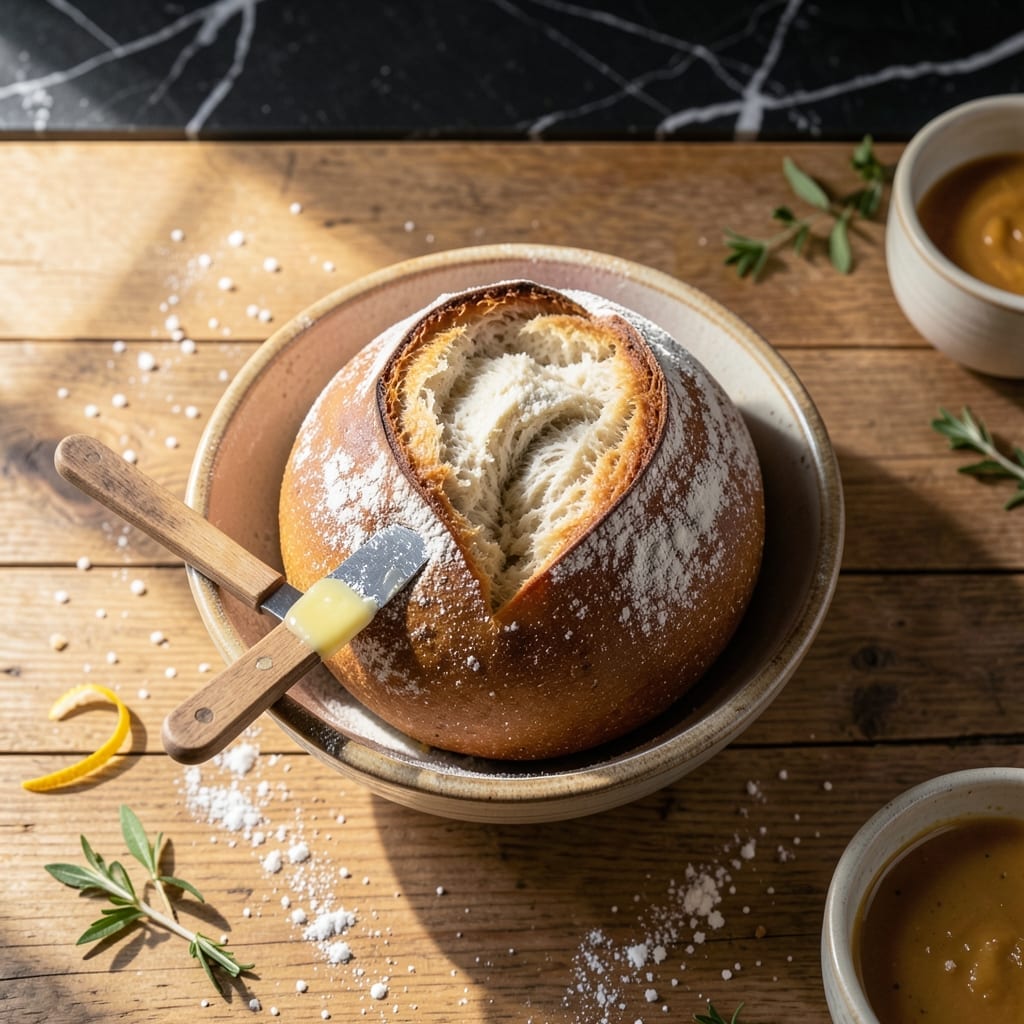
There’s nothing quite like the aroma of fresh bread filling your kitchen, and this homemade loaf delivers that experience with simple ingredients. I’ve perfected this recipe to create a pillowy soft texture that stays fresh for days.
The beauty of this method lies in its simplicity—using all-purpose flour and a few basic pantry staples. With just 15 minutes of active prep time and a patient rise, you’ll achieve bakery-quality results at home.
What emerges from the oven is a loaf with a golden crust that gives way to an airy, tender crumb. The crust crackles slightly when sliced, while the inside remains wonderfully soft and perfect for sandwiches or toast.
This bread keeps well and toasts beautifully, making it ideal for everyday use. The process is straightforward yet rewarding, with each step building toward that perfect homemade loaf.
Ingredients for Homemade White Bread Recipe with All Purpose Flour
Simple pantry staples transform into a bakery-quality loaf with pillowy texture and golden crust.
| Ingredient | Amount | Notes |
|---|---|---|
| All-Purpose Flour 🌾 | 4 ½ cups | Sifted for even texture |
| Warm Water 💧 | 1 ¼ cups | 110-115°F for yeast activation |
| Active Dry Yeast 🍞 | 2 ¼ tsp | One 0.25 oz packet plus extra |
| Granulated Sugar 🍚 | 2 tbsp | Feeds the yeast |
| Salt 🧂 | 1 ½ tsp | Fine grain for even distribution |
| Unsalted Butter 🧈 | 2 tbsp | Softened to room temperature |
| Whole Milk 🥛 | ¼ cup | Warm, enhances softness |
| Large Egg 🥚 | 1 whole | Room temperature for binding |
| Olive Oil 🫒 | 1 tbsp | For greasing bowl |
| Honey 🍯 | 1 tbsp | Optional for golden crust |
[recipe_ingredient_scaler]
The flour is the foundation—King Arthur or Gold Medal all-purpose work beautifully. Yeast freshness is non-negotiable; check the expiration date and store unopened packets in the freezer. For the milk, whole milk yields the softest crumb, though 2% works in a pinch. Butter should be unsalted to control sodium levels precisely (the good stuff, not margarine).
No whole milk? Substitute with equal parts water plus 1 tbsp powdered milk. Out of eggs? Use 1/4 cup unsweetened applesauce for binding, though the texture will be slightly denser. Honey can be swapped for maple syrup or sugar for the crust glaze. The butter is replaceable with vegetable oil, but expect a less tender result.
Store flour in an airtight container for up to 1 year; yeast keeps 4 months in the fridge or 6 months frozen. The baked loaf stays fresh at room temperature for 3-4 days or freezes beautifully for 1 month.
Why You’ll Love This Recipe
- No-Knead Magic: Honestly, I just mix the warm water with yeast, sugar, and flour—no fancy stand mixer required.
- Soft and Sweet: That hint of sugar in the dough gives it a subtle sweetness that makes it irresistible fresh from the oven.
- Sandwich Savior: I slice and freeze loaves so I always have bread ready for quick lunches or impromptu grilled cheese.
- Penny-Pincher’s Dream: All-purpose flour and basic pantry staples mean I spend pennies per loaf compared to store-bought.
Step-by-Step Instructions for Homemade White Bread
Master the technique for a perfectly soft loaf with a golden crust using this tested method.
Step 1: Activate the Yeast and Prepare the Dough Base
In a stand mixer bowl, combine the 1.25 cups Warm Water, 2.25 tsp Active Dry Yeast, and 2 tbsp Granulated Sugar. Let it stand for 5-7 minutes until the mixture becomes foamy and smells yeasty—this confirms the yeast is active.
Add the 0.25 cup Whole Milk, 1 whole Large Egg, and 2 tbsp Unsalted Butter to the yeast mixture. Use the paddle attachment to blend on low speed until the butter is mostly incorporated. This creates a rich base that ensures a tender crumb.
Step 2: Incorporate Dry Ingredients and Knead
Gradually add 1.5 tsp Salt and 4.5 cups All-Purpose Flour, mixing on low until the dough comes together into a shaggy mass. Switch to the dough hook and knead on medium speed for 8-10 minutes.
The dough should be smooth, elastic, and slightly tacky but not sticky. If it feels too dry, add a splash of warm water; if too sticky, add a tablespoon of flour. Proper kneading develops gluten, which gives the bread its structure and chewy texture.
Step 3: First Rise in a Greased Bowl
Lightly grease a large bowl with 1 tbsp Olive Oil and transfer the dough to it, turning once to coat. Cover with a clean kitchen towel or plastic wrap and place in a warm, draft-free spot. Let it rise for 1 to 1.5 hours or until doubled in size.
To test if it’s ready, press two fingers gently into the dough—if the indentations remain, the dough has risen sufficiently. This first rise allows the yeast to ferment the sugars, creating air pockets for a light texture.
Step 4: Shape, Second Rise, and Bake
Punch down the risen dough to release air, then turn it onto a lightly floured surface. Shape it into a loaf by flattening into a rectangle and rolling it tightly from the short end. Pinch the seam and tuck under.
Place the loaf seam-side down in a greased 9×5-inch loaf pan. Cover and let rise again for 45-60 minutes until it domes about 1 inch above the pan rim.
Preheat the oven to 375°F. Brush the top of the loaf with 1 tbsp Honey diluted in a teaspoon of warm water for a golden crust. Bake for 30-35 minutes until the top is deep golden brown and the internal temperature reaches 190-200°F.
Step 5: Cool Completely Before Slicing
Remove the bread from the pan and transfer to a wire rack. Let it cool completely for at least 1 hour before slicing. This cooling period allows the structure to set, preventing a gummy texture.
Resist the urge to slice while warm—the steam inside needs time to redistribute for the perfect soft, pillowy result. Once cooled, the bread should have a tender interior with a slightly crisp, golden crust.
Pro Tips For Making Homemade White Bread Recipe With All Purpose Flour
- Test Your Yeast: I learned this the hard way—mix your active dry yeast with the warm water and sugar first, then wait 5-10 minutes for a foamy layer to confirm it’s alive before adding flour.
- Use Room Temp Ingredients: Cold water or flour straight from the fridge can slow yeast activation; pull everything out 30 minutes early for even rising.
- Skip Over-Flouring: Resist the urge to dump extra flour on sticky dough during kneading—just lightly flour your hands and surface, as too much toughens the bread.
- Let It Double: Give the first rise a full hour or until the dough has truly doubled in size; rushing this step leaves you with dense, flat loaves.
Best Sauces and Condiments for This Recipe
Classic Butter Spread
For the simplest enhancement, I spread warm slices with salted European-style butter—the higher fat content melts beautifully into the soft crumb. A sprinkle of flaky sea salt on top elevates the flavor without overpowering the bread’s natural taste. 💛
Sweet Cinnamon Honey
Mix ½ cup honey with 1 tsp cinnamon and a pinch of salt for a quick compound spread. Drizzle over toasted slices or use as a dip for fresh bread. The warmth of cinnamon complements the loaf’s subtle sweetness perfectly.
Garlic Herb Infusion
Combine ½ cup softened butter with 2 minced garlic cloves, 1 tbsp fresh parsley, and ½ tsp black pepper. This savory spread is ideal for garlic bread or pairing with soups. I love how it transforms the bread into a meal.
Spicy Sriracha Mayo
Blend ¼ cup mayonnaise with 1 tbsp sriracha and 1 tsp lime juice for a tangy kick. It’s my go-to for sandwiches with this bread, adding a bold contrast to the mild, pillowy texture. Adjust the heat level to your preference.
Citrus Marmalade
High-quality orange marmalade with visible citrus peel adds a bright, slightly bitter contrast. I prefer Bonne Maman brand for its perfect balance of sweet and tart. The chunks of fruit give each bite an exciting texture.
Herb-Infused Olive Oil
Warm ½ cup extra-virgin olive oil with rosemary sprigs and crushed red pepper for 5 minutes. Strain and use for dipping—this is my favorite way to enjoy the bread still warm from the oven. ✨
Nutrition Facts
Frequently Asked Questions
Why does my bread come out dense?
Under-kneading or insufficient rising time are common culprits. Knead for the full 8-10 minutes to develop gluten properly, and let it rise until doubled in size.
Can I use bread flour instead of all-purpose?
Yes! Bread flour will give you a slightly chewier texture due to its higher protein content. Reduce the total amount by 2-3 tablespoons per cup.
How do I know when the bread is fully baked?
Use an instant-read thermometer—the internal temperature should reach 190-200°F. The crust should be deep golden brown and sound hollow when tapped.
Can I make this without a stand mixer?
Knead by hand on a floured surface for 12-15 minutes until smooth and elastic. The process will be more labor-intensive but equally rewarding.

Trained in classic French technique but raised on slow-cooked ribs and spicy rubs, she blends culinary skill with smoke and soul.
- Recipe for Fried Pork Chops With Flour: Crispy Crust and Juicy Centers - October 3, 2026
- Octopus Recipe Pan Fried: Crispy Edges With Tender Bites - October 3, 2026
- Recipe For Fried Pork Chops In An Iron Skillet: Crispy Crust With Juicy Centers - October 3, 2026