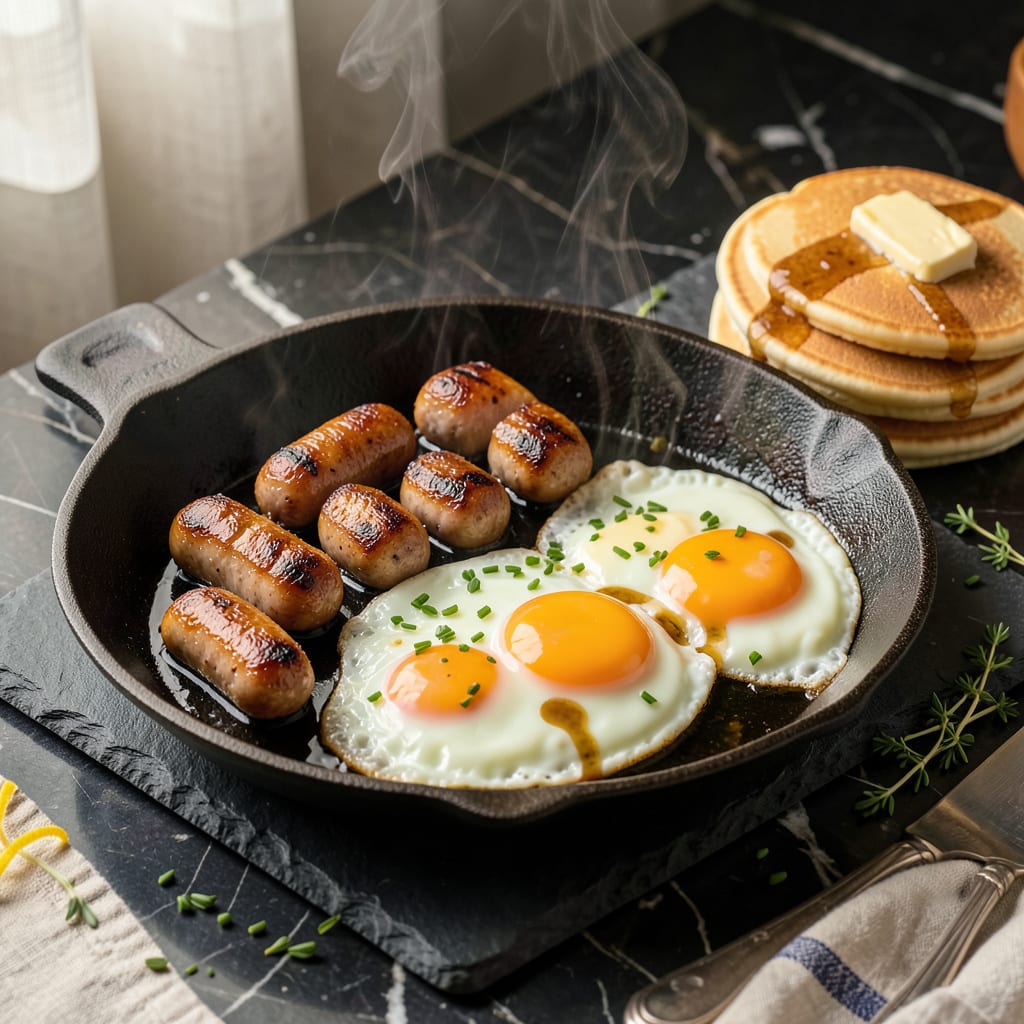
Cook fresh sausage links on medium heat for 12-16 minutes total, turning every 2-3 minutes until internal temperature reaches 160°F. Pre-cooked links need 8-10 minutes to brown and heat through.
Getting the timing right transforms ordinary sausage into something extraordinary. I’ve found that medium heat creates that perfect golden crust while keeping the inside juicy—too high and you risk burning the casing before the center cooks. 🔥 For fresh links, I always use a meat thermometer to hit that 160°F sweet spot, which ensures safety without drying them out. Pre-cooked varieties are more forgiving, but I still give them enough time to develop that satisfying snap when you bite in.
The secret lies in patience and attention. Those 2-3 minute turns aren’t just about even browning—they prevent the natural fats from pooling in one spot, which can lead to uneven cooking. I learned this the hard way after ruining a batch of homemade bratwurst by walking away mid-cook. ✨ Now I treat it like a rhythm: turn, sizzle, turn, sizzle—until that internal temperature confirms perfection.
💡 In This Article
- Why Cooking Time Varies for Different Sausage Links
- Pro Tips for Perfect Stovetop Sausage Links Every Time
Why Cooking Time Varies for Different Sausage Links
The difference between fresh and pre-cooked links is all about what’s happening inside. Fresh sausages contain raw meat that needs to reach 160°F to kill harmful bacteria like salmonella or trichinella. This process takes 12-16 minutes because the proteins need time to denature and coagulate properly.
Pre-cooked links, on the other hand, just need reheating to 140°F—their proteins are already set from the initial cooking process. 🔥
Meat type dramatically changes the equation. Pork links (the classic breakfast sausage) cook differently than poultry-based options. Chicken or turkey sausages require extra attention because their leaner composition dries out faster—watch for 165°F internal temp here.
Thickness matters too: a standard 1-inch diameter link cooks evenly at medium heat, while thicker bratwurst-style links may need lower heat for 18-20 minutes to avoid burnt exteriors. ✨
Heat level creates a delicate balance. Too high (>375°F) and you’ll get a dark crust before the center cooks. Too low (<300°F) and the sausages steam instead of sear, losing that coveted caramelization.
I’ve found medium heat (325-350°F) creates the Maillard reaction we want—the chemical process where amino acids and sugars combine to form new flavor compounds—while maintaining even cooking throughout. 💫
The casing tells a story too. Natural casings (made from intestines) conduct heat differently than collagen or synthetic casings. They’ll often split if cooked too aggressively, releasing precious juices. That’s why I recommend starting with a dry pan for natural casings—they’ll render their own fat.
For synthetic casings, a light oil helps prevent sticking without compromising texture. 🌟
Here’s what most home cooks miss: carryover cooking adds 5-10°F after you remove sausages from the pan. This is why I pull fresh links at 155°F—they’ll coast up to that perfect 160°F while resting. Pre-cooked links can come off at 135°F for the same reason.
The resting period also allows juices to redistribute, preventing that first-bite squirt of hot liquid. ⚡
Pro tip for testing doneness without a thermometer: press the sausage with tongs. A properly cooked link will spring back slightly but feel firm. Undercooked meat will squish like a water balloon, while overcooked will feel dense and unyielding.
For visual cues, look for juices running clear when pierced—any pinkish tint means it needs more time. 💛
The fat content changes everything. Higher-fat sausages (like Italian sweet) can handle slightly higher heat because the fat bastes the meat as it renders. Leaner varieties (chicken apple) need gentle heat and possibly a splash of water to create steam, preventing dryness.
I’ve ruined many a turkey sausage by treating it like its pork counterpart—now I know to adjust both time and temperature accordingly. 💫

Trained in classic French technique but raised on slow-cooked ribs and spicy rubs, she blends culinary skill with smoke and soul.
- Recipe for Boneless Pork Chops in Cast Iron Skillet: Sear and Baste to Juicy Perfection - October 3, 2026
- Recipe for Boneless Cross Rib Roast: Slow-Roasted Beef with Herb Crust - October 3, 2026
- Hamburgers in Sauce Recipe Crock Pot: Slow-Cooked Savory Delight - October 3, 2026