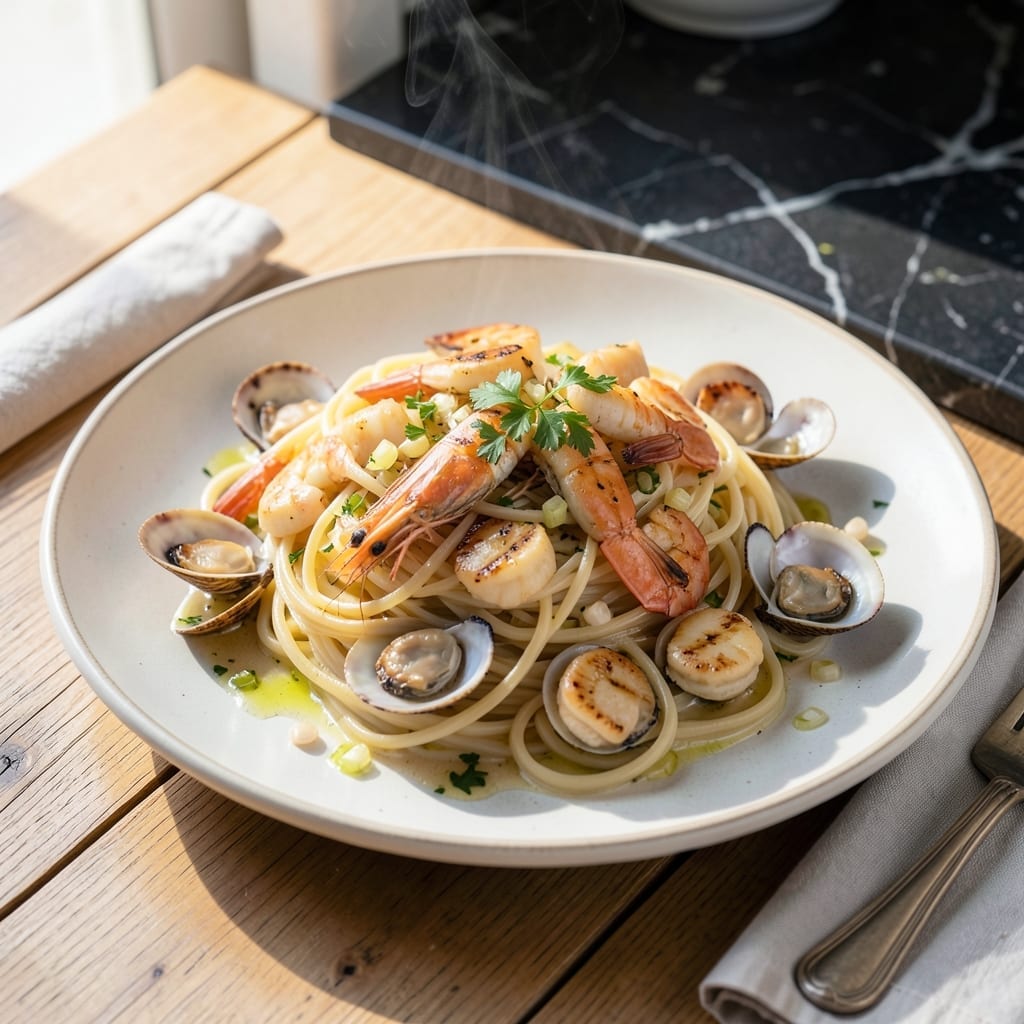
This Italian seafood pasta delivers restaurant-quality results with a fraction of the effort. The white wine sauce creates a delicate balance, enhancing the natural flavors of fresh seafood without overpowering them.
I’ve perfected this method to ensure the linguine absorbs just enough sauce to stay light yet flavorful. The key is using dry white wine to deglaze the pan, lifting every bit of briny, garlicky goodness into the dish.
By the time it’s plated, you’ll have tender seafood, al dente pasta, and a sauce that clings perfectly to every strand. It’s a dish that feels special but comes together with simple, precise steps.
Pair it with a crisp white wine to elevate the experience even further. Here’s how to make it right.
Ingredients for Italian Seafood Pasta Recipe White Wine
Fresh seafood meets simple pantry staples for a dish that feels restaurant-worthy.
| Ingredient | Amount | Notes |
|---|---|---|
| Linguine Pasta 🍝 | 12 oz | Dried, enough for 4 servings |
| Shrimp 🍤 | 1 lb | Large, peeled and deveined |
| Scallops 🐚 | ½ lb | Fresh, dry-packed preferred |
| Clams 🦪 | 12 whole | Fresh, in shell, littleneck variety |
| Garlic Cloves 🧄 | 4 cloves | Minced for sauce base |
| Shallot 🧅 | 1 whole | Finely diced for aromatic depth |
| Dry White Wine 🍷 | 1 ½ cups | For deglazing and sauce base |
| Extra-Virgin Olive Oil 🫒 | ¼ cup | For sautéing seafood and aromatics |
| Unsalted Butter 🧈 | ¼ cup | For finishing the sauce |
| Fresh Parsley 🌿 | ¼ cup | Chopped, for garnish |
| Red Pepper Flakes 🌶️ | ½ tsp | Optional, for heat |
| Lemon Zest 🍋 | 1 tsp | For bright acidity |
| Lemon Juice 🍋 | 2 tbsp | Freshly squeezed for finishing |
| Sea Salt 🧂 | 1 tsp | For seasoning pasta water and dish |
| Freshly Ground Black Pepper 🌶️ | ½ tsp | For finishing the dish |
[recipe_ingredient_scaler]
The seafood is the star here—look for wild-caught shrimp and dry-packed scallops at Whole Foods or your local fishmonger. Fresh clams should be tightly closed (toss any open ones). For the wine, a crisp Pinot Grigio or Sauvignon Blanc works perfectly. The linguine should be high-quality bronze-cut for better sauce adhesion.
No clams? Mussels or additional shrimp work just as well. Out of white wine? Substitute with seafood stock plus a splash of lemon juice. The butter can be omitted for a lighter version, but it adds a silky finish. If you can’t find shallots, yellow onion at half the amount is a decent swap.
The pasta cooks in 8-10 minutes, so have everything prepped first. Leftovers keep 2-3 days in the fridge, though the seafood is best served fresh. Reheat gently to avoid overcooking the seafood.
Why You’ll Love This Recipe
- One Pot Wonder: I love that everything cooks in a single pan—pasta, seafood, and that garlicky white wine sauce.
- Garlic & Wine Magic: The garlic cloves and white wine create a sauce so rich, I could drink it with a straw.
- Date Night Ready: This feels fancy enough for a special dinner but honestly takes less effort than my weeknight stir-fry.
- Stretches Farther: Those clams and shrimp bulk it up so much that leftovers actually taste better the next day.
Step-by-Step Instructions for Italian Seafood Pasta in White Wine
Master the technique for perfectly balanced seafood pasta with restaurant-quality results every time.
Step 1: Sauté Aromatics in Olive Oil
Heat the 0.25 cup extra-virgin olive oil in a large, deep skillet over medium heat. Add the 1 whole shallot, finely diced, and cook for 2-3 minutes until softened and translucent. You want it to melt into the oil without browning.
Add the 4 cloves garlic cloves and 0.5 tsp red pepper flakes, stirring constantly for 30-45 seconds until the garlic turns fragrant but not brown. This builds the flavor foundation for your sauce. Remove the skillet from heat if the garlic starts to color too quickly.
Step 2: Toast Seafood and Deglaze with Wine
Return the skillet to medium-high heat and add the 1 lb shrimp and 0.5 lb scallops. Sear for 2 minutes per side until they develop a light golden crust. The shrimp should turn opaque, and the scallops should have a golden brown sear.
Add the 12 whole clams to the skillet, then immediately pour in the 1.5 cups dry white wine. Cover with a lid and let steam for 4-5 minutes until the clams open. Discard any clams that don’t open—they’re unsafe to eat.
Step 3: Cook Pasta and Finish the Sauce
While the seafood cooks, bring a large pot of water to a boil. Add the 12 oz linguine pasta and 1 tsp sea salt, cooking until the pasta is 1 minute shy of al dente (about 8-9 minutes). Reserve 1 cup of pasta water before draining.
Add the drained pasta to the skillet with the seafood. Stir in the 0.25 cup unsalted butter, 1 tsp lemon zest, and 2 tbsp lemon juice. Toss everything together, adding reserved pasta water ¼ cup at a time until the sauce clings beautifully to the pasta.
Step 4: Season and Garnish Before Serving
Taste and adjust seasoning with additional sea salt and 0.5 tsp freshly ground black pepper if needed. The sauce should be briny from the clams, bright from the wine, and balanced with the acidity of the lemon.
Transfer to serving bowls and garnish with the 0.25 cup fresh parsley, chopped. Serve immediately while the pasta is hot and the seafood is at its peak tenderness. The dish should have a glossy, light sauce that coats each strand of linguine without being heavy.
Pro Tips For Making Italian Seafood Pasta Recipe White Wine
- Deglaze with Wine: After sautéing garlic, pour in 1/2 cup white wine and scrape up those browned bits—this builds a flavor base that clams and shrimp will soak up.
- Pat Seafood Dry: I learned this the hard way: drying shrimp and scallops with paper towels before cooking prevents steaming and gives you a proper sear.
- Don’t Overcook Clams: Add clams to the pot last and cover just until they open (3-5 minutes max)—any longer and they turn rubbery.
- Use Pasta Water: Reserve a cup of starchy pasta water before draining; a splash or two loosens the sauce and helps it cling to the linguine.
Serving Suggestions for This Dish
Plating Perfection
Use shallow bowls to showcase the linguine—toss it lightly with tongs to create elegant twirls that highlight the sauce’s gloss. Arrange the shrimp, scallops, and clams strategically on top so each bowl gets a mix of seafood. The visual contrast of golden seared scallops against white clams is stunning. 💫
Garnish with Purpose
Sprinkle the 0.25 cup fresh parsley just before serving to preserve its vibrant color. A light dusting of lemon zest adds a pop of yellow and signals the bright acidity within. I always add a final crack of freshly ground black pepper for visual texture.
Wine Glass Pairing
Serve with the same dry white wine used in cooking—Pinot Grigio or Sauvignon Blanc—chilled to 45-50°F. The wine’s crispness mirrors the dish’s acidity. Use clear glassware to appreciate the pale straw color. The aromatic connection between glass and plate elevates the meal. 🍷
Bread for Sauce
Offer crusty Italian bread or a baguette on the side for soaking up every last drop of sauce. Warm the bread in a 350°F oven for 5 minutes and drizzle with extra-virgin olive oil. It’s the perfect way to stretch this luxurious dish into a full experience.
Family-Style Option
For gatherings, serve the pasta on a large platter with seafood arranged in a circular pattern. Place the bowl of sauce in the center for guests to add as desired. This encourages sharing and makes the meal feel more communal and celebratory.
Nutrition Facts
Frequently Asked Questions
Can I use frozen seafood instead of fresh?
Yes, but thaw it completely in the fridge overnight first. Pat it very dry to avoid watering down the sauce. Frozen shrimp and scallops work best, while clams are harder to find frozen and may have a different texture.
What if I don’t have clams?
Mussels are the perfect substitute with a similar briny flavor. You can also double the shrimp or add calamari rings. Just keep the total seafood weight around 1.5 lbs to maintain the right pasta-to-seafood ratio.
How do I prevent the pasta from getting mushy?
Cook it 1 minute less than package instructions, then finish in the sauce. Use reserved pasta water to adjust consistency—never add plain water, as it dilutes the flavor.

Trained in classic French technique but raised on slow-cooked ribs and spicy rubs, she blends culinary skill with smoke and soul.
- Recipe for Boneless Pork Chops in Cast Iron Skillet: Sear and Baste to Juicy Perfection - October 3, 2026
- Recipe for Boneless Cross Rib Roast: Slow-Roasted Beef with Herb Crust - October 3, 2026
- Hamburgers in Sauce Recipe Crock Pot: Slow-Cooked Savory Delight - October 3, 2026