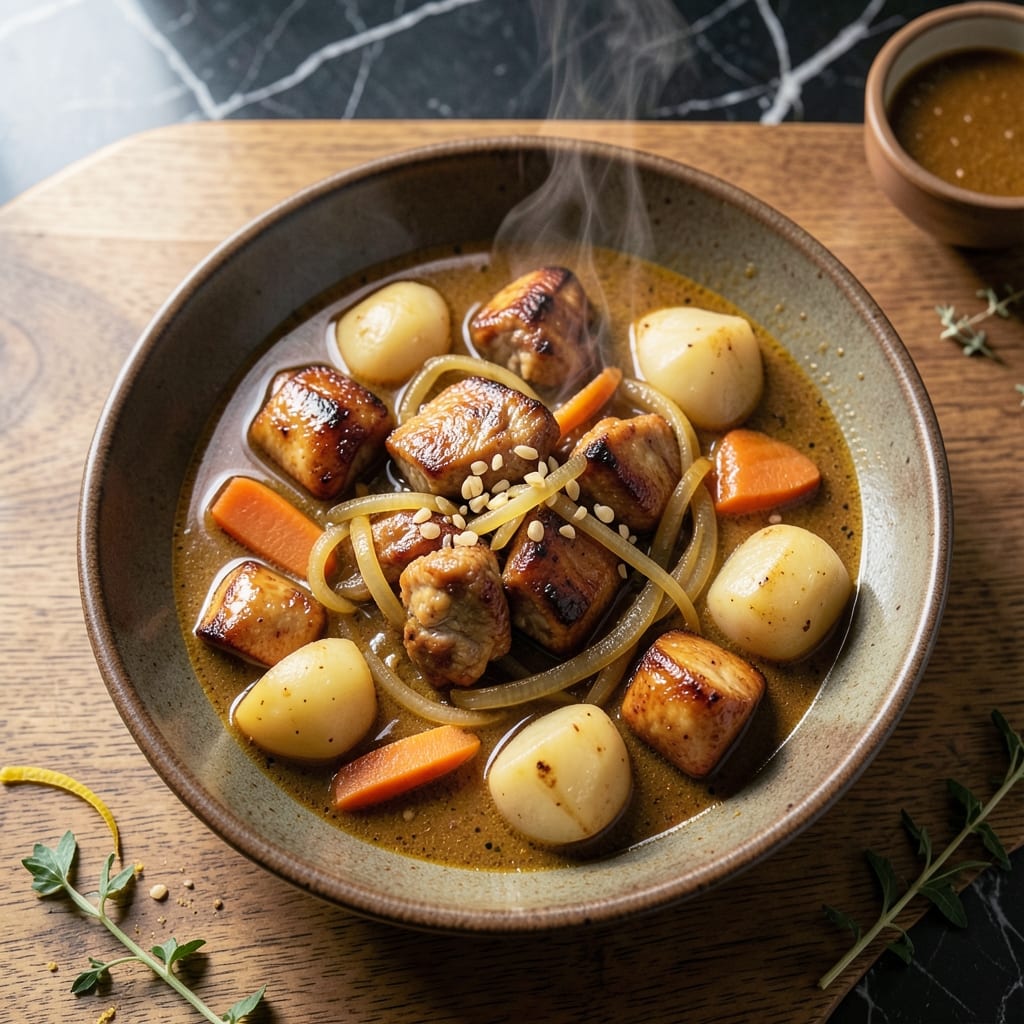
This recipe brings authentic Japanese comfort to your kitchen with minimal effort. I developed this method after years of testing different approaches to using Golden Curry roux.
The secret lies in the layering of flavors—searing the protein first, then building the vegetable base before adding the roux. This creates a rich, deeply aromatic curry that’s better than any restaurant version.
You’ll end up with a velvety sauce coating tender vegetables and meat, all infused with the signature Golden Curry flavor. The aroma alone will have everyone gathering around the table.
Perfect for a cozy weeknight dinner or meal prep. Here’s how to make it at home.
Ingredients for Japanese Curry Recipe Using Golden Curry
Rich, aromatic Japanese comfort with Golden Curry roux and tender chicken. Probably have most already.
| Ingredient | Amount | Notes |
|---|---|---|
| Golden Curry Roux 🟡 | 4 pieces | Japanese curry roux blocks |
| Chicken Thighs 🍗 | 1 ½ lb | Boneless, skinless, cut into bite-sized pieces |
| Yellow Onion 🧅 | 1 whole | Large, thinly sliced |
| Carrots 🥕 | 2 whole | Medium, sliced into rounds |
| Russet Potatoes 🥔 | 2 whole | Medium, peeled and cubed |
| Garlic Cloves 🧄 | 3 cloves | Minced |
| Fresh Ginger 🌿 | 1 tbsp | Grated |
| Vegetable Oil 🛢️ | 2 tbsp | For searing |
| Water 💧 | 4 cups | For cooking curry |
| Soy Sauce 🫕 | 1 tbsp | Low-sodium preferred |
| Honey 🍯 | 1 tbsp | For balancing sweetness |
| Apple 🍏 | 1 whole | Peeled, grated (optional for sweetness) |
[recipe_ingredient_scaler]
The Golden Curry roux is non-negotiable here. Find it in the Asian aisle at most supermarkets—S&B or House Foods are reliable brands. I always grab the hot version (the red box) for extra depth, but mild works if you’re sensitive to spice. Chicken thighs stay juicier than breasts during the long simmer, but swap in beef or pork if that’s what you’ve got. Look for bone-in, skin-on if you want even more flavor (just remove the skin before eating).
No chicken? Tofu or chickpeas work great—just add them later to avoid mush. Out of soy sauce? Tamari or coconut aminos in a pinch. The apple might seem odd, but it adds a subtle sweetness that balances the curry—grate it directly into the pot (peel and all). Golden roux is salty, so go easy on the soy sauce until you taste it.
This tastes even better the next day once the flavors meld. Keeps 4-5 days in the fridge, freezes for 3 months. Portion into containers for easy lunches—reheats like a dream (the potatoes soak up all that sauce).
Why You’ll Love This Recipe
- One-Pot Wonder: I just dump everything in and let the Golden Curry Roux work its magic with the chicken and veggies.
- Rich Comfort: Honestly, the sauce is so thick and savory it coats every bite of potato and carrot perfectly.
- Feeds a Crowd: I made this for my kid’s birthday and even the picky eaters went back for seconds.
- Budget Stretcher: A single box of Golden Curry Roux makes enough for leftovers that taste even better the next day.
Step-by-Step Instructions for Japanese Curry Using Golden Curry
This method delivers that rich, velvety texture and deep flavor you expect from a comfort dish.
Step 1: Sear the Chicken and Build the Flavor Base
Heat the 2 tbsp Vegetable Oil in a large pot over medium-high heat. Add the 1.5 lb Chicken Thighs and sear until golden brown on all sides, about 5-6 minutes. I press down gently with a wooden spoon to ensure even browning.
Remove the chicken and set aside. In the same pot, add the 1 whole Yellow Onion, 2 whole Carrots, and 2 whole Russet Potatoes. Sauté for 5 minutes until the onion starts to soften. Then add the 3 cloves Garlic Cloves and 1 tbsp Fresh Ginger, stirring for 1 minute until fragrant.
Step 2: Combine Liquids and Simmer the Vegetables
Pour in the 4 cups Water, 1 tbsp Soy Sauce, and 1 tbsp Honey. Stir to combine, scraping up any browned bits from the bottom of the pot. These bits add serious depth to the final dish.
Return the chicken to the pot and bring to a boil. Once boiling, reduce heat to medium-low and let it simmer for 10 minutes, or until the potatoes are just starting to soften. You’ll see the liquid turn a light golden color as the flavors begin to meld.
Step 3: Add the Curry Roux and Apple
Break the 4 pieces Golden Curry Roux into smaller chunks and add them to the pot, stirring until fully dissolved. This usually takes 2-3 minutes. The mixture will thicken slightly as the roux melts.
Add the 1 whole Apple, peeled and grated. This might seem odd, but it adds a subtle sweetness that balances the rich curry flavor beautifully. Simmer for another 10-15 minutes, stirring occasionally, until the potatoes are fork-tender and the curry has thickened to your desired consistency.
Here’s the thing—if it’s too thick, add a splash of water. If it’s too thin, let it simmer a few more minutes.
Step 4: Rest and Serve
Remove the pot from heat and let the curry rest for 5 minutes. This allows the flavors to fully develop and the sauce to thicken slightly more. The chicken should be fall-apart tender, and the vegetables perfectly coated in that glossy, rich sauce.
Real talk: This tastes even better the next day. Serve it hot over steamed rice, with the sauce generously ladled over the top. Each bite should deliver that comforting, velvety texture with the perfect balance of savory and sweet.
Pro Tips For Making Japanese Curry Recipe Using Golden Curry
- Brown the Meat First: Sear the chicken thighs in the pot before adding veggies—this builds a deep, savory base that the curry roux can’t provide on its own. I learned this the hard way after making bland curry for years.
- Cut Potatoes Evenly: Dice the russets into 1-inch cubes so they cook at the same rate as the carrots. Sounds obvious, but my first few batches had some mushy and some undercooked pieces.
- Bloom the Roux: After adding the Golden Curry blocks, let them melt and bubble for 2-3 minutes with the onions—this wakes up the spices. After skipping this step once, I noticed the flavor was flat.
- Add Water Gradually: Start with 3 cups of water, then add more as needed while simmering. Too much upfront makes the curry thin, and reducing it later dulls the flavors.
Wine and Beer Pairings for This Recipe
Japanese Beer Pairings
I always reach for a crisp Sapporo or Asahi with this curry—the light, clean finish cuts through the richness beautifully. The subtle bitterness complements the sweet and savory notes without overpowering them. 🍺
Light Lager Options
Kirin Ichiban is another excellent choice, with its smooth profile that doesn’t compete with the curry’s depth. Serve these beers chilled to 45-50°F for the best experience. The carbonation lifts the dish’s hearty flavors.
Wine Pairings
A lightly oaked Chardonnay works surprisingly well here. The buttery notes mirror the curry’s richness while the acidity balances the sweetness. I prefer one from California’s Russian River Valley for its bright fruit character. 🍷
Off-Dry Whites
An off-dry Riesling from Washington State offers a refreshing contrast. The slight sweetness harmonizes with the curry’s honey and apple, while the acidity cleanses your palate between bites.
Non-Alcoholic Option
For a zero-proof pairing, try ramune soda—the Japanese citrus flavor echoes the dish’s aromatic profile. The effervescence also helps reset your palate, just like a beer would.
Nutrition Facts
Frequently Asked Questions
Can I use a different protein instead of chicken?
Beef chuck or pork shoulder work wonderfully and become very tender during the 10-15 minute simmer. For a vegetarian version, try firm tofu or chickpeas added during the last 5 minutes of cooking.
Why add grated apple to the curry?
The apple adds natural sweetness that balances the savory roux. It melts into the sauce, creating a subtle depth without overpowering the dish. This trick is common in Japanese home cooking.
How do I fix curry that’s too thick?
Stir in warm water 1/4 cup at a time until it reaches your desired consistency. Remember that the sauce thickens slightly more as it rests. Never add cold water, as it can cause the roux to clump.

Trained in classic French technique but raised on slow-cooked ribs and spicy rubs, she blends culinary skill with smoke and soul.
- Recipe for Boneless Pork Chops in Cast Iron Skillet: Sear and Baste to Juicy Perfection - October 3, 2026
- Recipe for Boneless Cross Rib Roast: Slow-Roasted Beef with Herb Crust - October 3, 2026
- Hamburgers in Sauce Recipe Crock Pot: Slow-Cooked Savory Delight - October 3, 2026