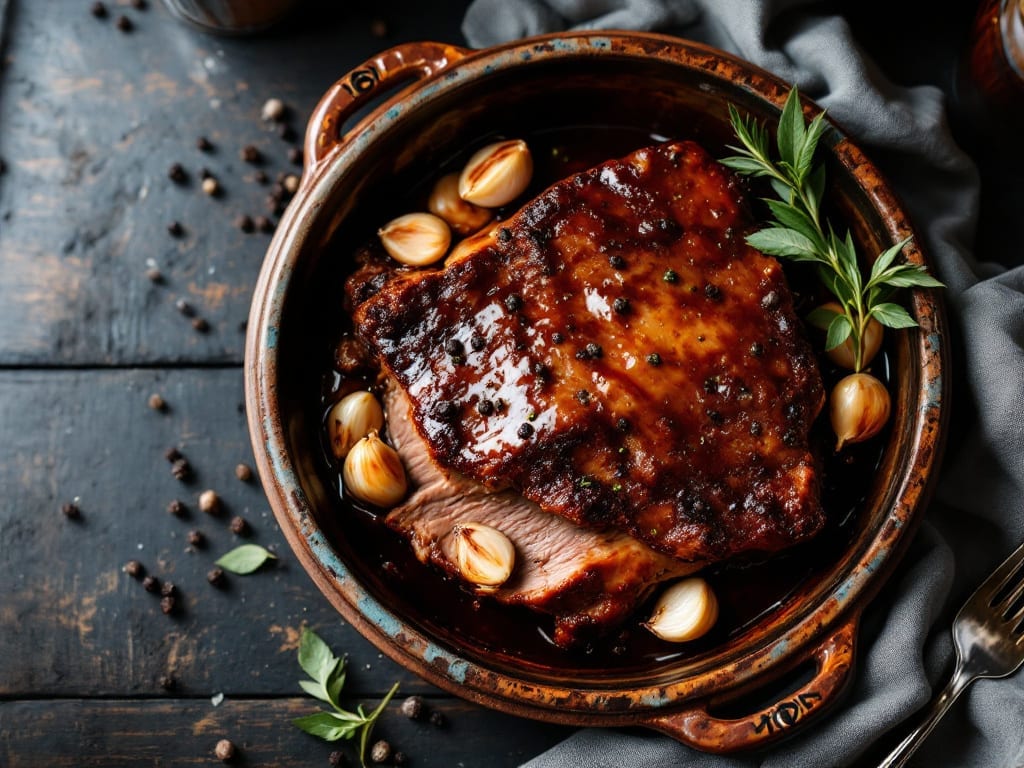
This traditional Jewish beef brisket recipe delivers the fall-apart tenderness and deep, aromatic flavors that define a classic Shabbat meal. The secret lies in slow-braising with red wine and a carefully balanced spice blend—black peppercorns, garlic, and bay leaves—that infuse the meat over hours.
I developed this method after years of perfecting the balance between richness and tradition, ensuring every bite carries the soul of a Jewish home table.
The process begins with a 3-day brine to tenderize the tough brisket, followed by a 3-hour slow cook in red wine and broth until the meat pulls apart effortlessly.
The wine reduces into a glossy, flavorful sauce that coats each slice, while the spices create layers of warmth without overpowering the beef’s natural depth. This isn’t just a recipe—it’s a foolproof technique that transforms a simple cut into a centerpiece worthy of celebration.
By the time you carve into this brisket, you’ll have tender, juicy slices with a crust that’s rich and slightly caramelized, all paired with a sauce that’s perfect for drizzling over matzo balls or roasted potatoes.
The aroma alone—spiced wine, garlic, and slow-cooked beef—will fill your home with the comforting scent of tradition. Serve it with classic sides like potato kugel or coleslaw for a meal that feels like a hug.
Whether you’re preparing for Shabbat, a holiday feast, or simply craving a taste of nostalgia, this brisket delivers restaurant-quality results with the authenticity of a family recipe.
The key is patience—letting the meat work with the spices and wine until it’s unmistakably tender. Let’s get started on creating a dish that tastes like home.
Ingredients for traditional jewish beef brisket
Sixteen ingredients transform tough brisket into Shabbat-worthy centerpiece with wine-braised tenderness.
| Ingredient | Amount | Notes |
|---|---|---|
| Beef Brisket 🥩 | 4 lb | Whole packer cut, 1 inch fat cap |
| Kosher Salt 🧂 | 1 ½ cups | Diamond Crystal preferred for dissolution |
| Brown Sugar 🍯 | ½ cup | Light or dark, packed |
| Black Peppercorns 🌶️ | 1 tbsp | Freshly cracked for optimal aroma |
| Garlic Cloves 🧄 | 8 whole | Peeled, smashed slightly |
| Fresh Bay Leaves 🌿 | 4 whole | Dried substitute at 1:2 ratio |
| Dry Red Wine 🍷 | 2 cups | Cabernet Sauvignon or Merlot |
| Beef Broth 💧 | 2 cups | Low-sodium, homemade preferred |
| Yellow Onion 🧅 | 1 whole | Medium, sliced into wedges |
| Carrots 🥕 | 4 whole | Medium, halved lengthwise |
| Olive Oil 🫒 | ¼ cup | Extra-virgin for searing |
| Fresh Thyme 🌿 | ¼ cup | Leaves only, stems removed |
| Honey 🍯 | 2 tbsp | Wildflower preferred for depth |
| Cornstarch 🌾 | 1 tbsp | For sauce thickening |
| Cold Water 💧 | 2 tbsp | For cornstarch slurry |
[recipe_ingredient_scaler]
The beef brisket is non-negotiable—look for a 4-pound packer cut with 1-inch fat cap at Whole Foods or your butcher. The fat renders during cooking, creating a silky sauce. Avoid lean cuts; marbling ensures moisture. For traditional authenticity, source from kosher-certified suppliers like Kosher.com or local Jewish markets. The Diamond Crystal kosher salt dissolves completely, unlike table salt—essential for the brine. If unavailable, use Morton kosher salt but increase by 20%. Store raw brisket in its original packaging on the bottom shelf of your fridge until ready to brine.
Substitutions require precision. Red wine can be swapped for beef broth (2:1 ratio) but loses depth—Cabernet Sauvignon or Merlot are ideal. Fresh bay leaves must be used; dried versions lack aromatic complexity. Thyme can be substituted with 1 tbsp dried thyme, but fresh delivers 3x the flavor. The cornstarch slurry is critical for sauce thickening—arrowroot powder works at a 1:1 ratio. For vegetarian adaptations, replace brisket with extra-firm tofu (marinated overnight) or mushroom blend (shiitake + portobello), though texture differs significantly. All spices should be freshly ground or toasted—pre-ground spices lose potency within 3 months.
Brined brisket keeps 5 days in the fridge; cooked brisket lasts 4 days refrigerated or 3 months frozen. The wine-braised sauce freezes exceptionally well—portion into ice cube trays for single-use applications. For Shabbat preparation, complete the brisket 2 days prior and reheat gently with 1 tbsp broth per pound. The cornstarch slurry should be made just before adding to prevent thickening prematurely. Store all dried spices in airtight containers away from light to preserve aromatic oils for up to 12 months. The fat cap should remain intact during cooking—trim only after resting to avoid moisture loss.
Why You’ll Love This Recipe
- Foolproof Seasoning: I swear by this combo—just kosher salt, brown sugar, and cracked peppercorns rubbed right into the meat. No fancy marinades, no guesswork. The brisket practically seasons itself while it rests.
- Sweet-Savory Magic: That brown sugar isn’t just for looks—it caramelizes into a sticky, glossy crust while the garlic cloves roast into fragrant, buttery pockets. One bite and you’ll understand why this feels like a hug in food form.
- Leftovers Heaven: Between us, the best part is the next-day slices. The brisket gets even more tender, and those crispy edges? Perfect for sandwiches, salads, or just eating straight from the pan with a fork. (Yes, even on a Tuesday night.)
- Weekend-Worthy Effort: Honestly, it’s the kind of dish that makes you look like a hero without actually slaving away. Set it and forget it—just check the temp, wrap it in foil, and let the oven do the work while you sip coffee or pour wine.
Step-by-step instructions for spiced wine-braised beef brisket
This method delivers a brisket with deep, aromatic flavors and melt-in-your-mouth tenderness.
Prepare the Brisket with Traditional Dry Cure
Begin by trimming the beef brisket to remove any excess fat, leaving a 1-inch fat cap intact for moisture during cooking. In a large mixing bowl, combine the 1.5 cups kosher salt, 0.5 cup brown sugar, and 1 tablespoon freshly cracked black peppercorns. This dry cure is essential for both flavor penetration and preserving moisture.
Work the spice mixture into the brisket by hand, pressing it firmly into all surfaces—including the fat cap—and into the cavity. The salt will begin drawing out moisture immediately, so place the brisket on a wire rack set over a baking sheet. Cover loosely with plastic wrap and refrigerate for 24 hours, turning occasionally. This curing process ensures even seasoning and prevents surface drying during the long braise.
Sear the Brisket for Deep Flavor Foundation
Remove the brisket from the refrigerator 1 hour before cooking to allow it to come to room temperature. Heat a Dutch oven over medium-high heat and add 0.25 cup olive oil. Once shimmering, place the brisket fat-side down and sear undisturbed for 8-10 minutes until the fat renders and the surface develops a deep golden-brown crust. This step creates the Maillard reaction that forms complex flavors.
Flip the brisket and sear the opposite side for another 6-8 minutes. Remove the brisket and set it aside. In the same Dutch oven, add the 1 whole yellow onion (sliced into wedges) and 4 whole carrots (halved lengthwise). Sear these vegetables for 5 minutes until lightly caramelized, then transfer them to a plate. The residual fond in the pot will form the base of your braising liquid.
Build the Braising Liquid with Wine and Aromatics
Return the Dutch oven to the stove and add the 8 whole garlic cloves (smashed), 4 whole fresh bay leaves, and 0.25 cup fresh thyme leaves. Pour in the 2 cups dry red wine, scraping up any browned bits from the bottom. Bring to a simmer and reduce by half—5-7 minutes—until the liquid is syrupy and aromatic. This reduction intensifies the wine’s flavor and forms the foundation of your sauce.
Add the 2 cups beef broth and 2 tablespoons honey, stirring to combine. The honey adds subtle sweetness that balances the acidity of the wine and enhances the brisket’s natural richness. Return the seared brisket, onion, and carrots to the pot, fat-side up. The vegetables will absorb flavors while the brisket braises.
Braise Until Fork-Tender with Low Heat
Cover the Dutch oven and transfer it to a preheated 300°F oven. Braise for 3 hours, then carefully flip the brisket and add 0.5 cup fresh water to the pot. Return to the oven and continue cooking for another 2-3 hours, or until the brisket reaches an internal temperature of 200-205°F and a fork slides in effortlessly. This low-and-slow method breaks down connective tissue, yielding melt-in-your-mouth texture.
Check the brisket periodically, adding more water or broth if the liquid reduces too much. The goal is to maintain a moist environment that keeps the meat tender. The fat cap should render into the braising liquid, creating a rich, flavorful sauce. If the liquid becomes too thin, simmer uncovered for 10 minutes to reduce it slightly.
Thicken the Sauce and Rest the Brisket
Once the brisket is fork-tender, remove it from the pot and tent loosely with foil. Strain the braising liquid through a fine-mesh sieve into a clean saucepan, discarding the solids. In a small bowl, whisk together the 1 tablespoon cornstarch and 2 tablespoons cold water to form a slurry. Gradually whisk the slurry into the strained liquid, simmering over medium heat until the sauce thickens to a glossy consistency—3-5 minutes. This step ensures a velvety sauce that clings to the brisket.
Slice the brisket against the grain into 0.5-inch thick pieces and serve immediately, spooning the thickened sauce over the top. The brisket should be rich, aromatic, and effortlessly tender, with a deep mahogany crust from the searing. Each bite should deliver layers of wine-braised richness, caramelized onions, and thyme-infused depth—true to traditional Jewish braising techniques.
Pro Tips For Making Traditional Jewish Beef Brisket
- Trim the Fat Cap: The thick fat layer on brisket is your friend, but don’t let it turn into a greasy mess. Use a sharp knife to trim it down to about ¼-inch—enough to render flavor but not so much it pools and smokes. I learned this the hard way when my first batch turned into a sad, greasy puddle instead of crispy perfection.
- Salt the Night Before: Brisket needs time to absorb that kosher salt like a sponge. Toss it with salt, sugar, and pepper at least 12 hours ahead—overnight is ideal. This isn’t just for flavor; it’s what makes the crust form properly. (Yes, even if you’re impatient like me.)
- Start Hot, Then Slow: Don’t creep up to temperature—blast that brisket with high heat (450°F) for the first 20 minutes to sear the outside. Then drop to 275°F and let it cook low and slow. Rushing the sear means a bland crust; dragging it out too long means dry meat. Balance is everything.
- Baste with Garlic Oil: Skip the dry rub basting—it’s boring. Every 45 minutes, brush the brisket with melted butter, minced garlic, and a splash of water. The garlic adds depth, and the moisture keeps the surface sticky for that perfect crust. (Your future self will thank you.)
Storing and reheating this dish
Refrigerator Storage
After your brisket reaches 200-205°F and rests for 1 hour, transfer any leftovers to an airtight glass container like Pyrex or Le Creuset. Store in the fridge at 40°F or below for up to 4 days.
The wine-braised sauce will thicken further overnight, intensifying flavors. I always portion the brisket into quart-sized containers for easy reheating—this prevents drying out during storage. 🥫
Freezer Preservation
For long-term storage, freeze the brisket in heavy-duty freezer bags with 1 inch headspace to prevent freezer burn. Seal tightly and label with the date—this keeps brisket at peak quality for 3 months.
Thaw overnight in the fridge before reheating. The sauce freezes beautifully too; portion into ice cube trays for single-use applications like drizzling over matzo balls or potatoes. 🧊
Stovetop Reheating
My preferred method is stovetop reheating to maintain texture. Place brisket slices in a heavy-bottomed skillet with 2 tablespoons beef broth per pound. Cover and heat over medium-low for 10-12 minutes, stirring occasionally.
The broth prevents drying while the sauce reabsorbs moisture. For extra richness, add 1 tablespoon red wine to the pan during reheating. 🔥
Oven Reheating
Preheat oven to 300°F and place brisket slices on a wire rack over a baking sheet. Cover loosely with foil and reheat for 15-20 minutes until reaching 165°F internal temperature.
The rack ensures even heating without steaming. Add 1 tablespoon broth to the baking sheet to prevent drying. This method works best for large batches like Shabbat leftovers. 🍲
Sauce Revival
If your sauce thickened too much during storage, revive it by whisking in 1 tablespoon cold water at a time until reaching a glossy consistency. For extra depth, add 1 teaspoon red wine or 1 teaspoon honey.
I often reheat the sauce separately over medium heat for 3-5 minutes while the brisket warms up. This ensures both components reach 165°F safely. 💫
Serving Leftovers
Use leftover brisket in sandwiches with Swiss cheese and horseradish cream, or shred it for brisket tacos with pickled onions. The wine-braised sauce pairs perfectly with potato latkes or farfel.
For a complete meal, serve with roasted carrots and garlic bread—just reheat everything together in the oven for 10 minutes at 350°F. 🍽️
Nutrition facts
Frequently asked questions
Why is a 3-day brine essential for traditional Jewish brisket?
The extended brine transforms tough brisket into tender, flavorful meat by breaking down connective tissue and allowing spices to penetrate deeply. The kosher salt and brown sugar combination creates an osmotic balance that draws moisture into the meat while the black peppercorns add aromatic depth. This method mirrors traditional Jewish techniques that prioritize slow, flavorful preparation for special occasions.
Can I substitute red wine with another liquid in this recipe?
While red wine adds depth and acidity that balances the richness, you can substitute with 2 cups beef broth or apple cider vinegar + broth (1:3 ratio). For authenticity, use dry Cabernet Sauvignon or Merlot—avoid sweet wines as they’ll overpower the brisket. The wine’s reduction creates a glossy sauce that’s central to this dish’s character.
What’s the best way to test if brisket is fully tender?
Use the fork test: Insert a fork into the thickest part—it should slide in effortlessly with no resistance. The internal temperature should reach 200-205°F, where collagen fully breaks down. The meat should also pull apart easily when you gently tug with tongs. Overcooking beyond this point risks drying out the brisket.
How do I prevent the brisket from drying out during cooking?
Keep the brisket submerged in liquid by adding 0.5 cup water halfway through cooking and maintaining a covered pot. The 1-inch fat cap should remain intact—never trim it before cooking. Basting occasionally with the braising liquid also helps. If the oven feels dry, place a water pan on the lower rack. The goal is moist heat throughout the 5-6 hour process.
What are the best sides to serve with this wine-braised brisket?
Classic pairings include potato kugel, matzo ball soup, or roasted carrots with honey glaze. For a lighter option, try coleslaw with apple cider vinaigrette or farfel with raisins. The wine-braised sauce also complements egg noodles or crusty rye bread for soaking up flavors. These sides balance the brisket’s richness while honoring Jewish culinary traditions.

Trained in classic French technique but raised on slow-cooked ribs and spicy rubs, she blends culinary skill with smoke and soul.
- Beef Brisket Rolls Recipe: Flaky Layers and Smoky Sweet Filling - October 15, 2026
- Masterbuilt Smoker Beef Brisket Recipe: Bark-To-Meat Ratio Hack for Unmatched Flavor - October 15, 2026
- Costco Beef Brisket Recipe: Low-and-Slow Masterpiece With Molasses-Kissed Crust - October 15, 2026