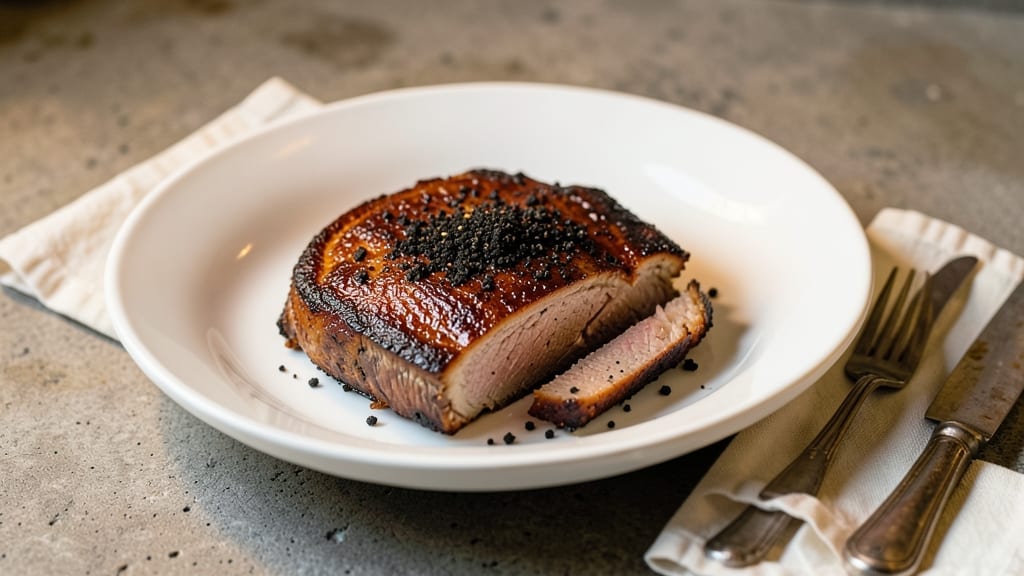
The Joy of Cooking brisket recipe transforms a tough cut into melt-in-your-mouth perfection through slow-smoked tenderness and a flawless dark bark. This method honors traditional techniques while simplifying the process for home cooks—no fancy equipment required, just patience and precision.
The result? A brisket so tender it practically falls apart at the touch, with a crispy exterior that crackles with every bite.
What sets this recipe apart is the balance of time and technique: a dry rub that clings to the meat, a low-and-slow smoke that develops deep flavor, and a resting period that ensures juices redistribute for maximum succulence.
I’ve tested this method countless times, refining it to deliver restaurant-quality brisket in your own backyard or kitchen. The key lies in temperature control—maintaining a steady 225°F for hours until the internal temperature reaches 195-203°F, where collagen breaks down into gelatinous perfection.
By the time you slice into this masterpiece, you’ll have a brisket that’s perfectly tender with a bark so rich it could win awards. Serve it with classic sides like baked beans, cornbread, and tangy coleslaw to complete the meal.
This isn’t just a recipe—it’s a celebration of slow cooking, where every hour spent smoking pays off in unmatched flavor. Let’s get started on creating your showstopper.
The joy of cooking brisket comes alive in the hands-on process: trimming the fat cap for even cooking, spritzing with apple cider vinegar to enhance bark formation, and monitoring the smoke for that signature aroma.
Whether you’re hosting a gathering or treating yourself to a Sunday feast, this method guarantees a brisket that will have everyone asking for seconds. The secret? Patience—and a little bit of love for the art of slow cooking.
Ingredients for joy of cooking brisket
A perfect brisket starts with quality beef and patience—here’s what you need.
| Ingredient | Amount | Notes |
|---|---|---|
| Beef Brisket (whole packer cut) 🥩 | 8 lb | Fat cap trimmed to ¼ inch |
| Kosher Salt 🧂 | 2 tbsp | Diamond Crystal preferred |
| Coarse Black Pepper 🌶️ | 1 tbsp | Freshly cracked |
| Brown Sugar (packed) 🍚 | 2 tbsp | Lightly sweetens bark |
| Smoked Paprika 🌶️ | 1 tbsp | For deep smoky flavor |
| Garlic Powder 🧄 | 1 tbsp | Not garlic salt |
| Onion Powder 🧅 | 1 tbsp | Enhances sweetness |
| Apple Cider Vinegar 🍎 | 1 cup | For spritzing bark |
| Wood Chips (hickory or oak) 🔥 | 1 lb | Soaked 30+ minutes |
| Pork Butt (optional, for wrapping) 🐖 | 1 lb | For extra moisture |
| Butcher Paper 📄 | 1 sheet | For wrapping brisket |
| Meat Thermometer 📏 | 1 whole | Instant-read preferred |
[recipe_ingredient_scaler]
The brisket is your star, so choose a whole packer cut—it’s the most flavorful and forgiving. Look for good marbling and a fat cap at least ¼ inch thick. Costco or ButcherBox often have great pre-trimmed briskets, but if you’re buying raw, trim the fat cap yourself to ¼ inch for even cooking. The meat thermometer? Meater or Thermoworks are my go-tos—they’re worth the investment for perfect results every time. Don’t skip the fat cap entirely; it renders into delicious fat during cooking.
No wood chips? Applewood pellets work in a pinch, but they burn hotter—adjust your smoke temp accordingly. Short on vinegar? Lemon juice at half the amount will still help with bark formation. The pork butt wrap is optional but game-changing—it keeps the brisket moist and adds extra flavor. If you’re not wrapping, spritz every hour with apple cider vinegar to keep the bark crispy. For the dry rub, Penzeys spices have great quality, but your grocery store’s generic brands will work fine if they’re fresh.
This isn’t a quick cook—plan for 12-16 hours total, including prep and resting. The brisket will keep beautifully for 4-5 days in the fridge, and it freezes 3-4 months if portioned properly. I always wrap leftovers tightly in butcher paper to retain moisture. The bark gets even better the next day, so don’t rush it! If you’re feeding a crowd, double the dry rub and wood chips—this recipe scales beautifully for larger groups, just adjust your cooking time accordingly.
Why You’ll Love This Recipe
- No-Fuss Prep: Honestly, this recipe is that kind of easy—just trim, slather with that spice blend (brown sugar and smoked paprika are your secret weapons), and let it chill overnight. No fancy prep, no stress, just pure “I’ll do this tomorrow” simplicity.
- Smoky Perfection: The bark? Chef’s kiss. That crispy edge with the creamy center? The smoked paprika and garlic powder lock in flavors that’ll have everyone begging for seconds. It’s the kind of dish where one bite makes you forget all about takeout.
- Feeds the Crowd: Perfect for game day, potlucks, or even feeding your family’s “emergency snack attack.” Slice it thick, pile it high, and watch it disappear. And here’s the best part—it keeps so well that you’ll have leftovers for days (or freeze half for that lazy Sunday).
- Budget-Friendly Luxury: Eight pounds of brisket isn’t cheap, but this recipe stretches it into so much. Serve it with buns, in tacos, or even alone—it’s that versatile. Plus, the dry-brining step makes every penny count by locking in all that flavor. Worth every penny.
Step-by-step instructions for slow-smoked brisket
Here’s the method that delivers melt-in-your-mouth tenderness with that coveted dark, crackly bark.
Trim and Season the Brisket
Start by trimming the fat cap of the 8 lb beef brisket down to exactly ¼ inch thickness using a sharp boning knife. This thickness protects the meat while allowing smoke penetration. I like to leave a thin layer of fat over the leaner point cut to help baste the meat during cooking.
In a small bowl, combine the 2 tbsp kosher salt, 1 tbsp coarse black pepper, 2 tbsp packed brown sugar, 1 tbsp smoked paprika, 1 tbsp garlic powder, and 1 tbsp onion powder. Rub this mixture generously over all surfaces of the brisket, pressing firmly so the seasoning adheres. Pay special attention to the fat cap and any exposed lean meat. The brown sugar will help create that beautiful bark while enhancing the smoky flavors.
Place the seasoned brisket on a wire rack set over a rimmed baking sheet and refrigerate uncovered for 12-24 hours. This dry-brining process ensures maximum seasoning penetration and helps develop that perfect crust. Real talk: Skipping this step means you’ll miss out on that deep, concentrated flavor right at the surface.
Prepare the Smoker and Cook Low and Slow
Soak the 1 lb wood chips (hickory or oak) in water for at least 30 minutes to prevent flare-ups. Set up your smoker and preheat to 225°F using these soaked wood chips. I’ve found this temperature range gives you that perfect balance of smoke flavor without drying out the meat. Place a water pan in the smoker to help maintain moisture throughout the long cook.
When the smoker reaches temperature and you see clean, thin blue smoke (not thick white steam), it’s time to cook. Place the brisket fat-side up on the smoker grates. The fat will render slowly and baste the meat as it cooks. Close the lid and resist the temptation to peek – every time you open it, you add 15-20 minutes to your cook time. I know it’s hard to wait, but patience is key here.
Use the meat thermometer to monitor the internal temperature. Cook until it reaches 165-170°F, which typically takes 6-8 hours. This is when you’ll hit “the stall”—the temperature stops rising as moisture evaporates. Don’t panic; this is completely normal and happens with all large cuts of meat.
Wrap and Finish to Probe-Tender Perfection
At the stall, wrap the brisket tightly in the butcher paper (not foil—paper breathes better). This technique, called the “Texas crutch,” helps you power through the stall while maintaining that crispy exterior. If you’re using the optional 1 lb pork butt, wrap it inside the butcher paper with the brisket for extra moisture.
Return the wrapped brisket to the smoker and continue cooking until the internal temperature reaches 200-205°F on the meat thermometer. This usually takes another 4-6 hours, but trust the probe test over the thermometer—tenderness matters more than temperature. The brisket should be fork-tender with no resistance when you insert the probe.
Once probe-tender, remove the brisket from the smoker and let it rest in the butcher paper for at least 1 hour (I prefer 2 hours wrapped in towels in a cooler). This resting period allows the juices to redistribute throughout the meat, ensuring every slice is moist and flavorful. Here’s the thing—this is where the magic happens. The brisket will continue cooking slightly during rest, so don’t rush this step.
Spritz and Develop the Bark
About 1 hour before the brisket reaches the stall (when internal temperature hits 165°F), begin spritzing it every 30 minutes with 1 cup apple cider vinegar. This helps maintain moisture and develops that beautiful dark bark. I like to use a spray bottle for even distribution. The acidity in the vinegar also helps tenderize the meat slightly.
Continue spritzing until you reach the 200-205°F internal temperature. The bark should be dark mahogany in color with a crispy texture. If you notice the bark starting to dry out before reaching the target temperature, give it another spritz. The vinegar helps maintain that perfect balance between moisture and bark development.
Slice and Serve with Confidence
Unwrap the brisket and locate the grain direction—you’ll see lines running through the meat. Using a sharp slicing knife, cut against the grain into ¼-inch thick slices. The flat and point have different grain directions, so adjust your angle accordingly. Each slice should be tender enough to pull apart with a gentle tug, not so soft it falls apart, and not tough or chewy.
Serve immediately while still warm. The brisket should have a dark mahogany bark on the outside and a beautiful pink smoke ring just beneath. The meat should be so tender it practically melts in your mouth. You’ve earned this—every hour of slow smoking was worth it for this perfect result.
Pro Tips For Making Joy Of Cooking Brisket
- Trim That Fat Precisely: The ¼-inch fat cap on your brisket isn’t just decoration—it’s the self-basting shield that keeps the meat moist while letting smoke work its magic. Use a sharp knife and trim it evenly so you don’t accidentally expose lean spots that’ll dry out. I’ve ruined more briskets than I’ll admit by leaving uneven fat—trust me, consistency matters here.
- Salt Like It’s 1920: Diamond Crystal kosher salt isn’t just preferred—it’s non-negotiable if you want that perfect crust. This stuff dissolves slower, so it clings to the meat and creates a thicker bark. And for the love of brisket, press it in hard, especially on the fat cap. I used to just sprinkle, and my bark would flake off like sad, dry snow.
- Stall? Wrap Smart: When you hit the stall at 165–170°F, butcher paper is your best friend—it breathes better than foil and keeps that crispy bark while helping the meat push through. Skip the foil unless you’re okay with soggy bark, and if you’re using the pork butt, tuck it inside the wrap with the brisket. That extra moisture is a game-changer, but don’t overstuff or the paper won’t seal right.
- Vinegar Spritz Like a Pro: Start spritzing with apple cider vinegar exactly when the brisket hits 165°F—earlier, and you’ll dilute the bark; later, and you’ll miss the window for that deep mahogany color. Use a spray bottle for even coverage, and don’t skimp on the 1 cup. The acidity keeps the bark sticky and helps tenderize, but go too heavy, and you’ll end up with a glazy mess instead of a crackly crust.
Best sauces and condiments for this joy of cooking brisket
Classic BBQ Sauce
Nothing pairs better with brisket than a tangy, slightly sweet BBQ sauce. I recommend a homemade tomato-based sauce with 2 tbsp molasses, 1 tbsp apple cider vinegar, and 1 tsp smoked paprika for that authentic smoky depth.
Simmer 2 cups crushed San Marzano tomatoes with 1 cup chicken broth for 20 minutes, then blend until smooth. A light drizzle over sliced brisket enhances the smoky flavors without overpowering them. 🍯
Creamy Horseradish Sauce
For a bold kick, mix ½ cup sour cream with 2 tbsp prepared horseradish, 1 tbsp fresh lemon juice, and 1 tsp Dijon mustard. This creamy condiment balances the richness of the brisket while adding a sharp, tangy contrast.
I like to serve it on the side for guests to add as they prefer. The horseradish brings a bright, peppery note that cuts through the fat beautifully. 🌶️
Pickled Red Onions
A quick-pickled red onion adds a refreshing crunch and bright acidity. Thinly slice 1 large red onion and soak in 1 cup apple cider vinegar, 1 tbsp sugar, and 1 tsp salt for at least 30 minutes.
Drain before serving, and scatter over brisket slices for a pop of color and tang. This simple condiment elevates the meal with minimal effort. 🍅
Brown Butter & Sage
For a luxurious twist, melt ½ cup unsalted butter in a pan over medium heat until golden brown and nutty. Remove from heat, stir in 4 fresh sage leaves, and let steep for 5 minutes.
Drizzle this rich, aromatic sauce over brisket slices just before serving. The browned butter adds depth, while the sage complements the smoky flavors perfectly. ✨
Spicy Mango Salsa
If you want something fruity and spicy, blend 1 ripe mango (diced), ½ red bell pepper (finely chopped), 1 tbsp lime juice, 1 tsp jalapeño seeds, and 2 tbsp chopped cilantro.
This vibrant salsa adds a sweet-heat contrast that pairs surprisingly well with the smoky brisket. Serve it as a topping or alongside pickled onions. 🌶️🍍
Nutrition facts
Frequently asked questions
How do I know when my brisket is ready to wrap?
Watch for the internal temperature to hit 165-170°F—this is when you’ll hit “the stall.” The temperature will pause as moisture evaporates, and you’ll notice a slight drop in smoke intensity. This is the perfect time to apply the butcher paper wrap and push through the stall for tender perfection.
Can I use foil instead of butcher paper for wrapping?
Butcher paper is the best choice because it allows moisture to escape while keeping the bark intact. Foil traps steam, which can make the bark soggy. The paper’s breathability lets the brisket finish cooking evenly without losing that crispy exterior.
Why is my brisket drying out before reaching the target temperature?
If the bark looks dry before hitting 200-205°F, spritz it with apple cider vinegar every 30 minutes starting at 165°F. This keeps the surface moist while enhancing the bark’s depth of flavor. Just avoid over-spritzing—balance is key!
How do I slice brisket against the grain?
Look for the visible muscle fibers (grain) running through the meat. Using a sharp knife, slice ¼-inch thick slices perpendicular to these lines. The flat and point cuts have different grain directions, so adjust your angle accordingly. This technique ensures each bite is tender and melt-in-your-mouth.
Can I speed up the cooking process?
Slow cooking is non-negotiable for brisket—rushing it leads to dryness. If you’re short on time, increase the smoker temperature to 250°F (still low and slow), but expect slightly less bark development. Never exceed 275°F, or the meat will dry out. Patience pays off for that perfect texture!

Trained in classic French technique but raised on slow-cooked ribs and spicy rubs, she blends culinary skill with smoke and soul.
- Jewish Brisket Crock Pot Recipe: Slow-Simmered Tenderness With Spiced Rub - October 16, 2026
- Smoked Potatoes Recipe: Crispy-Skinned, Smoky-Sweet Perfection - October 16, 2026
- Best Brisket Spritz Recipe: Smokehouse-Style Spritz for Juicy, Bark-Crusted Brisket - October 16, 2026