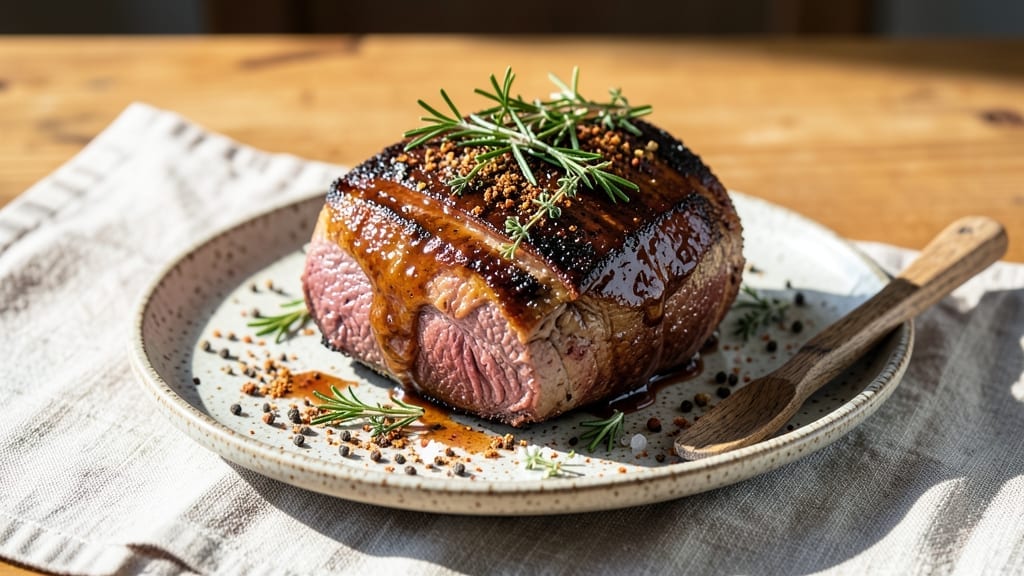
Mastering prime rib roast on a smoker transforms this luxurious cut into a showstopping centerpiece with a smoky crust and fall-apart tenderness that rivals high-end steakhouses. The secret lies in precise temperature control, strategic seasoning, and patience—because great smoked prime rib isn’t rushed.
I’ve perfected this method over years of trial and error, learning which wood pairs best and how to balance smoke flavor without overpowering the beef’s natural richness.
This recipe begins with a dry brine that enhances tenderness and flavor penetration, followed by a rub of coarse salt and aromatic spices that develop into a flavorful bark during smoking.
Using hickory or oak wood creates that classic smoky depth, while maintaining a steady 225°F ensures even cooking without drying out the meat. The result? A roast so tender it practically melts in your mouth, with a crust that carries layers of wood-fired flavor.
What sets this apart is the au jus—a rich, smoky pan sauce made from the roast’s natural juices and rendered fat, elevated with a splash of red wine and beef broth.
Served alongside crisp roasted potatoes or buttery green vegetables, this becomes a weekend-worthy feast that impresses even the most discerning guests. Every step is designed to deliver restaurant-quality results at home.
The key to success is precision: monitoring internal temperature, resting properly, and carving against the grain for perfect slices. Whether you’re hosting a holiday gathering or treating yourself to a special meal, this recipe delivers a prime rib experience that’s worth every minute of wait time.
Let’s get started on creating your most impressive roast yet.
Ingredients for prime rib roast smoker
Precision-cut beef and aromatic spices create the foundation for this luxurious smoker roast.
| Ingredient | Amount | Notes |
|---|---|---|
| Prime Rib Roast (Bone-In) 🥩 | 6 lb | Center-cut, 1.5-2 inches thick |
| Kosher Salt (Coarse-Grained) 🧂 | ½ cup | Diamond Crystal preferred |
| Freshly Ground Black Pepper 🌶️ | 2 tbsp | Cracked peppercorns preferred |
| Granulated Garlic 🧄 | 2 tbsp | Minced fresh preferred |
| Smoked Paprika 🌶️ | 1 tbsp | High-quality, not pre-mixed |
| Dried Thyme 🌿 | 1 tbsp | French thyme preferred |
| Dried Rosemary 🌿 | 1 tbsp | Fresh sprigs for garnish |
| Hickory Wood Chips 🌳 | 2 cups | Unsoaked, food-grade |
| Oak Wood Chips 🌳 | 1 cup | Unsoaked, food-grade |
| Red Wine 🍷 | ½ cup | Bold Cabernet Sauvignon |
| Beef Broth 💧 | ½ cup | Low-sodium, homemade preferred |
| Unsalted Butter 🧈 | ½ cup | Cold, cubed for sauce |
| Fresh Rosemary Sprigs 🌿 | 4 whole | For garnish and aroma |
[recipe_ingredient_scaler]
The prime rib roast demands premium quality—look for center-cut, bone-in with at least 1.5 inches of fat cap for moisture. Snelling or Omaha Steaks offer excellent options, or check your local butcher for dry-aged cuts. The hickory and oak wood chips should be food-grade and unsoaked—soak only if your smoker requires it. For the dry brine, use Diamond Crystal kosher salt (it’s coarser and dissolves better). Freshly ground black pepper and minced garlic elevate the rub beyond basic seasoning—don’t substitute pre-ground spices. The smoked paprika adds depth without overpowering the beef’s natural richness.
No hickory wood? Pecan or cherry wood chips work as substitutes, though the flavor profile shifts slightly. Running low on red wine? Beef broth with a splash of balsamic vinegar mimics the acidity. The French thyme and rosemary are non-negotiable for authenticity—dried works, but fresh sprigs tied to the roast during smoking infuse the fat with aroma. For the au jus, low-sodium beef broth prevents salt overload, and cold butter cubes emulsify beautifully into the sauce. If you’re short on time, pre-minced garlic suffices, but freshly minced garlic delivers superior flavor.
Store the prime rib roast uncovered on a wire rack in the fridge for 12-24 hours before smoking to enhance tenderness. The wood chips keep in an airtight container for up to 6 months in a cool, dry place. Once smoked, the roast rests 30-45 minutes before carving—never skip this step. The au jus reheats beautifully and can be stored for 3-4 days in the fridge or 3 months frozen. For leftovers, reheat slowly to preserve moisture, and re-garnish with fresh rosemary before serving.
Why You’ll Love This Recipe
- I’ll be real: smoking prime rib sounds intimidating, but this recipe is foolproof. The low-and-slow method means no babysitting, and the butcher paper wrap keeps things tender without soggy bark. Plus, the wood chips last forever, so you’re not buying new ones every time. Win-win.
- No Fuss Flavor Bomb: That dry rub—half a cup of kosher salt, black pepper, garlic, and smoked paprika—does all the work while you relax. Just pat it on, let it sit, and forget about it until the smoker does the heavy lifting. The result? A bark so crispy it’ll make your guests think you spent hours slaving over a hot grill.
- Smoke Meets Sophistication: Between the hickory and oak chips and that red wine-butter sauce, this isn’t just a meal—it’s an experience. The smoky depth pairs perfectly with the creamy reduction, and honestly, the way the fat renders while smoking? Chef’s kiss. Even my picky uncle (who only eats “safe” food) asked for seconds.
- Leftovers That Shame No One: Cook once, eat twice. That prime rib roast? It’s so good, you’ll have slices for lunches the next week. Reheat gently, drizzle with extra sauce, and boom—you’ve got a no-effort meal that still feels special. My kids even packed it for school.
Step-by-step instructions for smoked prime rib roast
Master this low-and-slow technique for a prime rib that delivers both smoky crust and melt-in-your-mouth tenderness.
Prepare the Dry Rub and Season the Roast
In a small bowl, combine the ½ cup kosher salt (coarse-grained), 2 tablespoons freshly ground black pepper, 2 tablespoons granulated garlic, 1 tablespoon smoked paprika, 1 tablespoon dried thyme, and 1 tablespoon dried rosemary. Mix thoroughly until the spices are evenly distributed and the salt crystals are fully coated.
Pat the 6 lb prime rib roast (bone-in) completely dry with paper towels—this is critical for developing that coveted bark. Apply the dry rub generously over the entire surface of the roast, pressing firmly so it adheres. Use about ⅔ of the rub mixture on the exterior and save the remaining ⅓ for the cavity. Stuff the cavity with the remaining rub and insert the 4 fresh rosemary sprigs for aroma. Let the roast sit at room temperature for 1 hour before smoking to ensure even cooking.
Set Up the Smoker for Low-and-Slow Cooking
Combine the 2 cups hickory wood chips and 1 cup oak wood chips in the smoker’s wood chip tray. Soak the wood chips in water for 30 minutes if your smoker requires it, or use them dry if your model specifies unsoaked wood. Preheat the smoker to 225°F and maintain a steady temperature—this is where patience pays off. The smoke should be light and blue, not thick and white, indicating proper combustion.
Once the smoker reaches 225°F and the smoke is clean, place the seasoned prime rib roast on the smoker grates, fat-side up. This position allows the rendered fat to baste the meat as it cooks, contributing to both moisture and flavor. Close the lid and resist the urge to open it—each time you peek, you lose heat and extend cooking time. Smoke the roast for 4-5 hours, or until the internal temperature reaches 145°F on a meat thermometer inserted into the thickest part of the roast, away from bone.
Wrap and Continue Cooking to Fall-Apart Tenderness
At the 145°F mark, the roast will begin to “stall,” where the internal temperature plateaus due to evaporative cooling. This is the moment to wrap the prime rib in butcher paper (not aluminum foil)—the paper allows the bark to develop while trapping moisture for tender results. Secure the wrap tightly with twine or kitchen foil to prevent steam from escaping. Return the roast to the smoker and continue cooking until the internal temperature reaches 195-203°F, a range that guarantees fall-apart tenderness.
This final stage typically takes 3-4 additional hours, depending on the size of your roast. The bark should be deep mahogany with a slight char, while the meat will pull apart with minimal resistance. Remove the roast from the smoker and let it rest on a cutting board for 30-45 minutes before slicing. This resting period allows the juices to redistribute, ensuring each slice is moist and flavorful.
Create the Red Wine and Beef Broth Sauce
While the roast rests, prepare the sauce by combining the ½ cup red wine and ½ cup beef broth in a saucepan. Bring to a gentle simmer over medium heat and reduce by half, which takes about 5-7 minutes. The sauce should thicken slightly and develop a rich, smoky aroma. Remove from heat and whisk in the ½ cup unsalted butter, one cube at a time, until fully incorporated. The sauce should coat the back of a spoon with a velvety consistency.
Strain the sauce through a fine-mesh sieve to remove any impurities, then pour it into a warm serving dish. The sauce is now ready to drizzle over the sliced prime rib, enhancing its natural flavors with a glossy, aromatic finish. Serve immediately with the sliced roast, garnished with any remaining fresh rosemary sprigs for a touch of elegance.
Pro Tips For Making Prime Rib Roast Smoker
- Preheat Smoker Right: Don’t rush this—let the smoker hit 225°F with clean, blue smoke before loading the roast. I used to load early, and the uneven heat gave me a roast that was smoked in patches instead of all over. That fat-side-up position only works if the smoke is steady from the start.
- Salt the Cavity Too: Stuffing ⅓ of the rub inside the cavity isn’t just for looks—it flavors the meat from the inside out. Skip this, and you’ll end up with a dry core. Press that rub in there like you’re tucking in a blanket, and don’t forget the 4 fresh rosemary sprigs for that extra aroma punch.
- Wrap in Butcher Paper: Aluminum foil traps steam like a sauna and kills your bark. Butcher paper lets the crust form while keeping the meat moist—exactly what you want at 145°F. Secure it tight with twine so it doesn’t unravel mid-cook, or you’ll be chasing a runaway roast.
- Reduce Wine Slowly: Simmer that ½ cup red wine and beef broth on medium heat—not high—so it reduces evenly without burning. I once rushed it, and the sauce turned bitter. Lower the heat if it boils hard, and whisk in that cold butter one cube at a time, or you’ll end up with butter blobs instead of a silky sauce.
Serving suggestions for prime rib roast smoker
Plating with Elegance
The star of the show deserves a presentation that mirrors its grandeur. I like to slice the prime rib ¼-inch thick against the grain, arranging the slices fan-style on a large platter.
Use a wooden serving board or slate platter for rustic charm, or a sleek ceramic dish for a refined touch. Drizzle the red wine au jus artistically over the top, letting it cascade down the sides for visual appeal. 💫
Side Dish Pairings
Crispy roasted garlic parmesan potatoes balance the richness of the prime rib perfectly. Toss 1.5 lbs baby potatoes with 2 tbsp olive oil, 2 minced garlic cloves, 1 tsp rosemary, and ½ tsp salt, then roast at 400°F for 30 minutes.
For a lighter option, creamy mashed cauliflower with chives adds color and contrast. 🥔
Garnish Like a Pro
A final touch makes all the difference. Scatter fresh rosemary sprigs and thinly sliced black truffles (if available) over the roast for instant luxury. For a pop of color, add microgreens or edible flowers like nasturtiums.
I also love sprinkling flaky sea salt like Maldon over the au jus for texture. These small details elevate the dish from impressive to unforgettable. ✨
Serving the Au Jus
Serve the au jus in a separate ceramic gravy boat or small sauce dish so guests can drizzle to taste. For extra flair, heat the sauce gently before serving to enhance its aroma.
If you prefer a thicker sauce, strain out any remaining bits and reduce it by another 2 minutes on low heat. This ensures every bite is complemented by the rich, smoky sauce. 🍷
Wine Pairing Essentials
A bold Cabernet Sauvignon like Château Montelena cuts through the richness while complementing the smoky notes. For a red alternative, a Syrah with dark fruit flavors works beautifully. If you prefer white, an off-dry Riesling balances the meal with its citrus and honeyed notes.
I always serve a chilled glass of water alongside to cleanse the palate between bites. 🍇
Nutrition facts
Frequently asked questions
Why does my prime rib need to rest before slicing?
Resting for 30-45 minutes after smoking lets the meat’s juices redistribute evenly. Slicing too soon causes them to spill out, leaving dry slices. This step ensures every bite stays juicy and tender—trust the process!
Can I use aluminum foil instead of butcher paper when wrapping?
Butcher paper is preferred because it allows the bark to develop while trapping moisture. Aluminum foil can create a steamy environment that softens the crust prematurely. If you must use foil, opt for heavy-duty and wrap loosely.
What if my smoker temperature fluctuates during cooking?
Small fluctuations are normal, but avoid extremes. If the temperature drops below 225°F, add more wood chips. If it rises above 250°F, open the vents slightly. Consistency is key—adjust gradually to maintain steady heat.
How do I tell when the prime rib is done without a thermometer?
Press the thickest part gently—it should feel springy but firm, like a well-cooked steak. The bark should be dark mahogany with slight char. If unsure, use a thermometer for accuracy; the 195-203°F range guarantees perfection.
Can I make the au jus ahead of time?
Yes! Prepare the sauce up to 2 days ahead and refrigerate. Reheat gently on low heat, stirring occasionally, until hot. Strain again before serving to remove any cooled bits.

Trained in classic French technique but raised on slow-cooked ribs and spicy rubs, she blends culinary skill with smoke and soul.
- Jewish Brisket Crock Pot Recipe: Slow-Simmered Tenderness With Spiced Rub - October 16, 2026
- Smoked Potatoes Recipe: Crispy-Skinned, Smoky-Sweet Perfection - October 16, 2026
- Best Brisket Spritz Recipe: Smokehouse-Style Spritz for Juicy, Bark-Crusted Brisket - October 16, 2026