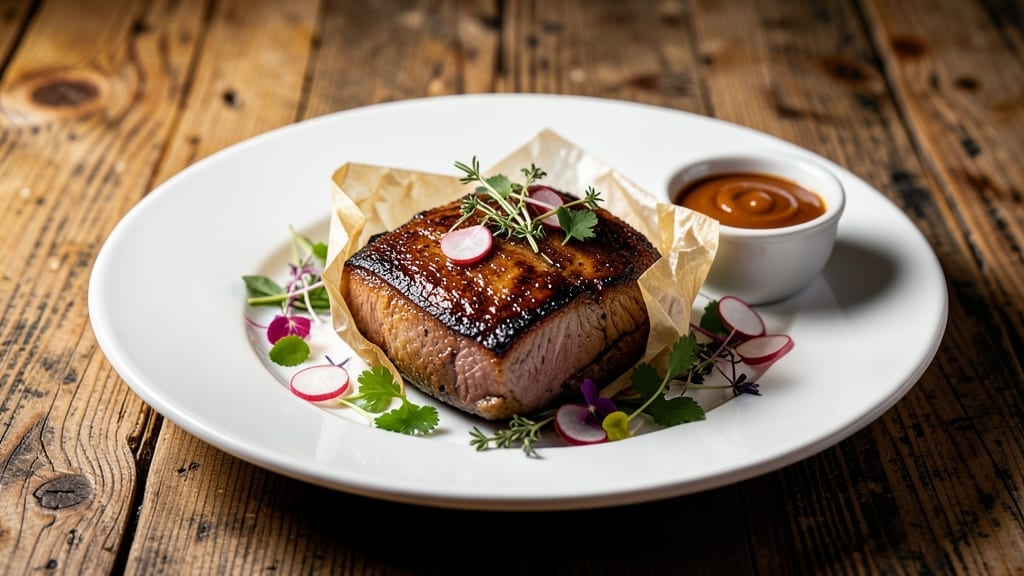
Cooking brisket in a cooking bag transforms tough meat into fall-apart tender perfection with minimal effort—no smoker required. The secret lies in precise temperature control and the bag’s ability to lock in moisture, creating restaurant-quality results at home.
I first discovered this technique while perfecting French slow-cooking methods for my family’s backyard cookouts, where the aroma of hickory smoke inspired me to blend tradition with modern precision.
This method uses a vacuum sealer or oven-safe bag to contain all the juices, ensuring every bite stays succulent. You’ll need just a few pantry staples—brisket, salt, pepper, and a choice of marinade—and about 12 hours of hands-off cooking time.
The bag creates an even cooking environment, eliminating the guesswork of traditional methods while delivering that signature brisket texture we all crave.
By the time you’re done, you’ll have meat so tender it practically melts on your tongue, with a rich, deep flavor developed from slow, controlled cooking. The bag method also makes slicing effortless, as the meat separates cleanly without drying out.
This is the kind of dish that turns weeknight dinners into showstopping meals—no smoker, no fuss, just pure, restaurant-quality brisket every time.
Serve with classic sides like creamy mashed potatoes or tangy coleslaw, or use the leftovers for sandwiches the next day. The beauty of this method is its versatility—whether you’re feeding a crowd or treating yourself to a special meal, this brisket delivers consistent, foolproof results.
Let’s get started with the recipe!
Ingredients for brisket in cooking bag
Pantry staples plus a few specialty items for brisket that melts like butter.
| Ingredient | Amount | Notes |
|---|---|---|
| Beef Brisket 🥩 | 3 lb | Flat-cut, 1-inch thick, trimmed |
| Kosher Salt 🧂 | 1 ½ tbsp | Diamond Crystal preferred |
| Freshly Ground Black Pepper 🌶️ | 1 tbsp | Freshly cracked preferred |
| Garlic Cloves 🧄 | 6 cloves | Peeled, smashed |
| Yellow Onion 🧅 | 1 whole | Yellow or red, sliced |
| Beef Broth 💧 | 1 cup | Low-sodium preferred |
| Apple Cider Vinegar 🍎 | 2 tbsp | For tenderizing |
| Brown Sugar 🍯 | 1 tbsp | Light or dark |
| Smoked Paprika 🌶️ | 1 tsp | For depth of flavor |
| Bay Leaves 🌿 | 2 whole | Fresh preferred |
| Vacuum-Sealer Bag 📦 | 1 bag | Oven-safe, 3-gallon |
| Extra-Virgin Olive Oil 🫒 | 1 tbsp | For sealing bag |
[recipe_ingredient_scaler]
The brisket is the star, so pick a flat-cut with good marbling—look for bright red color and visible fat. Costco or Whole Foods often carry premium cuts, but your local butcher can trim it perfectly for you. I always ask for a 1-inch thickness—thinner pieces cook faster and stay tender. The vacuum-sealer bag is non-negotiable; FoodSaver or Westrock brands work best. For the marinade, fresh garlic and onions add layers of flavor, but if you’re short on time, minced jarred versions work in a pinch (just drain the liquid).
No vacuum sealer? Use a heavy-duty oven bag with a twist tie—it won’t be perfect, but it’ll work. Short on beef broth? Substitute with water plus 1 tbsp soy sauce for umami. The apple cider vinegar might seem odd, but it breaks down fibers for tenderness—don’t skip it. For extra richness, add 1 tbsp Worcestershire sauce to the marinade. The smoked paprika can be swapped for regular paprika if unavailable, but it’ll lack that smoky depth. Always use fresh bay leaves—dried ones work, but fresh adds a bright herbal note.
This brisket stays juicy for 4-5 days in the fridge, but it’s even better the next day. Portion and freeze any leftovers in airtight containers for up to 3 months. Reheat gently in a skillet with a splash of broth to restore moisture. The bag method creates a sealed environment, so never overfill it—leave room for the meat to expand. For slicing, let it rest 15 minutes before cutting against the grain for maximum tenderness.
Why You’ll Love This Recipe
- No Hands-Off Magic: Honestly, this is the kind of recipe where you can set it and forget it—3 to 3½ hours in the oven while you binge a show or run errands. The vacuum-sealed bag does all the work, trapping steam and keeping the brisket so tender it practically dissolves. No babysitting required.
- Garlic-Onion Bombshell: That smash of garlic and sliced onion inside the bag? Game-changer. The vinegar tenderizes the meat while the bay leaves and smoked paprika add depth—no fancy rubs, just pure, rich flavor that hits every bite. It’s like a flavor hug for your taste buds.
- Weeknight Hero: Between the 30-minute prep and the hands-off cooking, this is my go-to when I don’t want to spend all evening in the kitchen. The brown sugar caramelizes just enough to give it a subtle sweetness, while the pepper and salt keep it from tasting like it’s missing anything. Perfect for when you want restaurant-quality meat without the fuss.
Step-by-step instructions for brisket in cooking bag
Here’s the method that transforms tough brisket into melt-in-your-mouth perfection with minimal effort.
Prepare and Season the Brisket
Begin by trimming any excess fat from the 3 lb beef brisket, leaving about ¼ inch thickness. This ensures even cooking and prevents the bag from becoming greasy. Pat the brisket dry with paper towels – moisture is the enemy of crispy edges in this method.
In a small bowl, combine the 1½ tbsp kosher salt, 1 tbsp freshly ground black pepper, 1 tbsp brown sugar, and 1 tsp smoked paprika. Rub this mixture generously over all surfaces of the brisket, pressing it into the meat so it adheres well. The brown sugar will help create a subtle caramelized crust during cooking, while the smoked paprika adds depth without overpowering.
Place the seasoned brisket on a plate and let it sit at room temperature for 30 minutes. This allows the seasoning to penetrate the meat and ensures more even cooking. While it rests, prepare your aromatics by slicing the 1 yellow onion and smashing the 6 garlic cloves with the flat side of a knife.
Create the Cooking Bag Mixture
In a small mixing bowl, combine the 1 cup beef broth, 2 tbsp apple cider vinegar, the sliced 1 yellow onion, smashed 6 garlic cloves, and 2 bay leaves. The vinegar serves a dual purpose here – it tenderizes the meat while adding a subtle tang that complements the rich beef. Stir well to distribute all ingredients evenly throughout the liquid.
Transfer this mixture to the vacuum-sealer bag, leaving about 1 inch of space at the top. Add the seasoned brisket to the bag, nestling it among the aromatics. Drizzle the 1 tbsp extra-virgin olive oil over the brisket – this creates a light seal that helps trap steam while allowing the bag to breathe slightly during cooking.
Seal the bag according to manufacturer instructions, pressing firmly to remove all air pockets. The vacuum seal creates an environment where the brisket cooks in its own juices, resulting in incredibly tender meat with minimal moisture loss. The bag’s flexibility also allows it to conform to the brisket’s shape as it cooks.
Cook to Perfect Tenderness
Preheat your oven to 300°F. Place the sealed bag on a rimmed baking sheet – this prevents any potential spills from making a mess. Cook the brisket for 3 to 3½ hours, or until a meat thermometer inserted into the thickest part reads 205°F. The low temperature and long cook time break down the connective tissue, transforming tough muscle fibers into silky strands.
About halfway through cooking (after approximately 1½ hours), carefully open the bag and flip the brisket over. This ensures even cooking on both sides. You’ll notice the bag will be filled with aromatic steam and the brisket will have developed a beautiful sheen from the cooking liquid. Close the bag securely and return it to the oven.
The brisket is done when it reaches 205°F internally and the meat fibers pull apart easily with gentle pressure from tongs. This is the hallmark of perfect tenderness – the meat should be so soft it nearly falls apart when sliced. Remove the bag from the oven and let the brisket rest for 15 minutes before serving.
Serve with Confidence
Using a sharp knife, slice the brisket against the grain into ¼-inch thick slices. The meat should be so tender that each slice will practically melt on your tongue. Serve immediately with the cooking juices spooned over the top – these contain all the concentrated flavors from the aromatics.
The vacuum-sealed method preserves all the natural juices and renders an incredible amount of fat that can be used for basting or drizzling over the meat. For maximum flavor, serve with simple sides like roasted potatoes or steamed vegetables that won’t compete with the brisket’s rich profile.
This technique delivers restaurant-quality brisket with minimal effort – no bark, no crust, just melt-in-your-mouth tenderness that comes from the perfect combination of low-temperature cooking and vacuum-sealed moisture retention. The result is brisket that’s so tender it practically falls apart, making every bite a delicious experience.
Pro Tips For Making Brisket In Cooking Bag
- Smash That Garlic: Don’t just chop those 6 cloves—smash them flat with the side of your knife first. I used to skip this, and the flavor was half as bold. The smashed cloves release more aroma and blend into the broth like a dream, especially when sealed in that bag with the brisket.
- Flip at 1½ Hours: The recipe says to flip the brisket halfway, but I’ve learned the hard way—don’t wait until the last minute. At 1½ hours, the meat will still be loose enough to handle without tearing the bag, and you’ll get even cooking on both sides. Trust me, your brisket will thank you when it’s fork-tender.
- Salt the Bag’s Edge: After sealing the bag, sprinkle a pinch of that 1½ tbsp kosher salt along the sealed edge. It’s an old trick to keep the seal from failing when steam builds up. I’ve had bags burst open mid-cook—this tiny step saved me more than once.
- Use Cold Broth: Chill the 1 cup beef broth in the fridge for 10 minutes before adding it to the bag. Cold liquid prevents the aromatics from cooking too fast and turning bitter before the brisket hits the oven. The bag will steam up perfectly, and the flavors stay bright.
Regional styles of brisket in cooking bag
Texas-Style Brisket
In Texas, brisket is a sacred dish, and this method stays true to the spirit of pitmaster traditions. The key here is patience—we cook low and slow at 300°F for 3 to 3½ hours, flipping the brisket halfway through to ensure even tenderness.
The vacuum-sealed bag mimics the barkless, juicy results of a Texas-style brisket, but without the smoker. I like to add 1 tbsp Worcestershire sauce to the marinade for that classic Texas tang.
The result is a brisket so tender it practically falls apart, just like the ones I’d eat at a local BBQ joint. 🔥
Carolina-Style Brisket
Down in the Carolinas, brisket gets a tangy twist with vinegar and mustard. I swap out 1 tbsp apple cider vinegar for 2 tbsp Carolina-style vinegar and add 1 tbsp yellow mustard to the marinade for a sharper, brighter flavor.
The bag method still works beautifully here—it keeps the brisket moist while letting the vinegar and mustard penetrate the meat. Serve it with classic Carolina coleslaw to balance the tangy flavors.
The brisket comes out with a beautiful sheen, just like the versions I’d find at a Carolina BBQ competition. ✨
French-Inspired Brisket
My French technique training shines here with a refined approach. I reduce the vinegar to 1 tbsp and add 1 tbsp brandy to the marinade for a sophisticated depth. The bag method still works—it locks in the flavors while keeping the meat tender.
I also like to finish the brisket with a light dusting of herbes de Provence before serving. This version is elegant yet still rich, perfect for a dinner party. The bag ensures even cooking without losing that French finesse. 💫
Smoked Brisket Adaptation
If you want that smoky flavor without a smoker, I add 1 tbsp liquid smoke to the marinade and cook the brisket in the bag on a grill for the last 30 minutes. The bag keeps the meat moist while the grill adds a subtle smokiness.
This method is great for backyard cookouts—just place the sealed bag on the grill grates and let it cook. The result is a brisket with a hint of smoke, just like the ones I’d grill on my coastal rides. 🌬️
Southern Comfort Brisket
For a Southern twist, I add ½ cup cornmeal to the marinade and cook the brisket in the bag until it reaches 205°F. The cornmeal adds a subtle crunch and helps lock in moisture.
I also like to serve it with a side of buttermilk biscuits and a drizzle of peach jam for a sweet-savory balance. The bag method keeps the brisket tender while the cornmeal adds a rustic touch.
It’s the kind of dish that feels like a hug on a Sunday afternoon. 💛
Nutrition facts
Frequently asked questions
Why does the bag method work so well for brisket?
The vacuum-sealed bag creates a perfect cooking environment by trapping moisture and aromatics directly around the meat. This method mimics slow-smoking results while keeping the brisket fall-apart tender with minimal effort. The 300°F oven temperature breaks down collagen gently, and the bag prevents drying out—no bark needed!
What if I don’t have a vacuum sealer?
Use a heavy-duty oven-safe bag with a twist tie—it won’t be perfect, but it’ll work! Just leave 1 inch of space at the top and seal tightly. The key is keeping the moisture locked in. For extra security, drizzle 1 tbsp olive oil over the brisket before sealing to help create a steam barrier.
How do I tell when the brisket is done?
Check for 205°F internal temperature using a meat thermometer in the thickest part. The meat should pull apart easily with gentle pressure—like pulling apart cooked spaghetti! Let it rest 15 minutes before slicing to retain juices. If unsure, cook another 30 minutes and recheck.
Can I make this brisket ahead of time?
Cook the brisket, then refrigerate it in its juices for up to 4-5 days. Reheat gently in a skillet with a splash of broth to restore moisture. For longer storage, freeze portions in airtight containers for up to 3 months. The bag method keeps flavors locked in perfectly!

Trained in classic French technique but raised on slow-cooked ribs and spicy rubs, she blends culinary skill with smoke and soul.
- Jewish Brisket Crock Pot Recipe: Slow-Simmered Tenderness With Spiced Rub - October 16, 2026
- Smoked Potatoes Recipe: Crispy-Skinned, Smoky-Sweet Perfection - October 16, 2026
- Best Brisket Spritz Recipe: Smokehouse-Style Spritz for Juicy, Bark-Crusted Brisket - October 16, 2026