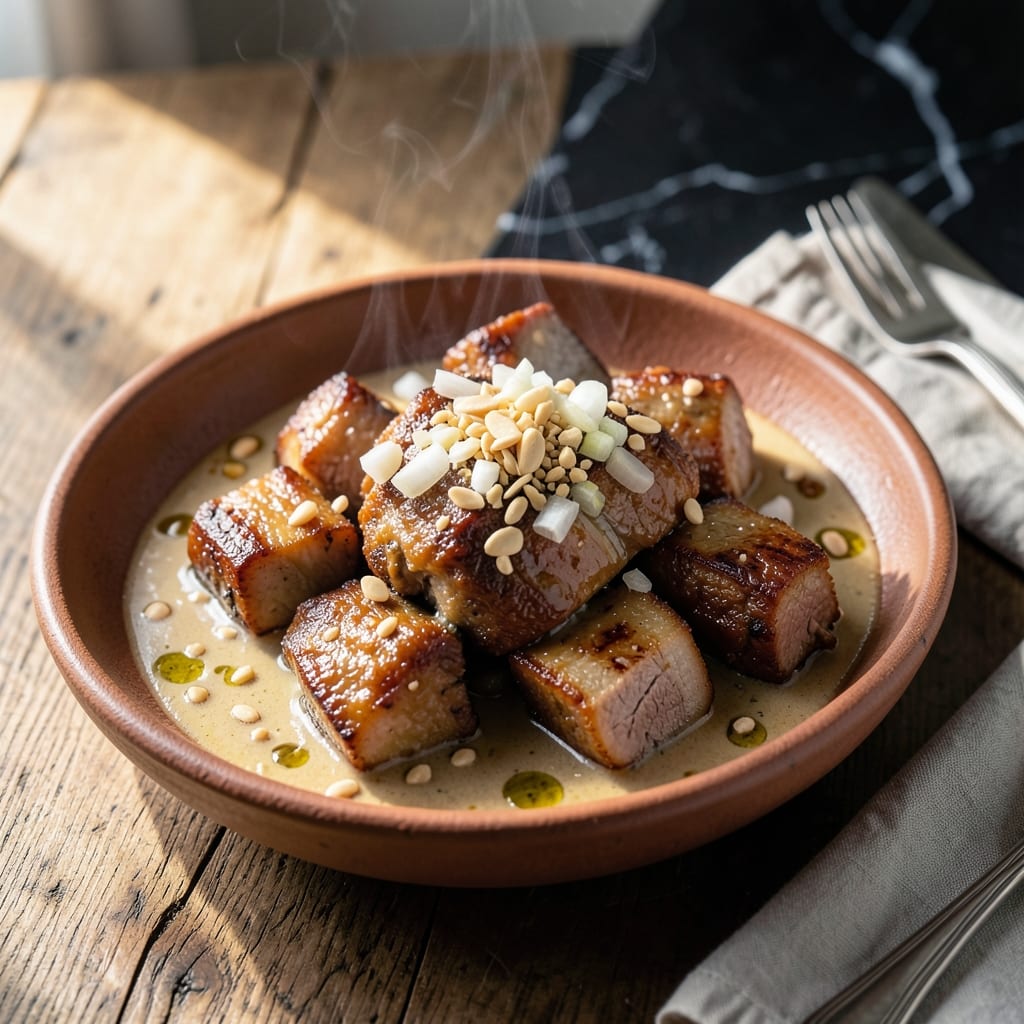
This Filipino stew brings the heart of Panlasang Pinoy to your kitchen with its rich peanut sauce and tender pork. I discovered this dish through my grandmother’s handwritten cards, where each step was guided by instinct rather than precise measurements.
The secret lies in the slow-cooked pork, which becomes fork-tender, and the ground peanuts that create a creamy, nutty sauce. Traditional techniques like toasting the rice flour for thickening make all the difference.
Every bite delivers a balance of savory and slightly sweet flavors, with the peanut sauce coating each piece of meat and vegetable. The dish is as comforting as it is flavorful, perfect for family gatherings.
Serve with steamed rice to soak up every last bit of the sauce. This is a meal that tells a story in every spoonful.
Ingredients for Kare Kare Pork Recipe Panlasang Pinoy
Pantry staples meet Filipino flavors. Rich, nutty, and deeply comforting.
| Ingredient | Amount | Notes |
|---|---|---|
| Pork Hock 🍖 | 2 lb | Cut into 2-inch pieces |
| Pork Belly 🥓 | 1 lb | Cut into 1-inch cubes |
| Peanuts 🥜 | 1 cup | Raw or roasted, unsalted |
| Rice Flour 🌾 | ¼ cup | For thickening sauce |
| Peanut Butter 🥜 | ½ cup | Creamy, unsweetened |
| Onion 🧅 | 1 whole | Medium, quartered |
| Garlic Cloves 🧄 | 6 cloves | Peeled and smashed |
| Ginger 🌿 | 2 tbsp | Fresh, minced |
| Baguio Beans 🌱 | 1 cup | Cut into 2-inch pieces |
| Eggplant 🍆 | 1 whole | Asian variety, sliced |
| Chinese Cabbage 🥬 | ½ whole | Bok choy or napa cabbage |
| Anochu or Annatto Oil 🟠 | 2 tbsp | For coloring, optional |
| Fish Sauce 🐟 | 2 tbsp | Filipino patis preferred |
| Salt 🧂 | 1 tsp | Or to taste |
| Black Pepper 🌶️ | ½ tsp | Freshly ground |
[recipe_ingredient_scaler]
The pork is everything here. Pork hock and belly give you that melt-in-your-mouth texture—ask your butcher to cut it into chunks or do it yourself at home. Most Asian markets sell pre-cut pork for stews, which saves time. For the peanuts, raw is best so you can toast them yourself (trust me on this), but pre-roasted unsalted works in a pinch. Look for freshly milled peanut butter at natural food stores—no added sugar or hydrogenated oils.
No pork hock? Oxtail or beef shank are traditional swaps that hold up to long cooking. Can’t find Baguio beans? Green beans or snake beans work just as well. Out of annatto oil? A pinch of saffron or turmeric gives color without the flavor. Fish sauce can be swapped with soy sauce plus a pinch of sugar, though the umami won’t be quite the same. Always taste as you go—Filipino cooking is all about balancing flavors.
This stew tastes even better the next day once the flavors meld. Keeps in the fridge for 3-4 days and freezes beautifully for 3 months. Store the peanuts in a cool, dry place to prevent them from going rancid (the fridge works too).
Why You’ll Love This Recipe
- Set It and Forget It: I can toss the pork hock and belly in the pot, let them simmer while I prep the peanut sauce—hardly any hands-on time.
- Rich Peanut Goodness: That thick, nutty gravy from peanut butter and crushed peanuts clings to every bite of tender meat.
- Feeds a Hungry Crowd: I make a big batch for family gatherings, and it’s always the first dish wiped out.
- Stretches the Budget: Pork hock and belly are affordable cuts, and a little peanut butter goes a long way to make it hearty.
Step-by-Step Instructions for Kare Kare Pork
This traditional method builds rich, nutty flavors layer by layer for an authentic stew.
Step 1: Sear and Simmer the Pork
Heat a large pot over medium-high heat and add the 2 lb Pork Hock and 1 lb Pork Belly pieces. Sear until lightly browned on all sides—you’ll see the fat render and the edges turn golden brown. This step locks in the juices and adds depth to the broth.
Add enough water to cover the pork completely. Bring to a boil, then reduce heat to medium-low and simmer for 1.5 to 2 hours until the pork is fork-tender. Skim off any foam that rises to the surface for a clear, clean broth. Season lightly with 1 tsp Salt and 0.5 tsp Black Pepper during the last 30 minutes of cooking.
Step 2: Prepare the Aromatics and Vegetables
While the pork simmers, prep your aromatics: quarter the 1 whole Onion, smash the 6 cloves Garlic Cloves, and mince the 2 tbsp Ginger. These will form the flavor base of your stew. Set them aside until the pork is nearly tender.
Cut the 1 cup Baguio Beans into 2-inch pieces, slice the 1 whole Eggplant, and separate the leaves of the 0.5 whole Chinese Cabbage. Keep these vegetables separate for now—you’ll add them later to preserve their texture.
Step 3: Toast the Peanuts and Build the Sauce
In a dry pan, lightly toast the 1 cup Peanuts over medium heat for 3-4 minutes until fragrant and slightly golden. Remove from heat and set aside. In the same pan, add the 2 tbsp Anochu or Annatto Oil and sauté the onion, garlic, and ginger until soft and aromatic, about 3-4 minutes.
Add the toasted peanuts, 0.5 cup Peanut Butter, and 0.25 cup Rice Flour to the pot with the pork. Stir well to combine, ensuring the peanut butter melts completely into the broth. Simmer for 5 minutes to thicken slightly and meld the flavors.
Step 4: Add Vegetables and Finish Cooking
Add the prepared vegetables to the pot: Baguio Beans, Eggplant, and Chinese Cabbage. Stir in the 2 tbsp Fish Sauce and simmer for 8-10 minutes until the vegetables are tender but still vibrant in color. The eggplant should be soft but not mushy, and the beans should retain a slight bite.
Taste and adjust seasoning if needed—this is your chance to balance the nutty, savory flavors. The sauce should coat the back of a spoon, and the pork should be fall-off-the-bone tender.
Step 5: Serve Hot with Bagoong
Ladle the kare kare into large bowls, making sure to include a mix of pork, vegetables, and plenty of the rich peanut sauce. This dish is traditionally served with steamed rice and a side of bagoong (shrimp paste) for dipping, though it’s just as delicious on its own.
Let the stew sit for 5 minutes before serving to allow the flavors to deepen. The peanuts will soften slightly in the sauce, and the pork will absorb even more of the rich, nutty broth.
Pro Tips For Making Kare Kare Pork Recipe Panlasang Pinoy
- Boil the Hock First: Start by boiling pork hock for 30-45 minutes to remove impurities and scum—I learned this the hard way after my first kare kare had a bitter aftertaste.
- Toast the Peanuts: Lightly toast the peanuts in a dry pan for 3-4 minutes before grinding; it deepens their flavor and prevents a raw, chalky texture in the sauce.
- Skip the Overcrowding: Brown the pork belly in batches to avoid steaming—after burning three batches, I finally figured out that crowded pans make soggy meat.
- Use Natural Peanut Butter: My grandmother swore by this, and she was right: natural peanut butter without additives blends smoother and tastes richer than the sugary kind.
Make-Ahead Tips for Leftovers
Prep Vegetables Early
Chop all your Baguio Beans, Eggplant, and Chinese Cabbage the night before. Store them in separate airtight containers in the fridge. I learned from my grandmother that keeping them apart prevents soggy eggplant. 💡
Toast Peanuts Ahead
Toast the 1 cup Peanuts up to 2 days in advance and keep in a cool, dry place. This saves time and enhances their nutty flavor. Just don’t toast them too dark or they’ll turn bitter.
Par-Cook the Pork
Sear and simmer the 2 lb Pork Hock and 1 lb Pork Belly a day early. Cool completely, then refrigerate in its broth. This makes the final cooking process much faster.
Sauce Base Prep
Mix the 0.5 cup Peanut Butter and 0.25 cup Rice Flour with a little water to form a smooth paste. Store this in the fridge for up to 24 hours before adding to the stew.
Freeze for Later
This stew freezes beautifully for up to 3 months. Portion into freezer-safe containers, leaving 1 inch headspace for expansion. Thaw in the fridge overnight before reheating. ❄️
Reheating Tips
Gently reheat on the stove over medium-low heat, adding a splash of water if needed. Avoid boiling to prevent the sauce from breaking. The flavors will taste even richer the next day.
Nutrition Facts
Frequently Asked Questions
Can I use chicken instead of pork?
Yes, chicken thighs work well but cook in just 45 minutes instead of 2 hours. The flavor will be milder, so add an extra 1 tbsp fish sauce for depth.
Why is my sauce too thin?
Simmer uncovered for 10-15 minutes longer. If still thin, mix 1 tbsp rice flour with water and stir in. The sauce thickens as it cools.
How do I store leftovers?
Keep in an airtight container in the fridge for up to 4 days. Freeze for 3 months. Reheat gently to preserve the sauce texture.

Trained in classic French technique but raised on slow-cooked ribs and spicy rubs, she blends culinary skill with smoke and soul.
- Recipe for Boneless Pork Chops in Cast Iron Skillet: Sear and Baste to Juicy Perfection - October 3, 2026
- Recipe for Boneless Cross Rib Roast: Slow-Roasted Beef with Herb Crust - October 3, 2026
- Hamburgers in Sauce Recipe Crock Pot: Slow-Cooked Savory Delight - October 3, 2026