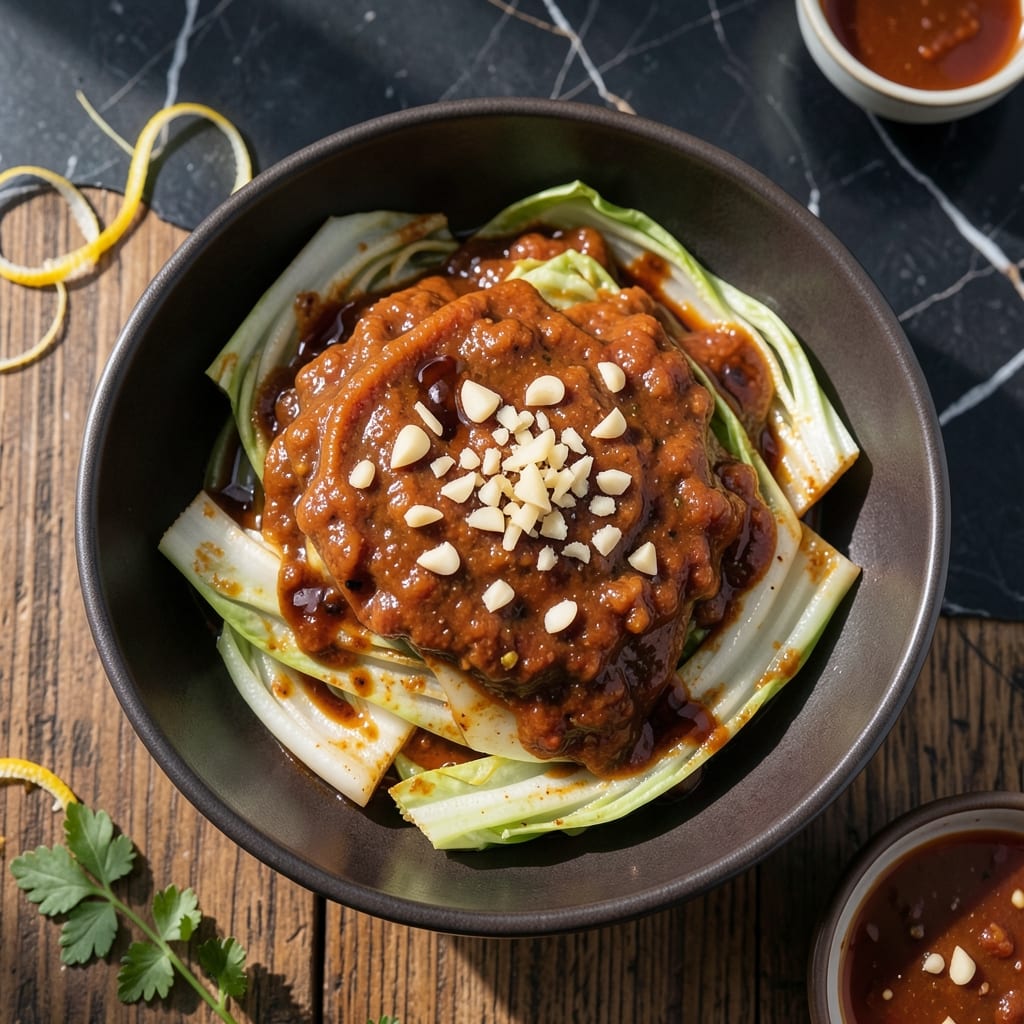
This kimchi recipe transforms simple cabbage into a fiery, fermented masterpiece with the bold heat of gochujang. The process begins with salting the napa cabbage to soften its texture and draw out excess moisture.
The paste combines gochujang with garlic, ginger, and fish sauce for depth, creating a spicy and umami-rich base that clings to every leaf. Proper fermentation at room temperature ensures the flavors develop fully.
After a few days, the kimchi will be tangy, spicy, and slightly effervescent, with a satisfying crunch. Store it in the fridge to slow fermentation and enjoy its evolving complexity over weeks.
Perfect as a side dish, in stews, or as a topping for rice and noodles. This method guarantees authentic results every time.
Ingredients for Kimchi Recipe Gochujang
Fermented napa cabbage meets bold Korean flavors in this fiery, tangy dish with depth and crunch.
| Ingredient | Amount | Notes |
|---|---|---|
| Napa Cabbage 🥬 | 2 lb | Cored and quartered lengthwise |
| Kosher Salt 🧂 | ½ cup | Diamond Crystal preferred for texture |
| Gochujang 🌶️ | ½ cup | Korean red pepper paste for heat |
| Garlic Cloves 🧄 | 12 cloves | Minced for maximum flavor infusion |
| Fresh Ginger 🌿 | 2 tbsp | Peeled and finely grated |
| Vegan Fish Sauce 💧 | 3 tbsp | Or soy sauce for umami depth |
| Sugar 🍚 | ¼ cup | Granulated or coconut sugar |
| Scallions 🧅 | 8 whole | Cut into 2-inch pieces |
| Korean Radish 🥕 | 8 oz | Julienned or matchstick-cut |
| Red Pepper Flakes 🌶️ | ¼ cup | Korean gochugaru for authentic heat |
| Rice Flour 🌾 | 2 tbsp | For thickening the paste |
| Water 💧 | 2 cups | For rinsing and paste consistency |
[recipe_ingredient_scaler]
The cabbage is non-negotiable—Napa is essential for authentic texture and flavor. Look for firm heads with crisp, unblemished leaves at Asian markets or well-stocked supermarkets. The gochujang should be Korean-made (check for brands like Chung Jung One or Sempio), as substitutes lack the complex heat. Salting draws out moisture, so use Diamond Crystal kosher salt—its coarse texture prevents over-salting.
No vegan fish sauce? Soy sauce plus a dash of miso paste mimics the umami. Korean radish can be swapped with daikon—same crunch, similar mild bite. Gochugaru is ideal for the red pepper flakes, but cayenne in a pinch (use half the amount). The rice flour thickens the paste; all-purpose flour works but may slightly alter texture. Fresh ginger and garlic are key—no powdered versions here.
Store finished kimchi in airtight glass jars in the fridge after initial fermentation. It keeps for 1-2 months, but flavor peaks at 2-4 weeks. Always use clean utensils to prevent contamination. The cabbage softens over time, so enjoy the crunch early on.
Why You’ll Love This Recipe
- Minimal Effort: I just salt the cabbage, rinse, and mix with gochujang, garlic, and ginger—no fancy steps.
- Flavor Bomb: That funky, spicy kick from the gochujang and garlic hits just right.
- Meal Prep Hero: It keeps fermenting in the fridge, so I always have a tangy side ready.
- Budget Friendly: Napa cabbage and a little gochujang stretch into jars of kimchi for pennies.
Step-by-Step Instructions for Kimchi with Gochujang
This traditional fermentation process delivers authentic Korean flavors with a spicy, tangy finish.
Step 1: Salt and Rinse the Napa Cabbage
Separate the 2 lb Napa Cabbage leaves, sprinkling each with 0.5 cup Kosher Salt between layers in a large bowl. Press down firmly to ensure even distribution. The salt will wilt the cabbage and extract moisture, which is essential for proper fermentation.
Cover with 2 cups Water and let stand for 1-2 hours, turning the cabbage occasionally. You’ll know it’s ready when the thickest stems bend easily without snapping. Rinse thoroughly under cold water 3 times to remove excess salt, then drain in a colander for 20 minutes.
Step 2: Prepare the Kimchi Paste
In a large mixing bowl, combine the 0.5 cup Gochujang, 12 cloves minced Garlic Cloves, 2 tbsp Fresh Ginger, 3 tbsp Vegan Fish Sauce, and 0.25 cup Sugar. Stir until the sugar dissolves completely and the mixture becomes smooth and glossy.
Add the 0.25 cup Red Pepper Flakes and 2 tbsp Rice Flour, mixing thoroughly to eliminate any lumps. The paste should be thick but spreadable—this consistency ensures it clings well to the vegetables. Taste and adjust seasoning if needed, though the flavors will intensify during fermentation.
Step 3: Combine Vegetables with the Paste
Add the drained Napa Cabbage, 8 whole Scallions (cut into 2-inch pieces), and 8 oz Korean Radish (julienned) to the bowl with the paste. Wear gloves to protect your hands from the chili, then massage the paste into every leaf and crevice of the cabbage.
Work the paste into the vegetables for 5-7 minutes until they are evenly coated and the mixture becomes slightly glossy. The cabbage should feel pliable and the scallions and radish thoroughly integrated. This step ensures even flavor distribution throughout the fermentation process.
Step 4: Pack and Begin Fermentation
Transfer the kimchi to clean, airtight jars, pressing down firmly to remove air pockets and submerge the vegetables in their liquid. Leave 1 inch of headspace at the top to allow for expansion during fermentation.
Seal the jars and let them sit at room temperature for 1-2 days to start the fermentation. You’ll notice bubbles forming and a tangy aroma developing—this indicates active fermentation. After this initial period, move the jars to the refrigerator to slow fermentation and store for up to 1 month.
Pro Tips For Making Kimchi Recipe Gochujang
- Salt the Cabbage First: I learned this the hard way—generously coat the Napa cabbage quarters with kosher salt and let them sit for 1-2 hours to draw out excess water. This keeps your kimchi crisp instead of soggy.
- Use Fresh Gochujang: Skip the old jar in the back of your fridge; fresh gochujang with its vibrant red color and smooth texture actually changes the outcome. The flavor fades over time, and your kimchi deserves better.
- Grate the Ginger Fine: After ending up with chewy ginger bits in my kimchi, I now grate it as fine as possible—almost to a paste. It blends seamlessly into the gochujang mixture and distributes the zing evenly.
- Wear Gloves: Sounds obvious, but I skip this when I’m lazy and always regret it. The gochujang and garlic will stain your hands and burn for hours—just grab a pair of disposable gloves before mixing.
Best Sauces and Condiments for These Flavors
Classic Dipping Sauce
I love serving this kimchi with a simple soy-garlic dip—mix 3 tbsp soy sauce with 1 tbsp rice vinegar, 1 tsp sesame oil, and 1 minced garlic clove. The acidity cuts through the richness beautifully. 💛
Spicy Mayonnaise
For a creamy contrast, blend ½ cup mayonnaise with 2 tbsp gochujang and 1 tsp honey. This creates a tangy, spicy spread perfect for kimchi pancakes or sandwiches. I always keep a batch in my fridge for quick meals.
Sesame Dressing
A nutty sesame dressing enhances the kimchi’s depth—whisk 2 tbsp toasted sesame oil, 1 tbsp sugar, 1 tbsp soy sauce, and 1 tbsp water. Drizzle over rice bowls or use as a salad dressing.
Kimchi Stew Base
Transform your kimchi into a hearty jjigae by simmering it with 2 cups vegetable broth, 1 tbsp gochujang, and 1 block tofu. The soup absorbs the kimchi’s bold flavors, creating a comforting dish.
Fusion Toppings
Try topping tacos or grilled cheese with this kimchi for a Korean-Mexican fusion. Add 1 tbsp lime juice and cilantro to balance the heat. The crunch and spice elevate any dish instantly. 🔥
Nutrition Facts
Frequently Asked Questions
Can I use a different type of cabbage?
Napa cabbage is ideal, but green cabbage can work in a pinch. It has a firmer texture and milder flavor, so the result won’t be as authentic.
Why is my kimchi not fermenting?
Room temperature is key—keep it between 65-75°F. If too cold, fermentation slows. Also, ensure the vegetables are fully submerged in liquid to prevent mold.
How long does it last in the fridge?
Properly stored in an airtight container, it stays fresh for 1-2 months. Flavor peaks at 2-4 weeks as it continues to develop.
Can I reduce the spice level?
Yes! Cut the gochujang in half and replace with 1 tbsp miso paste for depth without as much heat. Adjust red pepper flakes to taste.

Trained in classic French technique but raised on slow-cooked ribs and spicy rubs, she blends culinary skill with smoke and soul.
- Recipe for Boneless Pork Chops in Cast Iron Skillet: Sear and Baste to Juicy Perfection - October 3, 2026
- Recipe for Boneless Cross Rib Roast: Slow-Roasted Beef with Herb Crust - October 3, 2026
- Hamburgers in Sauce Recipe Crock Pot: Slow-Cooked Savory Delight - October 3, 2026