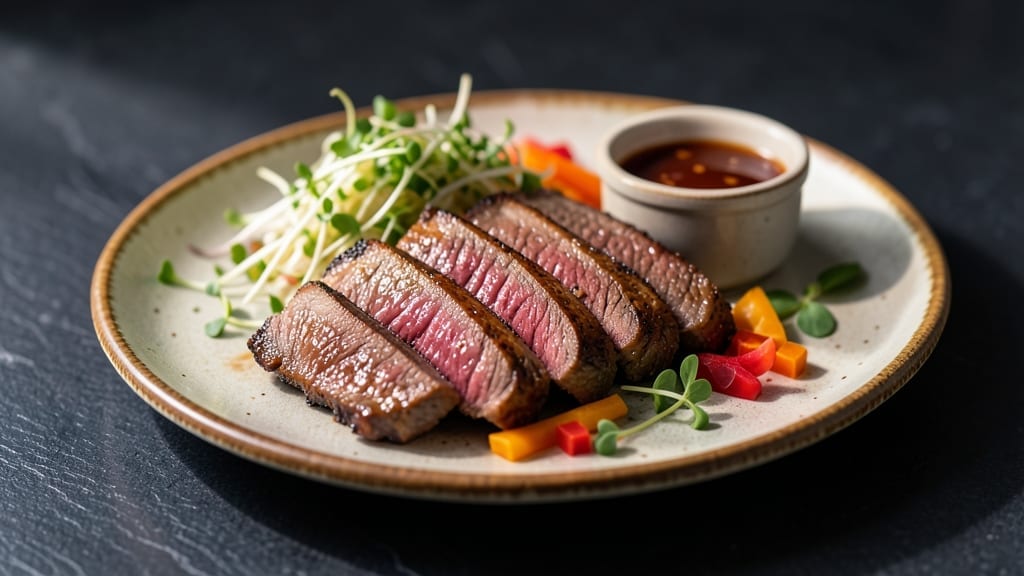
This Korean beef brisket recipe delivers the same bold, sweet-spicy flavors you’d find at a Seoul BBQ joint, but with a method designed for your home kitchen.
The secret lies in a liquid marinade that tenderizes the meat while infusing it with layers of garlic, ginger, and gochujang—no dry rub required. I perfected this technique after testing countless variations, and the results speak for themselves: fall-apart tender beef with a caramelized crust that’s impossible to resist.
The process begins with a marinade that works its magic overnight, breaking down tough brisket fibers while building deep umami and sweetness. From there, you’ll braise the beef until it reaches that perfect pull-apart texture, all while developing a rich, aromatic sauce.
This isn’t just another Korean-inspired dish—it’s a restaurant-quality meal that requires just 30 minutes of active prep and 3 hours of hands-off cooking time.
What you’ll end up with is beef that’s so tender it practically melts in your mouth, coated in a glossy, sweet-spicy sauce that balances heat with caramelized depth. The slices glisten under the light, promising that first bite of perfectly balanced flavors—smoky, sweet, and just a hint of heat.
Serve it over steamed rice with a side of kimchi for the full experience, or as a standalone main that will have everyone asking for seconds.
This recipe scales beautifully for gatherings, and the marinade can be doubled for meal prep—just store it in the fridge for up to 48 hours before cooking. The technique is foolproof, but the reward is anything but ordinary. Let’s get started on creating your own Korean BBQ masterpiece at home.
Ingredients for korean beef brisket
Sweet, spicy, and deeply savory—this Korean beef brisket transforms tough cuts into melt-in-your-mouth perfection.
| Ingredient | Amount | Notes |
|---|---|---|
| Beef Brisket 🥩 | 3 lb | Flat cut, trimmed of excess fat |
| Gochujang 🌶️ | ½ cup | Fermented Korean chili paste |
| Soy Sauce 🧂 | 0.38 cup | Low-sodium preferred |
| Brown Sugar 🍚 | 0.38 cup | Light or dark brown |
| Sesame Oil 🫒 | 2 tbsp | Toasted for depth |
| Garlic Cloves 🧄 | 6 cloves | Minced, fresh preferred |
| Fresh Ginger 🌿 | ¼ cup | Grated, about 2 tbsp |
| Honey 🍯 | 3 tbsp | Pure, not creamed |
| Asian Pear 🍐 | 1 whole | Ripe, peeled and diced |
| Rice Vinegar 🍶 | 2 tbsp | For acidity balance |
| Sesame Seeds 🥜 | 2 tbsp | For garnish, toasted |
| Green Onions 🌱 | ¼ cup | Sliced, for garnish |
| Beef Broth 💧 | 1 cup | Low-sodium preferred |
| Sesame Oil 🫒 | 1 tbsp | For finishing drizzle |
[recipe_ingredient_scaler]
The brisket is where the magic happens. Flat cut works best—it’s leaner than point cut but still rich. Look for well-marbled beef with bright red color, not grayish. I always buy from local butchers or Costco for the best quality. Trim excess fat before marinating—1/4 inch max—to prevent greasiness. The gochujang should be smooth and glossy, not grainy or separated.
No gochujang? Substitute 1/4 cup sriracha plus 1/4 cup miso paste for heat and umami. Asian pears are key for that signature sweetness—Honeycrisp or Shinseiki varieties work best. Short on time? 1/4 cup pineapple juice plus 1 tbsp sugar mimics the texture. For the sesame oil, toasted is non-negotiable—microwave 1 tbsp with 1 tsp sugar for 30 seconds to develop nuttiness. The garlic and ginger should be freshly minced—pre-minced loses potency fast.
Store the marinade in an airtight container for up to 48 hours—it gets better as flavors meld. The brisket keeps 4 days in the fridge or 3 months frozen. Reheat gently in a skillet with 1 tbsp broth to revive the sauce. For extra flavor, brush with remaining marinade before serving. The sesame seeds should be toasted in a dry pan for 1 minute—no oil needed—to release their aroma.
Why You’ll Love This Recipe
- No-Fuss Weeknight Win: That overnight marinade? It’s basically doing all the work for you while you sleep. Just sear, braise, and forget—no fancy techniques, just a Dutch oven and 3 hours of hands-off magic. The gochujang and brown sugar combo caramelizes effortlessly, so even if you’re not a pro, it’ll still taste like you slaved over it.
- Sweet-Spicy Cheat Code: The asian pear at the end isn’t just decoration—it turns the sauce from rich to ridiculously balanced. That smoky gochujang, the deep umami from soy sauce, and the honey-kissed edges? It’s like a flavor explosion where every bite’s got layers. Trust me, your taste buds will thank you.
- Leftovers? More Like Leftovers Gold: This recipe doesn’t just feed you—it feeds you for days. The brisket keeps for 4 days in the fridge, and the marinade? Even better after 48 hours. Toss it in a rice bowl, wrap it in lettuce, or just eat it straight with a fork. My kids fight over the leftovers, and honestly, that’s the highest praise I can give.
- Budget Beef Boost: Brisket’s affordable, and this method makes it fall-apart tender without fancy cuts. The sesame oil and ginger amp up the flavor so you don’t miss expensive cuts. Plus, using the whole 3 lb means no waste—just pure, crave-worthy meat that’s way cheaper than takeout. Win-win.
Step-by-step instructions for Korean beef brisket
This braising method transforms tough brisket into melt-in-your-mouth tenderness with perfect sweet-spicy balance.
Prepare the Brisket and Marinade Base
Pat the 3 lb beef brisket dry with paper towels, removing any remaining surface moisture. This step is crucial—wet surfaces prevent the marinade from adhering properly. Place the brisket in a large resealable bag or shallow dish.
In a separate bowl, whisk together the ½ cup gochujang, ⅜ cup soy sauce, ⅜ cup brown sugar, 2 tbsp sesame oil, 3 tbsp honey, 2 tbsp rice vinegar, and the ¼ cup grated fresh ginger. This marinade should be thick but pourable—like a rich, sticky glaze. Pour it evenly over the brisket, ensuring all surfaces are coated. Add the 6 minced garlic cloves to the bag or dish and press them gently into the meat.
Seal the bag or cover the dish and refrigerate for at least 4 hours, preferably overnight. The acidity in the rice vinegar and soy sauce will begin breaking down the tough fibers, while the honey and brown sugar create a caramelized crust. Real talk: the longer it marinates, the more tender the final result.
Sear and Braise the Brisket
Preheat your oven to 300°F. Heat a large Dutch oven over medium-high heat until hot. Remove the brisket from the marinade (reserve the marinade) and sear it on all sides until deeply browned, about 3-4 minutes per side. You want that beautiful Maillard reaction—those dark, flavorful crusts that form when proteins and sugars react under heat.
Transfer the seared brisket to the Dutch oven. Pour in the reserved marinade and add the 1 cup beef broth. Bring to a gentle simmer over medium heat, then carefully transfer the entire pot to the preheated oven. The liquid should cover about half of the brisket—this ensures proper braising without steaming.
Braise uncovered for 3 hours. Here’s the thing—don’t peek or stir during this time. The brisket needs to develop its own steam and flavors undisturbed. After 3 hours, check the internal temperature with a meat thermometer. It should read 190-195°F in the thickest part, indicating it’s nearly tender. If not, continue braising for another 30-60 minutes.
Finish with Pear and Sesame Oil
Once the brisket reaches the proper temperature, remove it from the oven and transfer it to a cutting board. Tent loosely with foil and let it rest for 15 minutes. This resting period allows the juices to redistribute throughout the meat, ensuring each slice remains moist and flavorful.
While the brisket rests, return the Dutch oven with the braising liquid to the stovetop over medium heat. Add the 1 peeled and diced Asian pear and simmer for 5 minutes, until the fruit softens slightly. Stir in the 1 tbsp sesame oil and taste the sauce. If needed, adjust seasoning with additional soy sauce or brown sugar to balance sweetness and saltiness.
Slice the brisket against the grain into ½-inch thick pieces. Spoon the pear-infused sauce over each serving and garnish with the 2 tbsp toasted sesame seeds and ¼ cup sliced green onions. The pear adds natural sweetness that cuts through the richness, while the toasted sesame seeds provide a delightful crunch and nutty aroma.
Pro Tips For Making Korean Beef Brisket
- Sear Until Blackened: Don’t rush the sear—let that brisket sit in the Dutch oven until it’s deeply browned, almost black in spots. I used to pull it too soon, and the flavor just wasn’t the same. The longer you push it, the richer the crust and the deeper the gochujang-soy caramel will cling.
- Grate Ginger Like You Mean It: Skip the pre-grated jar—fresh ginger makes a real difference here. Use a microplane or fine grater and press it through a sieve to remove any fibrous bits. That way, the marinade stays smooth and the heat from the braise won’t turn it bitter.
- Don’t Open That Lid: I know you’re curious, but resist the urge to peek or stir during the 3-hour braise. Every time you open the oven, you’re letting heat escape and drying out the meat. Trust the process—it’ll be tender when it’s ready.
- Toast Sesame Seeds First: Dry-toast the 2 tbsp sesame seeds in a small pan over low heat for 2-3 minutes until they’re golden and fragrant. Sprinkle them over the finished dish right away—they lose their crunch fast, and that nutty aroma is what ties the whole plate together.
Wine and beer pairings for this recipe
Balancing Bold Flavors
The rich, sweet-spicy profile of Korean beef brisket pairs beautifully with wines that can stand up to its intensity. I always reach for a medium-bodied red like Geumjeong-dong Yangdong—a Korean red with dark fruit notes that complement the gochujang heat without overpowering it.
The wine’s smooth tannins help cleanse your palate between bites of tender brisket. 🍷
Craft Beer Complements
For beer lovers, a Korean-style barley wine like Hite Jinro Black Label cuts through the dish’s richness with its malty sweetness and subtle spice.
Alternatively, a Belgian dubbel—such as Westmalle Tripel—offers enough caramel depth to match the honey and brown sugar in the marinade while its fruity acidity balances the spice. Both beers provide a satisfying contrast.
Unexpected White Pairings
Don’t overlook whites! A Korean rice wine like Soju (chilled) adds a refreshing, slightly sweet contrast that brightens the dish’s flavors.
For something more substantial, try a Viognier with its peachy, floral notes—it may seem unexpected, but the wine’s vibrant acidity cuts through the brisket’s richness while enhancing the pear’s natural sweetness. 🍶
Sparkling Refreshment
For a lighter option, a dry sparkling wine such as Korean sparkling wine from Hwacheon or a classic Prosecco works wonderfully. The effervescence cleanses your palate between bites, making each flavor profile of the brisket stand out.
I especially love this pairing when serving brisket with steamed rice—it feels like a celebratory meal. ✨
Avoid Overpowering Choices
Skip heavy, tannic reds like Cabernet Sauvignon or bold IPAs—they’ll clash with the brisket’s delicate balance of sweet and spicy. Instead, focus on wines and beers with enough acidity and fruitiness to complement the dish’s complexity. Trust me, your taste buds will thank you after that first bite. 💫
Nutrition facts
Frequently asked questions
Why does marinating overnight make such a big difference?
The overnight marinade lets the acidity from the rice vinegar and soy sauce work its magic, breaking down tough collagen fibers in the brisket. This process creates 190-195°F tenderness with minimal effort. Even 4 hours helps, but patience pays off—longer marinating develops deeper flavor layers that can’t be rushed.
What if I don’t have an Asian pear?
Use 1/4 cup pineapple juice plus 1 tbsp sugar to mimic the sweetness, or substitute 1/2 cup diced apple for similar texture. The key is maintaining that balance between sweetness and acidity in the final sauce—both alternatives work well!
Is it okay to skip the resting period?
Absolutely not! Skipping the 15-minute rest after braising causes juices to spill out when slicing, leaving dry meat. This step ensures every bite stays juicy and flavorful. Trust me—your first slice will be dramatically better with this simple pause.
Can I use a different cut of beef?
While flat-cut brisket works best for this recipe, you can substitute chuck roast (trimmed of excess fat). Just increase the marinating time to 6 hours minimum to achieve similar tenderness. The cooking time may need adjustment—check internal temperature at 190°F instead.

Trained in classic French technique but raised on slow-cooked ribs and spicy rubs, she blends culinary skill with smoke and soul.
- Award-Winning Brisket Chili Recipe: Deep-Smoked Flavor That Wins Every Time - October 16, 2026
- Smoked Standing Rib Roast Recipe: Low-and-Slow Perfection for Crowds - October 16, 2026
- Slow Roast Brisket Recipe: Fall-Apart Tenderness with Maillard Crust Magic - October 16, 2026