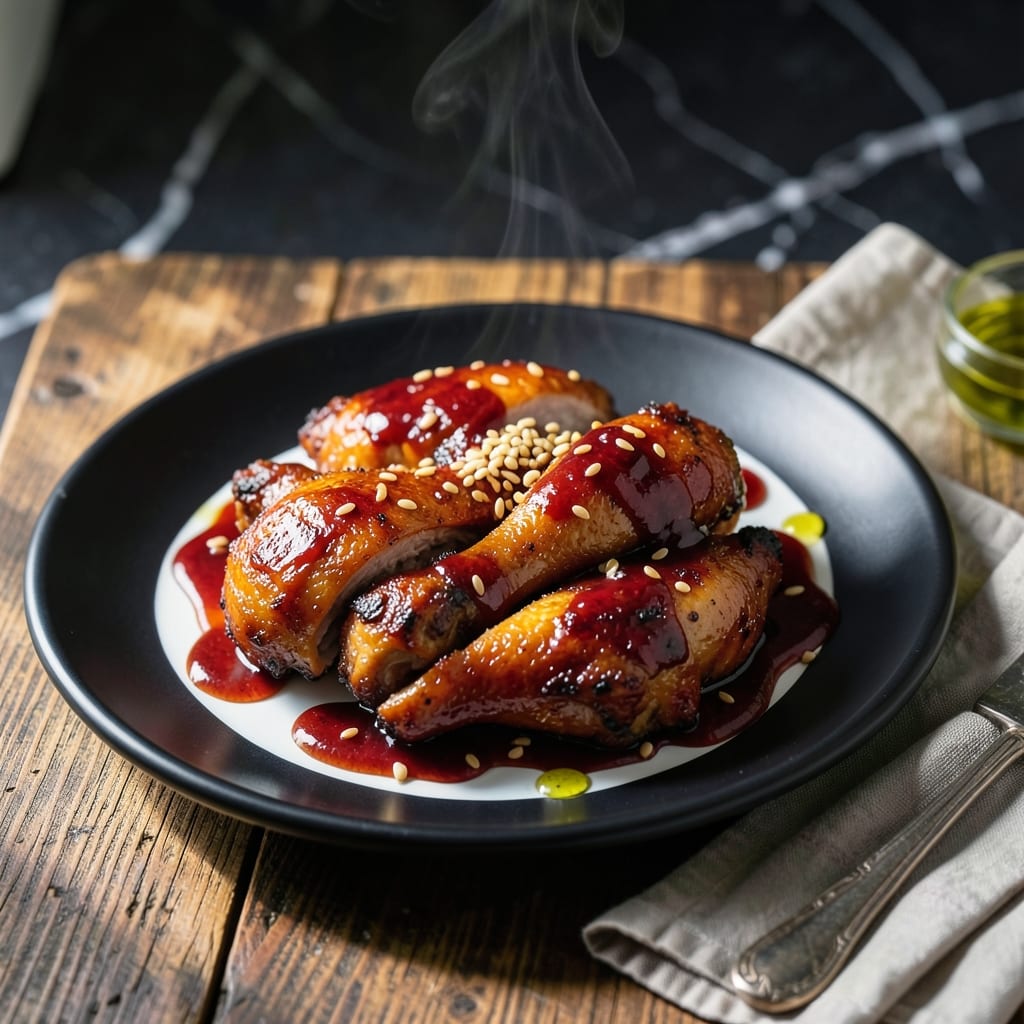
This Korean chicken delivers crispy edges with a sticky, spicy-sweet gochujang glaze that clings to every bite. I developed this method after years of testing to achieve restaurant-quality results at home.
The secret is double-frying the chicken for maximum crispiness, then tossing it in a glossy glaze while hot. The sauce balances heat, sweetness, and umami without overpowering the dish.
You’ll get golden, shatteringly crispy chicken pieces coated in a vibrant red sauce that’s bold yet balanced. The contrast of textures and flavors makes this dish irresistible.
Serve with steamed rice and quick-pickled vegetables for a complete meal. Here’s how to make it perfectly every time.
Ingredients for Korean Chicken Recipe Gochujang
Nothing exotic here—just bold flavors and that shatteringly crispy texture everyone loves.
| Ingredient | Amount | Notes |
|---|---|---|
| Boneless Chicken Thighs 🍗 | 2 lb | Skin-on for extra crispiness |
| Gochujang 🌶️ | ½ cup | Korean red pepper paste |
| Honey 🍯 | ¼ cup | Balances spicy heat |
| Soy Sauce 💧 | 3 tbsp | Low-sodium preferred |
| Rice Vinegar 🍚 | 2 tbsp | Adds tangy brightness |
| Minced Garlic 🧄 | 4 cloves | Freshly minced for best flavor |
| Fresh Ginger 🌿 | 1 tbsp | Peeled and grated |
| Sesame Oil 🫒 | 1 tbsp | Toasted variety preferred |
| Cornstarch 🌾 | ½ cup | For coating chicken |
| Vegetable Oil 💧 | 3 cups | For double-frying chicken |
| Sesame Seeds 🌰 | 2 tbsp | Toasted for garnish |
| Green Onions 🧅 | 4 whole | Thinly sliced for topping |
| Kosher Salt 🧂 | 1 tsp | Season chicken before coating |
| Black Pepper 🌶️ | ½ tsp | Freshly ground |
[recipe_ingredient_scaler]
The chicken is everything. Thighs stay juicier than breasts through double-frying, and skin-on gives you that extra crunch (remove it if you prefer). Most Asian markets carry gochujang, but H-Mart or Amazon work too. Look for Sempio or Chung Jung One brands—they’ve got the right balance of heat and sweetness. The cornstarch coating is non-negotiable for that restaurant-quality crispiness.
No gochujang? Sriracha plus miso paste gets you 70% there, but it won’t be the same. Honey can be swapped for brown sugar or maple syrup, though the flavor shifts slightly. Fresh ginger is ideal, but ground ginger at half the amount works in the sauce. For gluten-free, use tamari instead of soy sauce—just as good, no texture difference.
Fry in batches—crowding the pan kills crispiness. Leftover chicken keeps 3-4 days in the fridge, but the coating softens. Re-crisp in a 400°F oven for 10 minutes. The sauce thickens as it cools, so thin with water if needed before tossing.
Why You’ll Love This Recipe
- One Pan Wonder: It’s just mix, coat, and bake—no fancy techniques, just gochujang, honey, and soy doing all the work.
- Sweet Heat Perfection: The gochujang brings the fire while honey and rice vinegar balance it into this sticky, finger-licking glaze.
- Meal Prep Hero: I make a big batch Sunday and it’s honestly still delicious cold in salads or reheated with rice by Wednesday.
- Budget Stretcher: Boneless thighs stay juicy and cheap, and a little gochujang goes a long way to flavor a whole meal.
Step-by-Step Instructions for Korean Chicken with Gochujang Glaze
Here’s the method I use to achieve ultra-crispy chicken with a sticky-sweet-spicy glaze every time.
Step 1: Season and Coat the Chicken Thighs
Pat the 2 lb Boneless Chicken Thighs completely dry with paper towels. This is non-negotiable—any moisture will prevent the coating from adhering properly. Season both sides with the 1 tsp Kosher Salt and 0.5 tsp Black Pepper, pressing the seasoning into the meat.
Place the 0.5 cup Cornstarch in a shallow dish. Dredge each piece of chicken through the cornstarch, pressing gently to create an even, thick coating. The cornstarch will create that signature ultra-crispy exterior when fried. Shake off any excess—you want a visible but not excessive layer.
Step 2: Double-Fry for Maximum Crispiness
Heat the 3 cups Vegetable Oil in a deep, heavy pot to 350°F. Working in batches to avoid crowding, carefully lower the coated chicken into the oil. Fry for 6-7 minutes until light golden brown and just cooked through. The pieces should float and bubble actively—this is the first crisp forming.
Remove the chicken with a slotted spoon and drain on a wire rack. Increase the oil temperature to 375°F and fry the chicken again for 2-3 minutes until deep golden brown and extremely crispy. This double-fry technique is what gives authentic Korean fried chicken its shatteringly crisp texture. Drain again on the rack.
Step 3: Make the Gochujang Glaze
In a large skillet, combine the 0.5 cup Gochujang, 0.25 cup Honey, 3 tbsp Soy Sauce, 2 tbsp Rice Vinegar, 4 cloves Minced Garlic, 1 tbsp Fresh Ginger, and 1 tbsp Sesame Oil. Cook over medium heat for 3-4 minutes, stirring constantly, until the sauce thickens slightly and becomes glossy.
You’ll notice the aroma shift from sharp to deeply savory-sweet as the garlic and ginger cook. The glaze should coat the back of a spoon but still be pourable. If it thickens too much, add a splash of water to loosen it—you want it to cling to the chicken without being cloying.
Step 4: Toss and Garnish for Serving
Add all the crispy chicken to the skillet with the glaze. Toss gently but thoroughly for 1-2 minutes over low heat until every piece is evenly coated. The glaze should sizzle slightly as it caramelizes on the hot chicken.
Transfer to a serving platter and immediately sprinkle with the 2 tbsp Sesame Seeds and thinly sliced 4 whole Green Onions. The contrast of the crispy chicken, sticky glaze, and fresh garnish is what makes this dish irresistible. Serve immediately while the chicken is at its crispiest.
Pro Tips For Making Korean Chicken Recipe Gochujang
- Sear First, Sauce Later: I learned this the hard way—browning the chicken thighs first in a hot pan (about 3-4 minutes per side) gives you that crispy edge before the gochujang sauce goes in. If you add the sauce too early, the meat steams instead of searing.
- Thin the Honey: Sounds weird, but it works: warm the honey for 10-15 seconds in the microwave or mix it with a splash of hot water before adding to the sauce. It blends smoothly into the gochujang instead of clumping at the bottom of the bowl.
- Don’t Drown the Chicken: After burning three batches, I finally figured out that the sauce should coat the chicken, not swim around it—use about 1/3 cup gochujang per pound of thighs. Too much liquid means soggy meat and a thin, sad glaze.
- Rest Before Serving: Give it a solid 5 minutes off the heat before slicing. The juices redistribute, and the gochujang glaze thickens up just enough to cling to every bite—yes, even if you’re impatient like me.
Creative Variations of korean chicken recipe gochujang
Spicy Honey Twist
Swap the honey for ¼ cup hot honey and add 1 tsp gochugaru (Korean chili flakes) to the glaze. This version amplifies the heat while keeping that signature sweetness. I love this for game day—it disappears fast! 🌶️
Sweet and Tangy
Reduce gochujang to ⅓ cup and add 2 tbsp apricot jam plus 1 tbsp lime juice to the sauce. The fruitiness balances the spice beautifully, and the lime adds a bright note that cuts through the richness.
Garlic Bomb
Double the garlic to 8 cloves and add 1 tbsp gochujang to the cornstarch coating. This creates an extra garlicky, extra crispy version that my friends beg me to make. Use freshly minced for maximum flavor impact.
Sesame Crunch
Mix 2 tbsp toasted sesame seeds into the cornstarch before coating the chicken. The seeds add a nutty crunch that pairs perfectly with the sticky glaze. I buy mine in bulk at the local Asian market for the best freshness.
Mild Family Version
Replace half the gochujang with 2 tbsp tomato paste and add 1 tbsp brown sugar. This toned-down version keeps the depth of flavor without the heat. My kids actually ask for seconds with this adaptation.
Extra Crispy
Add ¼ cup crushed cornflakes to the cornstarch coating for even more crunch. The cereal adds texture without changing the flavor. Just pulse it in a food processor first for even coverage. 💫
Nutrition Facts
Frequently Asked Questions
Can I use chicken breast instead of thighs?
You can, but thighs stay juicier through double-frying. If using breasts, brining for 30 minutes first helps prevent dryness.
What can I use if I don’t have gochujang?
Mix 2 tbsp sriracha with 1 tbsp miso paste for a similar flavor profile. It won’t be identical, but it’s a good substitute in a pinch.
How do I keep the chicken crispy after saucing?
Toss the chicken in the glaze right before serving. The sugar in the sauce will soften the coating if it sits too long.
Can I bake the chicken instead of frying?
Yes, bake at 400°F for 25-30 minutes on a wire rack. It won’t be as crispy as fried, but it’s a healthier option.

Trained in classic French technique but raised on slow-cooked ribs and spicy rubs, she blends culinary skill with smoke and soul.
- Recipe for Boneless Pork Chops in Cast Iron Skillet: Sear and Baste to Juicy Perfection - October 3, 2026
- Recipe for Boneless Cross Rib Roast: Slow-Roasted Beef with Herb Crust - October 3, 2026
- Hamburgers in Sauce Recipe Crock Pot: Slow-Cooked Savory Delight - October 3, 2026