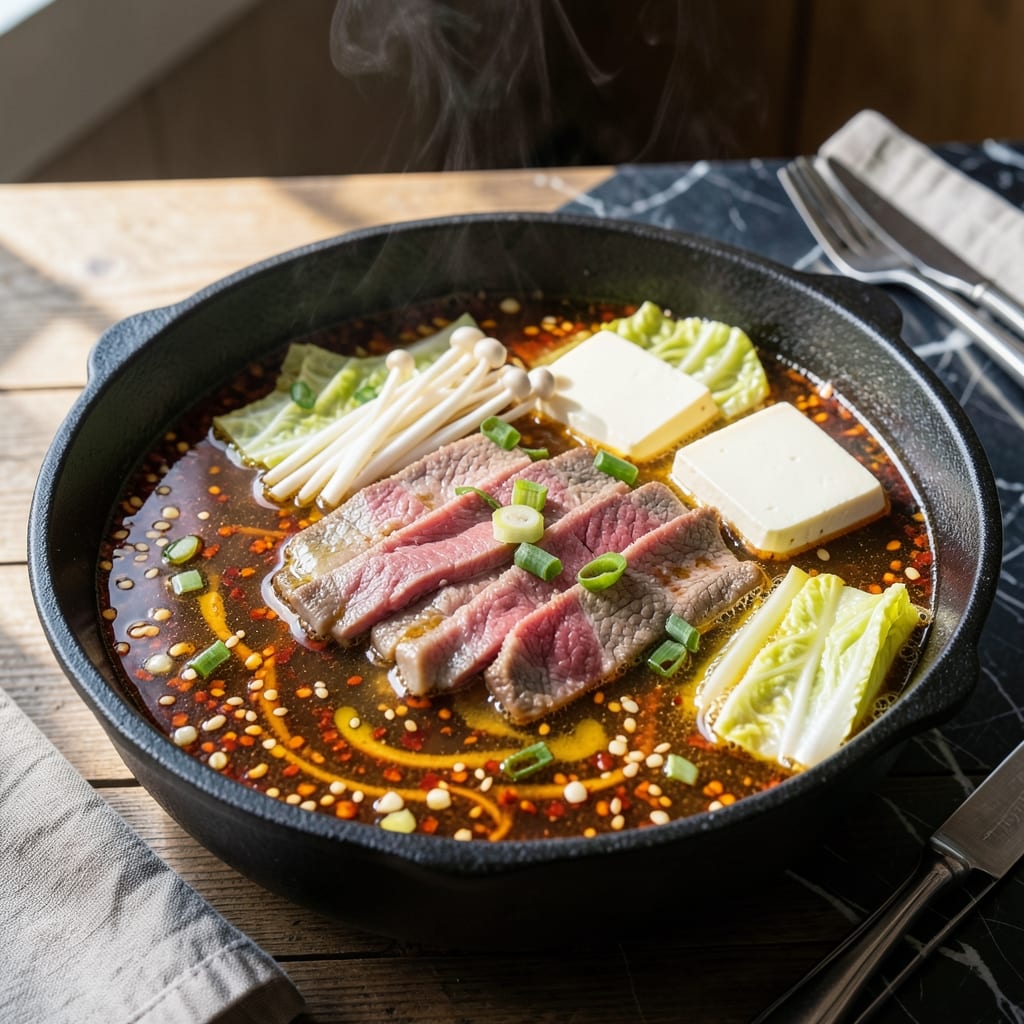
Bring the vibrant flavors of Korean hot pot to your own kitchen with this authentic communal dining experience. This dish transforms simple ingredients into a rich, spicy broth perfect for gathering friends and family around the table.
The foundation lies in a well-balanced broth built with traditional Korean staples like gochugaru and anchovy stock. Seafood and vegetables cook directly in the simmering pot, absorbing layers of flavor as they mingle with the aromatic base.
What emerges is a spicy, deeply savory broth filled with tender seafood, crisp vegetables, and that signature Korean heat. The interactive nature makes it ideal for sharing, with everyone customizing their bowl to taste.
Serve with rice and traditional sides for a complete meal that feels like a restaurant experience at home. Here’s how to create this feast.
Ingredients for Korean Hot Pot Recipe at Home
Authentic Korean ingredients create a rich, spicy broth for communal dining at home.
| Ingredient | Amount | Notes |
|---|---|---|
| Anchovy Stock 🐟 | 4 cups | Korean-style or homemade |
| Gochugaru 🌶️ | ¼ cup | Korean red pepper flakes |
| Soy Sauce 🫒 | ¼ cup | Low-sodium preferred |
| Sesame Oil 🥜 | 2 tbsp | Toasted for depth |
| Garlic Cloves 🧄 | 6 cloves | Minced for aroma |
| Fresh Ginger 🌿 | 2 tbsp | Grated for freshness |
| Shrimp 🦐 | 1 lb | Peeled and deveined |
| Mussels 🦪 | 1 lb | Cleaned and debearded |
| Firm Tofu 🧈 | 14 oz | Pressed and cubed |
| Napa Cabbage 🥬 | 4 cups | Thinly sliced |
| Shiitake Mushrooms 🍄 | 8 oz | Fresh or rehydrated |
| Green Onions 🧅 | 4 whole | Cut into 2-inch pieces |
| Korean Radish 🥕 | 1 cup | Peeled and sliced |
| Sugar 🍚 | 1 tbsp | Balances spice and salt |
| Korean Rice Cakes 🍙 | 8 oz | Sliced for texture |
[recipe_ingredient_scaler]
Anchovy stock is foundational—look for Korean brands like Sempio or Ottogi at Asian markets. H Mart or Assi Plaza reliably stock gochugaru (ensure it’s Korean, not generic chili flakes). The seafood should be fresh: shrimp with no fishy odor, mussels that close when tapped. For tofu, Nasoya or House Foods offer consistent firmness for holding up in broth.
No anchovy stock? Dashi or chicken stock with a splash of fish sauce gets you close. Gochugaru can be swapped with half the amount of cayenne plus paprika for color, but the flavor won’t be the same. No shrimp? Scallops or squid work beautifully. For a vegetarian twist, swap seafood for extra mushrooms and zucchini. The rice cakes are non-negotiable for that authentic chewy texture.
Store gochugaru and sesame oil in a cool, dark place—they keep for 6-12 months. Fresh seafood should be cooked within 24 hours of purchase. Leftover broth freezes beautifully for 3 months and reheats with fresh ingredients for a quick meal.
Why You’ll Love This Recipe
- One Pot Wonder: Honestly, the anchovy stock simmers while I prep the rest—minimal effort, maximum flavor.
- Umami Bomb: The gochugaru and garlic create this deep, spicy-savory broth that’s ridiculous on a cold night.
- Feed the Crew: I stretch it with tofu and veggies for a crowd, or keep it simple for a solo dinner.
- Leftovers Win: Between us, the flavors taste even better the next day, and the broth freezes solid.
Step-by-Step Instructions for Korean Hot Pot
This method ensures a balanced, aromatic broth with perfectly cooked seafood and vegetables.
Step 1: Prepare the Aromatic Broth Base
In a large, heavy pot, combine the 4 cups Anchovy Stock, 0.25 cup Gochugaru, 0.25 cup Soy Sauce, 2 tbsp Sesame Oil, 6 cloves Garlic Cloves, and 2 tbsp Fresh Ginger. Stir thoroughly to dissolve the gochugaru and distribute the flavors evenly.
The broth should take on a deep, reddish hue as the gochugaru incorporates. Add the 1 tbsp Sugar and stir again—this balances the heat and saltiness of the base. Bring the mixture to a gentle simmer over medium heat, then reduce to low to maintain a steady, subtle bubble.
Step 2: Add the Hearty Vegetables
Once the broth is simmering, add the 4 cups Napa Cabbage, 8 oz Shiitake Mushrooms, 1 cup Korean Radish, and 4 whole Green Onions. These vegetables form the foundation of the hot pot, absorbing the broth’s flavors while contributing their own depth.
Simmer for 8-10 minutes until the napa cabbage wilts and the radish softens slightly. The mushrooms should be tender but still hold their shape. Stir occasionally to ensure even cooking and to prevent any ingredients from sticking to the bottom of the pot.
Step 3: Incorporate the Protein Elements
Gently add the 1 lb Shrimp, 1 lb Mussels, 14 oz Firm Tofu, and 8 oz Korean Rice Cakes to the pot. The shrimp and mussels will cook quickly, so arrange them so they are submerged in the broth. The tofu and rice cakes will absorb the flavors as they heat through.
Cover the pot and let it cook for 5-7 minutes. The shrimp should turn opaque and pink, and the mussels should open fully—discard any that remain closed. The rice cakes will become soft and slightly chewy, a hallmark of authentic Korean hot pot.
Step 4: Adjust and Serve
Taste the broth and adjust seasoning if needed. The flavors should be bold and well-balanced, with a noticeable but not overwhelming heat from the gochugaru. If the broth seems too spicy, add a splash of water or additional anchovy stock to dilute slightly.
Ladle the hot pot into individual bowls, ensuring each serving includes a variety of seafood, tofu, and vegetables. Serve immediately with additional green onions on the side for garnish. The communal nature of this dish encourages sharing, so place the pot in the center of the table for a traditional experience.
Pro Tips For Making Korean Hot Pot Recipe At Home
- Bloom the Gochugaru: Toast the gochugaru in sesame oil for 30 seconds before adding liquids—it wakes up the flavor and removes the raw edge I used to hate in my early batches.
- Strain the Anchovy Stock: Even if you’re in a hurry, strain out the anchovy bits after simmering; they can turn bitter if left in too long, and the broth stays cleaner.
- Mince Garlic Fine: Smash and mince the garlic cloves instead of just crushing them—smaller pieces distribute better in the broth and prevent those sharp, overpowering bites.
- Finish with Sesame Oil: Stir in that last drizzle of sesame oil at the very end, off the heat, so it keeps its fresh aroma instead of cooking off into the steam.
Flavor Customization for This korean hot pot recipe at home
Adjusting Spice Levels
For milder heat, reduce gochugaru to 2 tbsp and add 1 extra cup anchovy stock. The broth will still be flavorful but more approachable for sensitive palates. I often do this when cooking for kids. 🌶️
Adding Extra Heat
Kick it up by adding 1 tbsp gochujang or 1 tsp cayenne pepper to the broth. For serious spice lovers, serve with 1 tsp Korean chili powder on the side for individual adjustment.
Vegetarian Adaptation
Swap seafood for 8 oz enoki mushrooms and 1 bell pepper. Increase tofu to 20 oz for protein. The umami from mushrooms keeps the broth rich and satisfying.
Richer Broth Option
Add 2 tbsp doenjang (fermented soybean paste) for deeper umami. Stir it in with the gochugaru at the start. This creates a more complex, savory base that pairs wonderfully with beef additions.
Seafood Variations
Replace shrimp with 1 lb scallops or 1 lb squid. For a mixed seafood pot, use ½ lb each shrimp, mussels, and clams. Adjust cooking time to 4-5 minutes for delicate seafood. 🔥
Extra Aromatics
Boost flavor with 1 sliced onion and 3 dried shiitake mushrooms in the broth. Remove them after 15 minutes of simmering to avoid bitterness. This adds subtle depth without overpowering.
Nutrition Facts
Frequently Asked Questions
What can I use instead of anchovy stock?
Dashi or chicken stock with 1 tbsp fish sauce works as a substitute. For vegetarian, use mushroom stock with 1 tbsp soy sauce for umami depth.
How long does the broth need to simmer?
Simmer the base for 10 minutes before adding vegetables, then 8-10 minutes more. This builds layered flavors without overcooking delicate ingredients.
Can I prepare this ahead of time?
Make the broth base 1 day ahead and refrigerate. Add seafood and vegetables just before serving to prevent mushiness. Reheat gently on low-medium.
Why did my mussels stay closed?
Discard any unopened mussels after 5-7 minutes. This means they were likely bad before cooking. Always buy mussels that smell fresh and close when tapped.

Trained in classic French technique but raised on slow-cooked ribs and spicy rubs, she blends culinary skill with smoke and soul.
- Recipe for Boneless Pork Chops in Cast Iron Skillet: Sear and Baste to Juicy Perfection - October 3, 2026
- Recipe for Boneless Cross Rib Roast: Slow-Roasted Beef with Herb Crust - October 3, 2026
- Hamburgers in Sauce Recipe Crock Pot: Slow-Cooked Savory Delight - October 3, 2026