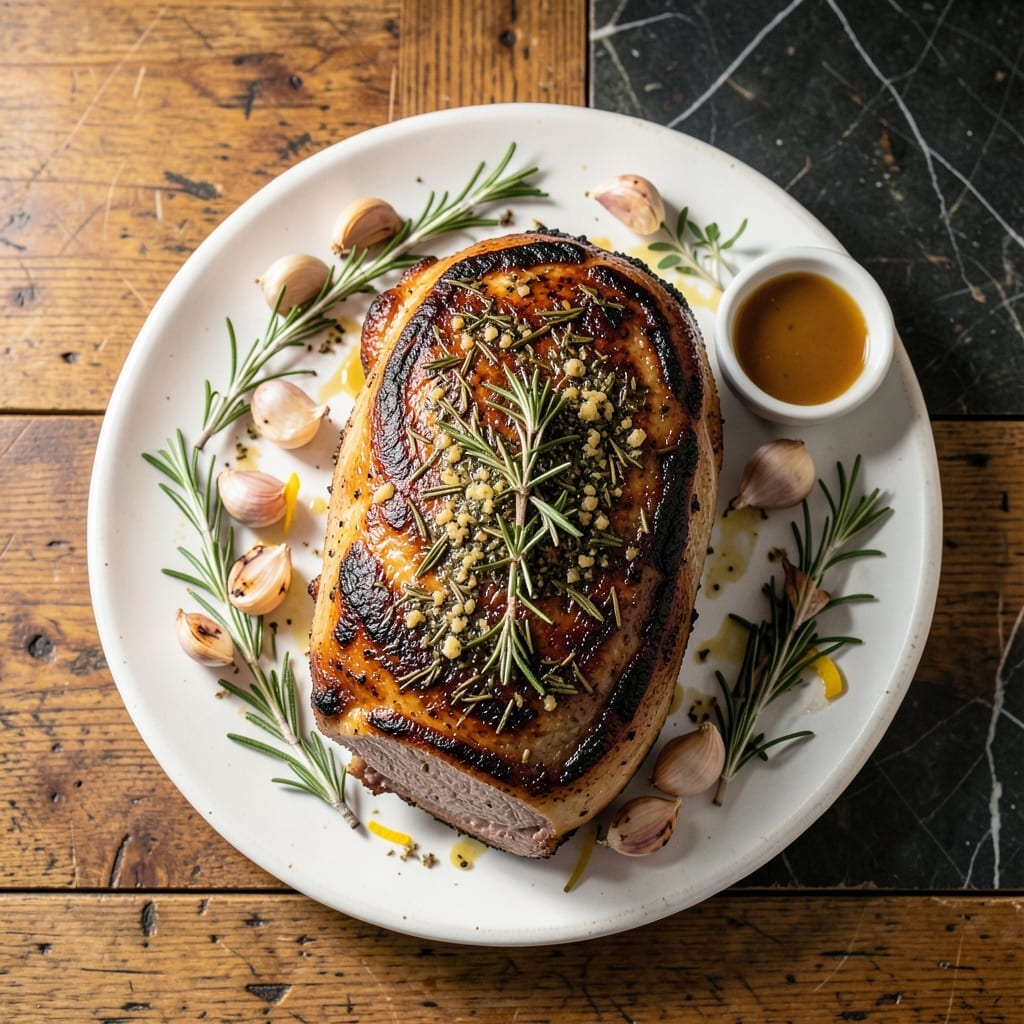
I created this lamb loin roast after realizing Sunday dinner needed a showstopper that’s impressive yet approachable. The garlic-rosemary crust forms a golden seal that locks in juices while adding aromatic depth.
This method uses a hot oven to sear the exterior before finishing at a lower temperature, ensuring tender meat from edge to edge. The crust’s herbs and garlic infuse every bite with bold, savory flavor.
The result is a centerpiece-worthy dish with a crispy crust and juicy interior, perfect for gathering the family around the table. It pairs beautifully with roasted vegetables or a red wine reduction.
This is the kind of recipe that turns a simple Sunday into something memorable.
Ingredients for Lamb Loin Roast Recipe Oven
A few quality ingredients transform into a Sunday dinner centerpiece everyone will remember.
| Ingredient | Amount | Notes |
|---|---|---|
| Lamb Loin Roast 🐑 | 2 lb | Bone-in, trimmed of excess fat |
| Fresh Rosemary 🌿 | 3 tbsp | Finely chopped, stems discarded |
| Garlic Cloves 🧄 | 6 cloves | Minced to fine paste |
| Dijon Mustard 🟡 | 2 tbsp | Whole-grain preferred for texture |
| Extra-Virgin Olive Oil 🫒 | ¼ cup | Divided for crust and searing |
| Kosher Salt 🧂 | 1 tbsp | Diamond Crystal brand recommended |
| Freshly Ground Black Pepper 🌶️ | 1 tsp | Coarse grind for crust |
| Fresh Thyme Sprigs 🌿 | 2 tbsp | Leaves stripped from stems |
| Dry White Wine 🍷 | ½ cup | For deglazing pan |
| Unsalted Butter 🧈 | 2 tbsp | Softened for crust mixture |
| Shallot 🧅 | 1 whole | Finely minced for pan sauce |
| Low-Sodium Chicken Stock 🥣 | 1 cup | For optional pan reduction |
[recipe_ingredient_scaler]
The lamb loin is the star—bone-in roasts from Whole Foods or a trusted butcher offer the best marbling and flavor. Look for pieces with a thin, even fat cap (about 1/4 inch) and a bright pink color. The rosemary and thyme should be fresh and vibrant, not wilted or brown. For the Dijon, Maille or Grey Poupon brands deliver consistent quality with the right tangy punch.
No lamb loin? Boneless leg of lamb works but requires adjusted cooking times. Out of fresh herbs? Dried at one-third the amount, though fresh is vastly superior here. For the wine, any dry white like Sauvignon Blanc or Pinot Grigio is perfect. If avoiding alcohol, substitute with additional stock plus a squeeze of lemon. The butter can be replaced with olive oil, though the crust may be less rich.
The raw lamb keeps in the fridge for 2-3 days or can be frozen for up to 3 months. Fresh herbs are best used within 5 days. Once cooked, leftovers hold well for 4 days refrigerated—perfect for next-day sandwiches or salads.
Why You’ll Love This Recipe
- Set and Forget: I rub the lamb with olive oil, mustard, and herbs, pop it in the oven, and let it do its thing. No babysitting required.
- Herb Crust Magic: The rosemary and garlic form a crust so fragrant, it fills the kitchen before the first bite.
- Dinner or Leftovers: It’s just as good cold in a sandwich the next day—if there’s any left.
- One Pan Wonder: Everything cooks together, so I spend more time eating and less time scrubbing.
Step-by-Step Instructions for Lamb Loin Roast Oven
This method ensures a perfectly cooked roast with a fragrant herb crust every time.
Step 1: Prepare the Herb Crust Mixture
In a small bowl, combine the 3 tbsp Fresh Rosemary, 6 cloves Garlic Cloves minced to a fine paste, 2 tbsp Fresh Thyme Sprigs leaves, 2 tbsp Dijon Mustard, 2 tbsp Unsalted Butter, 1 tbsp Kosher Salt, and 1 tsp Freshly Ground Black Pepper. Stir until the mixture forms a thick paste.
Drizzle in 0.25 cup Extra-Virgin Olive Oil while stirring continuously to create a cohesive, spreadable herb crust. The consistency should be thick enough to cling to the lamb loin roast without sliding off during cooking.
Step 2: Sear and Coat the Lamb Loin Roast
Preheat your oven to 425°F. Pat the 2 lb Lamb Loin Roast completely dry with paper towels to ensure the crust adheres properly. Place the lamb in a roasting pan and sear it in the oven for 15 minutes to develop a golden crust.
Remove the lamb from the oven and brush the herb crust mixture liberally over the entire surface, pressing gently to ensure it adheres. The searing step creates a flavorful base that the herb crust will build upon during roasting.
Step 3: Roast to Desired Doneness
Return the lamb to the oven and reduce the temperature to 375°F. Roast for an additional 25-30 minutes for medium-rare, or until an instant-read thermometer inserted into the thickest part reads 135°F.
The lamb loin roast continues to cook as it rests, so remove it from the oven when it reaches 5°F below your desired final temperature. This ensures the meat remains juicy and tender without overcooking.
Step 4: Rest and Prepare the Pan Sauce
Transfer the lamb to a cutting board, tent loosely with foil, and let it rest for 15 minutes. This allows the juices to redistribute throughout the meat, ensuring a moist and flavorful result.
Place the roasting pan on the stovetop over medium heat. Add the 1 whole Shallot finely minced and sauté for 2 minutes until softened. Deglaze the pan with 0.5 cup Dry White Wine, scraping up any browned bits from the bottom. Simmer for 3 minutes until the liquid reduces by half.
Pour in the 1 cup Low-Sodium Chicken Stock and simmer for an additional 5-7 minutes until the sauce thickens slightly. Strain the sauce through a fine-mesh sieve if a smoother texture is desired.
Step 5: Slice and Serve
After resting, slice the lamb loin roast between the bones into individual chops. Arrange the slices on a serving platter and drizzle the pan sauce over the top.
Serve immediately while the lamb is still warm. The herb crust should be fragrant and golden, while the meat inside remains tender and juicy, offering a perfect balance of flavors in every bite.
Pro Tips For Making Lamb Loin Roast Recipe Oven
- Rest Before Slicing: Let the roast rest for 10-15 minutes under foil after pulling it from the oven. I learned this the hard way—slicing too soon sends all those juices straight to the cutting board instead of staying in the meat.
- Sear the Surface: Start with a screaming hot oven (450°F) for the first 15 minutes to get a golden crust on the lamb. After burning one too many batches, I finally figured out that lower heat alone won’t give you that perfect brown exterior.
- Score the Fat: Make shallow cuts in a crosshatch pattern on the fat cap before seasoning. Sounds weird, but it works—this lets the rosemary, garlic, and Dijon mustard penetrate deeper and crisp up the fat evenly.
- Use Room-Temp Lamb: Take the roast out of the fridge 1-2 hours before cooking. My grandmother swore by this, and she was right: cold meat cooks unevenly, while room-temp lamb roasts more consistently from edge to edge.
Perfect Pairings for This Recipe
Wine Pairings
A bold Cabernet Sauvignon from Napa Valley complements the rosemary and garlic crust beautifully. I love how its dark fruit notes balance the dish’s richness. For a lighter option, try a Syrah with its peppery finish. 🍷
Side Dish Ideas
Garlic mashed potatoes soak up the pan sauce wonderfully. I use Yukon Golds and fold in roasted garlic for extra depth. Roasted asparagus with lemon zest adds a bright contrast to the savory lamb.
Vegetable Pairings
Braised fennel with a splash of white wine offers a subtle anise note. I cook it for 45 minutes until tender. Minted peas bring a fresh pop of color and flavor that cuts through the richness.
Bread Options
A crusty Italian loaf from my neighborhood bakery is perfect for soaking up every last bit of sauce. I warm it in the oven for 5 minutes before serving. For something different, rosemary focaccia echoes the herb crust beautifully.
Cheese Accompaniments
A simple platter with aged Parmesan and Gorgonzola offers contrasting flavors. I like serving 2 oz portions of each per person. The saltiness of the cheeses enhances the lamb’s natural sweetness.
Dessert Follow-Up
End with dark chocolate and a glass of Port for a classic pairing. The bitterness of 70% cacao balances the meal’s richness. I serve 1 oz squares with fresh raspberries for a touch of acidity. 💫
Nutrition Facts
Frequently Asked Questions
What temperature should the lamb reach?
For medium-rare, aim for an internal temperature of 135°F. Use a meat thermometer for accuracy. The temperature will rise 5°F during resting.
Can I use boneless lamb loin?
Yes, but reduce cooking time by 10-15 minutes. Boneless cooks faster, so monitor the internal temperature closely to avoid overcooking.
How do I know if it’s overcooked?
Overcooked lamb becomes tough and dry. If the internal temperature exceeds 145°F for medium-rare, it’s likely overdone. Resting helps retain moisture.

Trained in classic French technique but raised on slow-cooked ribs and spicy rubs, she blends culinary skill with smoke and soul.
- Recipe for Boneless Pork Chops in Cast Iron Skillet: Sear and Baste to Juicy Perfection - October 3, 2026
- Recipe for Boneless Cross Rib Roast: Slow-Roasted Beef with Herb Crust - October 3, 2026
- Hamburgers in Sauce Recipe Crock Pot: Slow-Cooked Savory Delight - October 3, 2026