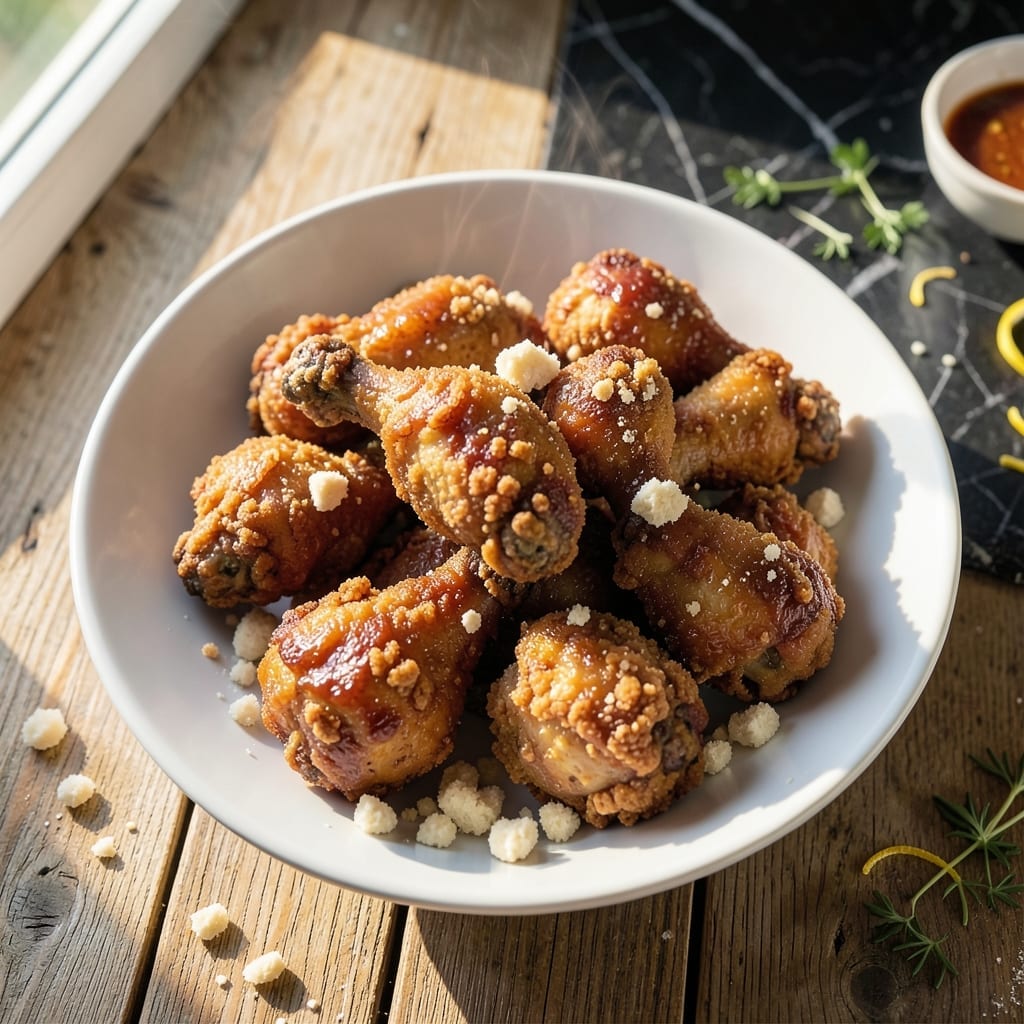
There’s nothing quite like the crisp golden crust and juicy meat of chicken fried in lard. This traditional method delivers unmatched flavor and texture that modern shortenings simply can’t replicate.
I perfected this technique after years of competition cooking, where every detail matters. The key is maintaining the right oil temperature and using quality lard for that authentic taste. Safety comes first with proper frying practices.
Each piece emerges with a shatteringly crisp exterior while the meat stays remarkably moist. The lard creates a seal that locks in natural juices, resulting in chicken that’s tender from edge to edge.
This isn’t just fried chicken—it’s a testament to time-honored cooking methods that still outperform modern techniques.
Ingredients for Lard Fried Chicken
Traditional lard and a handful of pantry staples create an unmatched crisp and juicy experience.
| Ingredient | Amount | Notes |
|---|---|---|
| Chicken Thighs and Drumsticks 🍗 | 3 ½ lb | Bone-in, skin-on for crispiness |
| Leaf Lard 🥓 | 4 cups | High-quality, rendered for frying |
| All-Purpose Flour 🌾 | 2 cups | For dredging chicken pieces |
| Kosher Salt 🧂 | 2 tbsp | Diamond Crystal preferred for texture |
| Freshly Ground Black Pepper 🌶️ | 1 tbsp | Coarse grind for seasoning |
| Paprika 🌶️ | 1 tbsp | Sweet or hot, for color and flavor |
| Garlic Powder 🧄 | 1 tbsp | Freshly ground if available |
| Onion Powder 🧅 | 1 tbsp | Enhances depth of seasoning |
| Cayenne Pepper 🔥 | ½ tsp | Adjust to heat preference |
| Buttermilk 🥛 | 1 cup | For marinating chicken overnight |
| Large Eggs 🥚 | 2 whole | Bind the flour coating |
| Hot Sauce 🌶️ | 2 tbsp | For extra tang in marinade |
[recipe_ingredient_scaler]
The lard is non-negotiable here. Leaf lard from a trusted butcher or Fatworks brand delivers the cleanest flavor and highest smoke point. Avoid grocery store lard with additives—look for pure, rendered leaf lard. For the chicken, bone-in, skin-on thighs and drumsticks yield the juiciest results. Always pat the pieces dry before dredging to ensure maximum crispness.
No buttermilk? Whole milk with a tablespoon of vinegar works in a pinch. Swap cayenne for smoked paprika if you prefer warmth over heat. Self-rising flour can replace all-purpose (omit salt), but the texture won’t be quite as shatteringly crisp. For extra crunch, some cooks swear by a double-dredge method—dip in flour, egg wash, then flour again.
Lard keeps indefinitely in a cool, dark place. The seasoned flour can be prepped a day ahead and stored at room temperature. Fried chicken is best eaten immediately but reheats well in a 350°F oven for 10-15 minutes to restore crispness.
Why You’ll Love This Recipe
- One Pan Magic: I just toss the chicken in flour, salt, and pepper, then fry it in leaf lard—no fancy steps, no mess.
- Crispy Perfection: That leaf lard gives it a golden crust with juicy meat inside, and the black pepper adds just the right kick.
- Weeknight Hero: Honestly, it’s my go-to for busy evenings when I need something hearty and fast.
- Budget Friendly: I stretch one batch into two meals—leftovers taste even better the next day.
Step-by-Step Instructions for Lard Fried Chicken
Master these techniques for perfectly crisp skin and impossibly juicy meat every time.
Step 1: Marinate the Chicken Overnight
In a large bowl, whisk together the 1 cup buttermilk, 2 whole large eggs, and 2 tbsp hot sauce until fully combined. The buttermilk’s acidity tenderizes the meat while the eggs help the flour coating adhere later.
Add all 3.5 lb chicken thighs and drumsticks to the mixture, ensuring each piece is fully coated. Cover and refrigerate for at least 8 hours, or ideally overnight. This extended marination guarantees the juiciest possible result.
Step 2: Prepare the Seasoned Flour Dredge
In a large shallow dish, combine the 2 cups all-purpose flour, 2 tbsp kosher salt, 1 tbsp freshly ground black pepper, 1 tbsp paprika, 1 tbsp garlic powder, 1 tbsp onion powder, and 0.5 tsp cayenne pepper.
Whisk until all spices are evenly distributed throughout the flour. The paprika provides both color and subtle smokiness, while the cayenne adds a gentle heat that complements the richness of the leaf lard.
Step 3: Dredge and Rest the Chicken
Remove the chicken from the marinade, allowing excess to drip off. Working with one piece at a time, dredge each thoroughly in the seasoned flour, pressing firmly to create an even, thick coating. Shake off any loose flour.
Place the dredged chicken on a wire rack set over a baking sheet. Let it rest for 20 minutes at room temperature. This resting period allows the coating to set, preventing it from slipping off during frying.
Step 4: Fry in Leaf Lard to Golden Perfection
In a deep, heavy pot or Dutch oven, melt the 4 cups leaf lard over medium-high heat until it reaches 350°F. Use a deep-fry thermometer for accuracy. The lard’s high smoke point and rich flavor make it ideal for this application.
Carefully lower the chicken into the hot lard, working in batches to avoid crowding. Fry for 12-15 minutes, turning occasionally, until all pieces are deep golden brown and the internal temperature reaches 165°F for dark meat. The lard creates an exceptionally crisp crust while keeping the meat moist.
Drain the fried chicken on a wire rack or paper towels to maintain crispness. Serve immediately while hot and at its crispest.
Pro Tips For Making Lard Fried Chicken
- Render Lard Slowly: Start your leaf lard on medium-low heat and let it melt gradually—rushing it can scorch the fat and give your chicken a bitter edge.
- Dry the Chicken: Pat those thighs and drumsticks bone-dry before dredging; I learned this the hard way after pulling soggy, greasy pieces from the pan.
- Don’t Crowd the Pan: Resist the urge to cram it all in at once—overcrowding drops the lard temp and steams the coating right off.
- Rest Before Serving: Give the fried chicken 5 minutes on a rack after frying so the crust stays crisp and the juices redistribute.
Troubleshooting Perfect Results
Oil Temperature Drops
If your lard temperature plummets when adding chicken, you’re likely overcrowding the pot. I never add more than 4 pieces at a time to my 5-quart Dutch oven. The temperature should stay between 325-350°F. If it drops below 300°F, the chicken will absorb oil and turn greasy. 🌡️
Uneven Browning
Hot spots in your pot cause uneven cooking. I rotate my pieces every 3-4 minutes and use a cast iron Dutch oven for even heat distribution. If some pieces brown faster, move them to cooler areas of the pot and finish cooking the lighter pieces in the hotter spots.
Coating Falls Off
The flour won’t stick if the chicken isn’t dry before dredging. After removing from buttermilk, I pat each piece with paper towels until completely dry. Also, let the dredged chicken rest for 20 minutes—this forms a glue-like layer that prevents flaking during frying.
Greasy Finished Product
Draining properly is key. I use a wire rack over a baking sheet, never paper towels alone. The rack allows air circulation on all sides, preventing steam from making the crust soggy. Let drain for 5 minutes before serving. If oil pools on the surface, your lard was too cool during frying.
Undercooked Interior
Dark meat needs to reach 165°F internally. I always use a meat thermometer—color alone isn’t reliable. If the outside browns before the inside cooks, lower your oil temperature to 325°F and finish cooking more slowly. Large drumsticks may need an extra 2-3 minutes. 💡
Lard Smoking Excessively
If you see smoke, your lard is too hot. The ideal frying range is 325-350°F. Leaf lard has a high smoke point, but if you notice wisps of smoke, reduce heat immediately. I keep a fire extinguisher nearby as a precaution—safety first when working with hot oil.
Nutrition Facts
Frequently Asked Questions
Can I substitute another fat for lard?
Leaf lard is ideal for its high smoke point and rich flavor, but you can use shortening or peanut oil in a pinch. Avoid butter as it burns easily.
How do I know when the lard is hot enough?
Use a deep-fry thermometer to check for 350°F. If you don’t have one, test with a wooden chopstick—bubbles will form around it when ready.
Why does my coating fall off during frying?
Pat the chicken completely dry after marinating and let it rest 20 minutes after dredging. This helps the flour adhere properly.
How long can I store leftover fried chicken?
Keep leftovers in an airtight container in the fridge for up to 3 days. Reheat in a 350°F oven to restore crispness.

Trained in classic French technique but raised on slow-cooked ribs and spicy rubs, she blends culinary skill with smoke and soul.
- Recipe for Boneless Pork Chops in Cast Iron Skillet: Sear and Baste to Juicy Perfection - October 3, 2026
- Recipe for Boneless Cross Rib Roast: Slow-Roasted Beef with Herb Crust - October 3, 2026
- Hamburgers in Sauce Recipe Crock Pot: Slow-Cooked Savory Delight - October 3, 2026