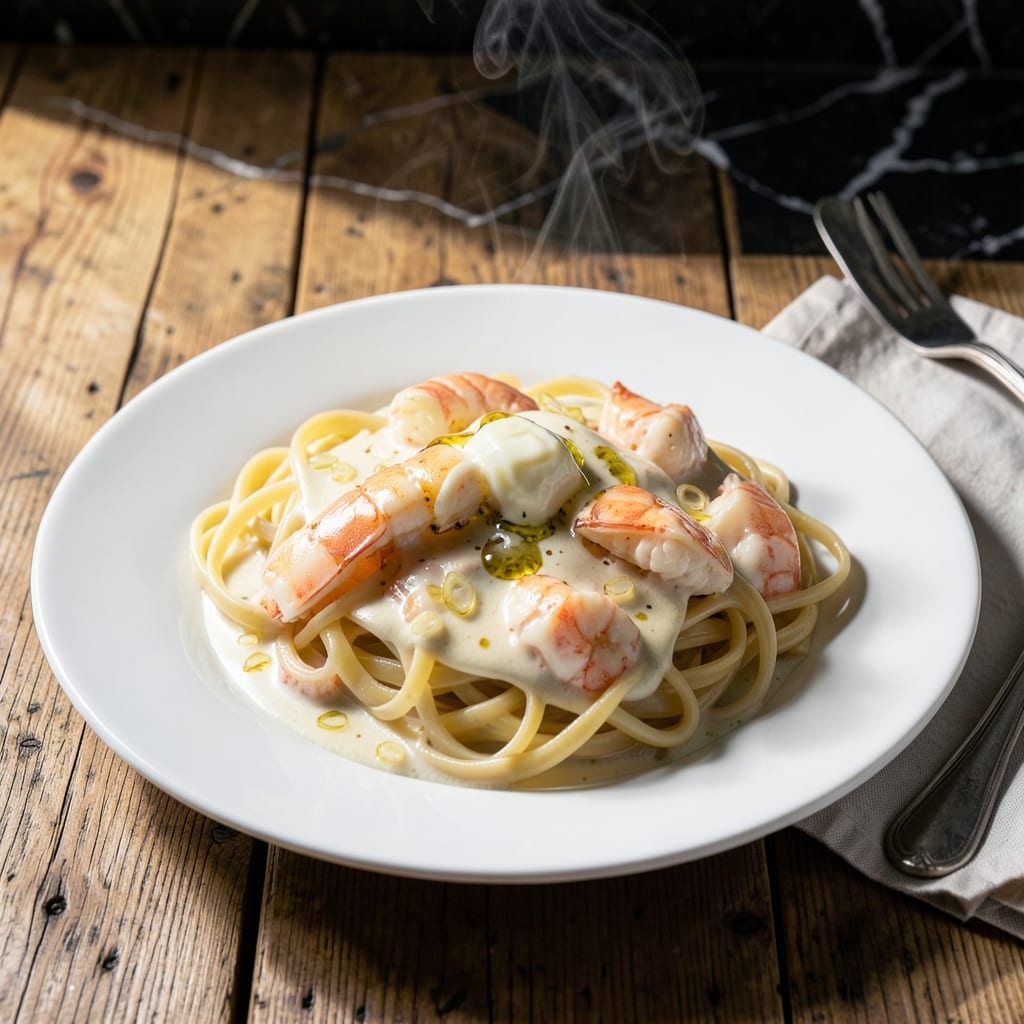
There’s something undeniably indulgent about fresh lobster tossed with al dente pasta in a velvety white wine sauce. This dish brings restaurant-quality luxury to your home kitchen without the hefty price tag.
The secret lies in cooking the lobster meat just until tender, then finishing it in the same pan with garlic, shallots, and dry white wine. The sauce reduces into a rich, aromatic base that clings beautifully to each strand of pasta.
In under 25 minutes, you’ll have a plate of tender lobster and perfectly coated pasta with a sauce that’s both bright and deeply flavorful. It’s a meal that feels special enough for a celebration but simple enough for a weeknight treat.
Pair with a crisp white wine and crusty bread to soak up every last drop. Here’s how to make it.
Ingredients for Lobster Pasta Recipe White Wine
Fresh lobster, al dente pasta, and a velvety white wine sauce come together beautifully here.
| Ingredient | Amount | Notes |
|---|---|---|
| Lobster Tail Meat 🦞 | 1 ½ lb | Fresh or thawed, chopped into bite-sized pieces |
| Linguine Pasta 🍝 | 12 oz | Or sub fettuccine or spaghetti |
| Dry White Wine 🍷 | 1 ½ cups | Sauvignon Blanc or Pinot Grigio preferred |
| Shallots 🧅 | 2 whole | Finely minced for sauce |
| Garlic Cloves 🧄 | 4 cloves | Minced for aromatic base |
| Unsalted Butter 🧈 | ½ cup | Divided for cooking and finishing |
| Heavy Cream 🥛 | ½ cup | For velvety sauce texture |
| Fresh Parsley 🌿 | ¼ cup | Chopped for garnish |
| Lemon 🍋 | 1 whole | Zested and juiced for brightness |
| Kosher Salt 🧂 | 1 tsp | Plus more to taste |
| Freshly Ground Black Pepper 🌶️ | ½ tsp | For seasoning sauce |
| Red Pepper Flakes 🌶️ | ¼ tsp | Optional for subtle heat |
| Olive Oil 🫒 | 2 tbsp | For sautéing aromatics |
| Parmesan Cheese 🧀 | ½ cup | Freshly grated for finishing |
[recipe_ingredient_scaler]
The lobster is the star—fresh tails from a trusted seafood counter are ideal, but high-quality frozen works in a pinch (thaw overnight). I grab mine from Whole Foods or Local Fishmongers when they’re running specials. For the wine, Sauvignon Blanc or Pinot Grigio are perfect: dry, crisp, and they won’t overpower the dish. Don’t use cooking wine—it’s too salty and harsh.
No white wine? Sub dry vermouth or chicken stock plus a splash of lemon juice. Heavy cream can be half-and-half for a lighter sauce, but the texture won’t be as luxurious. No linguine? Any long pasta works—fettuccine or spaghetti hold the sauce well. The Parmesan can be swapped for Pecorino Romano if you want a sharper bite (just use a touch less).
Leftovers keep 2-3 days in the fridge—reheat gently to avoid overcooking the lobster. The sauce will thicken as it cools, so add a splash of warm water or wine when reheating. Best served fresh, but still delicious the next day.
Why You’ll Love This Recipe
- I’ll be real: the flavors meld overnight, so tomorrow’s lunch tastes like a second date with this dish.
- One Pan Wonder: I toss the linguine, lobster, and wine in a single skillet—minimal cleanup, maximum flavor.
- Rich White Wine Depth: The dry white wine and shallots create this luxurious sauce that coats every strand of pasta.
- Date Night Ready: Honestly, this feels fancy enough for a special occasion but comes together faster than ordering takeout.
Step-by-Step Instructions for Lobster Pasta with White Wine
Ready to impress? This luxurious dish comes together faster than you’d think.
Step 1: Cook the Linguine Al Dente
Bring a large pot of salted water to a rolling boil. Add the 12 oz Linguine Pasta and cook according to package directions until al dente, about 8-10 minutes. Stir occasionally to prevent sticking.
Before draining, reserve 1 cup of the starchy pasta water—this is key for adjusting the sauce consistency later. Drain the pasta but don’t rinse it; the starch helps the sauce cling to every strand.
Step 2: Sauté Aromatics and Lobster
While the pasta cooks, heat 2 tbsp Olive Oil in a large skillet over medium heat. Add the 2 whole Shallots (finely minced) and cook for 2-3 minutes until soft and translucent. Stir in the 4 cloves Garlic Cloves (minced) and the 0.25 tsp Red Pepper Flakes and cook for 30 seconds until fragrant but not browned.
Add the 1.5 lb Lobster Tail Meat (chopped into bite-sized pieces) to the skillet. Cook for 2-3 minutes until the edges turn opaque and the meat is just cooked through. Lobster cooks quickly, so keep an eye on it to avoid overcooking.
Step 3: Deglaze with Wine and Build the Sauce
Pour in the 1.5 cups Dry White Wine and scrape up any browned bits from the bottom of the pan with a wooden spoon. Let the wine simmer for 3-4 minutes until it reduces by about half. This step concentrates the wine’s flavor and infuses the lobster with its acidity.
Reduce the heat to medium-low and stir in the 0.5 cup Unsalted Butter (divided) and the 0.5 cup Heavy Cream. Let the sauce simmer gently for 2 minutes until it thickens slightly and turns a rich, creamy consistency. Season with 1 tsp Kosher Salt and 0.5 tsp Freshly Ground Black Pepper.
Step 4: Combine Pasta and Sauce
Add the drained pasta to the skillet with the sauce and toss to coat evenly. If the sauce seems too thick, add a splash of the reserved pasta water, 1 tablespoon at a time, until it reaches your desired consistency. The pasta should be glossy and well-coated.
Squeeze in the juice from the 1 whole Lemon (zested and juiced) and stir to brighten the sauce. The acidity cuts through the richness and enhances the lobster’s natural sweetness.
Step 5: Finish and Serve
Remove the skillet from heat and stir in the 0.5 cup Parmesan Cheese (freshly grated) and the 0.25 cup Fresh Parsley (chopped). Toss once more to distribute the cheese and parsley evenly throughout the dish.
Serve immediately while hot, with extra Parmesan Cheese and a sprinkle of lemon zest if desired. Each bite should be packed with tender lobster, silky sauce, and the bright finish of lemon and herbs.
Pro Tips For Making Lobster Pasta Recipe White Wine
- Poach the Lobster: Gently simmer the lobster tail meat in the white wine for 3-4 minutes—just until opaque. I learned this the hard way after overcooking it in the pan and turning it rubbery.
- Reserve Pasta Water: Before draining the linguine, save a cup of the starchy water. It’s the thing that matters most for binding the sauce when you toss everything together.
- Sauté Shallots Slow: Cook the shallots and garlic on medium-low for 5-6 minutes until soft and sweet. After burning three batches, I finally figured out that high heat just makes them bitter.
- Deglaze with Wine: Pour in the white wine to scrape up all those browned bits from the pan—sounds weird, but it works and packs the sauce with flavor.
Flavor Customization for lobster pasta recipe white wine
Herb Infusions
Swap the parsley for fresh tarragon or chives to add an elegant French touch. A 1 tbsp of chopped tarragon gives a subtle anise flavor that pairs beautifully with lobster. I often mix tarragon and parsley for complexity. 🌿
Citrus Variations
Add 1 tsp orange zest along with the lemon for a brighter, more floral note. For a bold twist, use lime juice and zest instead of lemon—this works especially well with a Pinot Grigio wine base.
Spice It Up
Increase the red pepper flakes to ½ tsp for noticeable heat, or add 1 finely diced jalapeño with the shallots. For smoky depth, stir in ½ tsp smoked paprika when building the sauce.
Creamy Alternatives
Replace the heavy cream with ½ cup crème fraîche for a tangy, slightly lighter sauce. For a dairy-free version, use ½ cup coconut cream—it adds a subtle sweetness that complements the lobster. 💡
Cheese Swaps
Use Pecorino Romano instead of Parmesan for a sharper, saltier bite. A blend of Parmesan and Gruyère (about ¼ cup each) adds nutty depth. For extra richness, sprinkle 2 tbsp grated Fontina on top before serving.
Extra Luxe Touches
A splash of 1 tbsp brandy or cognac deglazed with the wine adds incredible depth. Finish with 1 tbsp truffle oil drizzled over the top for an earthy, gourmet flourish. I save this for special occasions. ✨
Nutrition Facts
Frequently Asked Questions
What kind of white wine works best?
A dry Sauvignon Blanc or Pinot Grigio adds bright acidity that complements the lobster. Avoid sweet or oaky wines as they can overpower the dish.
Can I use frozen lobster meat?
Yes! Thaw it overnight in the fridge and pat dry before cooking. Frozen lobster works well but may release more moisture, so drain it thoroughly.
How do I avoid rubbery lobster?
Cook the lobster just until opaque, about 2-3 minutes. Overcooking makes it tough, so remove it from heat as soon as it turns pink.
What pasta shape holds the sauce best?
Linguine or fettuccine are ideal for catching the creamy sauce. Spaghetti works too, but wider noodles cling better to every bite.

Trained in classic French technique but raised on slow-cooked ribs and spicy rubs, she blends culinary skill with smoke and soul.
- Recipe for Boneless Pork Chops in Cast Iron Skillet: Sear and Baste to Juicy Perfection - October 3, 2026
- Recipe for Boneless Cross Rib Roast: Slow-Roasted Beef with Herb Crust - October 3, 2026
- Hamburgers in Sauce Recipe Crock Pot: Slow-Cooked Savory Delight - October 3, 2026