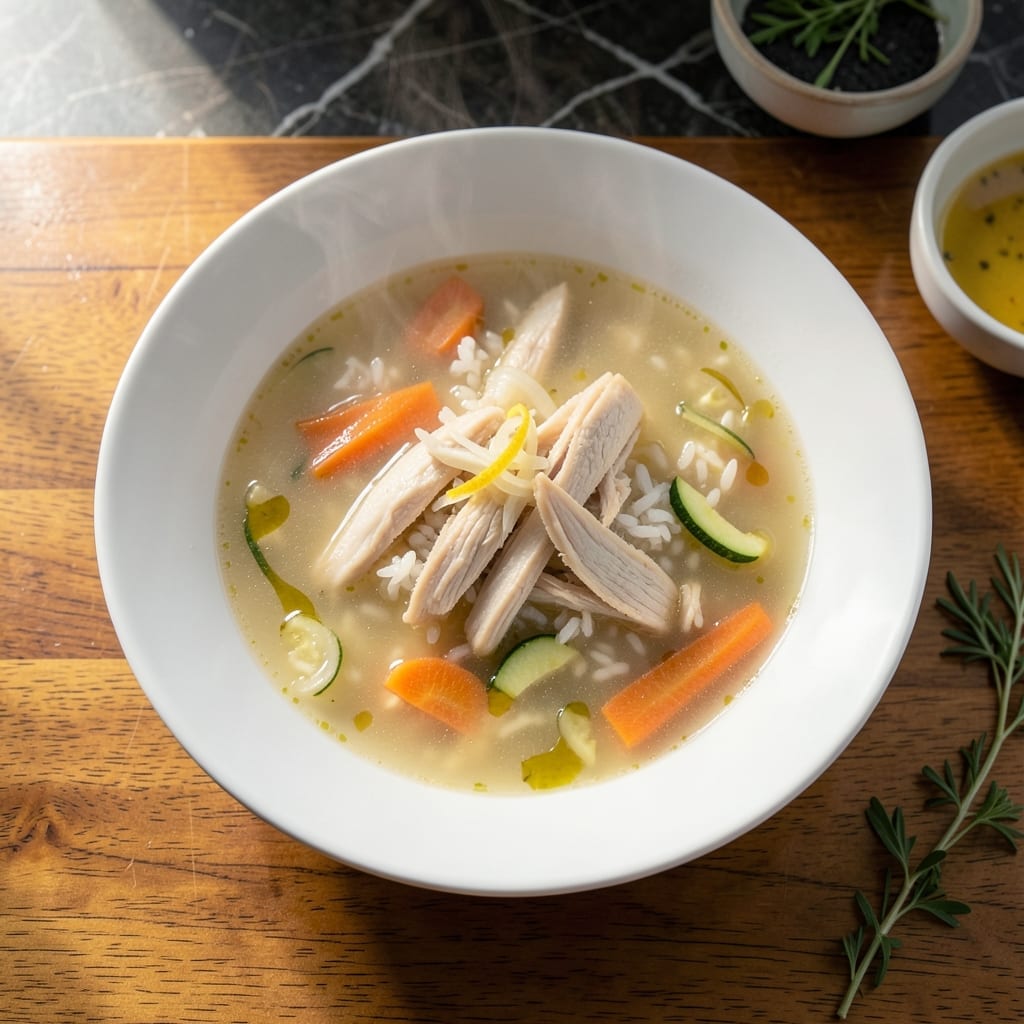
This gentle soup offers comfort when your digestive system needs a break. A light broth with carefully selected ingredients provides nourishment without irritation, making it ideal for sensitive stomachs or recovery periods.
I developed this recipe after realizing how few truly low-fiber options exist for those needing digestive rest. Strained broth and peeled vegetables create a smooth, easy-to-digest base that still delivers satisfying flavor.
The result is a soothing, nutrient-rich soup that won’t overwhelm your system. Its simplicity allows the natural flavors to shine while keeping the fiber content minimal.
Perfect for post-procedure recovery or whenever you need a digestive reset.
Ingredients for Low Fiber Soup
Simple, soothing ingredients for a broth that comforts and nourishes without straining digestion.
| Ingredient | Amount | Notes |
|---|---|---|
| Chicken Breast 🍗 | 1 lb | Boneless, skinless, poached and shredded |
| White Rice 🍚 | ½ cup | Long-grain, fully cooked |
| Carrots 🥕 | 2 whole | Peeled and finely diced |
| Zucchini 🥒 | 1 whole | Peeled, seeded, and diced |
| Low-Sodium Chicken Broth 🍲 | 6 cups | Strained for smoothness |
| Yellow Onion 🧅 | ½ whole | Peeled and finely minced |
| Garlic Cloves 🧄 | 2 cloves | Peeled and crushed |
| Olive Oil 🫒 | 1 tbsp | Light or extra-light variety |
| Celery Stalks 🥬 | 1 whole | Peeled and finely chopped |
| Salt 🧂 | ½ tsp | Fine sea salt or table salt |
| Ground White Pepper 🌿 | ¼ tsp | Milder than black pepper |
| Fresh Parsley 🌿 | 2 tbsp | Finely chopped, for garnish |
[recipe_ingredient_scaler]
The chicken is the protein base here—boneless, skinless breasts are easiest to digest. I get mine from Whole Foods or any trusted butcher (their birds tend to be more tender). The carrots and zucchini need peeling to remove fiber-rich skins. Organic produce can be gentler on sensitive systems, but conventional works just fine if that’s what you have.
Need to swap the chicken? Ground turkey or tofu works well (press the tofu first to remove excess moisture). No zucchini? Peeled yellow squash is an easy stand-in. For the broth, vegetable broth keeps it plant-based if needed. The rice can be swapped for white quinoa, but avoid brown rice—it’s higher in fiber.
This soup keeps beautifully for 4-5 days in the fridge and reheats gently without losing texture. Freeze portions for up to 3 months (leave out the parsley garnish until serving). Strain again if you need an even smoother consistency after storage.
Why You’ll Love This Recipe
- One Pot Wonder: I just dump everything in, simmer, and it’s done—no fancy steps, no extra pans to wash.
- Mild & Comforting: The chicken and carrots blend into this gentle, soothing broth that’s easy on the stomach.
- Meal Prep Magic: I make a big batch on Sunday and it reheats beautifully all week.
- Budget Friendly: Chicken breast, rice, and basic veggies stretch far without breaking the bank.
Step-by-Step Instructions for Low Fiber Soup
This gentle method ensures a smooth, easily digestible soup with maximum flavor and minimal residue.
Step 1: Sauté the Aromatics for Depth
Heat the 1 tbsp Olive Oil in a large pot over medium heat. Add the 0.5 whole Yellow Onion (finely minced) and cook for 3-4 minutes until translucent but not browned. You want to soften the onion without developing color, which keeps the flavor mild.
Add the 2 cloves Garlic Cloves (crushed) and 1 whole Celery Stalks (finely chopped), cooking for another 2 minutes until fragrant. This builds a subtle, savory base that won’t overwhelm the delicate broth. Stir occasionally to prevent sticking.
Step 2: Simmer the Vegetables Until Tender
Pour in the 6 cups Low-Sodium Chicken Broth and bring to a gentle boil. Add the 2 whole Carrots (peeled and finely diced) and 1 whole Zucchini (peeled, seeded, and diced). Reduce heat to low-medium and simmer for 15-20 minutes until the vegetables are completely soft.
Taste the broth as it simmers—if it needs brightness, a pinch of the 0.5 tsp Salt will enhance the natural sweetness of the carrots and zucchini. Avoid vigorous boiling, which can break down the vegetables too much and make the soup cloudy.
Step 3: Poach and Shred the Chicken
While the vegetables cook, place the 1 lb Chicken Breast (boneless, skinless) into the simmering broth. Poach for 12-15 minutes until the internal temperature reaches 165°F and the meat is fully cooked through. The chicken should be tender and easy to shred with forks.
Remove the chicken from the broth and transfer it to a cutting board. Once cool enough to handle, shred it into fine pieces using two forks. This ensures the chicken blends seamlessly into the soup, creating a uniform texture that’s easy to digest.
Step 4: Cook the Rice and Finalize the Soup
Stir the 0.5 cup White Rice (long-grain) into the broth and return the pot to a simmer. Cook for 15-18 minutes until the rice is fully tender. The rice will absorb some of the broth, thickening the soup slightly while keeping it light.
Add the shredded chicken back into the pot along with the 0.25 tsp Ground White Pepper. This milder pepper adds a gentle warmth without the harshness of black pepper. Stir well and let the soup heat through for 2-3 minutes.
Step 5: Strain and Garnish for Smoothness
For an ultra-smooth texture, strain the soup through a fine-mesh sieve, pressing gently on the solids to extract as much liquid as possible. This removes any remaining fiber while retaining the rich flavor. Discard the solids or save them for another use if preferred.
Ladle the strained soup into bowls and garnish with the 2 tbsp Fresh Parsley (finely chopped). The parsley adds a touch of color and freshness without introducing significant fiber. Serve warm for the most soothing experience.
Pro Tips For Making Low Fiber Soup
- Simmer, Don’t Boil: Keep the broth at a gentle simmer—around 185-200°F—so the chicken stays tender and the rice doesn’t turn mushy. I learned this the hard way after ending up with a pot of gluey soup.
- Peel the Zucchini: Since you’re going low-fiber, peel the zucchini before dicing—it removes most of the skin’s fiber while keeping the flavor. Sounds tedious, but it’s worth the extra 2 minutes.
- Cook Rice Separately: White rice can soak up too much broth if added raw, so par-cook it first (about 10 minutes in water) before adding to the soup. This guarantees a consistent texture without turning your soup into porridge.
- Shred the Chicken: After poaching the chicken breast, shred it instead of cubing—it distributes more evenly and makes the soup feel heartier. My grandmother swore by this, and she was right.
Make-Ahead Tips for Leftovers
Prep Ahead Strategy
I always chop all vegetables the night before and store them in airtight containers in the fridge. The carrots, zucchini, and celery stay fresh for 24-48 hours when prepped this way. This cuts your active cooking time in half on soup day.
Broth Base Shortcut
Make a big batch of strained chicken broth on Sunday and freeze it in 2-cup portions. When you’re ready to make the soup, just thaw what you need. I use Ball mason jars for freezer storage—they’re perfect for broth and don’t absorb odors. ❄️
Rice Cooking Tip
Cook the 0.5 cup White Rice separately and store it in the fridge for up to 3 days. Add it to the soup during the final 5 minutes of reheating. This prevents the rice from turning mushy if you’re making the soup in advance.
Chicken Prep
Poach the 1 lb Chicken Breast in advance and shred it—the cooked chicken keeps well in the fridge for 3-4 days. I’ve found this actually improves the flavor as the chicken absorbs more of the broth’s seasoning over time.
Storage Essentials
Let the soup cool completely before storing. I divide it into individual portions using 16-ounce deli containers from my local Boston market. These stack neatly and are perfect for grabbing a single serving when you need a gentle meal. 💡
Reheating Method
Reheat gently over medium-low heat for 8-10 minutes, stirring occasionally. If the soup seems thick, add a splash of low-sodium chicken broth to restore the perfect consistency. Never boil vigorously—this keeps the texture smooth and soothing.
Nutrition Facts
Frequently Asked Questions
What vegetables work best for this?
Peeled carrots, zucchini, and celery are ideal. Avoid high-fiber options like broccoli or spinach.
Can I make this dairy-free?
This recipe contains no dairy ingredients. Just ensure your broth is dairy-free.
How long can I store leftovers?
Keep in the fridge for 4-5 days or freeze for up to 3 months. Reheat gently to preserve texture.
Why strain the soup?
Straining removes any remaining fiber from softened vegetables, creating an ultra-smooth, easily digestible broth.

Trained in classic French technique but raised on slow-cooked ribs and spicy rubs, she blends culinary skill with smoke and soul.
- Recipe for Boneless Pork Chops in Cast Iron Skillet: Sear and Baste to Juicy Perfection - October 3, 2026
- Recipe for Boneless Cross Rib Roast: Slow-Roasted Beef with Herb Crust - October 3, 2026
- Hamburgers in Sauce Recipe Crock Pot: Slow-Cooked Savory Delight - October 3, 2026