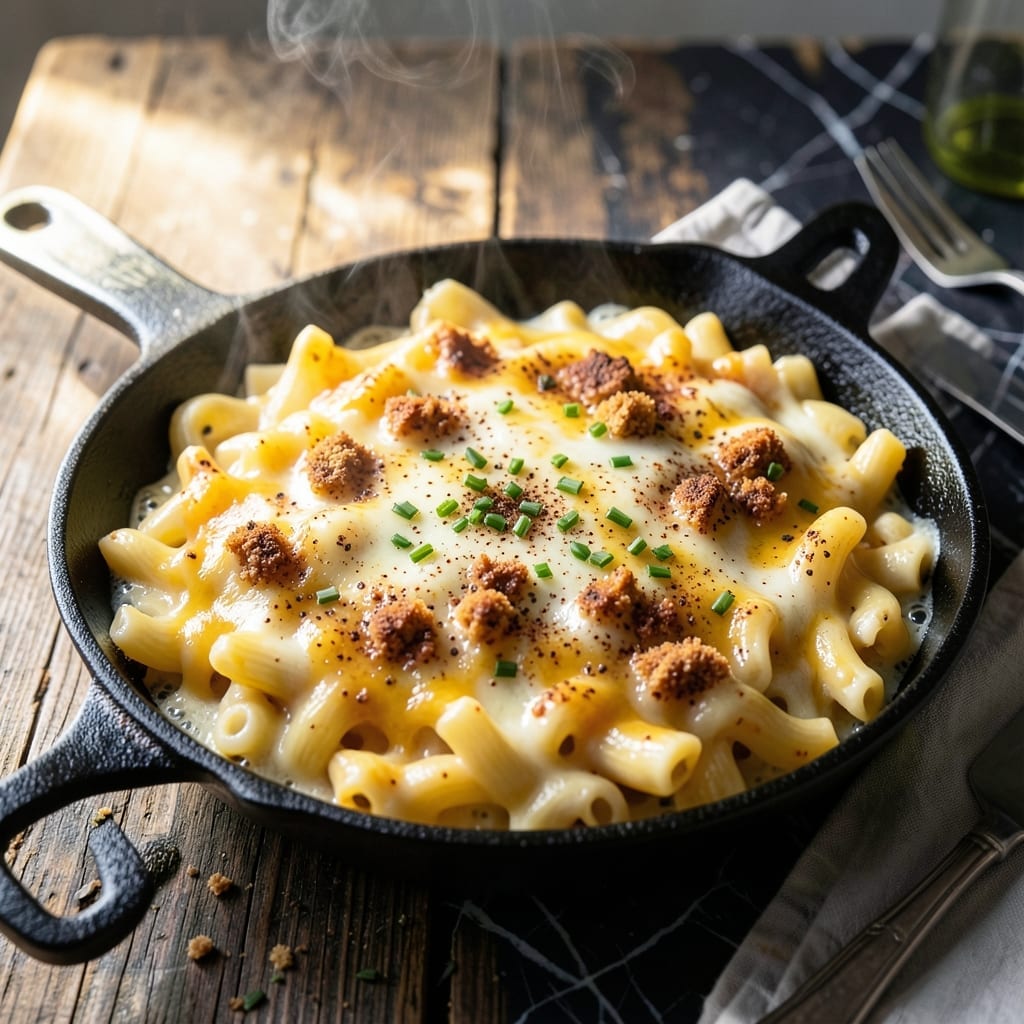
I’ve spent years perfecting this stovetop method to deliver the creamiest mac and cheese without a single baked minute. The secret lies in a precise roux and gradual cheese incorporation, ensuring a velvety sauce that clings to every noodle.
This approach eliminates the risk of grainy textures or separated sauce that plagues many homemade versions. By controlling the heat and timing, you achieve restaurant-quality results with minimal effort and maximum flavor.
What emerges is a dish with rich, smooth sauce and perfectly cooked pasta—no oven required. The method guarantees consistent creaminess every time, whether serving a crowd or just yourself.
Vegetarian-friendly and ready in under 30 minutes, this version proves stovetop mac and cheese can rival any baked casserole.
Ingredients for Mac N Cheese Recipe Step by Step
Pantry staples and quality cheeses create this ultra-creamy stovetop masterpiece in minutes.
| Ingredient | Amount | Notes |
|---|---|---|
| Elbow Macaroni 🍝 | 12 oz | Or any short pasta shape |
| Unsalted Butter 🧈 | 4 tbsp | Divided for roux and finishing |
| All-Purpose Flour 🌾 | ¼ cup | For roux base |
| Whole Milk 🥛 | 3 cups | Full-fat for creaminess |
| Sharp Cheddar Cheese 🧀 | 8 oz | Freshly grated from block |
| Gruyère Cheese 🧀 | 4 oz | Freshly grated for depth |
| Parmesan Cheese 🧀 | 2 oz | Freshly grated for saltiness |
| Dijon Mustard 🟡 | 1 tsp | Smooth, not whole grain |
| Worcestershire Sauce 🫒 | 1 tsp | Vegetarian version required |
| Garlic Powder 🧄 | ½ tsp | Not garlic salt |
| Onion Powder 🧅 | ½ tsp | For savory depth |
| Salt 🧂 | 1 tsp | Diamond Crystal kosher preferred |
| Ground White Pepper 🌶️ | ¼ tsp | For clean finish |
| Ground Nutmeg 🌰 | 0.125 tsp | Freshly grated if possible |
[recipe_ingredient_scaler]
The cheese selection is critical for optimal texture and flavor. Sharp cheddar provides the base, while Gruyère adds complexity and Parmesan delivers the salty finish. Source blocks from Whole Foods or Murray’s Cheese—pre-shredded contains anti-caking agents that prevent smooth melting. Use full-fat whole milk for the creamiest sauce; low-fat versions produce a thinner result.
Cheese substitutions are possible with a few guidelines. American cheese at half the quantity ensures ultra-smoothness. For a tangier profile, swap cheddar for Colby. No Gruyère? Use Fontina or Monterey Jack. The Dijon mustard brightens the sauce—skip it only if you prefer a milder flavor. Always use vegetarian Worcestershire to maintain dietary compliance.
Store fresh cheeses wrapped in parchment, then foil, in the fridge for up to 1 week. The prepared mac and cheese keeps for 3-4 days refrigerated or 3 months frozen. Reheat gently with a splash of milk to restore creaminess.
Why You’ll Love This Recipe
- One Pot Wonder: I love that this comes together in a single saucepan—no colander, no extra bowls, just melt, whisk, and stir.
- Sharp Cheddar Magic: That tangy bite from the sharp cheddar cuts through the creamy sauce in the best way.
- Feeds a Crowd: Honestly, it’s my go-to for potlucks or lazy Sundays when I need to fill hungry bellies fast.
- Budget Stretch: A pound of pasta and a block of cheese feed my family for two meals, and the leftovers taste even better.
Step-by-Step Instructions for Ultra Creamy Stovetop Mac N Cheese
Here’s the method. Straightforward, tested, works every time.
Step 1: Cook the Elbow Macaroni to Al Dente Perfection
Bring a large pot of salted water to a rolling boil. Add the 12 oz Elbow Macaroni and cook according to package directions, but stop 1 minute early—you want it just shy of al dente. The pasta will finish cooking in the sauce, absorbing all that cheesy richness without turning mushy.
Drain the pasta in a colander but don’t rinse it. The surface starch helps the sauce cling beautifully. Shake the colander gently to remove excess water, then set the pasta aside. This step ensures your final dish has the perfect texture, with each bite coated in velvety sauce.
Step 2: Create a Smooth, Golden Roux as Your Sauce Foundation
In a heavy-bottomed pot, melt 4 tbsp Unsalted Butter over medium heat until foaming subsides. Add the 0.25 cup All-Purpose Flour and whisk constantly for 2-3 minutes until the mixture turns a light golden color and smells slightly nutty. This is your roux—the backbone of a proper béchamel.
Be patient here. Undercooked flour tastes raw, while overcooked roux can make the sauce grainy. You’re aiming for a smooth paste that bubbles gently. The moment it reaches that perfect golden hue, you’re ready for the next step.
Step 3: Build the Creamy Béchamel Base with Milk and Seasonings
Slowly pour in the 3 cups Whole Milk, whisking vigorously to prevent lumps from forming. Bring the mixture to a gentle simmer over medium heat, continuing to whisk until it thickens enough to coat the back of a spoon. This should take about 5-7 minutes.
Stir in the 1 tsp Dijon Mustard, 1 tsp Worcestershire Sauce, 0.5 tsp Garlic Powder, 0.5 tsp Onion Powder, 1 tsp Salt, 0.25 tsp Ground White Pepper, and 0.125 tsp Ground Nutmeg. These seasonings add depth and complexity to your sauce, balancing the richness of the cheese.
Step 4: Incorporate the Cheeses for Maximum Creaminess
Reduce the heat to low and begin adding the cheeses gradually. Start with the 8 oz Sharp Cheddar Cheese and 4 oz Gruyère Cheese, stirring until fully melted and smooth before adding the 2 oz Parmesan Cheese. Freshly grated cheese melts evenly without the anti-caking agents found in pre-shredded varieties.
Taste and adjust seasoning if needed. The sauce should be rich, velvety, and perfectly balanced. If it’s too thick, add a splash of milk to reach your desired consistency. Remember, the sauce will thicken slightly as it cools.
Step 5: Combine Pasta and Sauce for the Final Touch
Add the cooked elbow macaroni to the cheese sauce and stir gently to coat every piece evenly. If the mixture seems too thick, add a small amount of the pasta cooking water to loosen it. This starchy water helps create a silky texture that clings to the pasta beautifully.
Let the dish sit for 2-3 minutes off the heat to allow the flavors to meld together. The pasta will absorb some of the sauce, creating that perfect creamy consistency this recipe promises. Serve immediately while hot and at its creamiest.
Pro Tips For Making Mac N Cheese Recipe Step By Step
- Cook Pasta Al Dente: Boil the elbow macaroni for 1-2 minutes less than the package says—I learned this the hard way after ending up with mushy noodles that turned to paste in the cheese sauce.
- Grate Your Cheese: Skip the pre-shredded stuff and grate the sharp cheddar yourself; the anti-caking agents in bagged cheese make the sauce grainy, and fresh-grated melts like a dream.
- Temper the Milk: Warm the whole milk slightly before adding it to the butter-flour roux, or you’ll end up with a lumpy, sad sauce that refuses to smooth out—my grandmother swore by this, and she was right.
- Add Cheese Off Heat: Remove the pot from the burner before stirring in the cheddar, then return it to low heat; this keeps the sauce creamy instead of turning it into a stringy, broken mess.
Common Mistakes When Making This Recipe
Overcooked Pasta
Cooking your elbow macaroni past al dente is the fastest way to ruin the texture. I learned this the hard way when I first started making this dish. The pasta continues cooking in the sauce, so stop 1 minute early and test for doneness. You want a slight bite that softens perfectly in the final dish. 💪
Lumpy Roux
When making the roux, don’t rush adding the all-purpose flour to the melted butter. Whisk constantly over medium heat for 2-3 minutes until smooth and golden. Lumps form when flour isn’t fully incorporated before adding liquid. I use a flat whisk for better control.
Cheese Clumping
Always use freshly grated cheese from blocks—pre-shredded contains anti-caking agents that prevent smooth melting. Add cheeses gradually over low heat, stirring until fully melted before adding more. I source my sharp cheddar and Gruyère from New Seasons Market for best results.
Sauce Separation
If your sauce looks greasy or separated, it’s often because the heat was too high when adding cheese. Remove from heat immediately and whisk vigorously. If needed, add a splash of warm whole milk to bring it back together. This happened to me once during a dinner party—lesson learned!
Underseasoned Dish
Don’t forget the seasonings in your béchamel. The Dijon mustard, Worcestershire, and spices add depth. Taste as you go and adjust the salt and white pepper to balance the richness. I often add an extra pinch of garlic powder for my family’s taste.
Skipping the Rest
After combining pasta and sauce, let it sit for 2-3 minutes off heat. This allows the flavors to meld and the pasta to absorb the sauce fully. Serving immediately can result in a thinner, less cohesive dish. I set a timer to remind myself during busy weeknights. ⏰
Nutrition Facts
Frequently Asked Questions
Can I use pre-shredded cheese to save time?
Avoid pre-shredded cheese as it contains anti-caking agents that prevent smooth melting. Freshly grated blocks of sharp cheddar and Gruyère melt evenly for the creamiest texture.
Why does my sauce turn out grainy?
Graininess usually happens from high heat or adding cheese too quickly. Keep heat on low and add cheese gradually, stirring until fully melted between additions.
How can I make this ahead of time?
Prepare as directed, then store in an airtight container in the fridge for up to 3-4 days. Reheat gently with a splash of milk to restore creaminess.
What pasta shapes work best?
Elbow macaroni is classic, but any short shape like cavatappi or shells works well. Avoid long pasta like spaghetti as it won’t hold the sauce as effectively.

Trained in classic French technique but raised on slow-cooked ribs and spicy rubs, she blends culinary skill with smoke and soul.
- Recipe for Boneless Pork Chops in Cast Iron Skillet: Sear and Baste to Juicy Perfection - October 3, 2026
- Recipe for Boneless Cross Rib Roast: Slow-Roasted Beef with Herb Crust - October 3, 2026
- Hamburgers in Sauce Recipe Crock Pot: Slow-Cooked Savory Delight - October 3, 2026