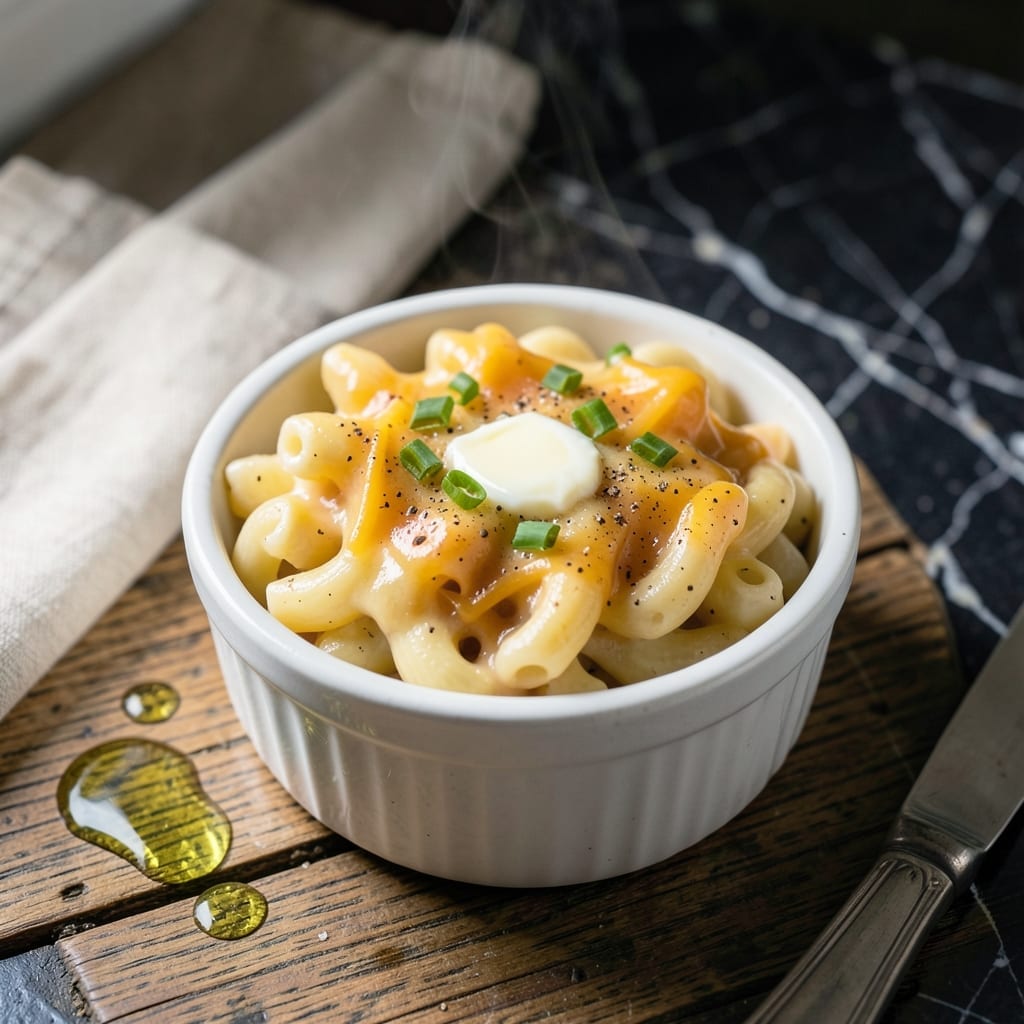
There’s something deeply satisfying about a warm bowl of macaroni cheese made just for you. This single-serving version delivers all the comfort of the classic without leftovers or waste.
I developed this method in my tiny Boston kitchen, where space and time are always limited. The key is cooking the pasta directly in the cheese sauce, so you get a creamy, cohesive dish in one pot.
The result is perfectly tender pasta coated in a velvety, rich sauce with just the right amount of cheesy goodness. It’s the ideal portion for a cozy solo dinner.
No fancy techniques—just straightforward steps for a dish that feels indulgent yet effortless.
Ingredients for Macaroni Cheese Recipe for 1
Nine simple ingredients deliver creamy, single-serving comfort in one pot.
| Ingredient | Amount | Notes |
|---|---|---|
| Elbow Macaroni 🍝 | ¾ cup | Uncooked, or any short pasta |
| Water 💧 | 1 ½ cups | For cooking pasta |
| Milk 🥛 | ½ cup | Whole milk for creaminess |
| Unsalted Butter 🧈 | 1 ½ tbsp | For richness in sauce |
| All-Purpose Flour 🌾 | 1 ½ tbsp | For thickening sauce |
| Shredded Sharp Cheddar Cheese 🧀 | 1 cup | Packed, for best melt |
| Shredded Gruyere Cheese 🧀 | ¼ cup | Optional, for depth of flavor |
| Salt 🧂 | ½ tsp | Kosher or sea salt |
| Dry Mustard 🌶️ | ¼ tsp | Adds tang to sauce |
| Ground Black Pepper 🌶️ | 0.125 tsp | Freshly ground preferred |
[recipe_ingredient_scaler]
The cheese makes this. Sharp cheddar is a must—mild just disappears. I grab blocks from Trader Joe’s since their pre-shredded has anti-caking agents that ruin the melt. Gruyere adds complexity (the good stuff, not the pre-shredded kind), but skip it if you’re keeping it simple. For the milk, whole is ideal but 2% works in a pinch. Butter should be unsalted so you control the seasoning.
No sharp cheddar? Colby or Monterey Jack work but won’t pack the same punch. Out of Gruyere? Pepper Jack at half the amount adds a nice kick. The flour can be swapped for cornstarch at half the quantity. Mustard powder missing? Dijon at a quarter teaspoon gives similar depth. Pasta shape is flexible—any short variety holds sauce well.
This is best eaten fresh, but leftovers (if any) keep 2-3 days in the fridge. Reheat gently with a splash of milk to restore creaminess. Doesn’t freeze well—the sauce separates. Perfect portion means no waste, just pure comfort.
Why You’ll Love This Recipe
- 20-Minute Meal: I can have this creamy macaroni cheese ready before the kettle boils for tea. Just pasta, milk, butter, and flour—no fancy ingredients.
- Cheesy Comfort: The roux made with butter and flour thickens the milk into this velvety sauce that clings to every elbow macaroni. Honestly, it’s the little things.
- Solo Feast: Perfect when I’m cooking for one and don’t want to bother with scaling down a big recipe or dealing with leftovers.
- Pantry Hero: All the ingredients are kitchen staples I already have on hand, so it’s a reliable go-to when the fridge is looking bare.
Step-by-Step Instructions for Macaroni Cheese
Here’s how to make this comforting dish quickly and perfectly every time.
Step 1: Cook the Elbow Macaroni
Bring the 1.5 cups Water to a boil in a small pot. Add the 0.75 cup Elbow Macaroni and cook according to package instructions until al dente.
Drain the pasta but don’t rinse it—those surface starches help the sauce cling beautifully. I like to undercook it by 1 minute since it’ll finish in the sauce. Transfer the drained pasta to a small bowl and set aside.
Step 2: Make the Roux for the Cheese Sauce
In the same pot, melt the 1.5 tbsp Unsalted Butter over medium heat. Once melted, whisk in the 1.5 tbsp All-Purpose Flour to form a smooth paste. Cook for 1-2 minutes, stirring constantly, until the mixture turns a light golden color and smells nutty.
This roux is your sauce’s backbone—don’t let it brown too much or your sauce might taste burnt. The consistency should be thick but pourable.
Step 3: Build the Cheese Sauce
Slowly pour in the 0.5 cup Milk, whisking continuously to prevent lumps. Add the 0.5 tsp Salt, 0.25 tsp Dry Mustard, and 0.125 tsp Ground Black Pepper. Cook over medium-low heat for 2-3 minutes until the sauce thickens enough to coat the back of a spoon.
Now, reduce the heat to low and add the 1 cup Shredded Sharp Cheddar Cheese and 0.25 cup Shredded Gruyere Cheese. Stir constantly until the cheese melts completely and the sauce is smooth. The Gruyere adds a lovely depth, but if you skip it, the cheddar alone still delivers great flavor.
Step 4: Combine and Finish
Add the cooked pasta to the cheese sauce and stir gently to coat every piece evenly. If the sauce seems too thick, add a splash of warm milk to loosen it. The pasta should glisten with a creamy, velvety coating.
Let it sit for 1-2 minutes off the heat—this allows the pasta to absorb some of the sauce and the flavors to meld together. The end result should be rich, creamy, and comforting, with every bite packed with cheesy goodness.
Pro Tips For Making Macaroni Cheese Recipe For 1
- Salt the pasta water: Use at least 1 tablespoon of salt in your boiling water—this is your only chance to season the macaroni itself. I learned this the hard way when my first batch tasted bland despite a perfect cheese sauce.
- Cook pasta al dente: Pull the elbow macaroni off the heat 1 minute before package instructions say it’s done. It’ll finish cooking in the sauce and won’t turn to mush.
- Warm your milk: Heat the milk for 30-45 seconds in the microwave before adding it to the roux. Cold milk makes the sauce seize up, and nobody wants lumpy mac and cheese.
- Toast the flour: After melting the butter, cook the flour for 1-2 minutes before adding milk. Sounds weird, but it works—this removes the raw flour taste and deepens the flavor.
Essential Equipment for Perfect Results
Small Saucepan
A 1.5-quart saucepan is ideal for this single-serving recipe. It provides enough space for the pasta to cook evenly without crowding. I use my Calphalon Simply—perfect for small batches in my Boston kitchen.
Whisk
Use a flat-bottomed whisk to prevent lumps when making the roux. The flat edges get into the pot’s corners better than balloon whisks. My OXO Good Grips whisk has been my go-to for years.
Wooden Spoon
A sturdy wooden spoon helps stir the cheese sauce without scratching your pot. It also lets you scrape up any browned bits from the roux. Look for one with a long handle to keep your hands away from the heat.
Measuring Cups
Accurate measurements matter in small batches. I prefer stackable measuring cups that nest together—saves space in my tiny kitchen. Pyrex makes a great set that lasts forever.
Cheese Grater
Skip pre-shredded cheese—it has anti-caking agents that prevent smooth melting. A box grater gives you control over texture. I use my Cuisinox for everything from cheddar to nutmeg.
Real talk: freshly grated makes a noticeable difference in creaminess. 🧀
Nutrition Facts
Frequently Asked Questions
Can I make this without Gruyere?
Sharp cheddar alone still delivers rich flavor. For extra depth, try adding 1/4 cup of Monterey Jack or pepper jack instead.
Why is my sauce grainy?
This usually happens if the cheese is added too quickly or at too high heat. Always use low heat and stir constantly when melting. Pre-shredded cheese with anti-caking agents can also cause graininess.
Can I use a different pasta shape?
Yes! Any short pasta like penne, shells, or rotini works well. Stick to 3/4 cup uncooked pasta to keep the ratio perfect.
How do I reheat leftovers?
Add a splash of milk and warm gently on the stove over low heat, stirring often. This restores creaminess without breaking the sauce.

Trained in classic French technique but raised on slow-cooked ribs and spicy rubs, she blends culinary skill with smoke and soul.
- Recipe for Boneless Pork Chops in Cast Iron Skillet: Sear and Baste to Juicy Perfection - October 3, 2026
- Recipe for Boneless Cross Rib Roast: Slow-Roasted Beef with Herb Crust - October 3, 2026
- Hamburgers in Sauce Recipe Crock Pot: Slow-Cooked Savory Delight - October 3, 2026