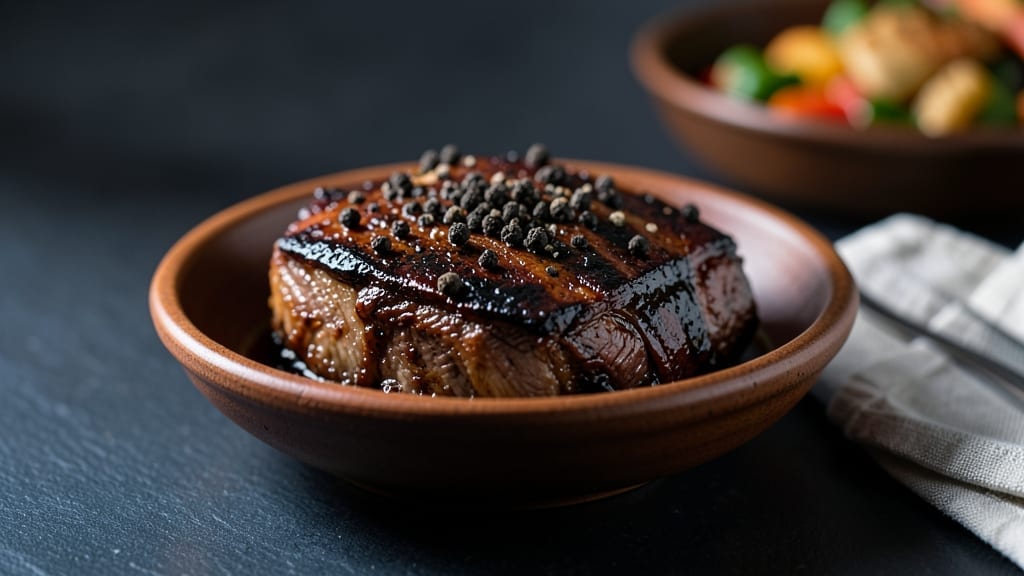
This marinated beef brisket recipe unlocks the secret to turning tough cuts into fork-tender perfection with a carefully balanced marinade that infuses every layer with herbal depth. This marinated beef brisket recipe combines aromatic oils, vinegar, and spices to break down fibers while building flavor—critical for achieving that melt-in-your-mouth texture.
I developed this method after years of testing, ensuring the marinade doesn’t just flavor but also tenderizes the meat before slow cooking.
The secret lies in the two-stage process: first, marinating the brisket overnight to maximize absorption, then slow-smoking it at a precise 225°F until the internal temperature reaches 195–203°F for that signature fall-apart tenderness.
This method guarantees a rich, caramelized bark on the outside while keeping the inside juicy and deeply flavorful—no guesswork, just consistent results every time.
By the final hour, your brisket will be so tender it nearly shreds at the touch, with a crust that’s perfectly balanced between smoky char and herbal brightness. The marinade’s acidity and oils ensure moisture retention, while the slow cook transforms tough cuts into something luxurious.
Serve it sliced against a bed of creamy mashed potatoes or on crusty bread with pickled onions for a restaurant-quality meal at home.
Resting for 30–45 minutes before slicing is non-negotiable—this step locks in juices and ensures clean cuts. Garnish with fresh herbs or a drizzle of the reduced marinade for extra depth. The result? A brisket so tender and flavorful, it becomes the centerpiece of any gathering.
Ingredients for marinated beef brisket
A carefully curated blend of aromatic oils, vinegar, and spices transforms tough beef brisket into luxurious, fall-apart perfection.
| Ingredient | Amount | Notes |
|---|---|---|
| Beef Brisket 🥩 | 4 lb | Whole packer cut, 1/2 inch thick |
| Extra-Virgin Olive Oil 🫒 | ½ cup | High-quality, fruity variety |
| Red Wine Vinegar 🍷 | ¼ cup | Bold, dry variety preferred |
| Fresh Garlic Cloves 🧄 | 8 cloves | Peeled and smashed |
| Fresh Rosemary 🌿 | ¼ cup | Finely chopped, fresh preferred |
| Fresh Thyme 🌿 | ⅛ cup | Leaves only, stems removed |
| Kosher Salt 🧂 | 2 tbsp | Diamond Crystal preferred |
| Freshly Ground Black Pepper 🌶️ | 1 tbsp | Coarsely ground |
| Brown Sugar 🍚 | ¼ cup | Light or dark variety |
| Smoked Paprika 🌶️ | 1 tbsp | High-quality, not cayenne |
| Black Liquorice Root 🍃 | 1 tsp | Optional, for depth |
| Yellow Onion 🧅 | 1 whole | Large, peeled and sliced |
| Wood Chips 🌳 | 1 package | Hickory or oak preferred |
| Beef Broth 💧 | 1 cup | Low-sodium preferred |
[recipe_ingredient_scaler]
The beef brisket is the foundation—opt for a whole packer cut from a trusted butcher, ideally with a 1/2-inch thickness for even cooking. Costco or local meat markets often carry high-quality briskets with excellent marbling, which is critical for flavor and tenderness. If your butcher offers a dry-aged option, it adds an extra layer of depth. For the olive oil, invest in a high-quality extra-virgin—look for labels indicating cold-pressed and first-press, like California Olive Ranch or Colavita. The red wine vinegar should be bold and dry; Bartles & Jaymes or Heinz are reliable choices. Fresh herbs like rosemary and thyme should be vibrant and fragrant—avoid wilted stems, and store them in the fridge wrapped in damp paper towels for up to 5 days.
No fresh rosemary? Dried rosemary at one-third the amount works, but the flavor will be less intense. Substituting balsamic vinegar for red wine vinegar adds sweetness, though it won’t carry the same acidity. For the smoked paprika, avoid cayenne-laced blends—stick to 100% smoked paprika for authentic flavor. If you’re avoiding liquorice, the dish will still be delicious, but it adds a subtle depth that complements the brisket beautifully. The wood chips can be swapped for fruitwood like cherry or pecan, though hickory or oak remains the classic choice. For the beef broth, low-sodium options like Kraft Natural or homemade reduce are ideal—high-sodium broths can overpower the marinade’s balance.
The marinade can be stored in an airtight container in the fridge for up to 5 days, though it’s best used within 48 hours for maximum flavor infusion. The brisket itself should be marinated overnight (12–24 hours) in the refrigerator, not at room temperature. After slow-smoking, let the brisket rest for 30–45 minutes before slicing—this step is non-negotiable for retaining juices. Leftover brisket can be refrigerated for 4–5 days or frozen for up to 3 months. For reheating, low-and-slow in a 300°F oven with a splash of beef broth preserves moisture and prevents drying.
Why You’ll Love This Recipe
- No-Fuss Smoking: I’ll admit it—smoking feels intimidating, but this brisket makes it foolproof. Just toss that 4 lb packer cut in a marinade of olive oil, red wine vinegar, and smashed garlic for 12 hours, then let the smoker do the heavy lifting. No constant babysitting, just set it and forget it while the hickory wood chips work their magic.
- Herbal Depth Bomb: That marinade? It’s a flavor party. The rosemary and thyme cling to every bite, while the brown sugar and smoked paprika caramelize into a crust so good you’ll forget it’s just beef. The black liquorice root (if you’re feeling adventurous) adds a subtle complexity that makes it unforgettable.
- Feeds a Crowd (Without the Guilt): A 4 lb brisket isn’t just for holidays—it’s my secret weapon for game days, potlucks, or when my family shows up unannounced. Leftovers? They reheat beautifully (though I usually eat mine fresh, no regrets). And with just a drizzle of that beef broth sauce, it’s still restaurant-quality the next day.
- Budget Beef Win: Brisket’s one of those cuts that’s cheap but pretentious—until you make it this way. The marinade turns tough meat into melt-in-your-mouth perfection, and you’re using pantry staples like olive oil and brown sugar to elevate it. Plus, smoking it yourself means no overpriced BBQ joint markups.
Step-by-step instructions for marinated beef brisket
Here’s the method to achieve perfectly tender, deeply flavorful brisket with a balanced herbal crust.
Prepare the Herb Marinade
In a large bowl, combine the ½ cup extra-virgin olive oil, ¼ cup red wine vinegar, 8 fresh garlic cloves (smashed), ¼ cup fresh rosemary, ⅛ cup fresh thyme, 2 tablespoons kosher salt, 1 tablespoon freshly ground black pepper, ¼ cup brown sugar, 1 tablespoon smoked paprika, and 1 teaspoon black liquorice root. Whisk vigorously until fully emulsified and the sugar dissolves completely. The marinade should be thick but pourable.
Add the 1 yellow onion (peeled and sliced) to the marinade and mix well. The onion will infuse the marinade with sweetness and depth. Transfer the mixture to a large resealable plastic bag, ensuring the brisket will fully submerge when added. Place the 4 lb beef brisket in the bag, seal tightly, and massage the marinade into the meat, coating all surfaces evenly. Refrigerate for at least 12 hours, preferably 24 hours, to allow the flavors to penetrate deeply.
Preheat Smoker and Prepare Brisket
Remove the brisket from the marinade and let it sit at room temperature for 1 hour before smoking. Preheat your smoker to 225°F using the 1 package wood chips (hickory or oak preferred). Place a water pan in the smoker to maintain moisture and prevent the bark from drying out. Allow the smoker to stabilize and produce clean, blue smoke before adding the brisket.
Position the brisket fat-side up on the smoker grate. The fat will render slowly, basting the meat and creating a rich, flavorful crust. Close the lid and resist the urge to open it during the initial 2 hours of cooking. This resting period ensures even heat distribution and prevents temperature fluctuations that could compromise tenderness.
Smoke and Monitor for Tenderness
Smoke the brisket undisturbed for 6-8 hours, or until the internal temperature reaches 165-170°F. Use a meat thermometer inserted into the thickest part of the brisket (avoid touching bone) to monitor progress. At this stage, you’ll encounter “the stall,” where the temperature plateaus as moisture evaporates. This is normal and expected.
Once the stall occurs, wrap the brisket tightly in butcher paper (not aluminum foil) to retain moisture while allowing the bark to develop. Return it to the smoker and continue cooking until the internal temperature reaches 203°F and the meat is fork-tender with no resistance. This process typically takes an additional 4-6 hours, depending on the size of your brisket and smoker efficiency.
Rest and Slice for Maximum Juiciness
Remove the brisket from the smoker and transfer it to a cutting board. Tent loosely with foil and let it rest for at least 1 hour, ideally 2 hours, before slicing. During this time, the juices redistribute throughout the meat, ensuring each slice is moist and flavorful. Pour the 1 cup beef broth into a small saucepan and simmer gently to create a pan sauce for serving.
Slice the brisket against the grain into ¼-inch thick pieces. The grain direction will be visible as fine lines running through the meat. Serve immediately with the reduced beef broth sauce drizzled over the top. Each slice should be tender enough to pull apart with a gentle tug, with a dark, mahogany bark on the outside and a pink smoke ring beneath.
Pro Tips For Making Marinated Beef Brisket
- Smash That Garlic: DESCRIPTION: Don’t just mince those 8 cloves—slam them with the flat side of your knife or a garlic press first. The released juices blend better into the marinade, and you’ll get that deep, mellow garlic flavor instead of sharp chunks. I used to skip this, and the rosemary and thyme would always overpower the garlic.
- Salt the Onion First: DESCRIPTION: Toss those sliced onions into the marinade after dissolving the 2 tbsp kosher salt and 1 tbsp black pepper. The salt draws out moisture, making the onions sweeter and helping them infuse faster into the oil and vinegar. I learned this the hard way—dry onions just sit there like sad, flavorless guests.
- Don’t Rush the Stall: DESCRIPTION: When the brisket hits 165-170°F and the temp freezes like a bad date, resist the urge to crank the heat. Wrap it in butcher paper and let it work its way to 203°F at its own pace. I’ve seen people panic and bump the temp—big mistake. The stall is where the magic happens, not where you force it.
- Whisk Like Your Life Depends on It: DESCRIPTION: That marinade needs to be fully emulsified—no oil pools, no sugar grit. Use a whisk (not a fork) and really commit to it for 2-3 minutes. The brown sugar should dissolve completely, or you’ll end up with sticky clumps on your brisket. I’ve made this mistake, and trust me, you’ll taste the difference.
Flavor customization for marinated beef brisket
Sweet & Smoky Fusion
Add 2 tbsp molasses to the marinade for a deep, caramelized sweetness that pairs perfectly with the smoky bark. The molasses will create a glossy crust while balancing the herbaceous notes—this is my go-to for a Southern-inspired twist.
Let the brisket marinate in this richer blend for 24 hours to maximize flavor infusion. 🔥
Spicy Heat Kick
For those who love a little fire, stir 1 tbsp chili powder and ½ tsp cayenne pepper into the marinade. I recommend Penzeys for authentic, well-balanced heat. The spices will infuse the meat while complementing the smoky wood flavors.
This version works especially well with a side of cooling yogurt sauce to balance the heat.
Herbal Depth Boost
Double the fresh rosemary to ½ cup and add 1 tbsp dried oregano for an extra Mediterranean flair. The oregano enhances the rosemary’s piney notes while adding complexity. I find this variation particularly delicious when served with a garlic aioli for dipping.
Sweet & Tangy Glaze
After smoking, brush the brisket with a mixture of ¼ cup brown sugar and 2 tbsp apple cider vinegar while it rests. This creates a sticky, glossy glaze that enhances the natural sweetness of the meat.
I like to finish with a sprinkle of flaky sea salt for contrast. This method works beautifully with a cornbread side.
Smoked & Citrus Bright
Add zest of 1 orange and 1 tbsp orange juice to the marinade for a bright citrus punch. The acidity cuts through the richness of the brisket while adding a refreshing dimension. Serve with a simple arugula salad dressed with lemon vinaigrette to highlight the citrus notes. 💛
Nutrition facts
Frequently asked questions
How long should I marinate the beef brisket for best results?
For maximum flavor penetration, marinate the 4 lb beef brisket for at least 12 hours, but 24 hours is ideal. This extended time allows the marinade—featuring extra-virgin olive oil, red wine vinegar, and aromatic herbs—to fully tenderize the meat. Never marinate at room temperature; always refrigerate to preserve safety and enhance absorption.
Why does the recipe specify butcher paper instead of aluminum foil?
The recipe uses butcher paper during the final cooking stage to balance moisture retention and bark development. Unlike aluminum foil, butcher paper allows the smoky bark to form while still trapping steam inside. This creates that coveted crust while keeping the meat juicy—critical for achieving the perfect texture in your marinated beef brisket.
What if I don’t have a smoker? Can I still use this recipe?
While the recipe is designed for a smoker, you can adapt it for an oven or grill. Use a low oven temperature of 275°F and place a pan of water nearby to maintain moisture. Alternatively, grill over indirect heat with the lid closed. The key is to cook slowly until the internal temperature reaches 203°F—just like with smoking.
How do I know when the brisket is done?
Use a meat thermometer to check the thickest part of the brisket, avoiding bone. The stall occurs around 165°F, so keep cooking until it reaches 203°F and the meat is fork-tender. The smoke ring beneath the bark and the meat’s ability to pull apart easily confirm doneness. Patience during this stage ensures your brisket remains juicy and flavorful.
Can I make this recipe ahead of time?
Yes! The brisket can be fully cooked and refrigerated for up to 4 days or frozen for 3 months. For best results, reheat in a 300°F oven with a splash of beef broth to restore moisture. The flavors actually deepen over time, making it perfect for meal prep or holiday gatherings.

Trained in classic French technique but raised on slow-cooked ribs and spicy rubs, she blends culinary skill with smoke and soul.
- Chinese Braised Beef Brisket with Daikon Recipe: Silky Tender Meat and Crunchy Roots - October 18, 2026
- Oklahoma Joe’s Smoked Beans Recipe: Slow-Smoked Flavor That Rivals the Original - October 18, 2026
- Beef Brisket Chili Recipe: Slow-Simmered Richness with Deep Flavor Layers - October 18, 2026