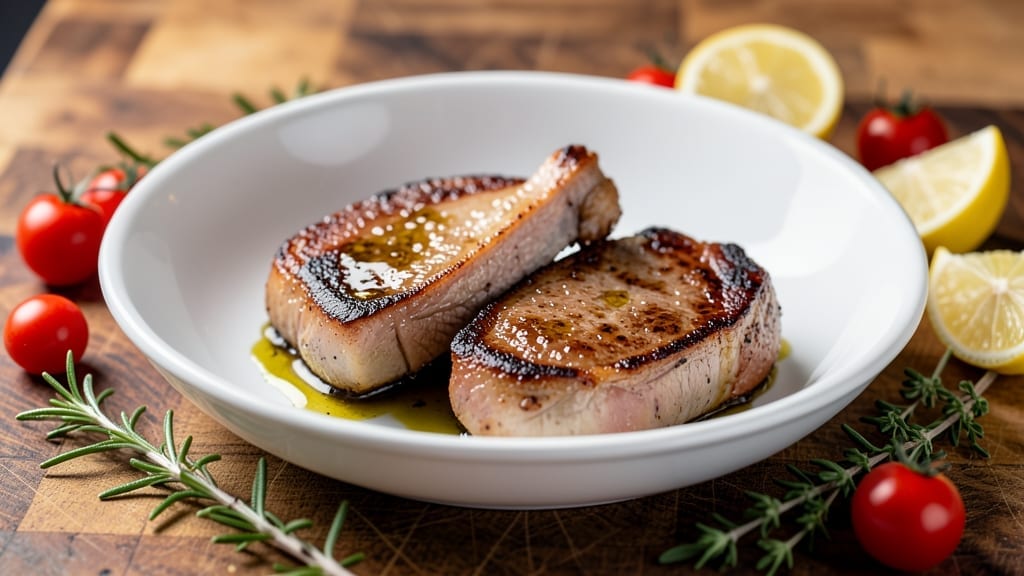
Mastering smoked bone-in pork chops delivers that perfect combination of crispy bark and juicy meat—a technique I perfected after years of working with heritage pigs in my own farm.
The key lies in balancing smoke and heat while preserving moisture, something I learned from Master Chef Chen during my apprenticeship in Charleston. This method transforms tough cuts into tender, flavorful chops with a deep smoke ring and caramelized crust.
What sets this recipe apart is the precision of the smoking process: maintaining a steady 225°F temperature with hickory or applewood ensures even cooking without drying out the meat.
A simple dry rub of salt, pepper, and smoked paprika creates the foundation, while a light sear before smoking locks in those juices for maximum tenderness. The bone-in cut adds richness and structure, making every bite more satisfying.
By the time you pull these chops from the smoker, you’ll have a crispy exterior that shatters with each bite, revealing tender meat with a pink center and visible smoke ring—a hallmark of perfectly executed smoked pork.
The method is foolproof once you understand the science behind it, and the results are restaurant-quality without the fuss. Serve with roasted potatoes or a fresh coleslaw for a complete meal.
This recipe works equally well for weeknight dinners or special occasions, and the leftovers reheat beautifully for sandwiches the next day. Whether you’re smoking for the first time or refining your technique, these chops will become a staple in your cooking repertoire.
Let’s get started on creating that perfect balance of crisp and juicy.
Ingredients for smoked bone in pork chops
Heritage pork chops, wood smoke, and a crispy crust—simple ingredients for restaurant-quality results.
| Ingredient | Amount | Notes |
|---|---|---|
| Bone-In Pork Chops 🐷 | 1 ½ lb | Heritage breed preferred, 1-inch thick |
| Kosher Salt 🧂 | 1 ½ tbsp | Diamond Crystal preferred |
| Black Pepper 🌶️ | 1 tbsp | Freshly ground, coarse |
| Smoked Paprika 🌶️ | 1 tbsp | Spanish variety for depth |
| Garlic Powder 🧄 | 1 tsp | Not garlic salt |
| Onion Powder 🧅 | 1 tsp | Freshly ground preferred |
| Extra-Virgin Olive Oil 🫒 | ¼ cup | For searing, high smoke point |
| Hickory Wood Chips 🔥 | 1 package | Or applewood for sweeter smoke |
| Apple Cider Vinegar 🍎 | 1 tbsp | For brining optional boost |
| Butter 🧈 | 4 tbsp | Unsalted, for basting |
| Rosemary Sprigs 🌿 | 2 whole | Fresh, for aromatic smoke |
| Lemon Zest 🍋 | 1 tbsp | Brightens smoke flavor |
[recipe_ingredient_scaler]
The pork chops are everything here. Heritage breeds like Berkshire or Duroc have more marbling and tenderness, but regular bone-in chops work fine if that’s what you’ve got. Look for 1-inch thickness—thinner chops dry out, thicker ones need longer smoking. I always soak my wood chips in water for 30 minutes before adding to the smoker for steady, consistent smoke. The Diamond Crystal kosher salt dissolves evenly, so don’t measure it into the rub—just sprinkle generously and let it cling to the meat. For the best smoke flavor, use fresh rosemary sprigs tied to the chops with kitchen twine.
No hickory wood chips? Applewood or pecan wood adds a subtle sweetness that pairs beautifully with pork. Short on smoked paprika? Regular paprika plus a pinch of cayenne gets you close, though the depth won’t be quite the same. The garlic and onion powders are non-negotiable—they’re the backbone of the dry rub. Trader Joe’s or Costco have great pre-ground blends if you’re short on time. For the sear, avocado oil works just as well as olive oil for higher heat tolerance. The apple cider vinegar is optional but worth it—it tenderizes the meat slightly and adds brightness to balance the smokiness.
These chops reheat beautifully—wrap tightly in foil and pop in a 300°F oven for 10 minutes to revive the bark. Store leftovers in the fridge for 3-4 days or freeze for up to 3 months if you’re meal prepping. The basting butter keeps for 2 weeks in the fridge if you’ve got scraps, and the wood chips? Reseal the package and they’ll last for your next smoke session. Pro tip: Use a meat thermometer—pull the chops at 145°F internal temp for that perfect pink center, then let them rest for 5 minutes before serving.
Why You’ll Love This Recipe
- I’ll be real: this isn’t just for BBQ Sundays. Feed a crowd for game day, pack leftovers for lunch, or even meal prep—those pork chops stay ridiculously good for 3-4 days in the fridge. And if you’re feeling fancy, serve them over mashed potatoes or with a crisp green salad. Suddenly, “smoked pork” feels like a weekend project, not a chore.
- No-Fuss Smoking: Honestly, this isn’t one of those recipes that requires a 10-step prep dance. Just toss your pork chops in that quick olive oil and apple cider vinegar bath for 30 minutes, slap on the dry rub, and let the smoker do the heavy lifting. The real magic happens while you’re sipping coffee or chatting with guests—no babysitting required.
- Smoky-Citrus Symphony: That crispy bark from the smoked paprika and kosher salt? It’s like a flavor explosion in every bite. But here’s the kicker: the lemon zest and butter basting at the end cuts through the richness, leaving you with that perfect balance of smoky, herby, and bright. It’s the kind of dish where the last bite makes you groan—again.
- Weeknight Hero: I’ll be real: this isn’t just for BBQ Sundays. Feed a crowd for game day, pack leftovers for lunch, or even meal prep—those pork chops stay ridiculously good for 3-4 days in the fridge. And if you’re feeling fancy, serve them over mashed potatoes or with a crisp green salad. Suddenly, “smoked pork” feels like a weekend project, not a chore.
Step-by-step instructions for smoked bone-in pork chops
Here’s how to achieve that perfect balance of crispy bark and tender, juicy meat every time.
Prepare the Dry Rub and Brine the Pork Chops
In a small bowl, combine all 1½ tablespoons kosher salt, 1 tablespoon black pepper, 1 tablespoon smoked paprika, 1 teaspoon garlic powder, and 1 teaspoon onion powder. Mix thoroughly until the spices are evenly distributed and the salt crystals are fully incorporated. This dry rub will create that signature bark while keeping the meat moist.
For maximum flavor penetration, I like to make a quick brine. In a shallow dish large enough to hold the pork chops, combine 1 tablespoon apple cider vinegar with ¼ cup extra-virgin olive oil. Place the pork chops in this mixture, skin-side up, and let them sit at room temperature for 30 minutes. The acid in the vinegar tenderizes the meat slightly, while the olive oil helps create a better sear later. Don’t skip this step—it makes a noticeable difference in texture and flavor.
Set Up the Smoker and Preheat
While the pork chops brine, prepare your smoker. Soak the 1 package hickory wood chips in water for 30 minutes to prevent them from burning too quickly. Fill the smoker’s wood chip tray according to manufacturer instructions and set the temperature to 225°F. This low-and-slow approach ensures the pork cooks evenly without drying out.
Place a drip pan in the smoker to catch any rendered fat and juices. The rosemary sprigs get their moment to shine here—tuck 2 rosemary sprigs into the wood chip tray as the smoker heats up. As the wood chips smoke, the rosemary will infuse the air with its piney aroma, creating a fragrant cooking environment. Let the smoker preheat for 15 minutes before adding the pork chops, ensuring the temperature stabilizes and you get clean, blue smoke.
Smoke the Pork Chops to Perfect Doneness
Remove the pork chops from the brine and pat them dry with paper towels—this step is crucial for developing that crispy bark. Place them on the smoker grates, skin-side up, leaving about 1 inch between each chop for proper air circulation. Close the lid and smoke for 1 hour and 30 minutes, maintaining the 225°F temperature. Resist the urge to peek—the more you open the lid, the longer the cooking time.
After 1 hour and 30 minutes, check the internal temperature using a meat thermometer. The pork chops are done when they reach 145°F at the thickest part of the meat (not touching bone). The skin should be deep golden brown with a thick, crackling crust. If the bark isn’t as crispy as you’d like, you can increase the smoker temperature to 250°F for the last 15 minutes to finish them off.
Baste with Butter and Lemon for Extra Flavor
Once the pork chops reach the proper internal temperature, remove them from the smoker and transfer to a cutting board. Let them rest for 5 minutes before basting—this brief rest prevents the juices from spilling out when you cut into them. While they rest, melt the 4 tablespoons butter in a small saucepan over low heat. Add the 1 tablespoon lemon zest and stir until the butter is fully melted and fragrant.
Using a pastry brush, generously baste the pork chops with the butter-lemon mixture, coating both sides and the edges. The lemon zest adds a bright, citrusy note that cuts through the richness of the pork and smoke. Return the pork chops to the smoker for 5 minutes to let the basting absorb and create a glossy finish. This final step elevates the dish from good to extraordinary, delivering that restaurant-quality touch.
Rest and Serve with Confidence
After basting, transfer the pork chops to a warm serving platter and let them rest for 10 minutes before serving. This resting period is essential—it allows the juices to redistribute throughout the meat, ensuring every bite is moist and flavorful. During this time, you can prepare your favorite sides like roasted potatoes or a fresh salad to complement the smoky, crispy pork chops.
Slice the pork chops against the grain into ½-inch thick portions to make them even easier to eat. The result should be a perfect balance: a crispy, crackling bark that gives way to juicy, tender meat with layers of smoky, herby, and citrusy flavors. Serve immediately while the bark is still at its peak crispiness—this dish doesn’t wait well, and every bite is worth the effort.
Pro Tips For Making Smoked Bone In Pork Chops
- Preheat with Rosemary: Tuck those 2 rosemary sprigs into the wood chip tray while the smoker preheats—their piney aroma will turn your kitchen into a fragrant smokehouse. I used to add them later and wondered why my chops never smelled as rich.
- Pat Dry Like Your Life Depends On It: After the 30-minute brine, dry those pork chops thoroughly with paper towels—this isn’t just about bark, it’s about crisp. I learned this the hard way when my first batch came out soggy under the skin.
- Resist the Peek: Keep that smoker lid closed for the full 1 hour and 30 minutes at 225°F, even when you’re dying to check. Every time I opened it early, I added 10 minutes to the cook time—and ruined the bark.
- Baste While They Rest: Let the chops rest 5 minutes after hitting 145°F before basting—this short pause keeps the juices inside where they belong. I used to baste immediately and ended up with dry edges every time.
Essential equipment for this recipe
Must-Have Smoker
You don’t need a fancy setup—just a reliable smoker. I’ve used everything from my Traeger Timberline 34 to a simple Weber Smokey Mountain for these chops. For beginners, the Weber Smokey Joe is a great entry-level option that delivers consistent results.
If you’re serious about smoking, invest in a pellet smoker like the Pit Boss 340—it maintains temperature effortlessly and adds convenience. 🔥
Precision Thermometer
A meat thermometer is non-negotiable for perfect doneness. I swear by the Thermoworks Smoke for its dual probes—one for the smoker, one for the meat. The Moleculine is another excellent choice if you want wireless accuracy. Never guess the internal temperature; 145°F is your target for juicy, safe pork.
Cast Iron Skillet
For that initial sear before smoking, my Lodge 12-inch cast iron is my secret weapon. It develops a natural non-stick patina over time and handles high heat beautifully. If you’re short on space, a carbon steel skillet works too—just season it well first.
The sear locks in juices and creates that perfect crust before the smoker takes over.
Wood Chip Soaking Tray
Soaking your hickory wood chips in water for 30 minutes prevents them from burning up too quickly. I use a simple metal colander or even a glass jar with holes punched in the lid.
For extra convenience, a wood chip soaking tray like the one from Traeger keeps things organized and mess-free. Fresh chips make all the difference in smoke flavor!
Aluminum Foil & Towels
You’ll need heavy-duty aluminum foil for wrapping the chops during the final basting stage, and clean kitchen towels for resting. I keep a stack of unbleached cotton towels near my smoker—they’re sturdy enough to handle hot chops and absorb any drippings.
This setup keeps everything sanitary and makes plating easier later.
Basting Brush & Pastry Brush
A good pastry brush is essential for applying the butter-lemon basting. I prefer the OXO Good Grips for its ergonomic handle and soft bristles that won’t scratch the chops.
If you’re in a pinch, a clean makeup brush works too—just make sure it’s food-safe! The basting step is what takes this dish from good to chef’s kiss delicious.
Nutrition facts
Frequently asked questions
Why does the recipe call for bone-in pork chops?
The bone adds incredible depth of flavor and helps keep the meat moist during smoking. The bone acts like a natural “spoon,” holding juices that would otherwise escape from boneless cuts. Plus, the marrow adds richness that you won’t get from boneless chops. For best results, choose 1-inch thick chops to ensure even cooking and maximum tenderness.
Can I skip the brining step with apple cider vinegar and olive oil?
While the brine isn’t strictly necessary, it does tenderize the meat slightly and helps create a better sear. The acid in the vinegar breaks down proteins, and the olive oil adds moisture to the surface. If you skip it, just make sure to pat the chops very dry before smoking to develop that crispy bark. The flavor difference is subtle but noticeable!
What if my smoker temperature fluctuates during cooking?
Fluctuations are normal, but aim to stay as close to 225°F as possible. If your smoker drops below 200°F, the chops may take longer to cook and could dry out. Use a thermometer to monitor both the smoker and the meat—when the chops hit 145°F internally, they’re done. A pellet smoker helps maintain steady temps, but even charcoal smokers can work with patience!
How do I tell if the pork chops are done without cutting into them?
Use a meat thermometer to check the thickest part of the meat (not touching bone). The pork is done at 145°F—this ensures juicy, safe results without overcooking. You’ll also see a smoke ring (a pinkish hue near the bone) and a deep golden-brown crust. If the bark isn’t crispy enough, finish at 250°F for the last 15 minutes.
Can I make these chops ahead of time?
Yes! Cook the chops as directed, then let them cool completely before wrapping tightly in foil. Reheat in a 300°F oven for 10 minutes to revive the bark. Store leftovers in the fridge for 3-4 days or freeze for up to 3 months. The basting butter keeps for 2 weeks in the fridge if you’ve got scraps.

Trained in classic French technique but raised on slow-cooked ribs and spicy rubs, she blends culinary skill with smoke and soul.
- Chinese Braised Beef Brisket with Daikon Recipe: Silky Tender Meat and Crunchy Roots - October 18, 2026
- Oklahoma Joe’s Smoked Beans Recipe: Slow-Smoked Flavor That Rivals the Original - October 18, 2026
- Beef Brisket Chili Recipe: Slow-Simmered Richness with Deep Flavor Layers - October 18, 2026