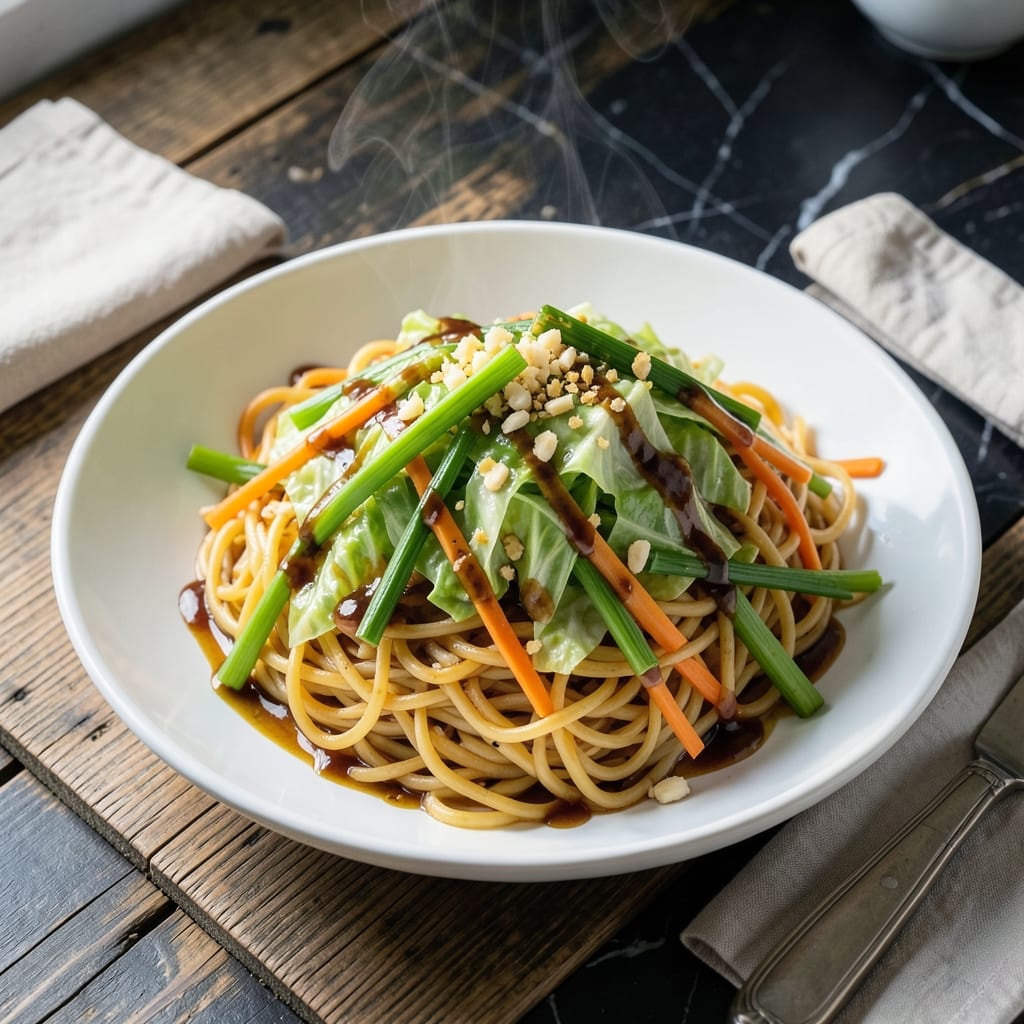
This vegetarian take on chow mein delivers all the crunchy texture and savory flavor of the classic without any meat. I developed this version after realizing how often I reached for takeout when craving those signature stir-fried noodles.
The dish comes together quickly with everyday ingredients from any grocery store. Thin egg noodles are stir-fried with cabbage, carrots, and celery until perfectly tender-crisp, then tossed in a simple soy-based sauce that coats every strand.
What you get is a satisfying meal that’s lighter than traditional chow mein but just as flavorful. The vegetables stay vibrant and slightly crisp, while the noodles soak up the umami-rich sauce without turning mushy.
Ready in under 30 minutes, this is weeknight cooking at its most rewarding.
Ingredients for Mock Chow Mein
Everyday staples turn into restaurant-quality stir-fried noodles with crunchy veggies in under thirty minutes.
| Ingredient | Amount | Notes |
|---|---|---|
| Egg Noodles 🍜 | 8 oz | Thin, dried variety preferred |
| Green Cabbage 🥬 | 3 cups | Thinly shredded for texture |
| Carrots 🥕 | 2 whole | Julienned for even cooking |
| Celery Stalks 🌿 | 3 whole | Thinly sliced on bias |
| Garlic Cloves 🧄 | 4 cloves | Minced for maximum flavor |
| Fresh Ginger 🌱 | 1 tbsp | Finely grated for sauce |
| Soy Sauce 🫒 | ⅓ cup | Low-sodium recommended for balance |
| Vegetable Oil 🛢️ | 2 tbsp | High smoke point for stir-frying |
| Sesame Oil 🫒 | 1 tsp | Toasted for finishing touch |
| Rice Vinegar 🍶 | 1 tbsp | Adds brightness to sauce |
| Granulated Sugar 🍚 | 1 tsp | Balances savory flavors |
| Green Onions 🧅 | 3 whole | Thinly sliced for garnish |
| Sesame Seeds 🌿 | 1 tbsp | Toasted for garnish (optional) |
[recipe_ingredient_scaler]
The noodles are the foundation—thin egg noodles from the dry pasta aisle work perfectly. For the cabbage, Napa or green both bring that essential crunch, but green holds up better to stir-frying. Most supermarkets stock everything here, but Asian markets have better prices on soy sauce and sesame oil if you’re making this often. Look for bright, firm veggies (the floppy ones won’t give you that signature crisp texture).
No green cabbage? Savoy or red cabbage work, though red might bleed a little color into the dish. Swap carrots for bell peppers if you prefer sweeter crunch. Out of rice vinegar? Apple cider vinegar at the same amount gets you close. The ginger is key—freshly grated has a brightness that powder just can’t match (and a microplane makes quick work of it).
Store the noodles in a cool, dry place—they keep for months. Veggies stay crisp in the fridge for 5-7 days if wrapped properly. The sauce ingredients last even longer. Leftover chow mein? It reheats surprisingly well for 3-4 days (though it loses a bit of that initial crunch).
Why You’ll Love This Recipe
- One Pan Wonder: I toss everything—egg noodles, cabbage, carrots—in a single skillet. Cleanup is a breeze.
- Garlic Magic: Honestly, the sizzle of garlic with those veggies smells like a takeout kitchen.
- Weeknight Hero: It’s my go-to for busy evenings when I need dinner fast (Yes, even on a Tuesday night).
- Budget Stretcher: A head of cabbage and a bag of noodles feed my family for days. I’ll be real: it’s a wallet-saver.
Step-by-Step Instructions for Stir-Fried Noodles with Crunchy Veggies
Here’s the method I rely on for perfectly tender noodles and crisp vegetables every time.
Step 1: Prepare and Blanch the Noodles
Bring a large pot of salted water to a rolling boil. Add the 8 oz Egg Noodles and cook for 1 minute less than package instructions suggest. You want them slightly underdone as they’ll finish cooking in the wok.
Drain immediately and rinse under cold water to stop the cooking process. Toss the noodles with 1 tsp Sesame Oil to prevent sticking. This small step ensures they stay separate and silky, not clumpy.
Step 2: Stir-Fry the Aromatics and Vegetables
Heat 2 tbsp Vegetable Oil in a wok or large skillet over high heat until shimmering. Add the 4 cloves Garlic Cloves and 1 tbsp Fresh Ginger, stirring constantly for 30 seconds until fragrant but not browned.
Immediately add the 3 cups Green Cabbage, 2 whole Carrots, and 3 whole Celery Stalks. Stir-fry for 4-5 minutes until the vegetables are crisp-tender and the cabbage starts to wilt slightly. The carrots and celery should retain a slight bite for texture contrast.
Step 3: Combine Noodles and Sauce
Add the blanched Egg Noodles to the wok along with the 0.33 cup Soy Sauce, 1 tbsp Rice Vinegar, and 1 tsp Granulated Sugar. Toss everything together with tongs, lifting and turning the noodles to coat them evenly.
Cook for an additional 2-3 minutes until the noodles are heated through and the sauce has slightly reduced. The sauce should cling to the noodles without pooling at the bottom of the wok.
If the mixture seems dry, add a splash of water and continue tossing. The starch from the noodles will help the sauce thicken naturally.
Step 4: Finish and Garnish
Remove the wok from heat and let the dish sit for 1 minute to allow flavors to meld. Stir in the 3 whole Green Onions, reserving a small handful for garnish.
Transfer to a serving platter and sprinkle with the remaining Green Onions and 1 tbsp Sesame Seeds. The green onions add a fresh, sharp contrast to the rich, savory noodles.
Serve immediately while hot, as the noodles absorb the sauce best when fresh from the wok.
Pro Tips For Making Mock Chow Mein
- Parboil Noodles First: Cook the egg noodles for 2 minutes less than package instructions, then drain—I learned this the hard way after ending up with mushy strands mixed into my stir-fry.
- Shred Cabbage Thin: Slice the green cabbage into thin, even strips, about 1/8-inch wide, so it wilts quickly and evenly without turning to mush while the carrots and celery finish cooking.
- Skip Overcrowding: Stir-fry the vegetables in batches if needed; I used to cram everything in at once and wondered why my mock chow mein steamed instead of seared.
- Toast Garlic First: Add minced garlic to the pan for just 15-20 seconds before the other veggies—any longer and it turns bitter, which ruins the whole dish.
Best Sauces and Condiments for This Recipe
Classic Soy-Ginger Sauce
The foundation sauce for this dish combines ⅓ cup Soy Sauce, 1 tbsp Rice Vinegar, and 1 tsp Granulated Sugar. I always use low-sodium soy sauce to control the saltiness. The vinegar adds that essential bright contrast to the rich soy. 💡
Spicy Sriracha Mayo
Mix ¼ cup mayo with 1 tbsp Sriracha and a squeeze of lime. This creamy, spicy condiment adds a cooling contrast to the hot noodles. I discovered this combo during my marketing days when takeout was a weekly habit.
Crunchy Toppings
Toasted Sesame Seeds and thinly sliced Green Onions are must-haves for texture. For extra crunch, I add ½ cup crushed peanuts or wonton strips. These toppings elevate the dish from good to restaurant-quality.
Umami Boosters
A drizzle of toasted Sesame Oil just before serving deepens the flavor. I also keep hoisin sauce on hand for guests who want extra sweetness. Both are staples I pick up at my neighborhood Asian market.
Fresh Herbs
Fresh cilantro or Thai basil adds a bright finish. Chop about ¼ cup and sprinkle over the top. These herbs bring a pop of color and freshness that balances the hearty noodles.
Quick Pickled Veggies
For tangy crunch, I quickly pickle ½ cup shredded carrots in ¼ cup Rice Vinegar and 1 tsp sugar while cooking. They’re ready by the time the noodles are done and add a vibrant contrast. 🌟
Nutrition Facts
Frequently Asked Questions
Can I use a different type of noodle?
Yes! While thin egg noodles work best, you can substitute ramen (discard seasoning) or spaghetti. Avoid thick noodles as they won’t crisp up properly.
Why are my vegetables soggy?
Overcrowding the pan steams instead of stir-frying. Cook in batches if needed and keep heat on high. Also, ensure veggies are dry before adding to the wok.
How do I make this gluten-free?
Swap egg noodles for rice noodles or gluten-free spaghetti. Use tamari instead of soy sauce, and verify all other ingredients are gluten-free.
Can I add protein to this dish?
Try tofu, chicken, or shrimp. Cook protein separately first, then add back with noodles and sauce at the end.

Trained in classic French technique but raised on slow-cooked ribs and spicy rubs, she blends culinary skill with smoke and soul.
- Recipe for Boneless Pork Chops in Cast Iron Skillet: Sear and Baste to Juicy Perfection - October 3, 2026
- Recipe for Boneless Cross Rib Roast: Slow-Roasted Beef with Herb Crust - October 3, 2026
- Hamburgers in Sauce Recipe Crock Pot: Slow-Cooked Savory Delight - October 3, 2026