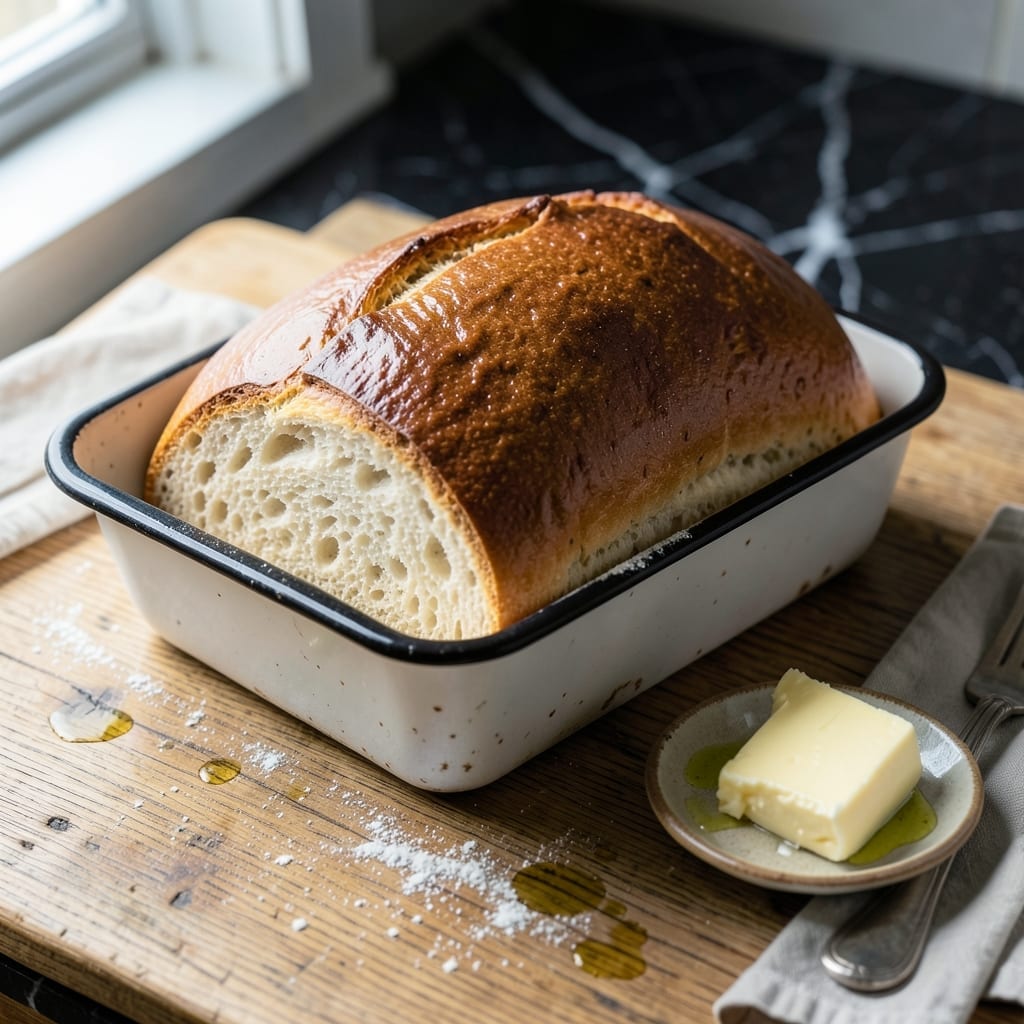
Nothing beats the smell of fresh-baked bread filling your kitchen. This hands-off method delivers that nostalgic flavor with minimal effort.
I’ve tested this on multiple machines to ensure consistent results. The secret is in the precise ingredient ratios and machine settings.
You’ll get a soft, golden loaf with a tender crumb and just the right amount of crust. It’s the kind of bread that brings back memories of Nana Mae’s diner.
David always requests this for weekend breakfasts. It’s perfect for sandwiches or simply slathered with butter.
Ingredients for Old Fashioned White Bread Recipe Bread Machine
Pantry staples plus a few fridge basics. Nothing exotic, just good old-fashioned flavor.
| Ingredient | Amount | Notes |
|---|---|---|
| Bread Flour 🌾 | 3 ½ cups | All-purpose works in a pinch |
| Water 💧 | 1 ¼ cups | Warm, about 80°F |
| Unsalted Butter 🧈 | 2 tbsp | Softened to room temperature |
| Granulated Sugar 🍚 | 2 tbsp | White or raw sugar fine |
| Salt 🧂 | 1 ½ tsp | Fine sea salt preferred |
| Active Dry Yeast 🍞 | 2 ¼ tsp | Check expiration date first |
| Whole Milk 🥛 | ½ cup | Warm, enriches the dough |
| Large Egg 🥚 | 1 whole | Room temperature for best rise |
| Honey 🍯 | 1 tbsp | Adds subtle sweetness |
| Vital Wheat Gluten 🌾 | 1 tbsp | Optional, improves texture |
[recipe_ingredient_scaler]
The flour is the foundation here. King Arthur Bread Flour is my go-to—consistent protein content, reliable rise. Gold Medal works too if that’s what you’ve got. The yeast? Don’t use that ancient packet from the back of your cupboard. Fleischmann’s or Red Star are solid choices, and freshness matters (check the date, seriously). Whole milk adds richness, but 2% works in a pinch—just avoid skim.
No bread flour? All-purpose plus 1 tbsp vital wheat gluten per cup gets you close. Swap honey for maple syrup or sugar if that’s what’s in your pantry. The egg can be skipped, but the loaf’ll be slightly denser. Butter’s non-negotiable for flavor though—margarine won’t cut it. For a lighter crust, brush the top with melted butter right after baking.
Dry ingredients can live in your pantry for months, but yeast loses potency after a few. Store it in the freezer to extend its life. Baked loaves keep at room temp for 2-3 days, or freeze slices for up to 3 months (toast straight from frozen—perfect for David’s weekend breakfasts).
Why You’ll Love This Recipe
- Set It and Forget: The bread machine does all the work—I just measure the flour, water, butter, sugar, and salt, then walk away.
- Buttery Soft Crumb: That touch of unsalted butter makes every slice tender, with just the right sweetness from the sugar.
- Sandwich Savior: Between us, this is my go-to for school lunches, toast, or even French toast when I need to use up leftovers.
- Pantry Staples Only: I love that it uses basic ingredients I always have on hand, and it costs pennies compared to store-bought loaves.
Step-by-Step Instructions for Old Fashioned White Bread Bread Machine
Set your machine to dough mode and let it handle the work—this is bread making at its simplest.
Step 1: Prepare and Measure the Wet Ingredients
Start by warming the 1.25 cups water and 0.5 cup whole milk to about 80°F. This temperature activates the yeast without killing it. I use a kitchen thermometer to check—any warmer and you risk deactivating the yeast entirely.
In your bread machine pan, add the warmed liquids first, followed by the large egg, 2 tbsp unsalted butter (softened), 2 tbsp granulated sugar, and 1 tbsp honey. The order matters here—liquids go in first to prevent the yeast from activating prematurely when the machine starts.
Step 2: Add Dry Ingredients and Yeast
Next, add the 3.5 cups bread flour to the pan, spreading it evenly over the wet ingredients. Sprinkle the 1.5 tsp salt and 1 tbsp vital wheat gluten over the flour. The salt should never come into direct contact with the yeast, as it can inhibit activation.
Finally, make a small well in the center of the flour and add the 2.25 tsp active dry yeast. This keeps the yeast isolated until the machine begins mixing. Double-check that the yeast stays dry until the cycle starts—this is crucial for proper rise.
Step 3: Select the Dough Cycle and Start
Place the pan into the bread machine and secure the lid. Select the dough cycle (this usually takes 1.5 to 2 hours) and press start. The machine will handle the kneading, rising, and punching down for you. I like to check on it after 10 minutes to ensure the dough is forming properly—it should pull away from the sides into a smooth ball.
If the dough looks too dry, add 1 tablespoon of warm water; if it’s too sticky, add 1 tablespoon of bread flour. But resist the urge to over-adjust—the bread machine is designed to handle variations. You’ll see the dough transform from shaggy to smooth and elastic as the cycle progresses.
Step 4: Shape and Final Rise Before Baking
Once the dough cycle completes, remove the dough from the machine and place it on a lightly floured surface. Gently deflate it and shape into a loaf. I prefer to tuck the edges under to create surface tension, which helps the loaf rise evenly.
Place the shaped dough into a greased loaf pan, cover with a damp towel, and let it rise in a warm place for 30 to 45 minutes, or until it’s doubled in size. Look for the dough to spring back slowly when pressed lightly with a finger—this indicates it’s ready for baking.
Step 5: Bake to Golden Perfection
Preheat your oven to 375°F. Once the dough has risen, bake for 25 to 30 minutes, or until the top is golden brown and the internal temperature reaches 190°F. I always rotate the pan halfway through baking to ensure even browning.
Remove the loaf from the pan and let it cool on a wire rack for at least 20 minutes before slicing. This cooling step is essential—it allows the crumb to set and prevents a gummy texture. You’ll know it’s done when the loaf sounds hollow when tapped on the bottom.
Pro Tips For Making Old Fashioned White Bread Recipe Bread Machine
- Warm the Water: Use water at 80-90°F—any hotter and you’ll kill the yeast, any colder and the dough won’t rise properly. I learned this the hard way after a few dense loaves.
- Measure Flour Right: Spoon the bread flour into your measuring cup and level it off—scooping directly from the bag packs it down and can add 20% more flour, making your bread dry.
- Soften the Butter: Cut the unsalted butter into small cubes and let it sit for 15-20 minutes until soft but not melted. It mixes evenly into the dough this way.
- Check the Window: Around the 10-minute mark of kneading, pause the machine and peek—the dough should stick slightly to the sides but pull away cleanly. If it’s a wet mess, add flour 1 tablespoon at a time.
Flavor Customization for This Recipe
Sweet Enhancements
Add 1 tbsp cinnamon and ½ cup raisins for a sweet loaf perfect for toast. I tested this with David—he gives it two thumbs up. The raisins plump beautifully during the dough cycle. 💛
Savory Twist
Mix in 1 tbsp dried herbs (rosemary or thyme) and ¼ cup grated Parmesan for an herbed bread. It’s fantastic with soups or as sandwich bread. I source my herbs from Central Market for the best quality.
Whole Grain Boost
Replace 1 cup bread flour with whole wheat flour for a nuttier flavor. Add 1 extra tbsp water to compensate for the dryness. This version keeps well and freezes beautifully.
Cheese Lovers
Stir in ½ cup shredded cheddar at the beep signal (if your machine has one). Use sharp cheddar for bold flavor. This was a hit at Nana Mae’s diner—customers still ask for it.
Garlic Herb
Add 3 minced garlic cloves and 1 tbsp Italian seasoning with the wet ingredients. The aroma while baking is incredible. I often make this for weekend gatherings.
Honey Butter Swirl
After shaping, swirl in 2 tbsp softened honey butter for a sweet, rich marbled effect. Use room temperature butter for easy mixing. This one disappears fastest in our house. 🔥
Nutrition Facts
Frequently Asked Questions
Can I use all-purpose flour instead of bread flour?
Yes, but add 1 tbsp vital wheat gluten per cup of all-purpose flour to boost protein content. This mimics bread flour’s structure for a better rise.
Why does the order of ingredients matter?
Liquids go in first to prevent yeast from activating prematurely. Salt and yeast must stay separate until mixing begins to avoid inhibiting the rise.
How do I know when the dough is ready?
It should pull away from the pan sides and form a smooth, elastic ball. If too sticky, add 1 tbsp flour; if dry, add 1 tbsp water.
Can I bake the dough directly in the machine?
Most machines have a bake cycle. Just select the basic white bread setting and let it complete the full process hands-free.

Trained in classic French technique but raised on slow-cooked ribs and spicy rubs, she blends culinary skill with smoke and soul.
- Beef Brisket Rolls Recipe: Flaky Layers and Smoky Sweet Filling - October 15, 2026
- Masterbuilt Smoker Beef Brisket Recipe: Bark-To-Meat Ratio Hack for Unmatched Flavor - October 15, 2026
- Costco Beef Brisket Recipe: Low-and-Slow Masterpiece With Molasses-Kissed Crust - October 15, 2026