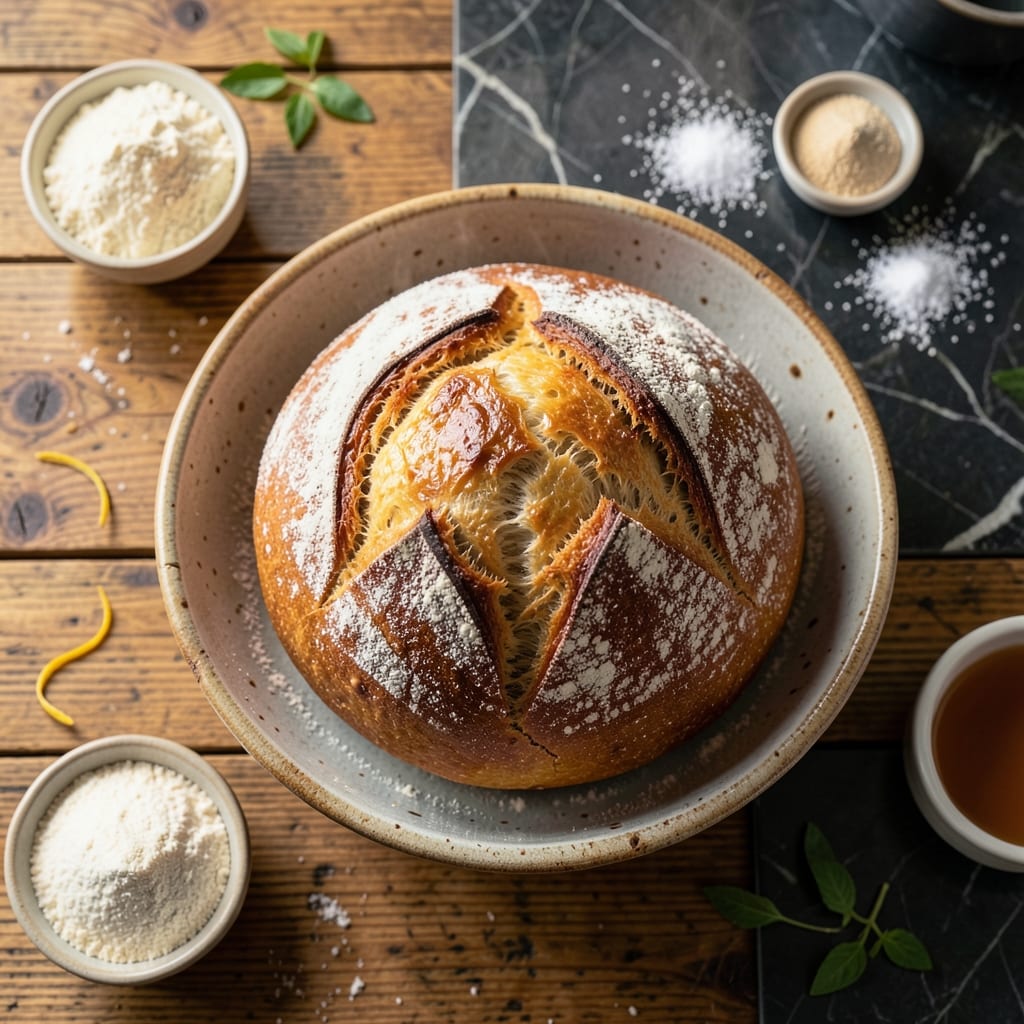
There’s nothing like the aroma of fresh bread filling your kitchen, and this recipe delivers that experience in just 60 minutes. I’ve refined this method to produce a warm, homemade loaf without the long wait of traditional recipes.
The key is using yeast in the right proportion and maintaining the proper temperature to accelerate the rising process. This approach ensures a soft, airy crumb with a golden crust that rivals any bakery loaf.
What you’ll get is a beautiful, rustic loaf that’s perfect for sandwiches, toast, or simply enjoying with butter. The process is straightforward, with clear steps that make it accessible for bakers of all skill levels.
This is the kind of recipe that turns an ordinary day into something special. Here’s how to make it.
Ingredients for One Hour Bread Recipe with Yeast
Simple pantry staples create this warm, homemade loaf with minimal effort.
| Ingredient | Amount | Notes |
|---|---|---|
| Bread Flour 🌾 | 4 cups | All-purpose flour works too |
| Active Dry Yeast 🍞 | 2 ¼ tsp | One packet, check expiration |
| Granulated Sugar 🍚 | 1 tbsp | Feeds the yeast |
| Salt 🧂 | 1 ½ tsp | Fine grain preferred |
| Warm Water 💧 | 1 ½ cups | 110-115°F, not hot |
| Unsalted Butter 🧈 | 2 tbsp | Melted and cooled |
| Whole Milk 🥛 | ¼ cup | Warmed slightly |
| Olive Oil 🫒 | 1 tbsp | For greasing bowl |
| Honey 🍯 | 1 tbsp | Optional for sweetness |
| Egg 🥚 | 1 whole | Optional for richer dough |
[recipe_ingredient_scaler]
The yeast is critical here—check the expiration date and store it in the freezer for longevity. King Arthur and Bob’s Red Mill bread flours yield excellent results, but all-purpose works in a pinch. Warm water temperature is key: aim for 110-115°F (wrist-test: should feel warm, not hot). If your kitchen is cold, preheat the oven to its lowest setting, turn it off, and let the dough rise inside for consistent warmth.
No bread flour? All-purpose plus 1 tsp vital wheat gluten per cup mimics the texture. Milk can be swapped for water, but the richness improves flavor. For a vegan version, skip the egg and butter—use olive oil instead. Honey can be replaced with maple syrup or sugar if preferred. The dough should be slightly sticky but not wet—adjust flour by 1-2 tbsp as needed.
Store the loaf wrapped in foil or a bread bag at room temperature for 2-3 days. For longer storage, slice and freeze for up to 3 months. To revive, warm in a 350°F oven for 5-10 minutes (the magic trick for that fresh-baked feel).
Why You’ll Love This Recipe
- No-Knead Magic: I dump the flour, yeast, sugar, salt, and warm water in a bowl, mix, and let it rise—no fancy techniques, just easy bread.
- Warm, Yeasty Comfort: The smell alone is worth it, but that first bite of soft, slightly sweet bread fresh from the oven? Pure coziness.
- Weeknight Hero: Between us, this is my secret for turning soup, stew, or even just butter into a full meal.
- Penny-Wise Loaf: Five ingredients, most of which I always have on hand, and it costs less than a bakery loaf. Honestly, it’s a no-brainer.
Step-by-Step Instructions for One Hour Bread With Yeast
This streamlined method delivers a warm, fresh loaf without sacrificing quality or flavor.
Step 1: Activate the Yeast and Mix Wet Ingredients
In a large bowl, combine the 1.5 cups Warm Water, 1 tbsp Granulated Sugar, and 2.25 tsp Active Dry Yeast. Stir gently and let sit for 5 minutes until the mixture becomes foamy—this confirms the yeast is active and ready to work.
Once foamy, whisk in the 0.25 cup Whole Milk, 2 tbsp Unsalted Butter, 1 tbsp Honey, and 1 whole Egg. The butter should be melted and cooled to avoid deactivating the yeast. You’ll notice the mixture will look slightly rich and silky at this stage.
Step 2: Incorporate Dry Ingredients to Form Dough
Add the 4 cups Bread Flour and 1.5 tsp Salt to the wet mixture. Using a wooden spoon or dough whisk, stir until the ingredients come together into a shaggy dough. The dough will be sticky and slightly rough, but that’s exactly what you want at this point.
Turn the dough out onto a lightly floured surface and knead for 5-7 minutes until smooth and elastic. If the dough feels too sticky, add a small amount of flour, but be careful not to overdo it—too much flour will make the bread dense. You’ll know it’s ready when it springs back lightly when pressed with a finger.
Step 3: First Rise in a Warm Environment
Lightly grease a large bowl with the 1 tbsp Olive Oil, then place the dough inside, turning once to coat all sides. Cover the bowl with a clean kitchen towel or plastic wrap and let the dough rise in a warm, draft-free place for 20-25 minutes or until doubled in size.
For best results, I place the bowl on top of the preheating oven or near a warm spot in the kitchen. The dough should look puffy and slightly jiggly when it’s ready for the next step.
Step 4: Shape, Second Rise, and Preheat
Punch down the risen dough to release the air, then transfer it to a lightly floured surface. Shape it into a round or oval loaf and place it on a parchment-lined baking sheet. Cover loosely with the towel and let it rise again for 15-20 minutes while you preheat the oven to 400°F.
The dough should rise noticeably but won’t double in size during this second rise. This step ensures the loaf bakes evenly and develops a good structure without overproofing.
Step 5: Bake to Golden Perfection
Once the oven is fully preheated, bake the loaf for 20-25 minutes or until the top is deep golden brown and the bread sounds hollow when tapped on the bottom. If the top begins to brown too quickly, tent the loaf with foil to prevent over-browning.
Remove the bread from the oven and let it cool on a wire rack for at least 10 minutes before slicing. This cooling period allows the crumb to set, making it easier to slice and ensuring each piece holds its shape beautifully.
Pro Tips For Making One Hour Bread Recipe With Yeast
- Test Your Yeast: I learned this the hard way—always proof your active dry yeast in the warm water with sugar first. If it doesn’t foam within 5-10 minutes, your bread won’t rise, no matter how long you wait.
- Use Bread Flour: Skip the all-purpose flour for this one; bread flour’s higher protein content gives that chewy, bakery-style texture you’re after.
- Don’t Overwork Dough: Knead just until smooth, about 5-7 minutes by hand. Overdoing it makes the bread tough, and nobody wants a dense loaf after all that effort.
- Preheat the Oven: Sounds obvious, but a fully preheated oven at 425°F is non-negotiable for that perfect crust and even bake in just one hour.
Common Mistakes When Making This Dish
Yeast Activation Errors
Using water that’s too hot will kill your yeast instantly. I always check with a thermometer—110-115°F is the sweet spot. If your mixture doesn’t get foamy after 5 minutes, your yeast may be expired. I learned this the hard way in Nonna’s kitchen. 🌡️
Overworking the Dough
Kneading too long or adding excess flour makes your loaf dense. The dough should be slightly sticky. I use a light dusting of flour on my surface and trust the process—just 5-7 minutes of kneading is perfect.
Inadequate Rising Space
Cold kitchens slow the rise dramatically. I place my bowl on the preheating oven (turned off) or near a warm spot. The dough should double in 20-25 minutes—if not, find a warmer location.
Skipping the Second Rise
This 15-20 minute rest is crucial for texture. Don’t rush it, even when you’re eager to bake. I’ve found skipping this makes the crumb too tight. The wait is always worth it.
Premature Slicing
Cutting too soon traps steam inside, making your bread gummy. Always wait the full 10 minutes after baking. I test by tapping the bottom—it should sound hollow. 💡
Oven Temperature Issues
A properly preheated 400°F oven is non-negotiable. If your loaf browns too fast, tent with foil. If it’s pale, your oven may need calibration. I check mine with an oven thermometer.
Nutrition Facts
Frequently Asked Questions
Can I use instant yeast instead of active dry?
Yes! Use the same amount but skip the 5 minute activation step. Mix it directly with dry ingredients. Instant yeast works faster, making it perfect for quick recipes.
Why didn’t my dough rise in 20 minutes?
Your kitchen may be too cold. Try placing the bowl near a warm spot or on top of the preheating oven. Also, check that your yeast wasn’t expired and water was 110-115°F.
Can I make this without kneading?
For a no-knead version, let the dough rise for 45 minutes after mixing. The texture will be slightly denser but still delicious. This method saves time and effort.
How do I store leftovers?
Wrap cooled bread in foil or a bread bag at room temperature for 2-3 days. For longer storage, slice and freeze for up to 3 months.

Trained in classic French technique but raised on slow-cooked ribs and spicy rubs, she blends culinary skill with smoke and soul.
- Smoked Teriyaki Beef Jerky Recipe: Umami-Deep Flavor in Every Chewy Bite - October 15, 2026
- Stewed Beef Brisket Recipe: Deep-Rich Flavor After 8 Hours of Slow Simmering - October 15, 2026
- Beef Brisket Rolls Recipe: Flaky Layers and Smoky Sweet Filling - October 15, 2026