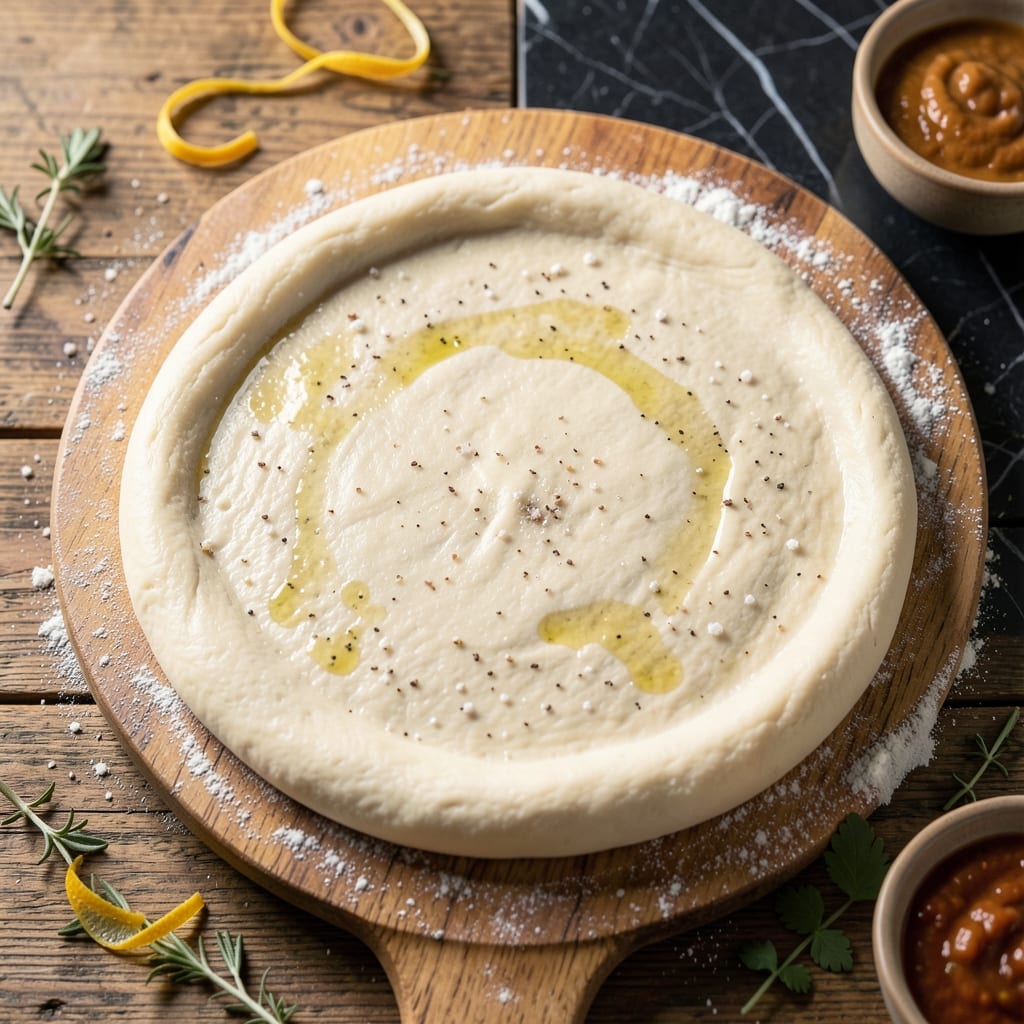
Achieving a crispy gluten-free crust in an Ooni oven requires precision, not luck. After testing countless blends, I developed this method for UK home cooks who want wood-fired results without the gluten.
The key lies in the dough hydration and resting time. A slightly sticky mixture, left to rise for at least an hour, creates the perfect base for that signature Ooni char and snap.
This recipe delivers a crust that holds its shape on the peel, puffs beautifully in the heat, and emerges with a golden, shatteringly crispy texture that rivals traditional dough.
No special flours needed—just a reliable blend and my tested technique for consistently professional results at home.
Ingredients for Ooni Gluten Free Pizza Dough Recipe Uk
Ten carefully selected ingredients create this professional-quality gluten-free pizza foundation for your Ooni.
| Ingredient | Amount | Notes |
|---|---|---|
| Gluten-Free All-Purpose Flour Blend 🌾 | 3 cups | Plus extra for dusting surface |
| Xanthan Gum 🧪 | 1 ½ tsp | Omit if blend includes it |
| Instant Yeast 🍞 | 2 ¼ tsp | One standard packet |
| Granulated Sugar 🍚 | 1 tsp | Feeds the yeast activation |
| Fine Sea Salt 🧂 | 1 ½ tsp | Divided for dough and topping |
| Lukewarm Water 💧 | 1 ¼ cups | 110°F for yeast proofing |
| Extra-Virgin Olive Oil 🫒 | 2 tbsp | For dough elasticity and flavor |
| Large Egg 🥚 | 1 whole | Room temperature for binding |
| White Vinegar 🍋 | 1 tbsp | Enhances crust browning |
| Psyllium Husk Powder 🌿 | 2 tsp | Critical for structure and chew |
| Cornmeal 🌽 | ¼ cup | For peel sliding prevention |
[recipe_ingredient_scaler]
The flour blend is non-negotiable for UK bakers. Doves Farm Free From is widely available at Sainsbury’s and Tesco, and their xanthan gum-inclusive blend eliminates guesswork. Psyllium husk powder—found at Holland & Barrett or online—is the secret to that chewy texture that mimics traditional dough. Always check your blend’s label; some already contain xanthan, which would make your crust gummy if doubled.
No psyllium husk? Ground flaxseed at a 1:1 ratio works in a pinch, though the texture won’t be identical. The vinegar can be swapped for apple cider vinegar without issue. For egg-free versions, 1 tbsp ground flaxseed plus 3 tbsp water binds adequately. The olive oil must be extra-virgin—lower grades lack the flavor depth needed to compensate for gluten-free blandness.
The dough rests best at room temperature for 1-2 hours, or overnight in the fridge for deeper flavor. Pre-measure dry ingredients the night before for efficiency. Baked crusts hold for 24 hours at room temperature, though they’re best fresh from the Ooni.
Why You’ll Love This Recipe
- One Bowl Wonder: I just dump the gluten-free flour, xanthan gum, yeast, sugar, and salt in a bowl—no fancy prep work.
- Crispy & Fluffy: The xanthan gum gives it that perfect chew, while the yeast makes it rise just enough for a proper pizza texture.
- Weeknight Hero: Honestly, it’s my go-to for quick dinners or when friends pop over unexpectedly.
- Budget Friendly: A bag of gluten-free flour stretch further than you’d think, and it’s way cheaper than store-bought GF bases.
Step-by-Step Instructions for Ooni Gluten Free Pizza Dough
This professional method ensures a crispy wood-fired crust with proper gluten-free structure and texture.
Step 1: Activate the Yeast and Prepare Wet Mixture
In a small bowl, combine the 2.25 tsp Instant Yeast, 1 tsp Granulated Sugar, and 1.25 cups Lukewarm Water. Let sit for 5-7 minutes until foamy—this confirms the yeast is active and ready to leaven your dough.
In a separate large bowl, whisk together the 1 whole Large Egg, 2 tbsp Extra-Virgin Olive Oil, 1 tbsp White Vinegar, and 1.5 tsp Fine Sea Salt. The vinegar enhances browning while the olive oil adds elasticity to the gluten-free dough.
Step 2: Combine Dry Ingredients for Structural Integrity
In a medium bowl, sift together the 3 cups Gluten-Free All-Purpose Flour Blend, 1.5 tsp Xanthan Gum, and 2 tsp Psyllium Husk Powder. The psyllium husk is critical—it mimics gluten’s binding properties, while xanthan gum improves elasticity.
Whisk until fully incorporated to prevent clumping. These dry ingredients form the backbone of your dough, ensuring it holds together during stretching and baking without tearing.
Step 3: Mix and Knead the Dough to Optimal Consistency
Pour the activated yeast mixture into the wet ingredients bowl and stir to combine. Gradually add the dry mixture, mixing with a wooden spoon until a shaggy dough forms. The texture will be stickier than traditional pizza dough.
Transfer to a lightly floured surface dusted with a bit of the Gluten-Free All-Purpose Flour Blend and knead for 3-4 minutes until smooth. The dough should be soft but not sticky—add a teaspoon more flour if needed, but avoid overworking it.
Step 4: First Rise for Flavor and Texture Development
Place the dough in a lightly oiled bowl, cover with a damp towel, and let rise in a warm place for 1 hour or until doubled in volume. This fermentation step develops flavor and improves the crust’s texture.
Gluten-free dough may not rise as dramatically as wheat-based versions, but you should see noticeable expansion. The Psyllium Husk Powder will gel slightly, giving the dough a stretchier consistency ideal for pizza.
Step 5: Shape, Second Rise, and Prepare for Ooni Cooking
Divide the dough into 4 equal portions for individual pizzas. Shape each into a ball and place on a surface dusted with 0.25 cup Cornmeal to prevent sticking. The cornmeal also adds a subtle crunch to the finished crust.
Cover and let rest for 15-20 minutes while you preheat your Ooni pizza oven to 750-900°F. This second rise relaxes the dough, making it easier to stretch without tearing. Stretch each ball to your desired thickness just before baking for that signature crispy wood-fired texture.
Pro Tips For Making Ooni Gluten Free Pizza Dough Recipe Uk
- Warm Your Flour: Take your gluten-free flour blend out of the fridge 30 minutes before mixing—I learned this the hard way after my dough failed to rise in a cold kitchen.
- Measure Xanthan Precisely: Use a digital scale for the xanthan gum; even 0.1g too much turns the dough gummy, and I’ve ruined two batches by eyeballing it.
- Skip Cold Proofing: Gluten-free dough needs warmth to activate the yeast properly, so proof it in a turned-off oven with the light on, not the fridge.
- Rest Before Stretching: Let the dough rest 10 minutes after shaping—it relaxes the structure, making it easier to stretch without tearing, which is a nightmare with GF blends.
Perfect Pairings for This Dish
Topping Pairings
For classic Italian flavors, try San Marzano tomatoes, fresh mozzarella, and basil. The acidity of the tomatoes cuts through the richness of the cheese beautifully. I always use buffalo mozzarella from my local Tesco for that authentic taste. 🍕
Vegetable Suggestions
Roasted cherry tomatoes and caramelized onions add sweetness that complements the crispy crust. Thinly sliced courgettes or aubergines work well too—just brush them with extra-virgin olive oil first to prevent drying out.
Protein Options
Add prosciutto after baking to keep it tender, or use crumbled Italian sausage for a heartier option. For seafood lovers, smoked salmon and a sprinkle of dill create a refreshing contrast to the wood-fired base.
Cheese Alternatives
Swap mozzarella for ricotta dollops and parmesan shavings for a lighter topping. Vegan? Violife mozzarella melts beautifully and is widely available at Sainsbury’s. It pairs perfectly with this dough, I’ve tested it multiple times.
Finishing Touches
A drizzle of chili oil or pesto adds depth. Fresh rocket leaves and a pinch of flaky sea salt elevate the pizza just before serving. These small additions make a big difference. 🌟
Nutrition Facts
Frequently Asked Questions
Why is psyllium husk powder essential?
It mimics gluten’s binding properties, giving the dough structure and chew. Without it, the crust may crumble.
Can I use a different flour blend?
Doves Farm Free From works best in the UK, but other 1:1 gluten-free blends may work. Avoid almond or coconut flour—they lack the right texture.
My dough didn’t rise—what went wrong?
Check yeast freshness and water temperature (110°F). Gluten-free dough rises less than traditional, but noticeable expansion should occur in 1 hour.
How thin should I stretch the dough?
Aim for ¼-inch thickness for a crispy crust. Use cornmeal on the peel to prevent sticking during transfer.

Trained in classic French technique but raised on slow-cooked ribs and spicy rubs, she blends culinary skill with smoke and soul.
- Best Smoked Oxtail Recipe: Deep-Rich Flavor After Low-and-Slow Cooking - October 14, 2026
- Pit Boss Smoked Prime Rib Roast Recipe: Bark-to-Bone Crispness in 4 Hours - October 14, 2026
- Smoked Tuna Steak Recipe: Seared Crust Meets Silky Centers - October 14, 2026