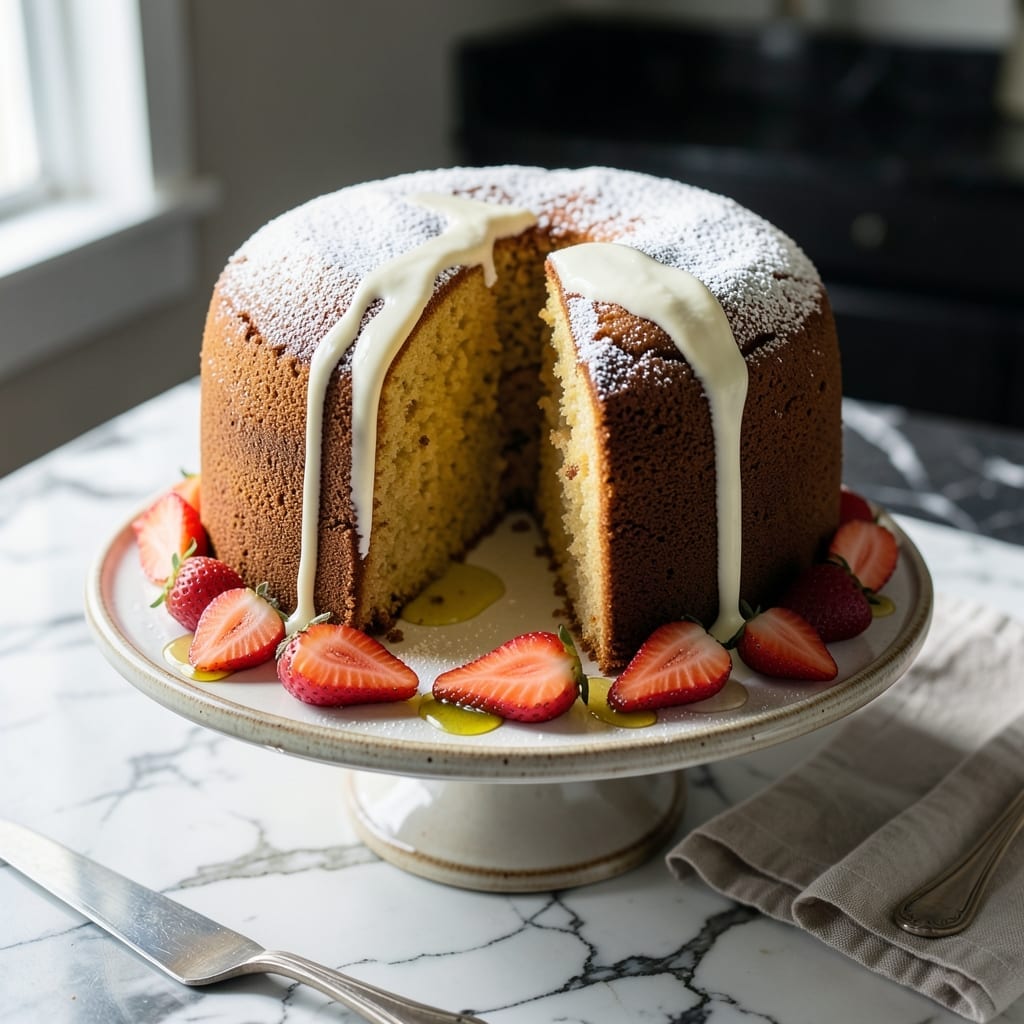
This Southern classic delivers the ultra-moist texture that made pound cake legendary. I’ve refined the traditional method to ensure perfect results every time, with heavy cream adding unmatched richness and tenderness.
The secret lies in creaming butter and sugar thoroughly before incorporating eggs one at a time. Heavy cream replaces milk for a denser, more velvety crumb that stays moist for days without drying out.
Baked low and slow, this cake develops a golden crust while keeping the interior soft and fine. It’s the kind of dessert that feels like a warm hug—simple ingredients, timeless technique, and a taste of Southern hospitality.
Perfect for holidays, birthdays, or anytime you crave a slice of tradition. Let’s bake this classic.
Ingredients for Paula Deen Pound Cake Recipe with Heavy Cream
Rich butter, sugar, and eggs with heavy cream for that signature Southern moisture.
| Ingredient | Amount | Notes |
|---|---|---|
| Unsalted Butter 🧈 | 1 lb | Room temperature, softened |
| Granulated Sugar 🍚 | 3 cups | Fine white granulated |
| Large Eggs 🥚 | 6 whole | Room temperature preferred |
| All-Purpose Flour 🌾 | 3 cups | Sifted before measuring |
| Heavy Cream 🥛 | 1 cup | Full-fat for richness |
| Vanilla Extract 🌿 | 2 tsp | Pure vanilla for best flavor |
| Baking Powder 🧂 | ½ tsp | Ensures proper rise |
| Salt 🧂 | ½ tsp | Fine table salt |
| Almond Extract 🌰 | ½ tsp | Optional for depth |
| Lemon Zest 🍋 | 1 tbsp | Finely grated fresh zest |
[recipe_ingredient_scaler]
The butter must be full-fat and unsalted—salted can throw off the balance. Land O’Lakes is a trusted brand for consistency. Heavy cream is non-negotiable here (the 40% fat kind), not half-and-half or milk. King Arthur Flour is ideal for all-purpose, but most grocery store brands work fine. Room temperature ingredients blend better, so pull them out an hour before baking.
No heavy cream? Whole milk plus melted butter in a pinch, but the texture won’t be as velvety. Out of almond extract? Skip it—the vanilla carries the flavor. Need a substitute for cake flour? Remove 2 tbsp of all-purpose flour and replace with 2 tbsp cornstarch per cup. The lemon zest is optional but adds a bright note that cuts through the richness.
This cake stays moist for 5 days at room temperature in an airtight container. Freeze slices for up to 3 months—just wrap them tightly in plastic and foil. Avoid refrigerating, as it can dry out the crumb. Bring to room temperature before serving for the best texture.
Why You’ll Love This Recipe
- One Bowl Wonder: I can mix everything from the butter to the heavy cream in a single bowl—no fancy equipment, just a whisk and 10 minutes of effort.
- Buttery Heaven: That rich, velvety crumb from the heavy cream and butter? It’s like a hug in cake form, sweet but not cloying.
- Crowd Pleaser: From Sunday suppers to last-minute potlucks, this cake disappears fast—my picky nephew even asks for seconds.
- Stays Fresh: Honestly, it tastes just as good on day three as day one, and the leftovers make killer French toast.
Step-by-Step Instructions for Paula Deen’s Heavy Cream Pound Cake
This method ensures a rich, velvety texture with a golden crust—every time.
Step 1: Cream Butter and Sugar to Perfection
In a stand mixer with the paddle attachment, beat the 1 lb Unsalted Butter on medium speed for 1 minute until smooth and pale. Gradually add the 3 cups Granulated Sugar, beating for 5–7 minutes until light and fluffy.
The mixture should nearly triple in volume and take on a satin-like sheen. This step aerates the butter, creating tiny pockets that will trap air and give the cake its tender crumb. Don’t rush—under-creaming results in a dense texture.
Scrape down the sides of the bowl with a spatula to ensure even mixing. The butter and sugar should be fully incorporated with no visible sugar granules.
Step 2: Incorporate Eggs and Flavorings
Add the 6 whole Large Eggs, one at a time, mixing on medium-low speed for 30 seconds after each addition until fully combined. This gradual process prevents the batter from curdling and ensures a smooth emulsion.
Once the eggs are incorporated, add the 2 tsp Vanilla Extract, 0.5 tsp Almond Extract, and 1 tbsp Lemon Zest. Mix for 15 seconds just until evenly distributed. The zest adds a bright, citrusy note that balances the richness of the butter and cream.
Real talk: if the mixture looks slightly separated at this point, it’s normal. The flour will bring it back together in the next step.
Step 3: Alternate Dry Ingredients and Heavy Cream
In a separate bowl, whisk together the 3 cups All-Purpose Flour, 0.5 tsp Baking Powder, and 0.5 tsp Salt. This ensures the leavening agent is evenly distributed for a consistent rise.
With the mixer on low speed, add about ⅓ of the flour mixture and mix until just combined. Pour in ½ cup of the Heavy Cream and mix for 10 seconds. Repeat with another ⅓ of the flour and the remaining ½ cup Heavy Cream, ending with the last ⅓ of flour.
Mix only until the flour disappears—overmixing develops gluten, which makes the cake tough. The batter will be thick but smooth, with a slight sheen from the heavy cream.
Step 4: Bake Until Deep Golden and Fragrant
Preheat the oven to 325°F. Grease and flour a 10–12 cup Bundt pan or tube pan, tapping out any excess flour. Pour the batter into the pan and smooth the top with a spatula.
Bake for 1 hour to 1 hour 15 minutes, or until a wooden skewer inserted into the center comes out clean or with a few moist crumbs. The top should be deep golden brown and the cake should pull slightly away from the sides of the pan.
Here’s the thing—every oven runs differently. Start checking for doneness at the 1-hour mark, and if the top begins to brown too quickly, tent the pan loosely with aluminum foil.
Step 5: Cool Completely Before Serving
Let the cake cool in the pan on a wire rack for 20 minutes. This allows it to set slightly without sticking. Then, invert the cake onto the rack and let it cool completely, about 2 hours.
I know it’s tempting to slice into it while warm, but cooling ensures the crumb stays intact and the flavors fully meld. The heavy cream in the batter keeps it moist for days, so it’ll taste just as good the next morning—if it lasts that long.
Pro Tips For Making Paula Deen Pound Cake Recipe With Heavy Cream
- Room Temp Butter: Pull your unsalted butter out at least 2 hours before baking—creaming it with sugar at true room temp gives you that light, fluffy texture this cake is famous for.
- Whip the Heavy Cream: Before adding it to the batter, give the heavy cream a quick whip to soft peaks—it incorporates air and makes the cake even more tender.
- Don’t Overmix Flour: As soon as the flour disappears into the batter, stop mixing. Overworking it develops gluten, and you’ll end up with a dense cake instead of that melt-in-your-mouth Paula Deen style.
- Test with a Skewer: Start checking for doneness at 1 hour—insert a skewer near the center, and if it comes out clean or with just a few moist crumbs, it’s done. I learned this the hard way after pulling out a gooey center twice.
Pro Cooking Tips for paula deen pound cake recipe with heavy cream
Creaming Technique
Beat the butter and sugar for 5-7 minutes until pale and fluffy—the longer you cream, the lighter your crumb. I use a KitchenAid stand mixer on medium speed. Stop to scrape the bowl at least twice to ensure even mixing.
Room Temperature Matters
All ingredients should be room temperature (65-70°F). Cold butter won’t cream properly, and cold eggs can cause the batter to curdle. I set mine out 1 hour before baking.
Alternate Additions
Add flour and heavy cream in 3 stages, starting and ending with flour. This prevents overmixing. Use a spatula to scrape the bowl between additions for even distribution.
Mix just until the flour disappears—overmixing develops gluten, leading to a tough cake.
Baking Evenness
Bake on the middle rack at 325°F for even heat circulation. Rotate the pan halfway through if your oven has hot spots. I check doneness at 1 hour with a wooden skewer. 🌡️
Cooling Properly
Let the cake cool in the pan for 20 minutes, then invert onto a rack. Cooling completely (2 hours) prevents crumbling and allows flavors to meld beautifully.
Resist slicing too soon—the texture improves as it rests.
Nutrition Facts
Frequently Asked Questions
Can I substitute the heavy cream with something else?
Whole milk plus 1 tbsp melted butter works in a pinch, but the texture won’t be as rich. Avoid skim milk—it lacks the fat needed for moisture.
Why does my cake have a dense texture?
Under-creaming the butter and sugar or overmixing the batter are common culprits. Cream for 5-7 minutes and stop mixing once flour disappears.
How do I prevent the cake from sticking to the pan?
Grease the pan thoroughly with butter, then dust with flour, tapping out excess. For extra insurance, use baking spray with flour.
Can I bake this in a different pan size?
A 9×13-inch pan works but reduces baking time to 45-55 minutes. Adjust oven temp to 300°F for even cooking.

Trained in classic French technique but raised on slow-cooked ribs and spicy rubs, she blends culinary skill with smoke and soul.
- Recipe for Boneless Pork Chops in Cast Iron Skillet: Sear and Baste to Juicy Perfection - October 3, 2026
- Recipe for Boneless Cross Rib Roast: Slow-Roasted Beef with Herb Crust - October 3, 2026
- Hamburgers in Sauce Recipe Crock Pot: Slow-Cooked Savory Delight - October 3, 2026