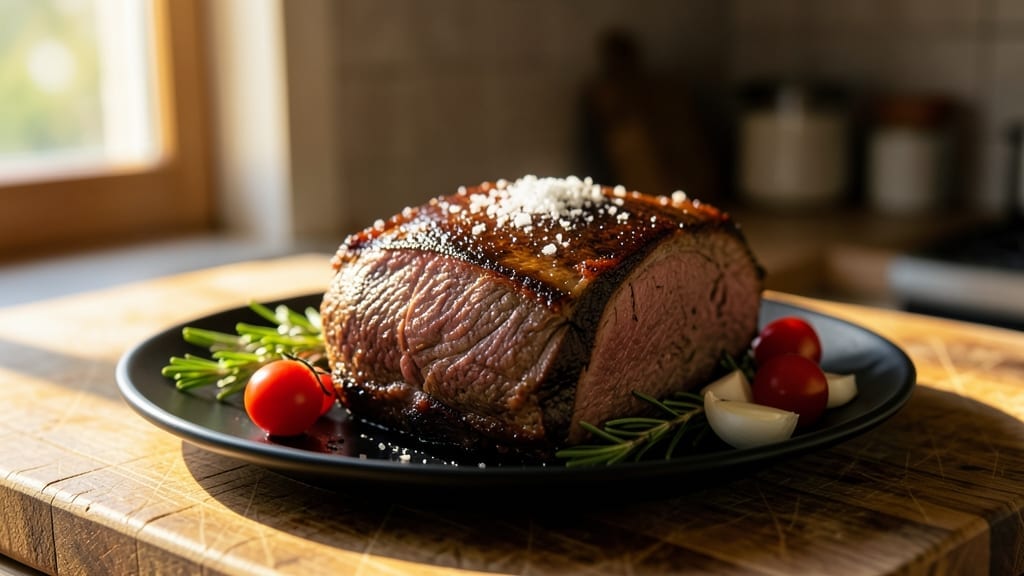
Cooking a pellet smoker prime rib roast transforms a holiday centerpiece into a restaurant-quality masterpiece with smoky depth and melt-in-your-mouth tenderness. The key lies in precise temperature control and a simple seasoning approach that lets the wood pellets shine—no complicated rubs or sauces needed.
I remember the first time I nailed this technique at a family cookout, when the aroma of hickory smoke filled the backyard and everyone fought for seconds.
This method delivers foolproof results by focusing on three critical elements: a dry brine overnight, consistent low-and-slow smoking, and proper resting time. You’ll work with a simple seasoning blend—just salt, pepper, and a touch of garlic powder—to create that perfect crust while keeping the interior juicy.
The pellet smoker handles the rest, delivering even heat and that signature smoky flavor without overpowering the beef’s natural richness.
By the time you carve into that perfectly tender prime rib, you’ll have a centerpiece that’s crisp on the outside, velvety inside, and infused with just the right amount of wood smoke. The sauce?
Optional—but if you choose to make it, a quick horseradish cream or classic au jus elevates every bite. This isn’t just dinner; it’s an experience that turns ordinary weeknights into special occasions.
Whether you’re hosting a holiday feast or treating yourself to a luxurious meal, this recipe scales beautifully and delivers restaurant-quality results at home. The secret? Confidence in the process and patience during the smoking phase. Let’s get started on creating your most impressive prime rib yet.
Ingredients for pellet smoker prime rib roast
A simple seasoning blend meets pellet smoker magic for restaurant-quality prime rib.
| Ingredient | Amount | Notes |
|---|---|---|
| Prime Rib Roast 🥩 | 8 lb | Bone-in, center-cut preferred |
| Kosher Salt 🧂 | 4 tbsp | Diamond Crystal preferred |
| Freshly Ground Black Pepper 🌶️ | 2 tbsp | Coarse grind for texture |
| Garlic Powder 🧄 | 1 tbsp | Not garlic salt substitute |
| Hickory Wood Pellets 🌳 | 10 lb | For consistent smoke flavor |
| Unsalted Butter 🧈 | ½ cup | Full-fat for richness |
| Fresh Horseradish 🥬 | ¼ cup | For horseradish cream sauce |
| Heavy Whipping Cream 🥛 | 1 cup | Full-fat for creaminess |
| Beef Broth 🍲 | 1 cup | Low-sodium preferred |
| Fresh Rosemary 🌿 | 2 sprigs | For garnish and aroma |
| Fresh Thyme 🌿 | 2 sprigs | For garnish and aroma |
| Apple Cider Vinegar 🍎 | 1 tbsp | For tenderizing brining |
[recipe_ingredient_scaler]
The prime rib is the star here—look for a bone-in center-cut with good marbling at Costco or your local butcher. Whole Foods carries excellent-quality prime rib too, but call ahead to confirm they have it in stock. The bone-in version adds flavor and keeps the meat juicy during the long smoke. I always opt for the 8 lb roast as it’s perfect for feeding a crowd while still being manageable for a pellet smoker. For the best results, ask your butcher to trim off any large fat caps—you want that beautiful crust without excess fat interfering.
No hickory pellets? Mesquite or cherry wood pellets work too, though they’ll give a slightly different flavor profile. Fresh horseradish can be tough to find—pre-shredded works in a pinch but drain well before using. Short on beef broth? Water plus 1 tbsp soy sauce mimics the depth. The apple cider vinegar in the brine is non-negotiable—it tenderizes the meat and balances the salt. If you’re short on time, skip the overnight brine and just pat the meat dry before seasoning, but you’ll lose some of that restaurant-quality tenderness. For the horseradish cream, Dijon mustard adds a nice kick if you’ve got it.
The prime rib keeps beautifully for 3-4 days in the fridge if wrapped tightly in plastic. For longer storage, slice against the grain and freeze portions in airtight containers for up to 3 months. The horseradish cream sauce can be made ahead and refrigerated for 5 days, though it’s best fresh. I like to portion the sauce into small containers so I can grab just what I need. The pellet smoker’s temperature probe is your best friend here—don’t rely on the internal thermometer alone; the probe gives you the most accurate reading. And trust me, the extra minute or two of resting makes all the difference for that perfect slice.
Why You’ll Love This Recipe
- One-Pot Smoky Wonder: The pellet smoker does all the heavy lifting—just toss that 8 lb prime rib on the grate, crank the hickory wood pellets to 225°F, and let it work its magic. No constant babysitting, no flipping every 5 minutes. I’ll admit, I used to stress over keeping the heat perfect, but this method? It’s foolproof. The brine and smoke do the work while you prep sides or even take a nap.
- Cravable Smoky-Creamy Combo: That first bite? Crispy bark on the outside, creamy pink center, and a horseradish cream sauce that’s like a spicy hug for your taste buds. The hickory wood pellets give it that deep, woodsy aroma, while the fresh rosemary and thyme add a fragrant punch. Honestly, the way the smoke infuses the meat—it’s not just flavor, it’s character. And that sauce? Thick enough to cling but smooth enough to melt.
- Feeds a Crowd, No Guilt: This isn’t your average “I’ll make extra” meal—this is make extra because you will. The 8 lb prime rib easily feeds 10-12 people, and the leftovers? Wrapped tightly in plastic, they stay juicy for 3-4 days. I’ve taken slices to potlucks, game days, or even packed them for a picnic. Plus, slicing against the grain makes it easy to reheat portions without drying them out. Budget-friendly? Absolutely. No takeout needed.
- Weeknight Hero (Yes, Really): Between the 24-hour brine and the low-and-slow smoke, it might look like a Sunday project, but I’ve pulled this off on a Tuesday night after work. The key is starting the brine the night before, so all you’re doing the next day is smoking and resting. And honestly, the only active time is the final hour of resting and slicing—plenty of time to open a bottle of wine. The result? A restaurant-worthy centerpiece that takes less effort than ordering delivery.
Step-by-step instructions for pellet smoker prime rib roast
Here’s the method that delivers melt-in-your-mouth tenderness with a perfect smoky crust every time.
Prepare the Brine for Maximum Tenderization
In a large non-reactive container, combine 1 gallon cold water, the 4 tbsp kosher salt, 1 tbsp apple cider vinegar, and 1 tbsp garlic powder. Stir until completely dissolved. Gently lower the 8 lb prime rib roast into the brine, ensuring it’s fully submerged. Cover and refrigerate for 24 hours, turning the roast once halfway through.
This dry brine method works magic for prime rib – the salt penetrates deeply while the vinegar helps break down muscle fibers. You’ll know it’s working when you see a thin layer of salt crystals forming on the surface. After brining, pat the roast thoroughly dry with paper towels, removing any excess moisture from the surface and in the cavity.
Here’s the thing – don’t skip this step. The brine creates that perfect balance of seasoning throughout the meat while preventing a dry exterior. I’ve found that prime rib responds exceptionally well to this technique, resulting in a juicy interior and that coveted bark.
Set Up the Pellet Smoker for Low-and-Slow Cooking
Fill your pellet smoker with 10 lb hickory wood pellets and preheat to 225°F. The key here is maintaining consistent temperature – I recommend using a wireless probe thermometer inserted into the thickest part of the roast. Place the roast bone-side down on the smoker grate, fat cap facing up.
Add 2 sprigs fresh rosemary and 2 sprigs fresh thyme to the smoker for subtle aromatic infusion. The hickory wood will create that classic smoky depth while the herbs add complexity. Smoke the roast uncovered for 4 hours, then rotate it 90 degrees to ensure even exposure to the smoke.
Resist the urge to open the smoker during this initial phase – every time you peek, you lose valuable heat and moisture. The roast should develop a thin crust and begin releasing its own juices, which will baste the meat as it cooks. This low-and-slow approach is what creates that legendary tenderness in prime rib.
Wrap and Rest for Perfect Texture
After the initial 4 hours, wrap the roast tightly in heavy-duty aluminum foil. This “Texas crutch” technique helps overcome the stall and ensures even cooking. Return it to the smoker and continue cooking until the internal temperature reaches 130°F in the thickest part of the roast, which should take approximately 2-3 additional hours.
At this point, remove the roast from the smoker and transfer it to a cutting board. Tent loosely with foil and let it rest for 1 hour. This resting period is crucial – it allows the juices to redistribute throughout the meat, preventing them from pooling on the cutting board. The internal temperature will rise another 10-15°F during this time, reaching the ideal 140-145°F range.
While the roast rests, prepare the horseradish cream sauce by combining the ½ cup unsalted butter, ¼ cup fresh horseradish, 1 cup heavy whipping cream, and 1 cup beef broth in a saucepan. Simmer over medium heat until the butter melts and the mixture thickens slightly, then keep warm.
Slice and Serve with Perfect Sauce Pairing
After the resting period, slice the prime rib against the grain into ½-inch thick slices. The meat should be fork-tender with a beautiful pink center. Arrange the slices on a warm platter and spoon the warm horseradish cream sauce over the top.
Here’s where it gets impressive – the sauce should be thick enough to coat the back of a spoon but still silky smooth. The horseradish adds a bright kick that cuts through the richness of the beef while the cream sauce ties everything together. Garnish with additional sprigs of rosemary and thyme for presentation.
Serve immediately with your favorite sides. Each slice should be incredibly tender, with a perfect balance of smoky flavor from the hickory wood and the bright horseradish cream sauce. The crust should be dark and slightly crispy, while the interior remains juicy and pink.
Pro Tips For Making Pellet Smoker Prime Rib Roast
- Trim the Fat Cap: That thick layer of fat on your prime rib? Don’t just leave it hanging there—trim it down to about ¼-inch thick before smoking. I learned this the hard way when my first attempt left the fat cap too thick, making the crust uneven and the meat greasy instead of crisp. A sharp knife and steady hand make all the difference.
- Rotate, Don’t Just Flip: After the first 4 hours at 225°F, give that roast a 90-degree turn instead of flipping it. This ensures the smoke and heat hit all sides evenly without letting the fat pool in one spot. I used to flip it like a steak, and the crust ended up lopsided—now I treat it like a delicate science experiment.
- Foil It Tight: When you wrap the roast after 4 hours, crimp that foil like you mean it—double-layer it and seal every edge. A loose wrap lets steam escape, turning your perfectly smoked roast into a sad, dry slab. I’ve seen people skip this, and it’s the difference between “wow” and “what even is this?”
- Sauce It While Warm: That horseradish cream sauce won’t shine if you make it cold. Simmer the butter, cream, and broth just until it thickens—no boiling, or you’ll scramble the cream. Keep it warm while the roast rests, then spoon it over immediately before slicing. Cold sauce on hot meat? A crime.
Best sauces and condiments for this recipe
Classic Horseradish Cream
The horseradish cream sauce from the recipe is my go-to for prime rib—it’s bright, creamy, and cuts through the richness perfectly. I mix ½ cup unsalted butter with ¼ cup fresh horseradish, then stir in 1 cup heavy whipping cream and 1 cup beef broth until smooth.
Simmer just until the butter melts, then keep warm while the roast rests. The tangy horseradish balances the smoky depth of the beef beautifully. 💛
Smoky Au Jus
For a restaurant-worthy touch, make an au jus using the drippings from your prime rib. After resting, strain the juices into a saucepan and simmer with 1 tbsp fresh thyme and 2 tbsp apple cider vinegar for 10 minutes.
Strain again, then reduce over medium heat until thickened. Serve alongside the slices for dipping—this is where the smoky flavor really shines. ✨
Red Wine Reduction
If you love bold flavors, a red wine reduction adds sophistication. Deglaze the roasting pan with ½ cup dry red wine (like Cabernet Sauvignon) after cooking, then reduce by half.
Stir in 2 tbsp beef broth and 1 tbsp butter for a glossy, tangy sauce. Drizzle over the prime rib before serving—it’s luxurious but simple. 🍷
Peppercorn Butter
This peppercorn butter is my secret weapon for adding depth. Melt ¼ cup unsalted butter with 1 tsp crushed black peppercorns and 1 tsp minced garlic, then strain and spread over the sliced prime rib.
The peppercorn’s warmth complements the smoky crust without overpowering. I often use Penzeys peppercorns for that extra kick. 🌟
Balsamic Glaze
For a sweet-tangy contrast, drizzle balsamic glaze over the prime rib. Heat ¼ cup balsamic vinegar with 1 tbsp honey until syrupy, then cool slightly. Spoon it over the slices just before serving—it’s a refreshing palate cleanser after the rich beef. I like Mirabelle balsamic for its fruity depth. 💫
Nutrition facts
Frequently asked questions
Why does the recipe recommend an overnight brine for the prime rib?
The 24-hour brine transforms the texture of your prime rib by breaking down muscle fibers and ensuring even seasoning throughout. The apple cider vinegar tenderizes while the salt penetrates deep, creating that perfect balance of juiciness and flavor. Skipping this step risks a dry exterior, so embrace the patience—it’s worth it for restaurant-quality results!
Can I use a different wood pellet flavor besides hickory?
While hickory is classic, mesquite adds a bolder, earthier note, and cherry offers a sweeter, fruitier aroma. Just note that stronger flavors like mesquite may overpower the beef’s natural taste. Stick to 10 lb pellets for consistent smoke and adjust your seasoning slightly if needed.
What’s the best way to handle if my pellet smoker temperature fluctuates?
Use a wireless probe thermometer in the thickest part of the roast—this gives real-time accuracy. If temps drop, add more pellets or close the lid slightly. Avoid opening the smoker often, as this causes heat loss. A 225°F consistency is key for that perfect crust and tender interior.
How do I know when the prime rib is done without cutting into it?
Watch for the 130°F internal temp (probe in the thickest part) and a dark, crispy crust. The meat should also pull away slightly from the bone. Resting 1 hour afterward lets juices redistribute—this is when the magic happens! Trust the probe, not guesswork.
Can I make the horseradish cream sauce ahead of time?
Yes! Store it in an airtight container in the fridge for up to 5 days. Reheat gently on the stovetop, stirring occasionally, until smooth. If it thickens too much, thin with a splash of beef broth. Fresh is ideal, but this sauce holds up beautifully.

Trained in classic French technique but raised on slow-cooked ribs and spicy rubs, she blends culinary skill with smoke and soul.
- Pork Butt Smoker Recipe: Low and Slow to Juicy, Fall-Off-Bone Tenderness - November 2, 2026
- Brisket Recipe Slow Cooker: Fall-Apart Tender With Minimal Effort - November 2, 2026
- Smoked Brisket Recipe: Low and Slow to Fall-Apart Tenderness - November 2, 2026