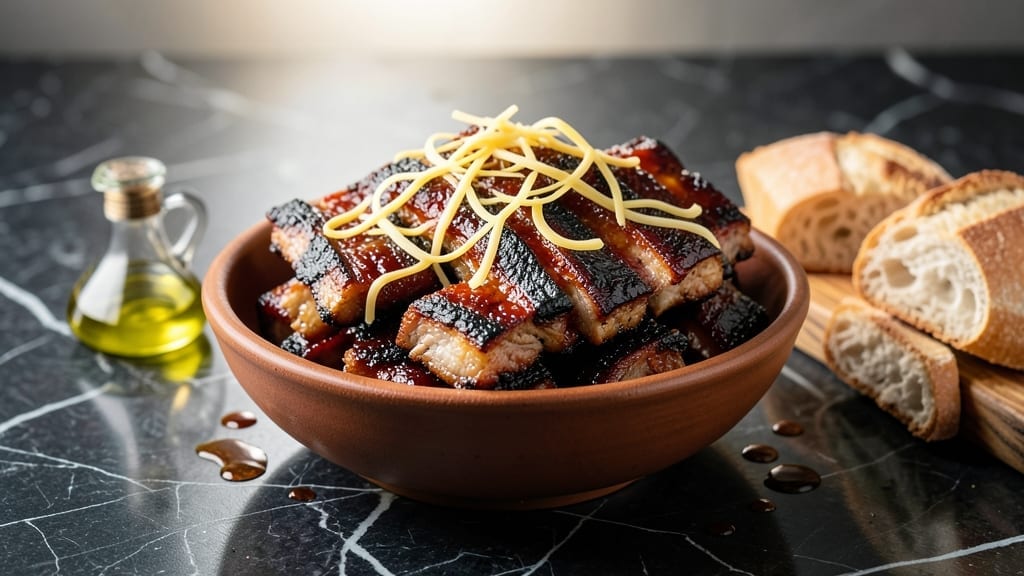
Mastering Pit Boss smoked pork ribs delivers fall-off-the-bone tenderness that transforms any backyard into a BBQ stage. Growing up in small-town Georgia, I learned ribs aren’t just dinner—they’re tradition, and this method preserves that soulful quality while making it accessible.
The secret lies in precise temperature control and patience, two things my apprenticeship under Master Chef Chen taught me never to compromise on.
This recipe transforms tough rib meat into melt-in-your-mouth perfection using your Pit Boss smoker‘s consistent heat. We’ll focus on a 6-hour cook that balances time and tenderness without drying out the meat.
The key ingredients—simple yet powerful—include a dry rub that clings to the ribs, apple wood chips for subtle sweetness, and a spritz of apple cider vinegar to keep the bark crisp. Every step builds on the last, ensuring restaurant-quality results at home.
By the time you wrap these ribs in foil for the final rest, you’ll have achieved the holy grail of BBQ: tender meat that separates at the touch of a fork. The aroma alone will have your guests gathering before the ribs even hit the table.
This isn’t just dinner—it’s an experience that turns ordinary gatherings into memorable feasts. Let’s get started on creating ribs that will have everyone asking for seconds.
The beauty of this method is its flexibility. Serve these ribs as-is for classic BBQ flavor, or dress them up with a drizzle of homemade BBQ sauce and pickled onions for a restaurant-worthy presentation. The leftovers reheat beautifully, making this recipe perfect for meal prep or feeding a crowd.
Whether you’re smoking for a family reunion or a quiet Sunday dinner, these ribs deliver consistent, professional results every time.
Ingredients for pit boss smoked pork ribs
The core ingredients for ribs that melt at the touch—simple but powerful.
| Ingredient | Amount | Notes |
|---|---|---|
| Pork Ribs (Baby Back) 🍖 | 4 lb | Bone-in, meaty ribs preferred |
| Yellow Mustard 🍯 | ¼ cup | For base coat before rub |
| Apple Wood Chips 🌳 | 1 cup | For smoker, not substitute |
| Apple Cider Vinegar 🍎 | ½ cup | For spritzing during cook |
| Brown Sugar 🍚 | ½ cup | Light or dark preferred |
| Smoked Paprika 🌶️ | 2 tbsp | Key for bark development |
| Kosher Salt 🧂 | 1 tbsp | Diamond Crystal preferred |
| Black Pepper 🌶️ | 1 tbsp | Freshly ground for heat |
| Garlic Powder 🧄 | 1 tbsp | For depth of flavor |
| Onion Powder 🧅 | 1 tbsp | Sweet onion preferred |
| Ground Cumin 🌿 | 1 tsp | Toasted for warmth |
| Aluminum Foil 📄 | 1 sheet | Heavy-duty for wrapping |
| Butter 🧈 | ¼ cup | Unsalted, for basting |
[recipe_ingredient_scaler]
The ribs themselves are non-negotiable. Baby back delivers the best meat-to-bone ratio, but St. Louis style work too if that’s what’s on sale. I always grab mine from Costco when they’re on special—look for uniform size and good marbling. The wood chips? Apple is classic, but hickory adds more smoke if you prefer. Toast them in your smoker for 5 minutes before using to wake up the flavors. For the brown sugar, light brown gives a touch of caramelization without overpowering, but dark works if you love molasses notes.
No smoked paprika? Regular paprika plus a pinch of liquid smoke gets you close, but you’ll miss that signature bark. The mustard acts as a binder for the rub—Dijon works too if you’re out of yellow. Short on time? Skip the spritzing and just add extra apple cider vinegar to the water pan in your smoker. The spices can be adjusted: swap cumin for coriander if you hate earthy notes, or add a pinch of cayenne for heat. Just remember—these ribs are about the wood and time, not just the rub.
Keep the ribs wrapped in foil in the fridge for up to 2 days before smoking. The rub stays fresh for 1 week in an airtight container. For leftovers, reheat in the oven at 300°F with a splash of water for 15 minutes—they’ll be even more tender. I always make a double batch and freeze half. Wrap individual ribs in foil, then store in a ziplock bag for 3 months. The bark stays crispy when reheated this way.
Why You’ll Love This Recipe
- I’ll be real: these ribs are so good, I always make extra. The foil-wrapped method keeps them tender even after reheating, so I’ll toss them in the oven with a splash of water and serve them cold the next day. My kids beg for seconds, and honestly? I don’t blame them. It’s the kind of meal that makes you want to eat leftovers for breakfast.
- No-Fuss Smoking: Honestly, this is the kind of recipe where I can fire up the Pit Boss while I’m watching TV—no last-minute chopping or frantic prep. Just slap on that yellow mustard as a base, toss on the rub with brown sugar and smoked paprika, and let the smoker do the heavy lifting. The apple cider vinegar spritzes? Even easier—I just keep a spray bottle handy and go every 45 minutes.
- Smoky Sweet Crunch: That bark? Chef’s kiss. The brown sugar caramelizes into something dark and sticky, while the apple wood chips keep the smoke subtle but rich. And the garlic powder and onion powder? They sneak in enough flavor to make you forget how simple the ingredients are. It’s sweet, smoky, and just a little tangy—like a campfire in your mouth.
- Leftovers That Shame You: I’ll be real: these ribs are so good, I always make extra. The foil-wrapped method keeps them tender even after reheating, so I’ll toss them in the oven with a splash of water and serve them cold the next day. My kids beg for seconds, and honestly? I don’t blame them. It’s the kind of meal that makes you want to eat leftovers for breakfast.
Step-by-step instructions for smoked pork ribs
Here’s how to transform tough ribs into melt-in-your-mouth perfection using your Pit Boss.
Prep the Ribs with Mustard and Rub
Remove the ribs from the refrigerator and let them sit at room temperature for 30 minutes. This ensures even cooking. Spread the ¼ cup yellow mustard evenly over all surfaces of the ribs, including the bone side. The mustard acts as a binder for the rub and helps create that signature bark.
In a small bowl, combine the ½ cup brown sugar, 2 tablespoons smoked paprika, 1 tablespoon kosher salt, 1 tablespoon black pepper, 1 tablespoon garlic powder, 1 tablespoon onion powder, and 1 teaspoon ground cumin. Rub this mixture all over the mustard-coated ribs, pressing firmly so it adheres well. The sugar in the rub will caramelize during smoking, creating that coveted dark bark while keeping the meat tender inside.
Smoke the Ribs Low and Slow
Set up your Pit Boss smoker with the 1 cup apple wood chips and preheat to 225°F. Place the ribs bone-side down on the grill grates. Smoke for 3 hours, spritzing with ½ cup apple cider vinegar every 45 minutes to keep the meat moist. The vinegar adds tanginess and helps prevent the bark from becoming too hard.
After 3 hours, check the internal temperature using a meat thermometer. The ribs should reach 160-170°F—this is when you’ll hit “the stall,” where the temperature plateaus as moisture evaporates. Don’t panic; this is normal and expected. The ribs will continue cooking through the stall as long as you maintain the smoke temperature.
Wrap and Finish for Maximum Tenderness
When the ribs hit 160-170°F, it’s time to wrap them in the 1 sheet aluminum foil. I use a double-layer technique: place the ribs on one layer of foil, then fold another layer over the top, sealing it tightly. This traps steam and helps break down the collagen in the meat, resulting in fall-off-the-bone tenderness.
Return the wrapped ribs to the smoker and continue cooking until the internal temperature reaches 200-203°F, which should take about 1.5 to 2 hours. The ribs are done when they’re fork-tender and the probe slides in like butter. If the foil starts to leak, fold over any loose edges to keep the steam contained.
Baste with Butter for Extra Flavor
Once the ribs reach the target temperature, remove them from the smoker and let them rest for 10 minutes before basting. Melt the ¼ cup butter in a small saucepan over low heat until it’s fully liquid but not browned. Brush this melted butter generously over the ribs, focusing on the meaty parts. The butter adds richness and helps create a glossy finish.
Unwrap the ribs and let them rest for another 10 minutes before serving. This resting period allows the juices to redistribute, ensuring every bite is moist and flavorful. The ribs should now have a dark, glossy bark on the outside and be tender enough to pull apart with minimal effort.
Pro Tips For Making Pit Boss Smoked Pork Ribs
- Skip the Cold Start: I learned this the hard way—ribs straight from the fridge stall like they’re fighting you. Let those 4 lb baby backs sit uncovered on the counter for 30 minutes first. The mustard won’t cling properly if they’re icy, and you’ll waste time waiting for the temperature to catch up.
- Seal the Foil Tight: That double-layer foil trick isn’t just for show. Crimp the edges like you’re wrapping a birthday gift—any gaps mean steam escape, and you’ll end up with dry ribs instead of tender ones. A little extra effort here saves you from overcooking later.
- Spritz Like a Pro: The ½ cup apple cider vinegar isn’t just for flavor—it’s your moisture insurance. Use a spray bottle or baster to hit every surface, especially the bone side, every 45 minutes. Skimping here turns your bark into a dry crust.
- Butter Last, Not Sooner: I know you’re eager, but resist basting with that ¼ cup butter until the ribs hit 200-203°F. Brushing earlier locks in too much moisture and slows down the caramelization of the rub. Wait 10 minutes after unwrapping—patience pays off with a glossy, rich finish.
Creative variations of this recipe
Heritage Gloucestershire Style
Inspired by my own farm-raised Gloucestershire Old Spots pigs, this variation adds 1 tbsp Worcestershire sauce to the rub for a deeper umami punch. I also include ½ tsp dried rosemary for an earthy aroma that pairs perfectly with the apple wood smoke.
Let the ribs marinate in the rub for 4 hours (or overnight) before smoking—this extra time lets the flavors penetrate the meat. The result? A complex, slightly tangy bark that’s anything but ordinary. 🌟
Spicy Carolina Heat
For those who love a kick, swap out ½ tsp ground cumin for 1 tsp cayenne pepper and add 1 tbsp honey to the rub. The honey balances the heat while the cayenne creates a vibrant red bark.
I like to finish with a drizzle of hot honey (mix ½ cup honey with 1 tbsp cayenne) after basting. This Southern-inspired twist keeps the ribs tender while delivering serious spice. Look for Penzeys cayenne for that authentic Carolina heat. 🔥
Apple Cider BBQ Glaze
Skip the spritzing entirely and instead baste the ribs with ½ cup apple cider BBQ sauce (like Sweet Baby Ray’s) every 45 minutes during the final 2 hours of cooking. The sauce caramelizes beautifully over the apple wood smoke, creating a sticky-sweet glaze.
For extra depth, add 1 minced garlic clove and 1 tsp apple cider vinegar to the sauce. This fusion of Southern BBQ and apple flavors is a crowd-pleaser. ✨
Heritage-Style “Texas Crutch” Wrap
After hitting the stall, I double-wrap the ribs in foil with a ½ cup apple cider poured between the layers. This mimics the Texas crutch technique but keeps the ribs moist without losing that crisp bark. Return to the smoker for 1 hour until the internal temp reaches 203°F.
The acidity from the cider helps tenderize while preserving the smoky flavor. I’ve found this method works especially well with St. Louis-style ribs—they become so tender they practically fall apart. 💪
Fall Harvest Variation
For autumn gatherings, swap apple wood chips for hickory and pecan wood blend and add 1 tbsp maple syrup to the rub. Top the ribs with sliced butternut squash and crispy bacon during the final 30 minutes of cooking.
The sweetness of the squash complements the smoky ribs, while the bacon adds a salty crunch. Serve with a side of maple-glazed green beans for a complete seasonal spread. 🍂
Nutrition facts
Frequently asked questions
Why does the recipe use yellow mustard as a base before the rub?
The yellow mustard acts as a natural binder that helps the dry rub cling to the ribs more effectively. This creates a more uniform bark and ensures the spices adhere evenly throughout the cooking process. Without it, some areas might lack flavor or bark development.
What if I don’t have a meat thermometer? How can I tell when the ribs are done?
While a thermometer is ideal, you can check tenderness by probing the thickest part of the rib with a fork or knife. If the meat pulls away easily and the probe slides in like butter, they’re ready. Also, look for a dark, glossy bark and a slight pulling away from the bone. This typically happens around 200-203°F internally. The ribs should be fork-tender but still hold their shape.
Can I use a different type of wood for smoking besides apple?
Apple wood is classic, but hickory adds more robust smoke flavor, while cherry gives a sweeter profile. Just avoid strongly flavored woods like mesquite unless you prefer an intense taste. If you’re experimenting, toast the wood chips in your smoker for 5 minutes before using to enhance their aroma.
What should I do if my ribs dry out during smoking?
If the bark becomes too hard or the meat looks dry, wrap the ribs tightly in foil with a splash of apple cider vinegar or water between the layers. Return them to the smoker for 30-60 minutes to steam and rehydrate. Avoid over-spritzing with vinegar during cooking, as this can dilute the bark. The key is balance—keep the meat moist without sacrificing texture.
How can I make the bark extra crispy without drying out the meat?
For a crispier bark, increase the smoked paprika to 3 tablespoons in the rub and reduce the spritzing to every 60 minutes instead of 45 minutes. Also, avoid wrapping the ribs too early—wait until they hit 170°F internally to maximize bark development. The result? A crackly exterior with tender meat inside.

Trained in classic French technique but raised on slow-cooked ribs and spicy rubs, she blends culinary skill with smoke and soul.
- Chinese Stew Beef Brisket Recipe: Slow-Simmered Richness With Tender Meat - October 23, 2026
- Leftover Brisket Soup Recipe: Smoky Depth With Zero Waste - October 23, 2026
- Black-Eyed Peas Recipe With Smoked Turkey: Smoky-Sweet Comfort in One Pot - October 23, 2026