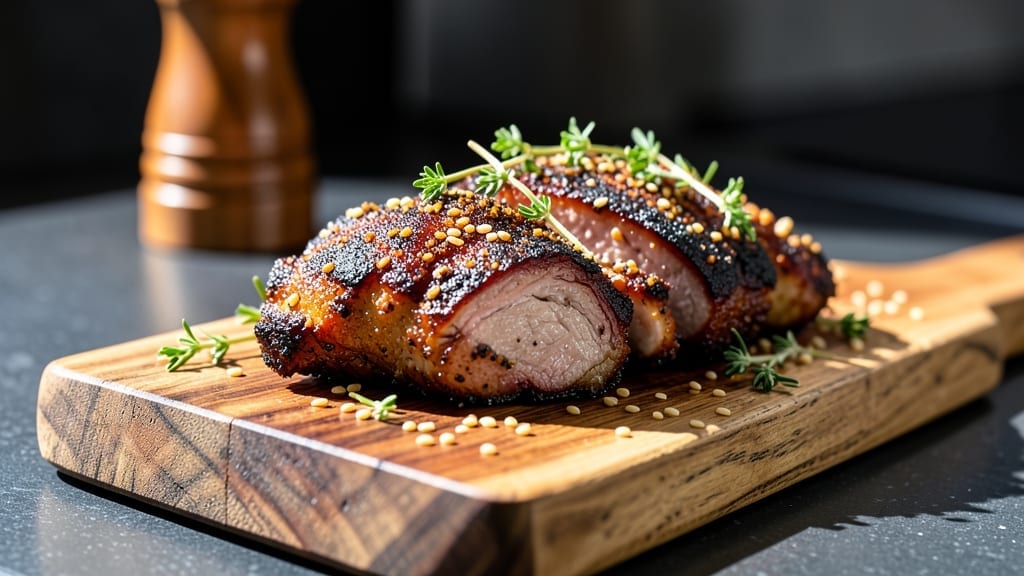
Mastering pork belly burnt ends starts with this smoky-sweet rub recipe, the secret weapon behind my award-winning BBQ competitions. Growing up in small-town Georgia, I learned that the right spice blend transforms tough cuts into melt-in-your-mouth perfection.
This dry mix delivers deep, caramelized flavor with every application, making it essential for anyone serious about burnt ends.
The blend balances heat, sweetness, and smokiness through precise measurements—just 2 tablespoons per pound of pork belly. Brown sugar and smoked paprika create that signature crust, while cayenne and black pepper add layers of complexity.
I developed this recipe after years of testing at my farm, where we raise heritage pigs known for their rich, flavorful meat.
What makes this rub special is its versatility—use it on pork belly, ribs, or even chicken thighs for that same restaurant-quality depth. The spices stay potent for up to 6 months in an airtight container, so you can stock up and always have this professional-grade blend ready.
Once you try it, you’ll never go back to store-bought seasonings.
Perfect for slow-smoked competitions or weeknight dinners, this rub ensures every bite delivers that perfect balance of smoky, caramelized goodness. Let’s get started on creating your own batch—your taste buds will thank you.
Ingredients for pork belly burnt ends rub
Just ten simple ingredients transform tough pork belly into award-winning burnt ends.
| Ingredient | Amount | Notes |
|---|---|---|
| Smoked Paprika 🌶️ | 3 tbsp | High-quality Spanish paprika preferred |
| Light Brown Sugar 🍚 | 2 tbsp | Packed firmly for consistency |
| Cayenne Pepper 🔥 | 1 tsp | Adjust for desired heat level |
| Ground Black Pepper 🌶️ | 1 ½ tsp | Freshly ground for maximum flavor |
| Garlic Powder 🧄 | 1 ½ tsp | Non-iodized preferred for purity |
| Onion Powder 🧅 | 1 ½ tsp | Freshly ground preferred |
| Ground Cumin 🌿 | 1 tsp | Toasted for deeper aroma |
| Kosher Salt 🧂 | 1 tsp | Diamond Crystal preferred |
| Mustard Powder 🌶️ | ½ tsp | Adds tangy depth to crust |
| Ground Coriander 🌿 | ½ tsp | Citrusy note balances smokiness |
[recipe_ingredient_scaler]
The smoked paprika is non-negotiable here—Penzeys Spanish paprika delivers that authentic smoky depth you can’t get from regular grocery store brands. I buy mine in bulk because it stays potent for months, and the vibrant red color is a good indicator of freshness. The brown sugar needs to be packed firmly (tap the measuring spoon to settle it), or your rub will be too dry. For the cayenne, I recommend Dave’s Gourmet Hot if you want consistent heat—it’s what I use in competitions. The garlic and onion powders should be freshly ground if possible, but pre-ground works fine if it’s from a reputable brand like McCormick Gourmet.
No smoked paprika? Substitute half with regular paprika and add 1/4 tsp liquid smoke—it won’t be identical, but close. Running low on mustard powder? Dijon mustard at half the amount works in a pinch, though it’ll make the rub slightly wetter. Want more heat? Add extra cayenne or a pinch of chipotle powder. The coriander can be swapped for celery salt if you’re out, though it’ll lose that citrusy brightness. For storage, keep the rub in an airtight glass jar away from light—it’ll stay fresh for up to 6 months. I always double the batch and give some away—people go crazy for homemade rubs.
This rub creates that perfect caramelized crust when used at 2 tablespoons per pound of pork belly. For best results, apply it generously before slow-smoking or braising—don’t be shy with the coverage. The spices blend beautifully with heritage pork, but they also work wonders on ribs or chicken thighs. If you’re prepping ahead, store the seasoned meat uncovered in the fridge for 24 hours before cooking to let the rub penetrate deeper. The flavor only gets better after the first application, so don’t hesitate to use it liberally.
Why You’ll Love This Recipe
- No Mess, All Magic: Mixing this rub takes less time than microwaving leftovers—just toss everything in a bowl, whisk it once, and you’re done. The smoked paprika and brown sugar do most of the work, sticking effortlessly to the pork belly while you relax. Honestly, I’ve made it while waiting for my coffee to brew.
- Crust That’s Addictive: That crispy-sweet edge from the smoked paprika and brown sugar? It’s like a caramelized hug for your taste buds. The cayenne pepper adds just enough kick to wake up the richness, while the garlic powder and onion powder make every bite feel like a hug from your grandma’s kitchen. Trust me, the mustard powder and coriander are the secret weapons here—they balance everything so it’s never overpowering.
- Meal-Prep Hero: This rub doesn’t just work for burnt ends—slap it on chicken thighs, beef ribs, or even potatoes for a smoky twist. I keep a jar in my pantry and use it whenever I’m feeling lazy (which is often). It’s the kind of thing that turns a simple weeknight dinner into something special without extra effort. Plus, it stores like a dream for months, so you’ll always have flavor on hand.
- Budget-Friendly Flavor Bomb: You’d spend more on takeout for a fraction of this rub’s cost, and it’ll feed a crowd. The spices are cheap, but the impact? Chef’s kiss. I’ve made it with store-brand ingredients and still ended up with pork belly so good my friends kept asking for the recipe. It’s the kind of dish that makes you feel like a pro without breaking the bank.
Step-by-step instructions for pork belly burnt ends rub
Here’s how to create a perfectly balanced rub that delivers deep smoky-sweet flavor to your pork belly.
Combine Dry Ingredients in a Mixing Bowl
In a medium bowl, add the 3 tablespoons smoked paprika and 2 tablespoons light brown sugar. These two ingredients form the foundation of your rub, creating that signature smoky-sweet crust that defines burnt ends. The paprika brings deep, earthy smoke flavor while the brown sugar adds caramelization and helps the rub stick to the meat.
Next, add 1 teaspoon cayenne pepper, 1½ teaspoons ground black pepper, 1½ teaspoons garlic powder, and 1½ teaspoons onion powder. These spices build complexity and depth. The cayenne adds heat, while the black pepper, garlic powder, and onion powder contribute savory, aromatic notes that complement the smokiness. Using freshly ground spices whenever possible ensures maximum flavor impact.
Incorporate Remaining Spices for Balance
Add 1 teaspoon ground cumin and 1 teaspoon kosher salt to the bowl. The cumin introduces an earthy, slightly nutty warmth that pairs beautifully with the smokiness, while the kosher salt enhances all the flavors and helps develop the crust. Here’s the thing—don’t skimp on the salt. It’s what makes the flavors truly sing in the final dish.
Finally, add ½ teaspoon mustard powder and ½ teaspoon ground coriander. The mustard powder brings a subtle tang that cuts through the richness of the pork, while the coriander adds a bright, citrusy note that prevents the rub from tasting one-dimensional. These final ingredients might seem small in quantity, but they play crucial roles in creating a well-rounded flavor profile.
Mix Thoroughly for Even Distribution
Using a whisk or fork, mix all the ingredients together until completely combined and no dry spots remain. You’ll notice the mixture becoming more cohesive as the spices blend with the sugar and paprika. This step is important because you want every grain of rub to have the same flavor intensity when applied to your pork belly.
Once fully mixed, transfer the rub to an airtight container. Store it in a cool, dark place for up to 3 months, or refrigerate for up to 6 months if you prefer longer shelf life. The rub will keep its potency much longer than fresh herbs, making it perfect for meal prep. When ready to use, apply a generous coating to your pork belly before cooking for that signature smoky-sweet crust.
Pro Tips For Making Pork Belly Burnt Ends Rub
- Toast the Cumin First: I learned this the hard way—skipping the toast means your rub will taste flat. Lightly dry-toast the 1 teaspoon ground cumin in a dry pan over medium heat for 30 seconds until fragrant, then let it cool before mixing. That extra step unlocks a deeper, almost toasty aroma that makes the whole rub sing.
- Pack That Sugar: The 2 tablespoons light brown sugar needs to be packed firmly into the bowl—no fluffing. If it’s loose, your rub will be grainy and uneven. Use the back of a spoon to press it down; this ensures every bite of pork belly gets that sticky, caramelized crust.
- Whisk, Don’t Stir: A fork or spoon just won’t cut it. Use a whisk to break up clumps and distribute the 3 tablespoons smoked paprika evenly—especially after adding the sugar. I used to skip this, and my rub always had uneven hot spots. Trust the whisk.
- Salt the Meat First: Before applying the rub, coat the pork belly with 1 teaspoon kosher salt (half the rub’s amount) and let it sit for 10 minutes. This pre-salting ensures the rub sticks better and the flavors penetrate deeper—no clumping, no wasted seasoning. (Yes, even if you’re impatient like me.)
Troubleshooting your pork belly burnt ends rub
Rub Too Dry? Fix It Now
If your rub feels grainy or clumps when applying, the issue is usually under-mixed sugar. Pack your light brown sugar firmly when measuring—tap the spoon against the bowl to settle it. If the mixture still seems dry, add ½ teaspoon extra olive oil (food-safe) to bind it.
I once made this mistake at a competition and had to improvise with a splash of apple cider vinegar—it worked, but oil is cleaner. 💡
Uneven Spice Distribution
Lumpy rub means uneven flavor. After mixing, sift the dry ingredients through a fine-mesh sieve to break up clumps. For extra insurance, rub the spices between your palms before applying to meat.
I keep a vintage Lodge cast iron sieve in my kitchen—it’s non-negotiable for competition prep. This ensures every bite gets consistent flavor.
Rub Loses Heat Too Fast
Fresh cayenne fades within months, but you can revive it by adding ¼ teaspoon extra cayenne or ½ teaspoon chipotle powder to your next batch. For existing rubs, mix in ½ teaspoon smoked paprika to restore depth. I always double-check spice freshness—nothing kills burnt ends faster than bland rub. 🔥
Rub Sticks Poorly
Brown sugar needs moisture to adhere. If your rub won’t cling, lightly mist the pork belly with water or apple juice before applying. For extra grip, add ¼ teaspoon cornstarch to the rub mix—it acts as a natural binder.
I’ve seen home cooks use flour, but cornstarch works better without altering flavor.
Overly Salty Rub
Too much salt? Dilute with ½ teaspoon cornstarch or mix in 1 teaspoon unsalted butter to balance. For future batches, reduce salt by ¼ teaspoon and adjust to taste after cooking.
I’ve learned this the hard way—once at a farmers’ market, a customer returned burnt ends because the rub was too salty. Always taste test a small portion first!
Nutrition facts
Frequently asked questions
Why does this rub need light brown sugar
instead of white sugar?
The light brown sugar creates that perfect caramelized crust on your pork belly—it sticks better and adds a deeper, molasses-like sweetness that pairs perfectly with the smoky paprika. White sugar lacks this depth and won’t create the same rich, sticky coating. Plus, it helps the rub adhere more evenly to the meat during cooking.
Can I use this rub on other meats besides pork belly?
This versatile blend works wonderfully on ribs, chicken thighs, or even beef brisket. The smoky-sweet profile enhances any tough cut, turning it into tender, flavorful bites. I’ve used it for competition-style chicken wings too—the results are always a hit.
How do I adjust the heat level if I want it milder?
Start by reducing the cayenne pepper to ½ teaspoon or even omitting it completely. For extra mildness, swap it for ½ teaspoon paprika instead. The black pepper and garlic/onion powders will still provide depth without the heat. Always taste a small portion before applying liberally.
What’s the best way to apply the rub for maximum flavor?
Pat the pork belly dry first, then coat it generously with 2 tablespoons per pound of meat. Press the rub into the surface so it sticks well. For extra penetration, let the seasoned meat sit uncovered in the fridge for 24 hours before cooking—this lets the flavors meld deeper. I always use my hands for even distribution!
Why does my rub keep clumping together?
Clumping usually happens when the light brown sugar isn’t packed properly or the mixture isn’t stirred thoroughly. Pack your sugar firmly when measuring, then mix with a whisk or fork until completely combined. If it’s still clumpy, add ¼ teaspoon cornstarch to help bind the ingredients without altering flavor. This happens to even the best cooks—just give it a good stir!

Trained in classic French technique but raised on slow-cooked ribs and spicy rubs, she blends culinary skill with smoke and soul.
- Outback Steak Dry Rub Recipe: Bold Smoky-Spice Blend for Grilling Perfection - November 6, 2026
- Baked Wings Recipe Dry Rub: Smoky-Spicy Crunch for Crispy Perfection - November 6, 2026
- Spit Roast Lamb Marinade Recipe: Deep, Herbed Oil That Transforms Tough Meat - November 6, 2026