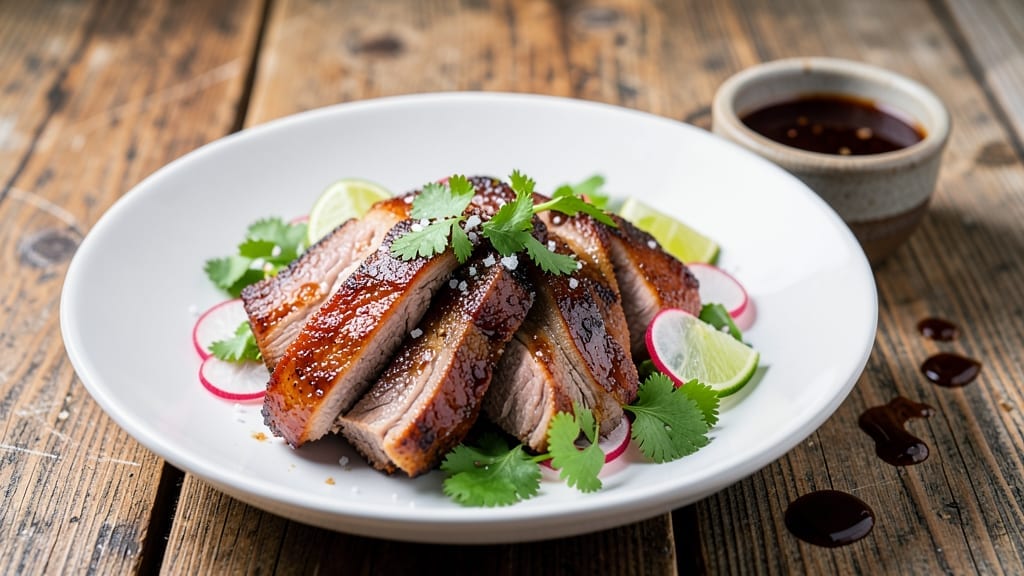
Slow-cooked pork brisket strips deliver the same restaurant-quality tenderness you’d expect from a smoked brisket, but with a fraction of the effort. Growing up in small-town Georgia, I learned that pork brisket transforms from tough to melt-in-your-mouth when given enough time and the right technique.
This one-pot method uses the slow cooker to break down the connective tissue without requiring a smoker or hours of attention.
The secret lies in the combination of acid (apple cider vinegar) and moisture (beef broth) working together to tenderize the meat while the slow cooker does all the work. What starts as a tough cut emerges as fork-tender strips that practically fall apart at the touch.
The beauty of this method is its adaptability—whether you’re feeding a crowd or meal prepping for the week, the same principles apply for consistent results every time.
By the time you’re ready to serve, you’ll have perfectly tender brisket strips with rich, caramelized edges that hold up beautifully in tacos, sandwiches, or over rice.
The slow cooking process infuses the meat with deep, savory flavors without requiring any special equipment beyond a slow cooker and basic pantry staples. This is the kind of dish that turns a simple weeknight into a memorable meal.
Pair these brisket strips with classic BBQ sides like coleslaw, cornbread, or roasted potatoes for a complete meal that feels like a Southern feast. The method scales effortlessly, making it perfect for both intimate dinners and large gatherings.
Let’s get started on creating these tender, flavorful bites that will have everyone asking for seconds.
Ingredients for pork brisket strips
Pantry staples and a few Southern pantry favorites. All you need for melt-in-your-mouth brisket strips.
| Ingredient | Amount | Notes |
|---|---|---|
| Pork Brisket 🥩 | 3 lb | Cut into 1-inch strips |
| Apple Cider Vinegar 🍏 | ½ cup | For tenderizing the meat |
| Beef Broth 💧 | 2 cups | Low-sodium preferred |
| Brown Sugar 🍚 | ¼ cup | Packed, light variety |
| Smoked Paprika 🌶️ | 2 tbsp | For smoky depth |
| Garlic Powder 🧄 | 1 tbsp | Freshly ground preferred |
| Onion Powder 🧅 | 1 tbsp | Adds sweetness |
| Salt 🧂 | 1 ½ tsp | Kosher or sea salt |
| Black Pepper 🌶️ | ½ tsp | Freshly ground |
| Olive Oil 🫒 | 1 tbsp | For searing |
| Yellow Onion 🧅 | 1 whole | Diced, for extra flavor |
| Fresh Thyme 🌿 | ¼ cup | Chopped, or dried |
| Water 💧 | ½ cup | For moisture balance |
[recipe_ingredient_scaler]
The brisket is the star here, so don’t skimp. Look for well-marbled cuts at your local butcher or Costco—they often have pre-cut brisket strips for convenience. If you’re buying a whole brisket, ask for the flat cut, which is leaner and more tender. The apple cider vinegar does most of the work here—it breaks down the tough fibers, so don’t skip it. I always grab the Mott’s brand from the grocery store, but any good-quality vinegar will do. For the beef broth, low-sodium is key—you don’t want to overpower the natural flavors of the pork. If you’re in a pinch, chicken broth works too, but beef adds that deep, savory note.
No smoked paprika? Substitute regular paprika plus a pinch of liquid smoke—it’s a game-changer for that smoky flavor. Fresh thyme is ideal, but dried works at one-third the amount. The brown sugar adds a nice caramelized touch, but white sugar in a pinch won’t ruin the dish. If you’re meal prepping, double the batch—these strips reheat beautifully and taste even better the next day. The olive oil is just for searing, so any neutral oil works, but olive oil adds a nice depth of flavor. For extra richness, sear the brisket in butter instead—it adds a lovely aroma.
These strips keep for 4-5 days in the fridge, but honestly, they’re even better the next day once all the flavors meld together. For longer storage, freeze them in a single layer before transferring to a bag—this prevents them from sticking. Portion into meal prep containers so you can grab and go. They reheat perfectly in the microwave or oven—just add a splash of broth to keep them moist. If you’re serving a crowd, double the recipe—this method scales effortlessly. Leftovers make killer tacos or sandwiches, so don’t be afraid to make extra.
Why You’ll Love This Recipe
- No-Fuss Tenderizer: That 30-minute soak in apple cider vinegar? Game-changer. I swear by it—my brisket strips go from tough to melt-in-your-mouth without hours of braising. The acid does all the work while I prep the rest.
- Smoky Sweet Surprise: The smoked paprika and brown sugar combo gives these strips a caramelized depth that’s ridiculously good. You’ll taste the garlic and thyme too—like a cozy campfire in every bite, but on your stove.
- Leftover Legend: Honestly, these strips are even better the next day. I make a double batch and freeze half—I toss them into tacos, stir-fries, or even sandwiches. My kids fight over the leftovers, which is my favorite kind of win.
- Budget-Friendly Feast: For under $15, you get enough brisket strips to feed a crowd. The beef broth and onion add richness without breaking the bank, and the spices stretch every bite into pure satisfaction. My secret weapon for busy nights.
Step-by-step instructions for slow-cooked pork brisket strips
Here’s how to transform tough brisket into fork-tender bites with minimal effort.
Prep the Brisket for Maximum Tenderness
Cut the 3 lb pork brisket into 1-inch strips – this size ensures even cooking and bite-sized perfection. Place the strips in a large bowl and pour over the ½ cup apple cider vinegar. Let them marinate for 30 minutes while you prepare the rest. The acid in the vinegar breaks down tough fibers, creating that melt-in-your-mouth texture we’re after.
While marinating, combine the 2 tbsp smoked paprika, 1 tbsp garlic powder, 1 tbsp onion powder, 1½ tsp salt, and ½ tsp black pepper in a small bowl. This spice blend forms the flavor base for your brisket – don’t skip this step as it creates that smoky depth that makes these strips special.
Build the Flavor Base in the Pot
Heat the 1 tbsp olive oil in a large Dutch oven or heavy pot over medium-high heat. Add the diced yellow onion and cook for 5 minutes until softened and translucent. This step develops the onion’s natural sweetness which will carry through the entire dish.
Add the marinated brisket strips to the pot, breaking up any large clumps. Cook for 3-4 minutes until the meat loses its raw pink color. Here’s where the magic happens – those browned edges create deep flavor that infuses into the broth later. Don’t worry if everything doesn’t fit perfectly – the strips will continue cooking in the liquid.
Slow-Cook Until Fork-Tender
Pour in the 2 cups beef broth and ½ cup water, then add the ¼ cup brown sugar and the spice mixture. Stir everything together until the brown sugar dissolves completely. Bring to a gentle simmer, then reduce heat to low and cover partially. This creates a steam bath that cooks the brisket gently without drying it out.
Add the ¼ cup fresh thyme and simmer for 2 to 2½ hours until the brisket is fork-tender. You’ll know it’s ready when you can easily pierce a strip with a fork and it falls apart with minimal resistance. The liquid should have reduced slightly, creating a thick, flavorful sauce that coats every bite.
Finish and Serve with Perfect Texture
Once tender, increase heat to medium-high and simmer uncovered for 5-10 minutes to reduce the sauce slightly and concentrate the flavors. This final step ensures your brisket strips have that perfect balance of moisture and caramelized surface that makes them irresistible.
Taste and adjust seasoning if needed – you might want to add a pinch more salt or black pepper to your liking. Serve immediately over steamed rice or mashed potatoes, letting each bite of tender brisket soak up that rich, smoky sauce. The strips should be juicy inside with a slightly crisp edge from the slow cooking process.
Pro Tips For Making Pork Brisket Strips
- Sear in Batches: Crowding the pot means steamed brisket, not seared. If your Dutch oven looks packed, work in two batches—3-4 minutes per batch over medium-high heat—until the edges turn golden. The crust is where all the flavor hides, and skipping this step means missing half the depth.
- Vinegar Time Matters: Thirty minutes is the minimum, but I’ve learned the hard way—don’t rush it. The apple cider vinegar needs time to work its magic on those tough fibers. If you’re short on time, double the marinade (use 1 cup instead) and cut the brisket into slightly thinner strips. Trust me, your fork will thank you.
- Stir the Sugar Early: Brown sugar loves to hide. When you add the ¼ cup packed brown sugar to the pot, stir it like you’re trying to win a cooking contest—no clumps allowed. If you let it sit, it’ll turn into a pasty mess that won’t dissolve, leaving your sauce grainy and your brisket under-seasoned. A quick whisk with the broth gets it smooth every time.
- Partial Lid = Perfect Steam: Covering the pot completely turns this into a stew, not tender brisket strips. Leave it slightly ajar—just enough for steam to escape—so moisture evaporates gradually. This keeps the meat from getting soggy while still letting the flavors meld. I used to forget and end up with mushy strips. Now I prop the lid with a wooden spoon if I have to.
Serving suggestions for this recipe
Classic Southern Sides
These brisket strips pair perfectly with creamy mac and cheese—my grandmother’s recipe with sharp cheddar and a touch of buttery elbow pasta. The richness of the cheese cuts through the smoky depth of the pork, creating a Southern comfort combo that feels like home.
I always add a pinch of nutmeg to the cheese sauce for that extra warmth. 🧀
Taco Night Upgrade
Turn these strips into a crowd-pleasing taco bar by serving them over warm corn tortillas with all the fixings. I like to add pickled red onions, crumbled queso fresco, and a squeeze of lime for brightness.
The tender meat soaks up all the toppings beautifully, making every bite feel indulgent. 🌮
Rice Bowl Elegance
For a lighter option, serve the brisket strips over steamed jasmine rice with a side of quick-pickled cucumbers and sriracha mayo. The cool, tangy elements balance the smoky pork perfectly.
I often top it with a sprinkle of sesame seeds and green onions for texture. This dish feels like a fusion of Southern and Asian flavors. 🍚
Potato Perfection
Roasted red potatoes with garlic and rosemary make an excellent side dish—their earthy notes complement the brisket’s sweetness. Toss 1.5 lbs baby potatoes in 2 tbsp olive oil, 2 minced garlic cloves, and 1 tbsp chopped rosemary, then roast at 400°F for 25 minutes.
The crispy edges add a satisfying contrast to the tender meat. 🥔
BBQ Slaw Twist
A coleslaw with a BBQ vinaigrette ties everything together—use ½ cup BBQ sauce, ¼ cup apple cider vinegar, and 2 tbsp honey to make the dressing.
Toss with shredded cabbage and carrots for a crunchy, tangy side that balances the richness. This dish is a staple at my BBQ cook-offs in the Southeast. 🥬
Nutrition facts
Frequently asked questions
Why does the apple cider vinegar make the brisket so tender?
The ½ cup apple cider vinegar works like a secret weapon by breaking down the tough collagen fibers in the brisket. The acidity softens the meat during the 30-minute marinate, creating that melt-in-your-mouth texture without needing long smoking times. This is the same principle used in traditional brisket brining but with a quicker, more accessible method.
Can I use a different type of vinegar instead of apple cider vinegar?
While apple cider vinegar is ideal, you can substitute white vinegar or red wine vinegar in a pinch. Just note that the flavor profile will shift slightly—apple cider adds a subtle sweetness that complements the dish. The key is the acidity, so any vinegar with 5-6% acidity will work, but the texture may vary a bit.
What if my brisket strips aren’t tender enough after 2 hours?
Check for doneness by piercing a strip with a fork—it should fall apart easily. If not, extend cooking by 30-60 minutes at low heat, adding a splash of water if the liquid evaporates. Overcrowding the pot can slow cooking, so ensure you’re using a large enough Dutch oven to allow proper liquid circulation.
How can I make the sauce thicker for serving?
After simmering for 2-2½ hours, reduce the sauce by increasing heat to medium-high and simmering uncovered for 5-10 minutes. For extra thickness, stir in 1-2 tbsp cornstarch mixed with water as a slurry during the final reduction. This creates a glossy, clingy sauce that coats every strip beautifully.
Can I make these brisket strips ahead of time for meal prep?
The strips reheat beautifully—store them in an airtight container with some of the cooking liquid for up to 4-5 days. For freezing, portion them into meal prep containers and reheat in the microwave with a splash of broth or oven at 350°F for 15 minutes. The flavors actually improve the next day as everything melds together.

Trained in classic French technique but raised on slow-cooked ribs and spicy rubs, she blends culinary skill with smoke and soul.
- Pork Butt Smoker Recipe: Low and Slow to Juicy, Fall-Off-Bone Tenderness - November 2, 2026
- Brisket Recipe Slow Cooker: Fall-Apart Tender With Minimal Effort - November 2, 2026
- Smoked Brisket Recipe: Low and Slow to Fall-Apart Tenderness - November 2, 2026