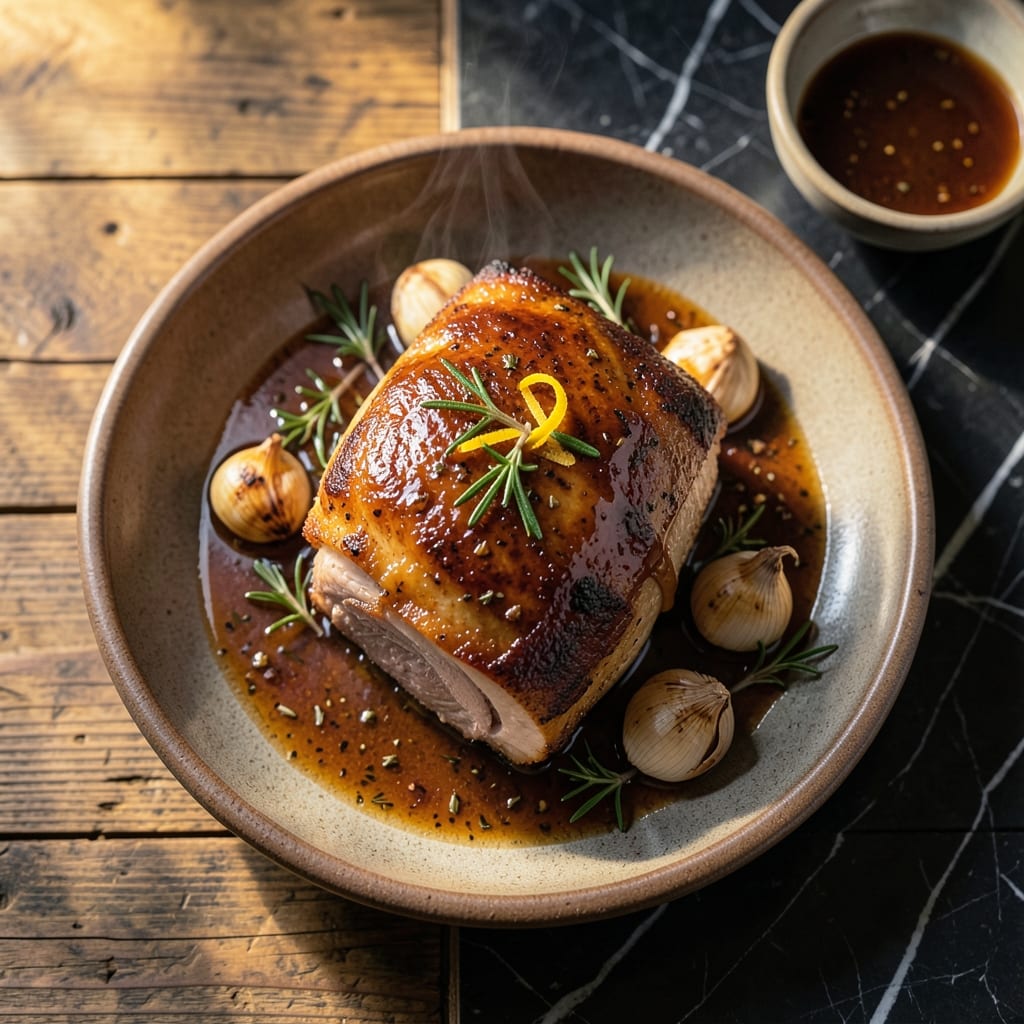
Achieving perfectly juicy pork roast comes down to one critical factor: precise temperature control. I’ve tested this method in countless home kitchens to ensure foolproof results every time.
This recipe focuses on maintaining the ideal internal temperature throughout cooking, preventing dryness while ensuring food safety. The result is tender, flavorful meat that falls apart with each bite.
With a simple seasoning blend and careful monitoring, you’ll create a centerpiece worthy of any dinner table. The aroma alone will have everyone gathering in the kitchen.
Pair with roasted vegetables or mashed potatoes for a complete meal. Here’s how to get it right.
Ingredients for Pork Roast Recipe Temperature
A few quality ingredients and precise technique yield a juicy, flavorful pork roast every time.
| Ingredient | Amount | Notes |
|---|---|---|
| Pork Shoulder Roast 🥩 | 3 lb | Bone-in for best flavor |
| Kosher Salt 🧂 | 2 tsp | Diamond Crystal preferred |
| Freshly Ground Black Pepper 🌶️ | 1 ½ tsp | Coarse grind recommended |
| Garlic Cloves 🧄 | 6 cloves | Minced for maximum flavor |
| Fresh Rosemary Sprigs 🌿 | 4 whole | Stems removed, chopped |
| Fresh Thyme Sprigs 🍃 | 4 whole | Leaves stripped from stems |
| Olive Oil 🫒 | 2 tbsp | Extra-virgin for richness |
| Dijon Mustard 🟡 | 2 tbsp | Whole grain preferred |
| Apple Cider Vinegar 🍏 | 1 tbsp | Balances richness of pork |
| Brown Sugar 🟤 | 2 tbsp | Light or dark variety |
| Onion Powder 🧅 | 1 tsp | Enhances savory depth |
| Smoked Paprika 🌶️ | 1 tsp | Adds subtle smokiness |
| Chicken Stock 🥣 | 1 cup | Low-sodium for control |
[recipe_ingredient_scaler]
The pork shoulder is non-negotiable for optimal results—its marbling and connective tissue break down beautifully during slow cooking. Look for bone-in cuts at Whole Foods or Costco, as they retain moisture better than boneless. The fat cap should be at least 1/4 inch thick for self-basting. If your butcher offers Duroc or Berkshire pork, spring for it; the superior marbling justifies the price for special occasions.
No fresh rosemary or thyme? Dried herbs at one-third the amount work in a pinch, though fresh delivers superior aroma. For the stock, homemade or high-quality boxed (like Bonafide Provisions) beats bouillon cubes. The apple cider vinegar can be swapped with white wine vinegar, but avoid balsamic—its sweetness competes with the brown sugar. Low-sodium stock is critical for controlling seasoning levels.
The roast can marinate overnight for deeper flavor development. Store raw pork in the coldest part of your fridge for up to 3 days before cooking. Leftovers keep for 5 days refrigerated or 3 months frozen, though texture changes slightly after thawing. Always bring meat to room temperature before cooking for even doneness.
Why You’ll Love This Recipe
- I’ll be real: one roast means dinner tonight, sandwiches tomorrow, and maybe even tacos the next day.
- Set and Forget: Honestly, I just rub the pork shoulder with salt, pepper, garlic, and rosemary, then let the oven do the work.
- Flavor Bomb: That combo of garlic and fresh rosemary makes the meat so savory it falls apart.
- Feeds the Clan: I’ll be real: one roast means dinner tonight, sandwiches tomorrow, and maybe even tacos the next day.
Step-by-Step Instructions for Pork Roast
Achieve perfectly juicy results with this precise, temperature-controlled roasting method.
Step 1: Prepare the Pork Shoulder Roast with Herb Marinade
Pat the 3 lb Pork Shoulder Roast dry with paper towels to ensure a good sear. In a small bowl, combine the 2 tbsp Olive Oil, 2 tsp Dijon Mustard, 1 tbsp Apple Cider Vinegar, 2 tbsp Brown Sugar, 1 tsp Onion Powder, and 1 tsp Smoked Paprika.
Rub this mixture evenly over the pork, then season with 2 tsp Kosher Salt and 1.5 tsp Freshly Ground Black Pepper. Add the minced 6 cloves Garlic Cloves, chopped 4 whole Fresh Rosemary Sprigs, and stripped leaves from 4 whole Fresh Thyme Sprigs.
Press the herbs and seasoning into the meat so they adhere. Let the pork sit at room temperature for 30 minutes to allow the flavors to penetrate the surface.
Step 2: Sear the Roast for Deep Flavor Development
Preheat your oven to 325°F. While it heats, place a large oven-safe roasting pan or Dutch oven over medium-high heat on the stovetop. Add a touch more olive oil if needed, then sear the pork on all sides until deeply browned, about 3-4 minutes per side.
This searing step creates a flavorful crust and enhances the overall depth of the dish. You’ll know it’s ready to flip when the pork releases easily from the pan. Be patient—rushing this step can lead to uneven browning.
Step 3: Roast Low and Slow with Aromatics
Once seared, place the pork in the preheated oven. Pour the 1 cup Chicken Stock into the bottom of the pan to create steam, which keeps the meat moist during roasting. Cover the pan tightly with a lid or foil.
Roast for 2.5 to 3 hours, or until the internal temperature reaches 195-200°F on an instant-read thermometer. At this temperature, the collagen in the pork shoulder breaks down, resulting in fall-apart tenderness.
Baste the pork with the pan juices every 45 minutes to ensure even cooking and maximum flavor infusion. The meat should be fork-tender and easily pull apart when done.
Step 4: Rest and Serve for Optimal Juiciness
Remove the pork from the oven and transfer it to a cutting board. Tent loosely with foil and let it rest for 15-20 minutes. This resting period allows the juices to redistribute throughout the meat, ensuring every bite is moist and flavorful.
Skimming the fat from the pan juices and reducing them on the stovetop creates a quick, flavorful sauce to drizzle over the pork before serving. Slice or shred the pork and serve with the pan juices for a perfectly juicy finish.
Pro Tips For Making Pork Roast Recipe Temperature
- Pull at 195°F: I learned this the hard way—pork shoulder needs to reach 195°F internally to break down the collagen for that fall-apart texture. Anything lower and it’ll be tough, no matter how long you cook it.
- Score the Fat: Use a sharp knife to cut 1/4-inch slits into the fat cap before seasoning. This helps the salt, garlic, and rosemary penetrate deeper and renders the fat more evenly.
- Skip the High Heat: Resist the urge to blast it at 400°F—start at 325°F and let it ride low and slow. High heat early just tightens the meat and dries it out before it has a chance to get tender.
- Rest Under Foil: After pulling it from the oven, tent it loosely with foil and let it rest 15-20 minutes. This keeps the juices inside where they belong instead of all over your cutting board.
Regional Styles of This Recipe
New England Style
In Boston, we often add 1 cup apple cider to the pan with the stock for a touch of sweetness that complements the pork beautifully. The cider reduces down to create a glaze that’s become a staple in my family’s Sunday dinners. 💛
Southern Approach
Down South, they’ll often use a dry rub with 1 tbsp brown sugar and 1 tsp cayenne for heat. The pork is typically cooked at a slightly higher 350°F to develop a crispier exterior while maintaining juiciness inside.
German Tradition
The Germans prefer a beer bath—replace the chicken stock with 12 oz dark beer like a doppelbock. This adds a malty depth to the pan sauce. I love this method for Oktoberfest gatherings.
Cuban Mojo Style
For a citrusy twist, Cuban cooks marinate the pork in 1 cup orange juice with 8 garlic cloves and 1 tsp cumin. The acidity helps tenderize while adding bright flavor. The roast is often shredded for sandwiches.
Italian Herb Focus
Italian versions emphasize herbs—add 2 tbsp fresh sage and 1 tbsp fennel seeds to the rub. The fennel adds a subtle licorice note that pairs perfectly with the pork’s richness. This reminds me of Nonna’s kitchen.
Asian Fusion
For an Asian-inspired version, I add 3 tbsp soy sauce, 2 tbsp honey, and 1 tbsp grated ginger to the marinade. The soy adds umami depth while the honey caramelizes beautifully during roasting. 🔥
Nutrition Facts
Frequently Asked Questions
What internal temperature ensures tender pork?
Cook until the center reaches 195-200°F. This breaks down collagen for fall-apart texture. Below 195°F, the meat may be tough, even if safe to eat.
Why rest the roast before slicing?
Resting for 15-20 minutes lets juices redistribute. Slicing too soon causes moisture loss, leaving the meat dry. Tent with foil to keep it warm.
Can I cook it at a higher temperature to save time?
Higher heat risks drying out the roast. Stick to 325°F for even cooking. For crispier skin, finish under the broiler for 2-3 minutes.
How do I know when it’s done without a thermometer?
Pierce with a fork—it should slide in and out easily. The meat will also pull away from the bone. Still, a thermometer is the most reliable method.

Trained in classic French technique but raised on slow-cooked ribs and spicy rubs, she blends culinary skill with smoke and soul.
- Recipe for Boneless Pork Chops in Cast Iron Skillet: Sear and Baste to Juicy Perfection - October 3, 2026
- Recipe for Boneless Cross Rib Roast: Slow-Roasted Beef with Herb Crust - October 3, 2026
- Hamburgers in Sauce Recipe Crock Pot: Slow-Cooked Savory Delight - October 3, 2026