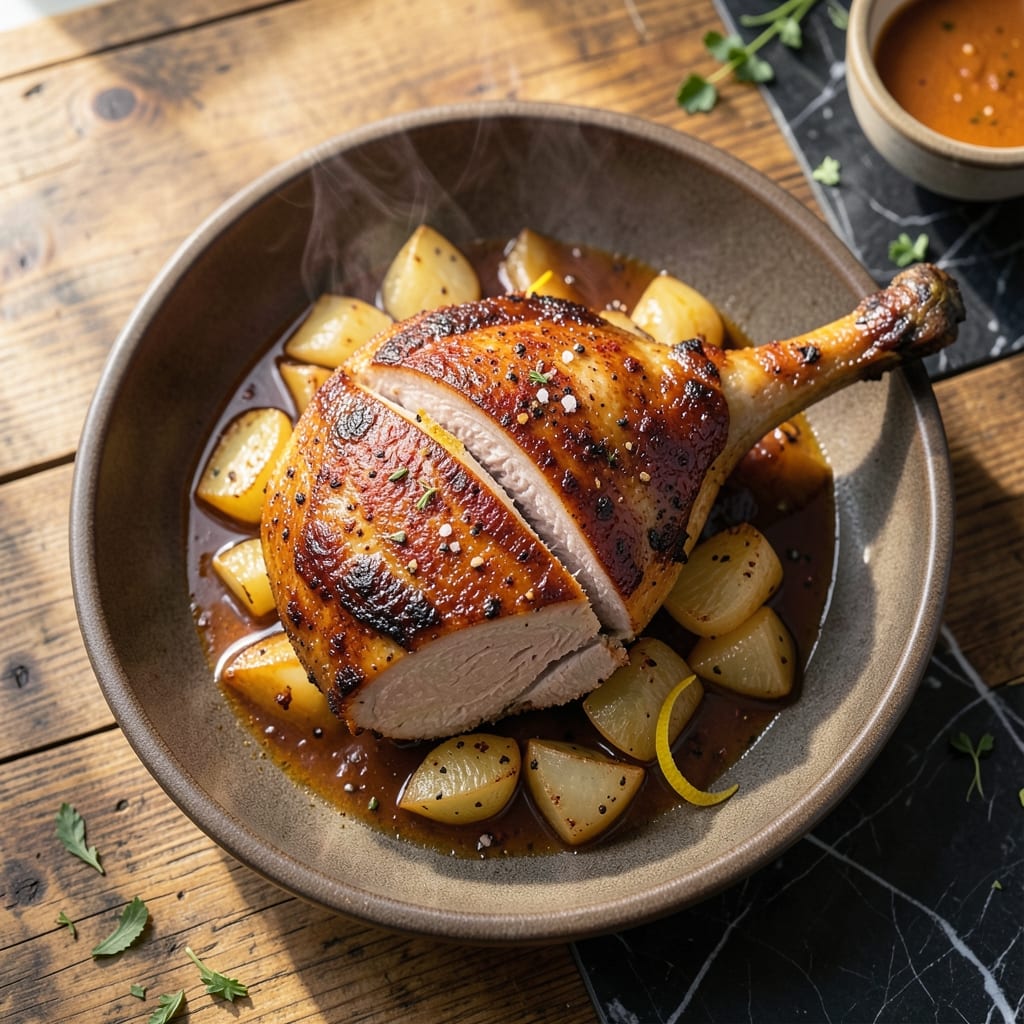
Slow-roasting pork shoulder blade transforms an affordable cut into a showstopper with minimal effort. The low temperature breaks down connective tissue, yielding fall-off-the-bone tenderness that defines great comfort food.
This method requires patience but rewards with deeply flavorful meat that shreds effortlessly. A simple dry rub and 4-5 hours in the oven create results that rival any pitmaster’s work.
The pork emerges with a caramelized crust and juicy interior, perfect for sandwiches or tacos. Leftovers reheat beautifully, making this ideal for meal prep.
Serve with roasted vegetables or crusty bread to soak up the rich pan juices.
Ingredients for Pork Shoulder Blade Recipe Oven
Transform an affordable cut with these carefully selected ingredients for unmatched tenderness and depth.
| Ingredient | Amount | Notes |
|---|---|---|
| Pork Shoulder Blade Roast 🥩 | 3 lb | Bone-in preferred for flavor |
| Kosher Salt 🧂 | 2 tbsp | Diamond Crystal preferred |
| Black Pepper 🌶️ | 1 tbsp | Freshly cracked for best flavor |
| Smoked Paprika 🌶️ | 1 ½ tsp | Sweet or hot variety |
| Garlic Powder 🧄 | 2 tsp | Not garlic salt |
| Onion Powder 🧅 | 2 tsp | Fine ground consistency |
| Dried Oregano 🍃 | 1 tsp | Mediterranean oregano ideal |
| Brown Sugar 🧈 | 2 tbsp | Light or dark variety |
| Olive Oil 🫒 | 2 tbsp | Extra-virgin for richness |
| Apple Cider Vinegar 🍏 | 1 tbsp | For acidity balance |
| Chicken Stock 🥣 | 1 cup | Low-sodium preferred |
| Yellow Onion 🧅 | 1 whole | Medium size, roughly chopped |
| Garlic Cloves 🧄 | 4 cloves | Smashed for maximum flavor |
[recipe_ingredient_scaler]
The pork shoulder blade is key—bone-in roasts from Whole Foods or Costco deliver superior flavor and moisture. Look for good marbling (those white fat streaks) which melts into the meat during slow-roasting. Avoid pre-cut stew meat; a whole 3-4 lb roast gives you better control over portion size and cooking consistency. The fat cap on top? Don’t trim it—that’s where the caramelized crust magic happens.
Substituting the dry rub? Cumin and coriander can join the party at 1 tsp each. No brown sugar? Maple syrup or honey at half the amount works in a pinch. For the liquid, white wine or beer replaces chicken stock beautifully. The apple cider vinegar adds brightness—lemon juice or white vinegar are acceptable substitutes. Don’t skip the acid; it cuts through the richness.
Raw pork keeps in the fridge 3-4 days or freezes beautifully for 6-12 months. Leftovers stay moist for 4-5 days refrigerated or freeze for 3 months. Always thaw frozen pork in the fridge overnight—never at room temperature. The cooked meat shreds easier when warm, so let it rest 20 minutes after roasting before pulling.
Why You’ll Love This Recipe
- I’ll be real: the leftovers make the best tacos, sandwiches, or even fried rice the next day.
- Set It and Forget: I just rub the pork shoulder with salt, pepper, smoked paprika, and garlic powder, then let the oven do all the work.
- That Smoky Crust: Honestly, the smoked paprika and garlic powder create this deep, rich crust that’s impossible to resist.
- Feeds a Hungry Table: Between us, this pork shoulder blade roast stretches easily for a big family dinner or a laid-back gathering.
Step-by-Step Instructions for Pork Shoulder Blade Roast
This method transforms tough pork shoulder into tender, fall-apart perfection with minimal hands-on time.
Step 1: Create the Dry Rub and Season the Roast
In a small bowl, combine the 2 tbsp Kosher Salt, 1 tbsp Black Pepper, 1.5 tsp Smoked Paprika, 2 tsp Garlic Powder, 2 tsp Onion Powder, 1 tsp Dried Oregano, and 2 tbsp Brown Sugar. The sugar will caramelize during cooking, creating a flavorful crust.
Rub this mixture all over the 3 lb Pork Shoulder Blade Roast, pressing it into every crevice and fold. Don’t be shy—the bold seasoning is what gives this dish its signature depth. Let the seasoned roast sit at room temperature for 30 minutes while you prepare the remaining ingredients.
Step 2: Prepare the Aromatics and Liquid Base
Roughly chop the 1 whole Yellow Onion and smash the 4 cloves Garlic Cloves (no need to peel). These will infuse the cooking liquid with robust flavor as they break down during the long roast.
In a small bowl, whisk together the 2 tbsp Olive Oil, 1 tbsp Apple Cider Vinegar, and 1 cup Chicken Stock. The vinegar’s acidity balances the richness of the pork, while the stock keeps the meat moist throughout the cooking process.
Step 3: Sear and Begin the Slow Roast
Preheat your oven to 300°F. In a large Dutch oven or oven-safe pot, sear the seasoned pork shoulder over medium-high heat for 3-4 minutes per side until deeply browned. This step develops the Maillard reaction, creating complex flavors that define the finished dish.
Remove the pork from the pot and add the chopped onion and smashed garlic. Pour in the liquid mixture, scraping up any browned bits from the bottom. Return the pork to the pot, fat-side up, ensuring it’s mostly submerged in the liquid.
Step 4: Slow-Roast to Tenderness
Cover the pot tightly and transfer it to the preheated oven. Roast for 3 to 3.5 hours, basting the pork with the cooking liquid every 45-60 minutes. The meat is ready when it reaches an internal temperature of 195-200°F and a fork slides in with no resistance.
As the pork cooks, the collagen in the shoulder breaks down, transforming tough muscle into buttery, fall-off-the-bone tenderness. The house will fill with an irresistible aroma, signaling that the dish is nearly complete.
Step 5: Rest and Shred for Service
Carefully remove the pork from the pot and transfer it to a cutting board. Let it rest for 15-20 minutes to allow the juices to redistribute. This step ensures maximum moisture and flavor in every bite.
Using two forks, shred the pork directly in the pot with the cooking liquid, mixing it thoroughly to coat every piece. The result should be glossy, saucy, and impossibly tender—ready to serve over rice, in tacos, or on its own with the rich cooking liquid spooned over the top.
Pro Tips For Making Pork Shoulder Blade Recipe Oven
- Dry the Meat: Pat the pork shoulder blade roast completely dry with paper towels before seasoning—this guarantees the spices stick and form a better crust.
- Low and Slow: Roast at 275°F for 3-4 hours until fork-tender; I learned this the hard way after rushing it at 350°F and ending up with tough meat.
- Rest Before Carving: Let it rest under foil for at least 15 minutes after pulling from the oven—this keeps the juices inside where they belong.
- Double the Rub: Use twice as much smoked paprika and garlic powder as you think you need; the bold flavors cut through the richness of the pork.
Storing and Reheating pork shoulder blade recipe oven
Refrigerator Storage
Let your pork cool for no more than 2 hours before transferring to airtight containers. I use glass containers from New Seasons Market—they keep the meat moist. Store at 40°F or below for up to 4-5 days. ❄️
Freezer Storage
For longer storage, freeze in portion-sized bags for up to 3 months. I prefer quart-size freezer bags from my local butcher. Squeeze out excess air to prevent freezer burn. Label with the date—trust me, you’ll forget otherwise.
Stovetop Reheating
This is my go-to method for best texture. Add pork and ¼ cup cooking liquid to a pot, heat over medium-low heat for 10-15 minutes. Stir occasionally and add a splash of water if it looks dry. 🔥
Microwave Reheating
For quick meals, microwave covered with a damp paper towel. Heat on 70% power for 2-3 minutes, stir, then continue in 30-second intervals until reaching 165°F. The pork stays juicier this way.
Oven Reheating
Preheat oven to 325°F, place pork in a baking dish with ½ cup cooking liquid, and cover with foil. Heat for 20-25 minutes until warmed through. This method works great for larger portions.
Nutrition Facts
Frequently Asked Questions
What oven temperature works best?
Set your oven to 300°F for the ideal balance of tenderness and timing. This temperature allows the connective tissue to break down slowly without drying out the meat.
How do I know when it’s done?
Use a meat thermometer to check for 195-200°F internally. The pork should pull apart easily with a fork when fully cooked. Never rely on color alone.
Can I cook it faster at a higher temperature?
Raising the temperature risks tough, dry meat. The slow cooking process is essential for melting the collagen. Stick to 3-3.5 hours at 300°F for perfect results.
What if my pork isn’t tender after the suggested time?
Every oven varies, so give it more time. Continue cooking in 30-minute increments until it reaches the ideal temperature and texture. Patience pays off!

Trained in classic French technique but raised on slow-cooked ribs and spicy rubs, she blends culinary skill with smoke and soul.
- Recipe for Boneless Pork Chops in Cast Iron Skillet: Sear and Baste to Juicy Perfection - October 3, 2026
- Recipe for Boneless Cross Rib Roast: Slow-Roasted Beef with Herb Crust - October 3, 2026
- Hamburgers in Sauce Recipe Crock Pot: Slow-Cooked Savory Delight - October 3, 2026