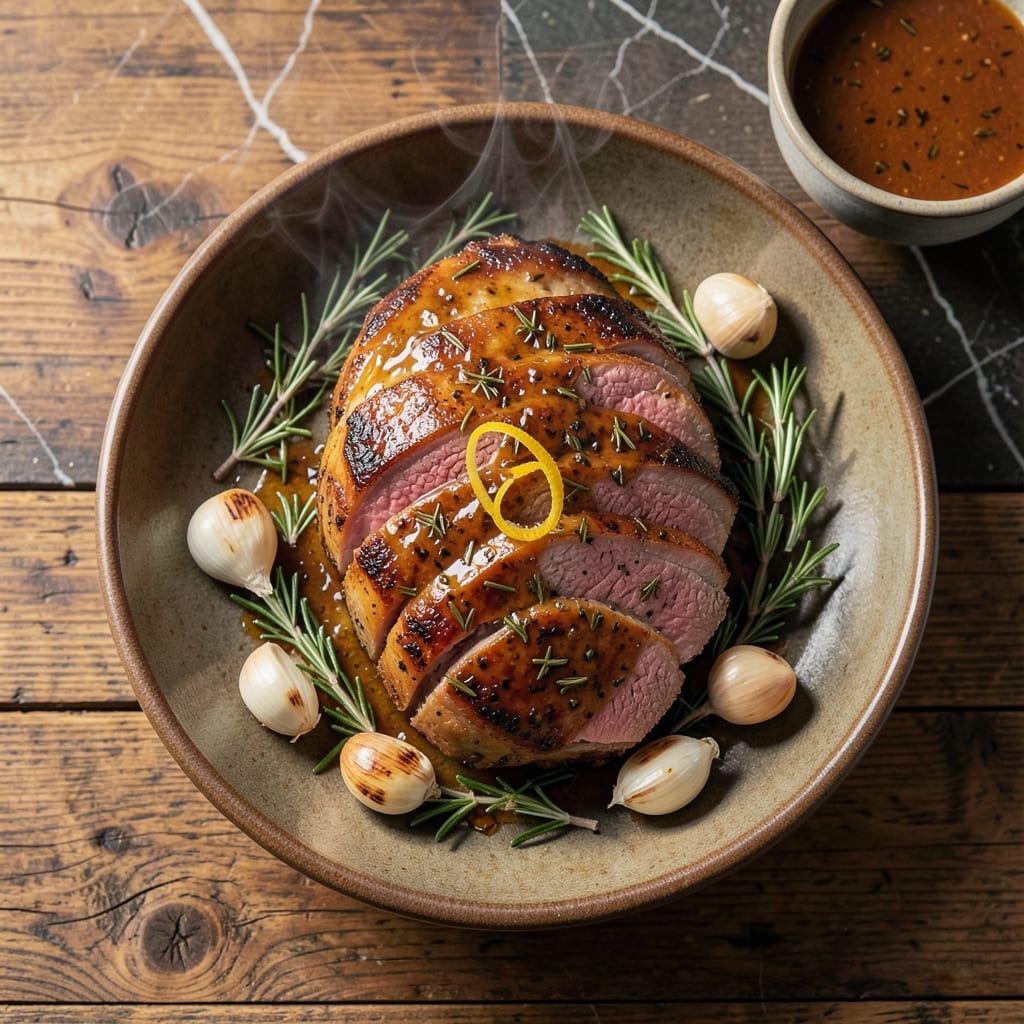
Sunday dinner deserves a centerpiece that impresses without demanding all day in the kitchen. This herb-crusted pork sirloin roast delivers restaurant-quality results with a simple, proven method.
I learned this technique from my grandmother in Sicily, where a perfectly roasted pork shoulder was the star of family gatherings. The key is a flavorful herb crust that forms a golden, aromatic seal over the tender meat.
You’ll achieve juicy, succulent pork with a crisp exterior that locks in natural flavors. The oven does most of the work, leaving you free to prepare sides while it cooks to perfection.
Serve with roasted vegetables or mashed potatoes for a meal that turns any Sunday into a special occasion.
Ingredients for Pork Sirloin Roast Recipe Oven
Quality pork and fresh herbs create this stunning centerpiece for your Sunday table.
| Ingredient | Amount | Notes |
|---|---|---|
| Pork Sirloin Roast 🥩 | 2 ½ lb | Boneless, well-trimmed fat cap |
| Fresh Rosemary 🌿 | 2 tbsp | Finely chopped, stems discarded |
| Fresh Thyme 🍃 | 2 tbsp | Finely chopped, stems removed |
| Fresh Garlic Cloves 🧄 | 6 cloves | Minced to fine paste |
| Dijon Mustard 🟡 | 3 tbsp | Whole grain preferred for texture |
| Extra-Virgin Olive Oil 🫒 | ¼ cup | High quality, fruity notes |
| Kosher Salt 🧂 | 2 tsp | Diamond Crystal brand preferred |
| Black Pepper 🌶️ | 1 ½ tsp | Freshly ground, coarse |
| Dry White Wine 🍷 | ½ cup | Sauvignon Blanc or Pinot Grigio |
| Chicken Stock 🥣 | ½ cup | Low-sodium for better control |
| Unsalted Butter 🧈 | 2 tbsp | Softened to room temperature |
| Fresh Sage Leaves 🌿 | 10 pieces | Chopped, optional for depth |
| Lemon Zest 🍋 | 1 tbsp | From 1 medium lemon |
[recipe_ingredient_scaler]
The pork is the star—look for a well-marbled sirloin roast at your butcher or Whole Foods. Avoid anything pre-seasoned (you want to control the flavor). Fresh herbs are non-negotiable here; dried won’t give you that vibrant crust. I grab my rosemary and thyme from Trader Joe’s when I’m in a pinch, but a local farm stand is even better for peak freshness.
No white wine? Substitute apple cider vinegar mixed with water (1:3 ratio). Out of Dijon? Whole grain mustard works, or even a bit of yellow mustard in a bind. The butter can be olive oil if you’re avoiding dairy, though you’ll lose some richness. For the stock, vegetable broth works just as well if that’s what you’ve got open.
Make the herb paste up to 2 days ahead—it’ll taste even better after sitting. The roast itself is best served fresh but leftovers keep 4-5 days in the fridge. Slice thin against the grain for sandwiches or salads the next day.
Why You’ll Love This Recipe
- Set It & Forget It: I rub the pork with Dijon and herbs, pop it in the oven, and let the rosemary and thyme do all the work for me.
- That Crust Though: The garlic and mustard bake into this ridculously good, caramelized crust that cracks with every slice.
- Sunday or Tuesday: Honestly, this feels fancy enough for company but I make it on random weeknights when I need something solid.
- Leftover Magic: One roast turns into sandwiches, tacos, or fried rice—my daughter picks out the herbs but still asks for seconds.
Step-by-Step Instructions for Pork Sirloin Roast Oven
Here’s my trusted method for a perfectly herb-crusted roast that’s ideal for Sunday dinner.
Step 1: Prepare the Herb Marinade and Season the Roast
In a small bowl, combine the 2 tbsp fresh rosemary, 2 tbsp fresh thyme, 6 cloves minced fresh garlic cloves, 3 tbsp Dijon mustard, 0.25 cup extra-virgin olive oil, 2 tsp kosher salt, and 1.5 tsp black pepper. Stir until it forms a thick, fragrant paste. I use a whisk here to ensure the mustard fully incorporates with the oil.
Pat the 2.5 lb pork sirloin roast completely dry with paper towels—this is critical for achieving a proper sear. Using your hands, rub the herb mixture all over the surface of the roast, pressing it into the meat so it adheres well. The paste should coat the entire roast in a thick, even layer. Let it sit at room temperature for 30 minutes to allow the flavors to penetrate.
Step 2: Sear the Roast for a Flavorful Crust
Preheat your oven to 425°F. While the oven heats, place a large oven-safe skillet or Dutch oven over medium-high heat. Add the 2 tbsp unsalted butter and let it melt until it foams. Carefully place the roast in the hot pan, fat-side down first, and sear for 3-4 minutes until deeply browned.
Turn the roast and sear the remaining sides for another 2-3 minutes each until uniformly golden brown all over. The searing step locks in juices and creates a flavorful fond in the pan, which we’ll use later for the sauce. Don’t rush this process—proper browning is the foundation of a great roast.
Step 3: Roast to Perfection with Aromatics
Once the roast is seared, transfer the skillet to the preheated oven. Pour the 0.5 cup dry white wine and 0.5 cup chicken stock into the pan, being careful to avoid the hot surfaces. Add the 10 pieces fresh sage leaves and 1 tbsp lemon zest around the roast for additional aroma.
Roast uncovered for 45-60 minutes, basting the roast with the pan juices every 15-20 minutes. The roast is done when an instant-read thermometer inserted into the thickest part reads 145°F. You’ll notice the meat pulling away from the bones slightly and the juices running clear when pierced.
Step 4: Rest and Serve with Pan Sauce
Transfer the roast to a cutting board, tent loosely with foil, and let it rest for 15 minutes. This resting period allows the juices to redistribute, ensuring every slice is moist and flavorful. The internal temperature will rise to about 150°F during this time, which is ideal for a juicy, medium doneness.
While the roast rests, place the skillet on the stovetop over medium heat. Simmer the pan juices for 3-4 minutes until slightly thickened. Slice the roast against the grain into ½-inch thick pieces and serve with the reduced pan sauce spooned over the top. The sauce should be rich, with a balance of herbal notes and a subtle tang from the wine.
Pro Tips For Making Pork Sirloin Roast Recipe Oven
- Sear First, Roast Later: Start with a screaming hot pan to sear the pork on all sides before transferring to the oven—this locks in juices and gives that golden crust. I learned this the hard way after too many dry roasts.
- Score the Fat: Use a sharp knife to cut shallow slits into the fat cap before seasoning. This helps the rosemary, thyme, and garlic penetrate deeper and crisps the fat evenly.
- Don’t Overcook It: Pull the roast at 145°F internal temp—it’ll rise to 150°F while resting. Pork sirloin turns tough fast if you wait for it to hit 160°F in the oven.
- Slather with Mustard: Rub Dijon mustard all over the pork before the herb crust—it acts like glue for the garlic and herbs and adds a tangy depth. Sounds weird, but it works.
Regional Styles of These Flavors
Sicilian Family Style
In Sicily, we roast pork with fennel pollen and orange zest for a citrusy brightness. I add 1 tsp fennel seeds and zest of 1 orange to the herb paste. The aroma fills Nonna’s kitchen just like Sunday dinners of my childhood. 💛
French Herb Crust
For a Provençal touch, mix in 1 tbsp herbes de Provence and 1 tsp lavender. Use Dijon mustard with white wine for deglazing. The lavender adds a floral note that pairs beautifully with the pork’s richness.
American South Style
A Cajun twist calls for 2 tbsp smoked paprika and 1 tsp cayenne in the rub. Swap the white wine for apple cider vinegar in the pan. This gives a smoky heat reminiscent of Louisiana barbecue. 🔥
German Beer Braised
Replace the wine with 1 cup dark beer like Guinness or a German bock. Add 1 tbsp caraway seeds to the crust. The beer creates a deep, malty sauce that’s perfect with sauerkraut or potatoes.
Asian Fusion
Incorporate 2 tbsp soy sauce, 1 tbsp grated ginger, and 1 tbsp honey into the marinade. Use rice vinegar instead of wine for deglazing. This creates a sweet-savory glaze that’s irresistible.
Nutrition Facts
Frequently Asked Questions
What internal temperature should I aim for?
Pull the roast from the oven when it hits 145°F internally. It will rise to 150°F while resting, giving you perfectly juicy, medium-done pork every time.
Can I use a different cut of pork?
Pork tenderloin works well, but reduce cooking time to 20-25 minutes. Pork shoulder needs 2-3 hours at 325°F for tenderness. Avoid lean cuts like chops—they dry out quickly.
How do I prevent the herb crust from burning?
Tent the roast with foil after 30 minutes if it’s browning too fast. Lower the oven to 375°F if needed. The crust should be golden, not charred.
What if my roast turns out dry?
Overcooking is the main culprit. Always use a meat thermometer and pull at 145°F. Letting it rest for 15 minutes before slicing also locks in moisture.

Trained in classic French technique but raised on slow-cooked ribs and spicy rubs, she blends culinary skill with smoke and soul.
- Recipe for Boneless Pork Chops in Cast Iron Skillet: Sear and Baste to Juicy Perfection - October 3, 2026
- Recipe for Boneless Cross Rib Roast: Slow-Roasted Beef with Herb Crust - October 3, 2026
- Hamburgers in Sauce Recipe Crock Pot: Slow-Cooked Savory Delight - October 3, 2026