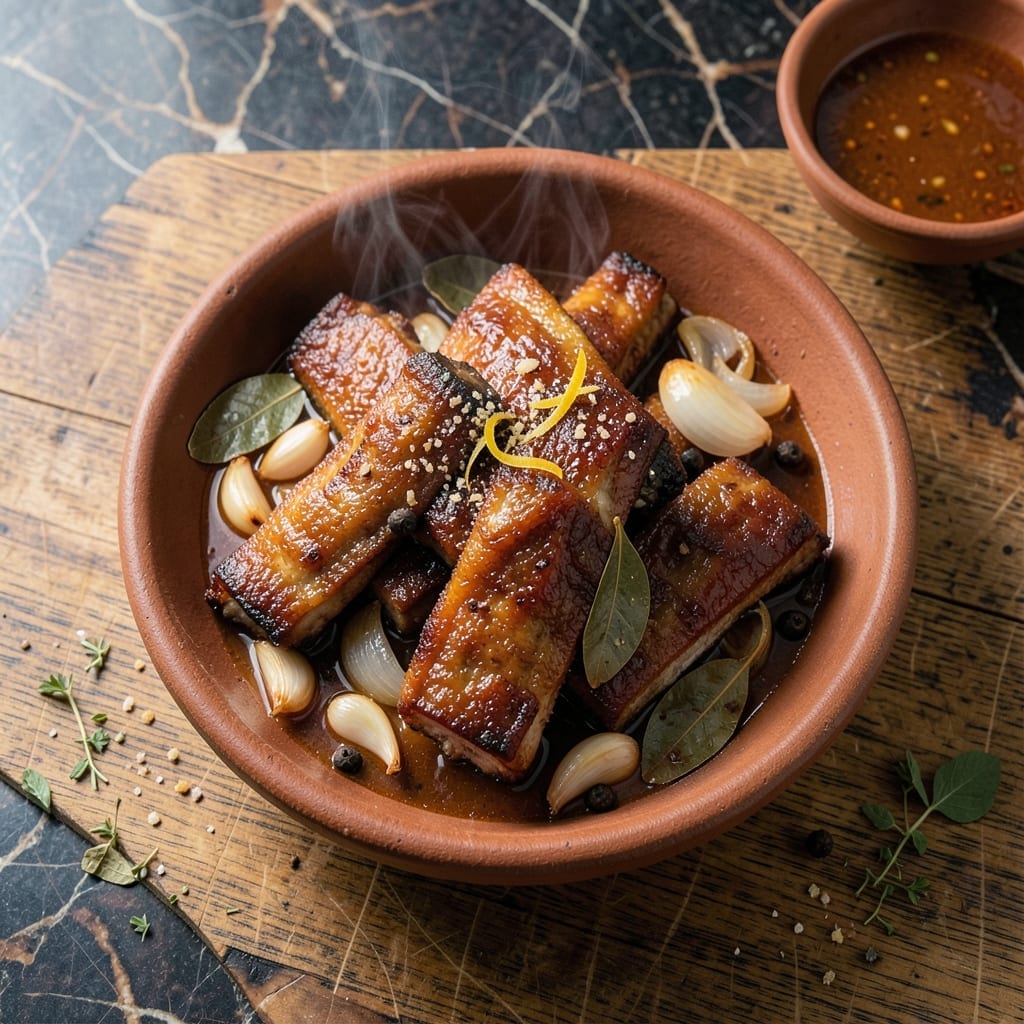
My grandmother never measured her adobo marinade, but I’ve perfected her method for fall-off-the-bone pork ribs. The vinegar, soy sauce, and garlic blend creates a tangy, savory base that tenderizes the meat beautifully.
This Pinoy-style dish relies on slow braising to achieve its signature texture. The ribs absorb the bold flavors while becoming irresistibly tender, with the sauce reducing into a rich, glossy glaze.
What emerges is a dish that balances sharp vinegar, salty soy, and aromatic garlic. The meat nearly collapses at the touch of a fork, while the sauce clings perfectly to each bite.
Serve with steamed rice to soak up every drop of that deeply flavorful sauce. Here’s how to make it right.
Ingredients for Pork Spare Ribs Recipe Pinoy Style
Simple pantry staples transform into that signature Pinoy adobo flavor you crave.
| Ingredient | Amount | Notes |
|---|---|---|
| Pork Spare Ribs 🍖 | 2 ½ lb | Cut into individual ribs |
| White Vinegar 💧 | 1 cup | For marinade tang |
| Soy Sauce 🫒 | ¾ cup | Regular or low-sodium |
| Garlic Cloves 🧄 | 12 cloves | Peeled, smashed for maximum flavor |
| Bay Leaves 🌿 | 4 whole | Dried for aroma |
| Black Peppercorns 🌶️ | 1 tsp | Whole, lightly crushed |
| Brown Sugar 🍯 | 2 tbsp | Balances acidity |
| Water 💧 | 1 cup | For braising liquid |
| Onion 🧅 | 1 whole | Quartered for depth |
| Cooking Oil 🫒 | 2 tbsp | Neutral oil for browning |
| Salt 🧂 | 1 tsp | To taste |
[recipe_ingredient_scaler]
The ribs are everything here. Pork spare ribs (not baby back) give you the right fat-to-meat ratio for slow braising. Look for well-marbled pieces at your butcher or Costco for bulk savings. Ask them to cut the rack into individual ribs—saves you the hassle. If you see pre-cut ribs labeled ‘country-style,’ those work too (just trim excess fat).
No white vinegar? Cane vinegar is traditional but apple cider works in a pinch. Soy sauce is non-negotiable though—Silver Swan or Datu Puti if you have a Filipino market nearby. Short on garlic? Double the amount of garlic powder (but fresh is way better). The brown sugar is for balance, so don’t skip it. If you’re out, a splash of pineapple juice adds the sweetness you need.
The adobo sauce actually gets better overnight. Store leftovers in an airtight container for up to 5 days in the fridge or 3 months frozen. Reheat gently to keep the meat tender—the microwave can dry it out if you’re not careful.
Why You’ll Love This Recipe
- One Pan Wonder: I just dump the ribs, vinegar, soy sauce, garlic, and bay leaves in a pot and let it simmer—no fancy techniques.
- Flavor Bomb: That tangy vinegar and soy sauce combo with garlic? Ridiculously good every single time.
- Feeds a Crowd: I make a big batch for Sunday lunch, and it’s always the first thing gone.
- Budget Keeper: Pork spare ribs are cheap, and this stretches to feed my whole family for days.
Step-by-Step Instructions for Pork Spare Ribs Pinoy Style
Here’s the method that delivers that classic adobo flavor with ribs so tender they fall right off the bone.
Step 1: Marinate the Pork Spare Ribs
Start by combining the 2.5 lb pork spare ribs with 1 cup white vinegar, 0.75 cup soy sauce, 12 cloves garlic cloves, 4 whole bay leaves, 1 tsp black peppercorns, 2 tbsp brown sugar, 1 whole onion, and 1 tsp salt in a large bowl.
I like to smash the garlic cloves slightly to release more flavor into the marinade. Mix everything well, ensuring all ribs are coated evenly. Let this sit for at least 30 minutes at room temperature, or refrigerate for 2-4 hours for deeper flavor penetration. The vinegar will start tenderizing the meat immediately.
Step 2: Brown the Ribs for Extra Flavor
Heat 2 tbsp cooking oil in a large pot or Dutch oven over medium-high heat. Remove the ribs from the marinade (reserve the marinade liquid) and pat them dry with paper towels. This ensures they’ll brown properly instead of steaming.
Brown the ribs in batches for 2-3 minutes per side until they develop a rich, golden brown crust. Don’t overcrowd the pot—this causes the temperature to drop and prevents proper browning. Transfer the browned ribs to a plate and set aside.
Step 3: Braise the Ribs in the Marinade
In the same pot, pour in the reserved marinade liquid and 1 cup water. Bring this to a boil over medium-high heat, scraping up all those delicious browned bits from the bottom of the pot. This deglazing step adds incredible depth to the sauce.
Return all the browned ribs to the pot, along with any accumulated juices. The liquid should just cover the ribs—if it doesn’t, add a splash more water. Reduce heat to low, cover the pot, and let it simmer gently for 1.5 to 2 hours until the meat is fork-tender.
Step 4: Reduce the Sauce and Finish
Once the ribs are tender, remove the lid and increase heat to medium. Let the sauce reduce for 10-15 minutes until it thickens slightly and coats the back of a spoon. The sauce should be rich, glossy, and deeply flavorful.
Taste and adjust seasoning if needed—you might want to add a touch more brown sugar to balance the acidity or salt to enhance the flavors. The ribs should be so tender that they practically fall apart when you lift them with tongs.
Serve hot with the reduced sauce spooned over the top. The meat should be falling off the bone, and the sauce should have a perfect balance of tangy, salty, and slightly sweet flavors that’s classic to this pinoy-style preparation.
Pro Tips For Making Pork Spare Ribs Recipe Pinoy Style
- Parboil the Ribs: Drop the ribs in boiling water for 5-10 minutes first to remove impurities—I learned this the hard way after my first batch had a weird aftertaste.
- Crush the Garlic: Smash the garlic cloves with the flat of your knife before mincing; it releases way more flavor into the soy-vinegar marinade than just chopping.
- Skip the Overcrowding: When braising, arrange the ribs in a single layer in the pot—stacking them steams instead of browns, and you’ll end up with pale, sad meat.
- Reduce the Sauce: After cooking, let the soy-vinegar mixture simmer uncovered for 3-4 minutes to thicken slightly; it coats the ribs better and intensifies the Pinoy-style tangy-savory kick.
Essential Equipment for This Dish
Heavy-Duty Pot
A 5-6 quart Dutch oven is my go-to for this dish. The heavy base distributes heat evenly, preventing hot spots that could burn the sauce. I use my grandmother’s old enamel-coated cast iron—it’s seen decades of adobo and still performs perfectly. 🔥
Wooden Spoon
Stirring with a wooden spoon won’t scratch your pot and helps deglaze those flavorful browned bits. I keep one dedicated just for braising—it’s absorbed the essence of countless meals. Avoid metal utensils that can damage your cookware.
Tongs for Ribs
You’ll need sturdy 12-inch locking tongs to flip the ribs safely during browning and serving. I prefer the OXO brand for their comfortable grip and precise control. This tool makes handling the ribs much easier than a fork or spatula.
Sharp Chef’s Knife
If your ribs aren’t pre-cut, a 8-inch chef’s knife will make quick work of separating them. I sharpen mine regularly—nothing ruins a cooking experience like struggling with a dull blade. A good knife makes the prep work almost effortless.
Measuring Cups
For the marinade, I use nested stainless steel measuring cups. They’re durable, easy to clean, and won’t absorb odors like plastic. Since my grandmother never measured, I find using these helps me stay consistent with her flavors.
Timer
A simple digital kitchen timer keeps me from overcooking the ribs. I set it for 1.5 hours initially, then check for tenderness. This prevents the common mistake of drying out the meat by going past the perfect doneness. ⏰
Nutrition Facts
Frequently Asked Questions
Can I use baby back ribs instead?
Yes, but they cook faster due to less fat. Reduce braising time to 1-1.5 hours and check for tenderness early. Spare ribs are preferred for their richer flavor and meat-to-bone ratio.
Why does the vinegar make the meat tender?
The acid in vinegar breaks down muscle fibers in the meat. Combined with slow cooking at low heat, it creates that signature fall-off-the-bone texture. Don’t skip this step—it’s key to authentic Pinoy flavor.
How do I fix sauce that’s too sour?
Balance it with 1-2 tbsp brown sugar or a pinch of salt. Simmer for 5 minutes to let flavors meld. Taste as you go—adobo should be tangy but not overpowering.
Can I make this in a slow cooker?
Brown ribs first, then add everything to the cooker. Set to low for 6-8 hours or high for 4-5 hours. The result will be just as tender.

Trained in classic French technique but raised on slow-cooked ribs and spicy rubs, she blends culinary skill with smoke and soul.
- Stewed Beef Brisket Recipe: Deep-Rich Flavor After 8 Hours of Slow Simmering - October 15, 2026
- Beef Brisket Rolls Recipe: Flaky Layers and Smoky Sweet Filling - October 15, 2026
- Masterbuilt Smoker Beef Brisket Recipe: Bark-To-Meat Ratio Hack for Unmatched Flavor - October 15, 2026