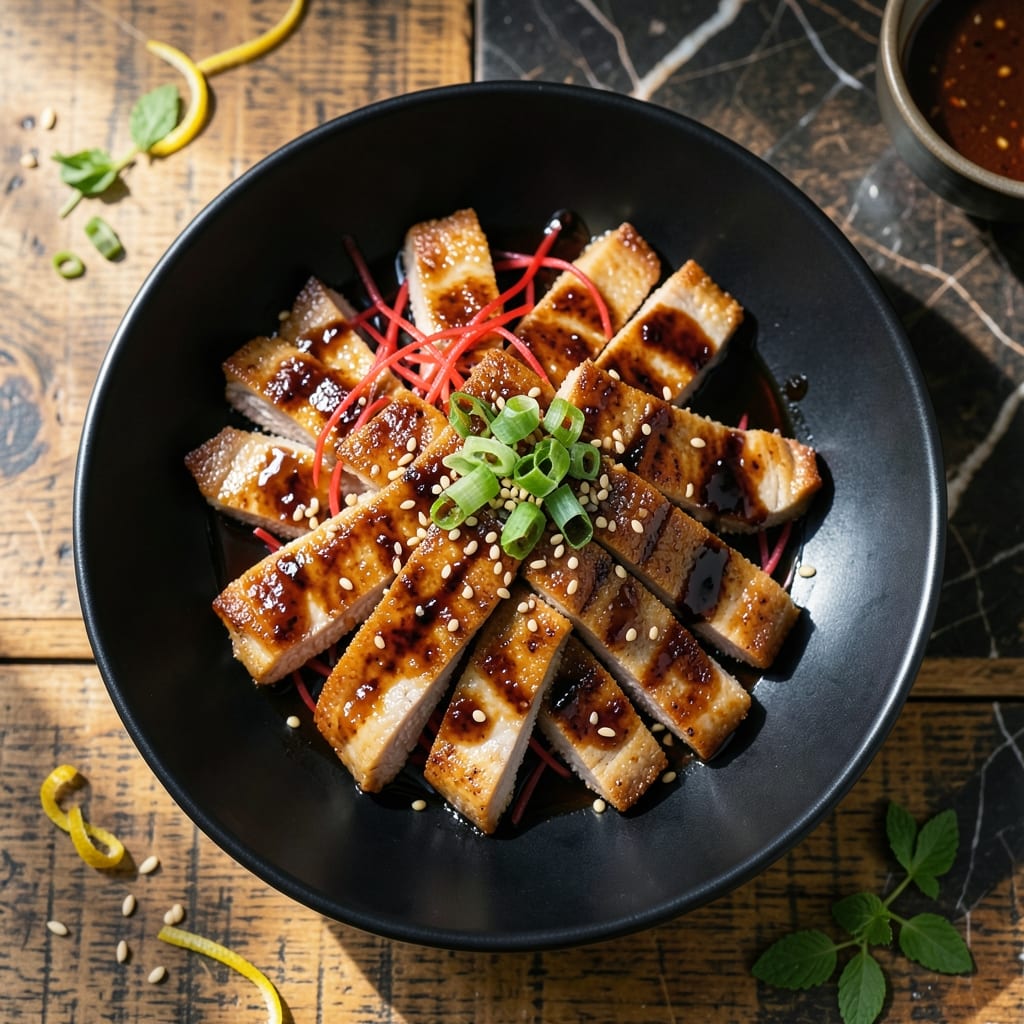
This garlic soy marinade transforms ordinary pork strips into something extraordinary in 20 minutes. I developed this for busy weeknights when flavor can’t be compromised.
The quick marinade combines soy sauce, garlic, and a touch of brown sugar for a balance of savory and sweet. A high-heat sear locks in juices while creating caramelized edges.
What emerges is tender, flavorful pork with a glossy, slightly sticky exterior. The meat stays juicy inside while developing restaurant-quality color and texture.
Serve over rice or noodles for a complete meal. This method guarantees quick, consistent results every time.
Ingredients for Pork Strips Recipe Ideas
Transform pork tenderloin with a bold garlic soy marinade and simple pantry staples.
| Ingredient | Amount | Notes |
|---|---|---|
| Pork Tenderloin 🥩 | 1 ½ lb | Trimmed, cut into strips |
| Soy Sauce 🫒 | ½ cup | Low-sodium preferred for balance |
| Garlic Cloves 🧄 | 6 cloves | Minced for maximum flavor infusion |
| Brown Sugar 🍚 | 3 tbsp | Packed, for caramelization |
| Rice Vinegar 🍶 | 2 tbsp | Balances sweet and savory |
| Sesame Oil 🫒 | 1 tbsp | Toasted, for depth of flavor |
| Ginger Root 🌿 | 1 tbsp | Freshly grated, peeled |
| Cornstarch 🌾 | 1 tbsp | For thickening marinade slightly |
| Vegetable Oil 🫒 | 2 tbsp | High smoke point for searing |
| Green Onions 🧅 | 4 whole | Thinly sliced for garnish |
| Sesame Seeds 🌾 | 1 tsp | Toasted, for finishing touch |
| Red Pepper Flakes 🌶️ | ½ tsp | Optional for subtle heat |
[recipe_ingredient_scaler]
The pork tenderloin is ideal here—lean yet tender, and it absorbs the marinade beautifully. Look for uniform thickness when slicing into strips to ensure even cooking. Whole Foods or Costco offer high-quality options. For the soy sauce, Kikkoman low-sodium is a reliable choice, allowing you to control salt levels without sacrificing depth of flavor.
No rice vinegar? Apple cider vinegar works at the same ratio. Brown sugar can be swapped for honey or maple syrup if you prefer a different sweetness profile. Fresh ginger is key—dried ground ginger at one-third the amount is an acceptable substitute in a pinch. For extra richness, add a splash of hoisin sauce to the marinade.
Marinate the pork for up to 24 hours for maximum flavor penetration. Cooked strips keep in the fridge for 3-4 days and reheat well. For best texture, avoid overcrowding the pan during searing—this ensures proper caramelization and juicy results.
Why You’ll Love This Recipe
- 20-Minute Magic: I can slice the tenderloin, toss it in the soy-garlic-brown sugar mix, and have it sizzling before the rice finishes cooking.
- Sweet-Savory Hook: Honestly, the brown sugar caramelizes with the soy and vinegar into this glossy, finger-licking glaze that makes every bite ridiculous.
- Endless Meal Prep: I batch-cook these strips on Sunday and they’re just as good in stir-fries, salads, or tacos all week.
- Leftovers Disappear: Between us, I double the batch on purpose—cold pork strips straight from the fridge are my midnight snack secret.
Step-by-Step Instructions for Garlic Soy Pork Strips
Follow this streamlined method for perfectly tender strips with bold, balanced flavor in minimal time.
Step 1: Prepare the Pork and Create the Marinade
Trim the 1.5 lb pork tenderloin of any silver skin or excess fat, then cut it against the grain into ¼-inch thick strips. This cross-grain cutting ensures tenderness in every bite. Place the strips in a large bowl.
In a separate bowl, whisk together the 0.5 cup soy sauce, 6 cloves minced garlic, 3 tbsp packed brown sugar, 2 tbsp rice vinegar, 1 tbsp sesame oil, 1 tbsp grated ginger root, and 1 tbsp cornstarch until the sugar completely dissolves. The cornstarch will create a light glaze on the pork during cooking.
Pour the marinade over the pork strips and toss to coat evenly. Let it sit at room temperature for 15 minutes while you prep the remaining ingredients. This short marinating time infuses flavor without breaking down the meat’s texture.
Step 2: Sear the Pork Strips to Perfection
Heat the 2 tbsp vegetable oil in a large skillet or wok over medium-high heat until it shimmers. Working in batches to avoid crowding, carefully add the pork strips in a single layer. Cook undisturbed for 2-3 minutes until the edges turn golden brown and slightly caramelized.
Flip each strip and cook for another 2 minutes until the pork is cooked through and develops a glossy coating from the marinade. The strips should reach an internal temperature of 145°F. Remove to a plate and repeat with the remaining batches, adding more oil if needed.
Real talk: resist the urge to stir constantly. Letting the pork sear undisturbed creates that desirable caramelization that makes this dish special.
Step 3: Rest and Garnish for Maximum Impact
Once all pork strips are cooked, return them to the skillet with any accumulated juices. Toss for 30 seconds over medium heat to reheat and coat evenly in the sauce that’s developed. The sauce should be slightly thickened and clinging to each strip.
Transfer the pork to a serving platter and let it rest for 5 minutes. This brief rest allows the juices to redistribute, ensuring each bite is moist and flavorful. While the pork rests, thinly slice the 4 whole green onions.
Step 4: Serve with Final Flourishes
Sprinkle the sliced green onions evenly over the pork strips. In a small dry skillet, toast the 1 tsp sesame seeds over medium-low heat for 30-60 seconds until golden and fragrant, then sprinkle them over the dish along with the 0.5 tsp red pepper flakes.
The sesame seeds add a nutty crunch that contrasts beautifully with the tender pork, while the red pepper flakes provide a subtle warmth. Serve immediately over steamed rice or with steamed vegetables to complete the meal.
Pro Tips For Making Pork Strips Recipe Ideas
- Slice Against Grain: Cut the pork tenderloin into strips against the grain for the most tender bite—this shortens the muscle fibers and makes a real difference with chewiness.
- Bloom the Garlic: I learned this the hard way—cook the minced garlic in a little oil for 30 seconds before adding other ingredients to wake up its flavor, or it’ll taste raw and harsh.
- Skip the Overcrowding: After burning three batches, I finally figured out to sear the pork strips in batches so they brown instead of steam in their own juices.
- Reduce the Sauce: Sounds weird, but it works: simmer the soy sauce, brown sugar, and rice vinegar for 2-3 minutes before tossing with the pork to thicken it slightly and coat every strip.
Troubleshooting Perfect Results
Pork Too Tough
If your pork strips turn out tough, you likely overcooked them. Pork tenderloin cooks quickly—pull strips at 145°F internal temperature. Also, ensure you’re cutting against the grain into ¼-inch strips for maximum tenderness. 💡
Sauce Too Thin
When your sauce isn’t clinging to the pork, the cornstarch might not have activated properly.
Burnt Garlic Flavor
Burnt garlic tastes bitter and overpowers the dish. This happens when cooking over too-high heat or not stirring the marinade before cooking. I always taste the marinade before using—if it’s too sharp, add a pinch more brown sugar to balance. 🔥
Pork Not Browning
For proper caramelization, your pan must be hot enough. Heat the 2 tbsp vegetable oil until it shimmers before adding pork. Also, don’t overcrowd the pan—cook in batches if needed. The sugar in the marinade needs space to caramelize properly.
Marinade Too Salty
Using regular soy sauce instead of low-sodium can make your marinade overly salty. If this happens, balance it by adding 1 tbsp honey or another 1 tbsp rice vinegar. Next time, stick with Kikkoman low-sodium for better control.
Pork Sticks to Pan
This usually means your pan wasn’t hot enough or you moved the pork too soon. Let the oil get properly hot and resist stirring for at least 2 minutes per side. A well-seasoned cast iron skillet works wonders for this recipe.
Nutrition Facts
Frequently Asked Questions
Can I use a different cut of pork?
Yes! While tenderloin works best, pork loin or shoulder can be used. Trim excess fat and cut into ¼-inch strips. Shoulder has more fat, so cook slightly longer to reach 145°F.
How long should I marinate the pork?
For best flavor, marinate for 15 minutes to 2 hours. Longer marinating (up to 24 hours) works but may slightly soften the texture. Never marinate at room temperature beyond 2 hours.
What can I serve with these pork strips?
They pair perfectly with steamed rice, noodles, or stir-fried veggies. For a lighter meal, try them over a salad with sesame dressing. The strips also shine in tacos or lettuce wraps.
Why is my sauce not thickening?
Ensure the cornstarch is fully dissolved in the marinade. Cook the pork in batches to avoid cooling the pan, which prevents the sauce from reducing. For extra thickness, mix 1 tsp cornstarch with water and stir in at the end.

Trained in classic French technique but raised on slow-cooked ribs and spicy rubs, she blends culinary skill with smoke and soul.
- Asian Beef Brisket Recipe: Umami-Rich Braise with Silky Texture - October 15, 2026
- Baked Smoked Ham Hocks Recipe: Slow-Braised Collagen-Rich Delight - October 15, 2026
- Roasted Brisket Recipe: Low-and-Slow Smoky Tenderness Without Dryness - October 15, 2026