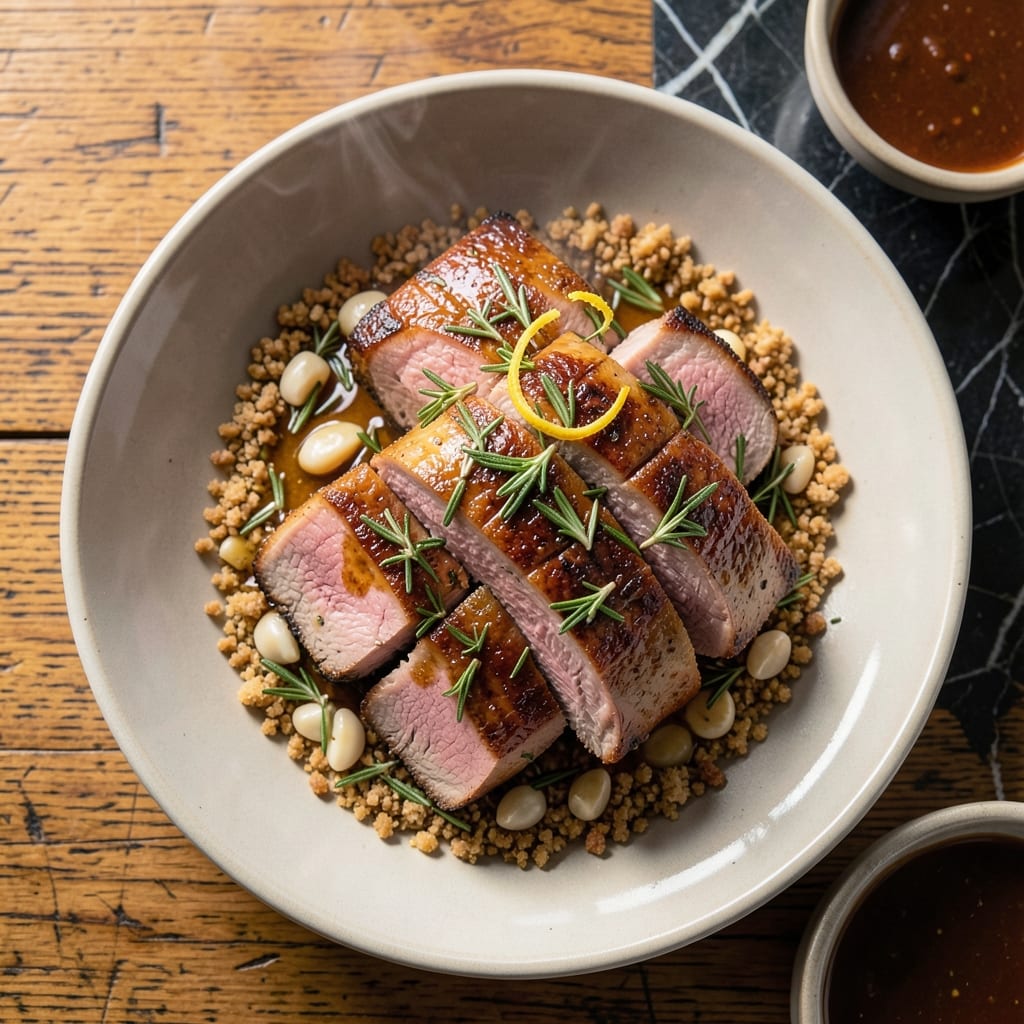
Pork tenderloin offers versatility and elegance for any dining occasion. This recipe transforms a simple cut into a tender, herb-crusted centerpiece that impresses without effort.
I developed this method after years of experimenting with different seasoning blends and cooking techniques. The key is a quick sear followed by a 15-minute roast at high heat to lock in juices.
The herb crust creates a fragrant, golden exterior while keeping the inside perfectly moist. Each bite delivers a balance of savory herbs and the pork’s natural sweetness.
Serve with roasted vegetables or a light salad for a complete meal. This approach guarantees consistent results every time.
Ingredients for Pork Tenderloin Recipe Ideas
Transform simple pork tenderloin into an elegant herb-crusted centerpiece with these ingredients.
| Ingredient | Amount | Notes |
|---|---|---|
| Pork Tenderloin 🥩 | 1 ½ lb | Trimmed of silver skin |
| Dijon Mustard 🟡 | 2 tbsp | For herb crust binding |
| Fresh Rosemary 🌿 | 2 tbsp | Finely chopped, stems removed |
| Fresh Thyme 🍃 | 2 tbsp | Finely chopped, stems removed |
| Garlic Cloves 🧄 | 4 cloves | Minced finely for even distribution |
| Breadcrumbs 🍞 | ¾ cup | Panko for extra crispiness |
| Olive Oil 🫒 | 3 tbsp | Divided for searing and crust |
| Kosher Salt 🧂 | 1 ½ tsp | Diamond Crystal preferred for consistency |
| Black Pepper 🌶️ | 1 tsp | Freshly ground for maximum flavor |
| Unsalted Butter 🧈 | 2 tbsp | For finishing the crust |
| Dry White Wine 🍷 | ¼ cup | For deglazing the pan |
| Chicken Stock 🥣 | ½ cup | Low-sodium for controlled seasoning |
| Shallot 🧅 | 1 whole | Finely minced for sauce base |
| Fresh Parsley 🌿 | 2 tbsp | Chopped, for garnish |
[recipe_ingredient_scaler]
The pork tenderloin quality is paramount. Whole Foods or Costco offer excellent options with consistent marbling. Look for pieces around 1.5 lb—large enough to serve four but not so big it dries out. The herb crust demands fresh rosemary and thyme; avoid dried as they won’t provide the same aromatic punch or texture. Trim the silver skin yourself for best results (most butchers will do this on request).
No white wine? Substitute apple cider vinegar mixed with water at a 1:3 ratio. For the breadcrumbs, crushed saltines or panko both work—panko gives extra crunch. If you’re missing fresh herbs, herbes de Provence at half the amount can substitute, though the flavor profile will differ slightly. Chicken stock can be swapped for vegetable stock without issue.
The herb crust mixture can be prepped 12 hours ahead and refrigerated. Cooked tenderloin keeps well in the fridge for 3-4 days and reheats beautifully. For longer storage, freeze the uncooked crust mixture for up to 1 month—thaw before applying to the pork.
Why You’ll Love This Recipe
- One Pan Wonder: I just toss the tenderloin with Dijon, garlic, and herbs, then roast—no messy stacks of dishes after.
- Herb-Infused Bite: The rosemary and thyme with that sharp Dijon crust? Honestly, it tastes like a restaurant dish.
- Weeknight MVP: I’ve served this for casual dinners and Sunday suppers alike—always disappears fast.
- Budget-Friendly Feast: One tenderloin feeds four with leftovers for sandwiches the next day, and it’s cheaper than takeout.
Step-by-Step Instructions for Herb-Crusted Pork Tenderloin
Here is the method I rely on for perfectly tender pork with a golden, fragrant crust.
Step 1: Prepare the Herb Crust and Season the Pork
Preheat your oven to 400°F. In a small bowl, combine the 2 tbsp Fresh Rosemary, 2 tbsp Fresh Thyme, 4 cloves Garlic Cloves, 0.75 cup Breadcrumbs, 1.5 tsp Kosher Salt, and 1 tsp Black Pepper. The herbs should be finely chopped to ensure even distribution and maximum flavor in every bite.
Pat the 1.5 lb Pork Tenderloin dry with paper towels—this is critical for achieving a good sear. Brush the pork all over with 2 tbsp Dijon Mustard, which acts as the perfect adhesive for the herb crust. The mustard’s tang will balance the richness of the pork beautifully.
Step 2: Sear the Pork for a Golden Crust
Heat 2 tbsp Olive Oil in a large oven-safe skillet over medium-high heat until shimmering. Add the pork and sear on all sides for 2-3 minutes per side until golden brown. The searing step locks in juices and creates a flavorful foundation for the crust.
Press the herb-breadcrumb mixture onto the seared pork, coating it evenly on all sides. Drizzle the remaining 1 tbsp Olive Oil over the crust to help it crisp in the oven. The crust should adhere firmly—if it doesn’t, pat it gently to secure.
Step 3: Roast to Perfection
Transfer the skillet to the preheated oven and roast for 15-20 minutes or until the internal temperature reaches 145°F. Use a meat thermometer to check—this is the only way to guarantee doneness without overcooking. The crust will turn a deep, golden brown and the pork will be juicy and tender.
Remove the pork from the oven and transfer it to a cutting board. Tent loosely with foil and let it rest for 10 minutes. This resting period allows the juices to redistribute, ensuring every slice is moist and flavorful.
Step 4: Create the Pan Sauce
Place the skillet over medium heat and add the 1 whole Shallot, minced. Sauté for 1-2 minutes until soft and fragrant. Deglaze the pan with 0.25 cup Dry White Wine, scraping up any browned bits with a wooden spoon. Let it simmer for 2 minutes until the liquid reduces by half.
Add the 0.5 cup Chicken Stock and 2 tbsp Unsalted Butter, stirring until the butter melts and the sauce thickens slightly. Taste and adjust seasoning if needed. The sauce should be rich, slightly tangy, and perfectly complementary to the herb-crusted pork.
Slice the pork into ½-inch thick medallions and arrange on a platter. Spoon the pan sauce over the top and garnish with 2 tbsp Fresh Parsley for a pop of color and freshness. Serve immediately.
Pro Tips For Making Pork Tenderloin Recipe Ideas
- Sear First, Roast Later: I learned this the hard way—start with a screaming hot pan to sear the tenderloin on all sides for 2-3 minutes, then finish it in the oven at 400°F. This locks in juices and gives that golden crust Dijon mustard adheres to perfectly.
- Score the Fat Cap: Sounds weird, but it works: make shallow cuts in the fat cap every inch or so before seasoning. This prevents curling during cooking and lets the rosemary and thyme penetrate deeper.
- Don’t Overcrowd the Pan: Resist the urge to cram the pan—give the tenderloin space so it browns instead of steams. If your pan is too small, use two or cook in batches; soggy pork ruins the garlic and herb crust.
- Rest It Properly: After pulling it at 145°F, tent it loosely with foil and let it rest for 10 minutes—no peeking. I skip this when I’m lazy, but the juices redistribute and the mustard glaze stays put instead of pooling on the cutting board.
Troubleshooting This Recipe
Crust Not Sticking
If your herb mixture won’t adhere, your pork might still be too wet. Pat it completely dry with paper towels first. I also brush on a slightly thicker layer of Dijon mustard as glue. Press firmly when applying the crust. 💡
Dry Pork Results
Overcooking is the usual culprit. Pull your tenderloin at 145°F internal temperature—it will rise to 150°F while resting. Use a meat thermometer; guessing leads to dryness. Resting for 10 minutes is non-negotiable for juicy slices.
Uneven Cooking
Pork tenderloin tapers at the ends. Tuck the thin end under and secure with kitchen twine before searing. This creates even thickness for consistent cooking. I learned this trick from my local butcher at New Seasons Market.
Crust Burning
If your crust browns too quickly, tent the pork with foil during the last 5-7 minutes of roasting. Also, ensure your oven is properly calibrated—400°F should be accurate. An oven thermometer can verify this.
Sauce Too Thin
Let your pan sauce reduce longer. After adding chicken stock, simmer uncovered for 3-4 minutes until it coats the back of a spoon. If needed, mix ½ tsp cornstarch with water and stir in at the end.
Herb Flavors Weak
Fresh herbs are essential. If using dried, double the amount and bloom them in 1 tbsp olive oil for 30 seconds before mixing. I always use fresh rosemary and thyme from my Portland garden. 🌿
Nutrition Facts
Frequently Asked Questions
Can I use dried herbs instead of fresh?
Yes, but double the amount and bloom them in 1 tbsp olive oil for 30 seconds first. Fresh herbs deliver brighter flavor, but dried work in a pinch.
How do I prevent the crust from burning?
Tent the pork with foil during the last 5-7 minutes of roasting. Also, verify your oven temperature is accurate with an oven thermometer.
What’s the best way to slice it?
Always slice against the grain into ½-inch thick medallions after resting for 10 minutes. This ensures tender, juicy pieces every time.
Can I make this ahead of time?
Prepare the herb crust mixture up to 12 hours ahead and refrigerate. Cooked tenderloin keeps well for 3-4 days in the fridge.

Trained in classic French technique but raised on slow-cooked ribs and spicy rubs, she blends culinary skill with smoke and soul.
- Recipe for Boneless Pork Chops in Cast Iron Skillet: Sear and Baste to Juicy Perfection - October 3, 2026
- Recipe for Boneless Cross Rib Roast: Slow-Roasted Beef with Herb Crust - October 3, 2026
- Hamburgers in Sauce Recipe Crock Pot: Slow-Cooked Savory Delight - October 3, 2026