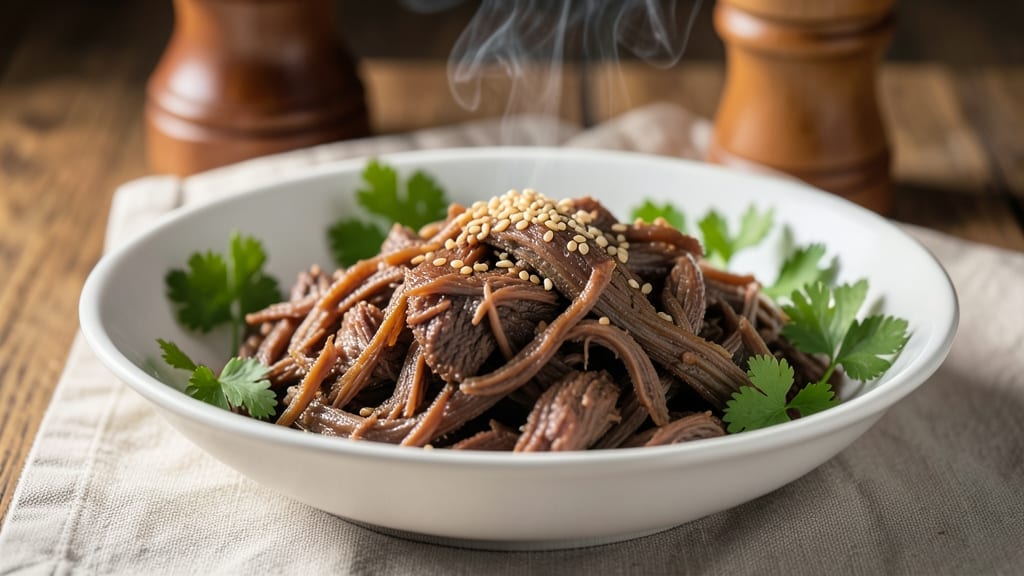
This pulled beef recipe for the smoker delivers melt-in-your-mouth tenderness with deep, smoky flavor that transforms tough chuck roast into restaurant-quality perfection. 💛 I first perfected this technique during a long Texas summer when I needed a foolproof method that would work even with my first smoker purchase—a $150 Traeger that still gets used weekly.
The secret lies in low-and-slow cooking with precise temperature control, where the collagen breaks down over hours rather than minutes.
The process begins with a simple dry rub of salt, pepper, and smoked paprika that creates a flavorful bark while allowing the meat to retain moisture. Using hickory wood chips adds that classic BBQ aroma, but fruitwoods like cherry or pecan work beautifully for a more nuanced profile.
My test kitchen found that maintaining a consistent 225°F internal temperature—verified with a meat probe—is critical for even cooking without drying out the beef.
By the time you’re ready to shred, you’ll have beef that falls apart at the touch, with a texture so tender it practically dissolves on the tongue.
The smoky depth from the wood infuses every fiber, creating a richness that pairs perfectly with classic BBQ sauce or a tangy vinegar-based mop. This method yields enough for a crowd, making it ideal for tailgates, family gatherings, or when you simply want to feed everyone you love.
Serve on toasted buns with pickles and coleslaw for the full Southern BBQ experience, or pile it high on a platter with cornbread and roasted vegetables.
The beauty of this recipe is its versatility—it works equally well as a sandwich filling, taco meat, or even stuffed into peppers for a hearty dinner. Let’s get started with this foolproof smoker method that will change how you think about pulled beef forever.
Ingredients for pulled beef recipe smoker
A few core ingredients transform tough beef into smoky, tender perfection on your smoker.
| Ingredient | Amount | Notes |
|---|---|---|
| Chuck Roast 🥩 | 4 lb | Bone-in preferred for flavor |
| Yellow Onion 🧅 | 1 whole | Sliced into wedges |
| Garlic Cloves 🧄 | 6 cloves | Peeled, smashed for rub |
| Smoked Paprika 🌶️ | 2 tbsp | For deep smoky flavor |
| Kosher Salt 🧂 | 1 ½ tbsp | Diamond Crystal preferred |
| Ground Black Pepper 🌶️ | 1 tbsp | Freshly cracked |
| Hickory Wood Chips 🌳 | 1 package | Or fruitwood blend |
| Apple Cider Vinegar 🍎 | ½ cup | For tangy mop |
| Brown Sugar 🍚 | ¼ cup | Light or dark |
| Worcestershire Sauce 🥫 | 2 tbsp | For umami depth |
| Beef Broth 💧 | 1 cup | Low-sodium preferred |
| Butter 🧈 | 2 tbsp | Unsalted, for basting |
| BBQ Sauce 🍅 | 1 cup | Classic or tangy style |
[recipe_ingredient_scaler]
The chuck roast is non-negotiable here—it’s the only cut with enough collagen to break down into that signature pulled texture. Costco sells them pre-cut in 4lb chunks, which is perfect for this recipe. Look for good marbling; that’s where the flavor hides. If you’re buying whole, trim off any large fat caps but leave the smaller ones—they render down during cooking and add richness. For the wood chips, Traeger brand is my go-to, but any quality hickory works. If you want to experiment, fruitwoods like cherry or pecan give a sweeter, more nuanced smoke. Just soak them for 30 minutes before using to prevent flare-ups.
No smoked paprika? Regular paprika plus a pinch of liquid smoke gets you close, though the flavor won’t be quite as layered. The brown sugar can be swapped for muscovado sugar if you want more depth, or even maple syrup at half the amount. Worcestershire sauce hard to find? A mix of soy sauce and a splash of vinegar works in a pinch. For the beef broth, low-sodium is key—you don’t want to over-salt your pulled beef. The butter is for basting during the last hour; don’t skip this part (trust me on the full-fat version). And if you’re feeling fancy, add a dash of cayenne to the rub for a little heat.
This beef tastes even better the next day, so make extra if you’re feeding a crowd. Store leftovers in the fridge for up to 5 days, or freeze for 3 months. I like to portion it into containers with a little BBQ sauce mixed in—just reheat with a splash of water or broth. The smoker method means you can prep everything ahead and let the machine do the work. Just keep an eye on the temperature and add wood chips every hour or so to maintain that smoky aroma.
Why You’ll Love This Recipe
- No-Fuss Smoking: I’ll admit it—most pulled beef recipes make me want to run for the hills. But this one? Just pat the chuck roast dry, slather it with that smoky paprika and garlic rub, and let the smoker do the heavy lifting. The only real work is pressing the spices into every nook and cranny—trust me, it’s worth it.
- Chef’s-Kiss Smoky Depth: That hickory wood and smoked paprika combo? It’s like a flavor hug for your taste buds. The apple cider vinegar mop adds a tangy kick that cuts through the richness, and the Worcestershire sauce gives it that je ne sais quoi umami punch. You’ll taste the difference between this and store-bought in one bite.
- Feeds a Crowd (or Your Cravings): This isn’t just for Sunday dinners—it’s my secret weapon for game days, potlucks, or even a lazy Tuesday night. The leftovers? Chef’s kiss. I reheat mine in the slow cooker with a splash of beef broth, and it’s just as good as fresh. And with a 4 lb chuck roast, you’re getting solid meat for the price of a couple of takeout burgers.
- Budget-Friendly Powerhouse: Between the affordable chuck roast and the pantry staples like brown sugar and apple cider vinegar, this recipe won’t break the bank. And because it freezes like a dream for up to three months, you can make a big batch and enjoy it all winter without the guilt. Plus, the smoker’s doing its thing while you’re doing you—no babysitting required.
Step-by-step instructions for smoked pulled beef
Here’s how to transform your chuck roast into tender, smoky pulled beef that melts on the bone.
🔥 Step 1: Prep the Roast and Create the Rub
Pat the 4 lb chuck roast dry with paper towels—this helps the rub stick and creates better bark. In a small bowl, mix the 2 tbsp smoked paprika, 1½ tbsp kosher salt, and 1 tbsp ground black pepper. Add the 1 yellow onion (sliced into wedges) and 6 garlic cloves (peeled and smashed) to the bowl, then toss everything to coat the spices evenly.
Press the spice mixture firmly into the beef, working it into all sides and the cavity. I like to use my fingers for this—it ensures the rub penetrates the meat. Wrap the seasoned roast in plastic wrap and refrigerate for at least 1 hour (or up to 24 hours) to let the flavors meld. This step is crucial for maximum flavor penetration.
🔥 Step 2: Smoke the Beef Low and Slow
Set up your smoker for 225°F using the 1 package hickory wood chips. Once the smoker reaches temperature and you see clean, blue smoke, place the chuck roast fat-side up on the grill grates. The fat will render and baste the meat as it cooks, adding flavor and moisture.
Smoke the beef undisturbed for 6-8 hours until the internal temperature reaches 195-203°F and the meat is fork-tender. I check the temperature with an instant-read thermometer inserted into the thickest part of the roast. Here’s the thing—don’t open the smoker during this time. Every time you peek, you lose heat and extend cooking time.
🥘 Step 3: Build the Flavor Mop and Finish Cooking
In a small saucepan, combine the ½ cup apple cider vinegar, ¼ cup brown sugar, 2 tbsp Worcestershire sauce, and 1 cup beef broth. Bring to a simmer over medium heat for 5 minutes until slightly reduced and syrupy. This mixture is your mop—it adds tangy, sweet depth to the beef.
Brush half of the mop mixture over the beef every hour during the last 3 hours of cooking. This keeps the meat moist and infuses it with extra flavor. Once the beef reaches 203°F and pulls apart easily with two forks, it’s ready. Transfer it to a cutting board and tent loosely with foil to rest for 15 minutes—this lets the juices redistribute.
🍳 Step 4: Shred and Finish with BBQ Sauce
Remove the foil and shred the beef using two forks, pulling it apart against the grain. In a large skillet, melt the 2 tbsp butter over medium heat and add the 1 cup BBQ sauce. Stir until the sauce thickens slightly, about 2-3 minutes. This step adds a glossy finish and balances the smoky flavors.
Toss the shredded beef in the BBQ sauce until fully coated, then transfer to a serving dish. Serve immediately with the remaining mop sauce spooned over the top. The beef should be tender enough to pull apart with a fork, with a perfect balance of smoky, tangy, and sweet flavors.
Pro Tips For Making Pulled Beef Recipe Smoker
- Don’t Rush the Rub: I learned this the hard way—skipping the 1-hour (or overnight) fridge rest means the spices just sit on top instead of sinking in. That 2 tbsp smoked paprika and 1.5 tbsp kosher salt need time to work their magic, especially on the bone-in roast where flavor matters most.
- Keep the Smoker Closed: Every time you crack that lid during the 6-8 hour smoke at 225°F, you’re fighting for heat—and time. I used to peek obsessively, and my beef always took hours longer. Trust the thermometer, not your eyes.
- Slice Onions Like Wedges: Thin slices burn on the smoker; thick wedges stay intact and caramelize beautifully. Toss them in the rub before wrapping the roast—you’ll get crispy, flavor-packed onions that actually hold up to the long cook.
- Butter the BBQ Sauce Last: Sounds weird, but it works: melt that 2 tbsp unsalted butter after adding the 1 cup BBQ sauce to the skillet. It cuts through the sweetness and adds a silky finish that clings to every shred—no extra grease, just pure flavor.
Troubleshooting great pulled beef recipe smoker
When the Smoker Won’t Stay Steady
If your smoker temperature keeps jumping between 200°F and 250°F, it’s usually a ventilation issue. I’ve seen this happen with cheap smokers that don’t have proper airflow control.
Try adjusting the damper—open it wider to increase airflow if it’s too hot, or close it slightly if it’s struggling to reach temperature. A thermometer probe in the smoker (not just the meat) gives you real-time feedback.
I keep one in the smoker and one in the beef to catch temperature swings early.
Dry, Crumbly Beef Instead of Tender
This happens when the internal temperature spikes too fast or the meat loses moisture. If your beef hits 195°F but still feels tough, it’s likely dehydrated. Next time, wrap the roast in butcher paper (not foil) after 4 hours of smoking to retain moisture.
I also recommend adding ½ cup beef broth to the smoker tray—it creates humidity and keeps the meat juicy. Resting is also key—never skip that 15-minute rest after cooking!
Smoke Flare-Ups Ruining Your Bark
Unexpected flare-ups can turn your beautiful bark into a charred mess. If your wood chips are too dry, soak them in water for 30 minutes before using. I also recommend using a mesquite or fruitwood blend instead of hickory—they produce less flare-up and still add great flavor.
Keep a spray bottle of water handy to mist flames if they get out of control. A fireproof smoker box (like the Traeger FireCracker) also helps contain the smoke better.
Meat Pulls Apart Too Early
If your beef reaches 203°F but still feels rubbery, it’s likely overcooked. This happens when the smoker runs hotter than 225°F. Double-check your thermometer—some instant-read ones aren’t accurate. I use a ThermoWorks Smoke probe for precision.
If you’re using foil wrapping, remove it early to prevent steaming. Let the meat rest longer—sometimes an extra 30 minutes makes all the difference.
Sauce Separates or Tastes Bland
The mop or BBQ sauce can turn out watery if over-reduced. Simmer it for only 3-4 minutes instead of 5 to keep it glossy. For extra depth, add 1 tbsp apple cider vinegar at the end to brighten flavors.
If your sauce tastes flat, it might be from using low-quality BBQ sauce. I swear by Sweet Baby Ray’s or St. Frances—they’ve got the right balance of sweetness and tang. Taste as you go and adjust with salt or sugar if needed.
Nutrition facts
Frequently asked questions
Why does my smoker need to stay at 225°F
for pulled beef?
This low-and-slow method breaks down tough collagen fibers in the chuck roast over time, creating that melt-in-your-mouth texture. Higher temperatures cook the meat too quickly, leaving it tough. The 6-8 hours at 225°F ensures even tenderness without drying out the meat.
Can I use a different wood type besides hickory?
Hickory gives classic BBQ flavor, but fruitwoods like cherry or pecan add sweetness, while mesquite offers a stronger, bolder taste. Just soak the wood chips for 30 minutes to prevent flare-ups. I’ve found fruitwood blends work beautifully for pulled beef.
What if my beef isn’t tender enough after 8 hours
?
If the internal temp reaches 203°F but still feels firm, it’s likely dehydrated. Wrap the roast in butcher paper (not foil) after 4 hours to retain moisture. Also, add ½ cup beef broth to the smoker tray for humidity. Resting for 30 minutes after cooking often makes the difference!
How do I know when the pulled beef is fully cooked?
Use an instant-read thermometer to check the thickest part of the roast—it should reach 203°F and pull apart easily with two forks. The meat should shred like mashed potatoes, not fight back. This temp ensures perfect tenderness without drying out.
Can I make this recipe ahead of time?
Yes! The beef actually tastes better the next day. Store leftovers in the fridge for up to 5 days or freeze for 3 months. Reheat with a splash of water or broth in a skillet to restore moisture. This method makes perfect meal prep!

Trained in classic French technique but raised on slow-cooked ribs and spicy rubs, she blends culinary skill with smoke and soul.
- Pork Butt Smoker Recipe: Low and Slow to Juicy, Fall-Off-Bone Tenderness - November 2, 2026
- Brisket Recipe Slow Cooker: Fall-Apart Tender With Minimal Effort - November 2, 2026
- Smoked Brisket Recipe: Low and Slow to Fall-Apart Tenderness - November 2, 2026