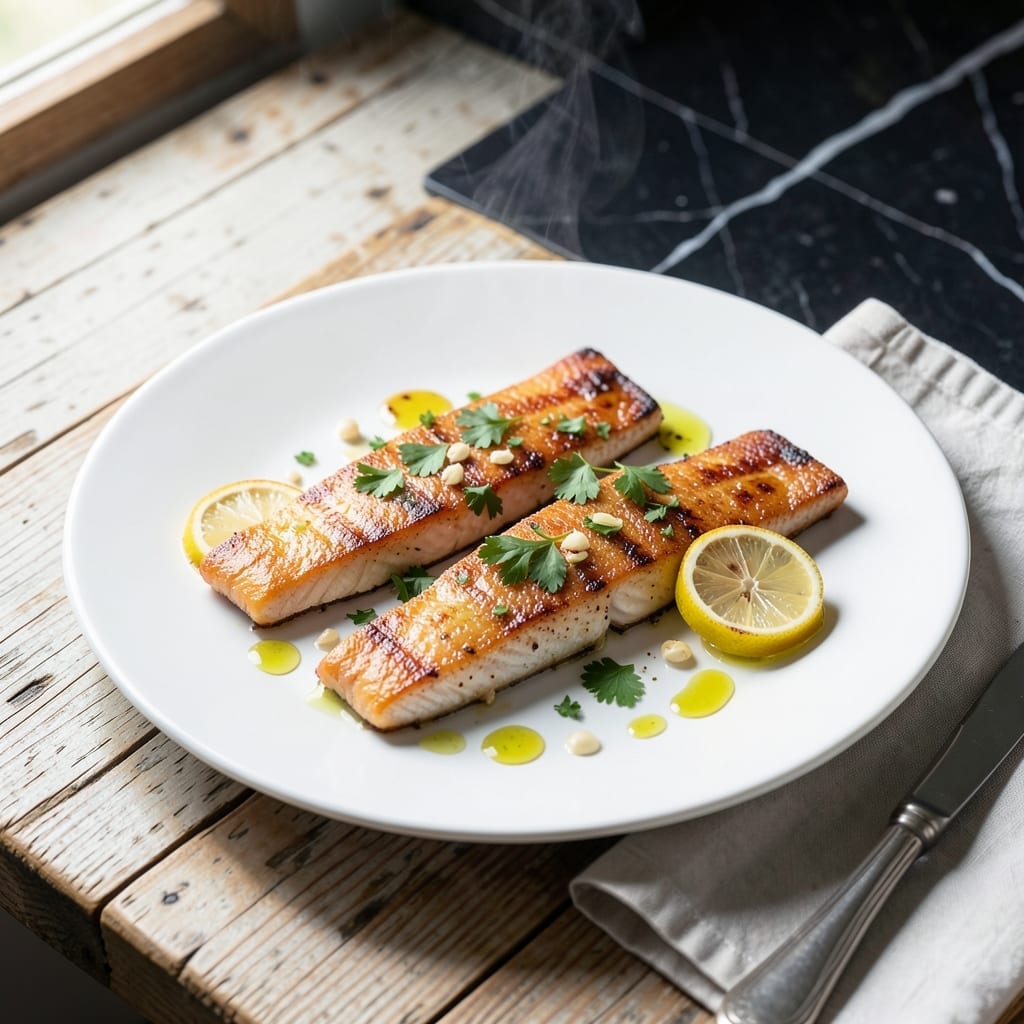
Rainbow runner is a hidden gem among seafood lovers, offering firm texture and mild flavor perfect for quick cooking. My pan-searing technique with lemon-garlic butter brings out its natural sweetness while adding brightness.
The key is high heat and precise timing to achieve a golden crust while keeping the fish moist inside. I developed this method after years of working with various firm-fleshed fish, adapting French techniques to coastal ingredients.
This preparation transforms simple ingredients into a restaurant-quality dish in under 15 minutes. The lemon-garlic butter creates a luxurious sauce that complements the fish beautifully.
Serve with seasonal vegetables or rice to complete the meal. The technique works equally well with other firm white fish when rainbow runner isn’t available.
Ingredients for Rainbow Runner
Firm rainbow runner fillets meet bright lemon-garlic butter in this restaurant-quality dish.
| Ingredient | Amount | Notes |
|---|---|---|
| Rainbow Runner Fillets 🐟 | 1 ½ lb | Skin-on, about 1-inch thick |
| Unsalted Butter 🧈 | ½ cup | Divided for cooking and sauce |
| Extra-Virgin Olive Oil 🫒 | 2 tbsp | High smoke point preferred |
| Garlic Cloves 🧄 | 4 cloves | Minced for lemon-garlic butter |
| Fresh Lemon 🍋 | 1 whole | Zested and juiced |
| Fresh Parsley 🌿 | ¼ cup | Chopped, for garnish |
| Kosher Salt 🧂 | 1 tsp | Diamond Crystal preferred |
| Freshly Ground Black Pepper 🌶️ | ½ tsp | Coarse grind preferred |
| All-Purpose Flour 🌾 | ¼ cup | For light dusting of fillets |
| Capers 🫒 | 1 tbsp | Drained, optional for sauce |
| Chicken Stock 🍲 | ¼ cup | For deglazing the pan |
| Shallot 🧅 | 1 whole | Finely minced for sauce |
[recipe_ingredient_scaler]
The rainbow runner fillets must be fresh and firm—look for bright, glossy skin and a mild ocean scent. Wild Fork or local seafood markets often carry it, but Whole Foods can special order if requested. For the butter, European-style unsalted (like Plugrá) has higher fat content, which resists burning at high heat. The fillets should be uniformly thick to ensure even cooking.
No rainbow runner? Mahi-mahi or swordfish work beautifully with this technique. Fresh lemon is non-negotiable for that bright acidity, but bottled juice at half the amount can substitute in a pinch. For the stock, vegetable stock works if avoiding poultry—just reduce it slightly for intensity. The capers add a briny depth, but green olives, chopped, can replace them if needed.
The fillets are best cooked immediately after purchase but hold in the fridge for 1-2 days if wrapped tightly. The lemon-garlic butter can be prepped ahead and reheated gently—keeps for 5 days refrigerated. Always bring the fish to room temperature before searing for even cooking.
Why You’ll Love This Recipe
- I’ll be real: the fillets taste even better the next day in a salad or tacos.
- One Pan Wonder: I sear the rainbow runner in butter and olive oil—cleanup is just a single skillet and a lemon wedge.
- Buttery Garlic Zing: Honestly, the garlic cloves and fresh lemon juice make the fillets taste like a restaurant dish at home.
- Weeknight Hero: Between us, it’s my go-to for a quick dinner that still feels special.
Step-by-Step Instructions for Pan-Seared Rainbow Runner
Master the technique for perfectly crisp skin and flaky, moist flesh with this refined approach.
Step 1: Prepare and Season the Fillets
Pat the rainbow runner fillets completely dry with paper towels—this is essential for achieving a crisp golden crust. Season both sides evenly with the 1 tsp kosher salt and ½ tsp freshly ground black pepper, pressing gently so the seasoning adheres.
Lightly dust each fillet with ¼ cup all-purpose flour, shaking off any excess. The thin flour coating creates a delicate barrier that prevents the skin from sticking while promoting even browning. Let the seasoned fillets rest at room temperature for 10 minutes before cooking to ensure even heat distribution.
Step 2: Sear the Fillets to Golden Perfection
Heat 2 tbsp extra-virgin olive oil in a large stainless steel or cast iron skillet over medium-high heat until it shimmers but doesn’t smoke. Place the fillets skin-side down in the pan and press gently with a fish spatula for the first 10 seconds to prevent curling.
Cook undisturbed for 4-5 minutes until the skin is deep golden brown and crisp. You’ll notice the edges become opaque and the fillet releases easily from the pan when it’s ready to flip. Turn and cook the other side for 2-3 minutes until the flesh flakes easily with a fork. Transfer to a warm plate, skin-side up.
Step 3: Craft the Lemon-Garlic Butter Sauce
Reduce heat to medium and add 2 tbsp unsalted butter to the same skillet. Once melted, add the finely minced shallot and sauté for 1 minute until translucent. Stir in the 4 minced garlic cloves and cook for 30 seconds until fragrant but not browned.
Deglaze the pan with ¼ cup chicken stock, scraping up any browned bits with a wooden spoon. Add the zest and juice from the fresh lemon, along with the 1 tbsp capers if using. Simmer for 2 minutes until the sauce slightly thickens. Finish by whisking in the remaining ¼ cup unsalted butter until emulsified and glossy.
Step 4: Finish and Serve
Return the fillets to the skillet, skin-side up, and spoon the lemon-garlic butter sauce over them. Let them warm through for 1 minute off the heat. The butter will melt into the sauce, creating a rich, velvety finish that complements the fish beautifully.
Garnish with the ¼ cup chopped fresh parsley and serve immediately. The parsley adds a pop of color and freshness, balancing the richness of the butter sauce. Each fillet should have a crisp, golden skin and tender, flaky interior, perfectly coated in the aromatic sauce.
Pro Tips For Making Rainbow Runner
- Pat Fillets Dry: I learned this the hard way—wet fillets steam instead of sear. Press them between paper towels for 30 seconds to guarantee that golden crust.
- Hot Pan, Cold Butter: Start with a screaming-hot pan and olive oil, then add cold butter right before the fish. It browns beautifully without burning the garlic.
- Skip Overcrowding: Resist the urge to cook all fillets at once—give each at least an inch of space or they’ll poach in their own juices instead of crisping.
- Zest Before Juicing: Grate the lemon zest directly over the fillets while they rest, then squeeze the juice. That extra oil in the peel actually changes the outcome.
Serving Suggestions for This Recipe
Plating Elegance
I love plating this fish on a warm platter with the lemon-garlic butter sauce pooled beneath. Arrange fillets skin-side up with the sauce spooned over the top. The golden crust contrasts beautifully against the pale flesh. 💛
Vegetable Pairings
Try blanched asparagus spears or a shaved fennel salad with orange segments. The licorice notes in fennel complement the lemon beautifully. For something heartier, serve over wild rice pilaf to soak up that luxurious butter sauce.
Starch Sides
Crusty sourdough or orzo pasta work wonders with this dish. I often do a simple 50/50 mix of orzo and quinoa for texture. The nutty quinoa balances the richness of the butter while the orzo soaks up every last bit of sauce.
Fresh Finishes
Beyond the parsley garnish, consider adding thin lemon slices or microgreens for color. A sprinkle of flaky sea salt like Maldon right before serving adds a final textural element. The crunch against the tender fish is divine.
Wine Match
A crisp Sauvignon Blanc from New Zealand cuts through the butter beautifully. For red lovers, a light Pinot Noir works surprisingly well. I always pour a glass for the cook too—it’s the pitmaster’s reward! 🍷
Family Style
For casual gatherings, serve the fillets on a large wooden board with the sauce in a small bowl for dipping. Add roasted baby potatoes and steamed green beans around the edges. Everyone loves building their own perfect bite.
Nutrition Facts
Frequently Asked Questions
What if my fillets are thinner than 1-inch?
Reduce cooking time to 2-3 minutes per side for thinner fillets. Watch for the flesh to turn opaque and flake easily. Overcooking will dry them out.
Can I use salted butter instead?
Yes, but reduce added salt by half. The dish will still be flavorful since the fish and capers add natural saltiness. Stick to medium heat to prevent burning.
How do I know when it’s done?
The internal temperature should reach 145°F. The flesh should flake easily with a fork and appear opaque throughout. Don’t rely on color alone.
What’s the best pan for searing?
Use a heavy stainless steel or cast iron skillet for even heat distribution. Nonstick pans work but won’t develop the same crisp crust. Avoid overcrowding the pan.

Trained in classic French technique but raised on slow-cooked ribs and spicy rubs, she blends culinary skill with smoke and soul.
- Recipe for Boneless Pork Chops in Cast Iron Skillet: Sear and Baste to Juicy Perfection - October 3, 2026
- Recipe for Boneless Cross Rib Roast: Slow-Roasted Beef with Herb Crust - October 3, 2026
- Hamburgers in Sauce Recipe Crock Pot: Slow-Cooked Savory Delight - October 3, 2026