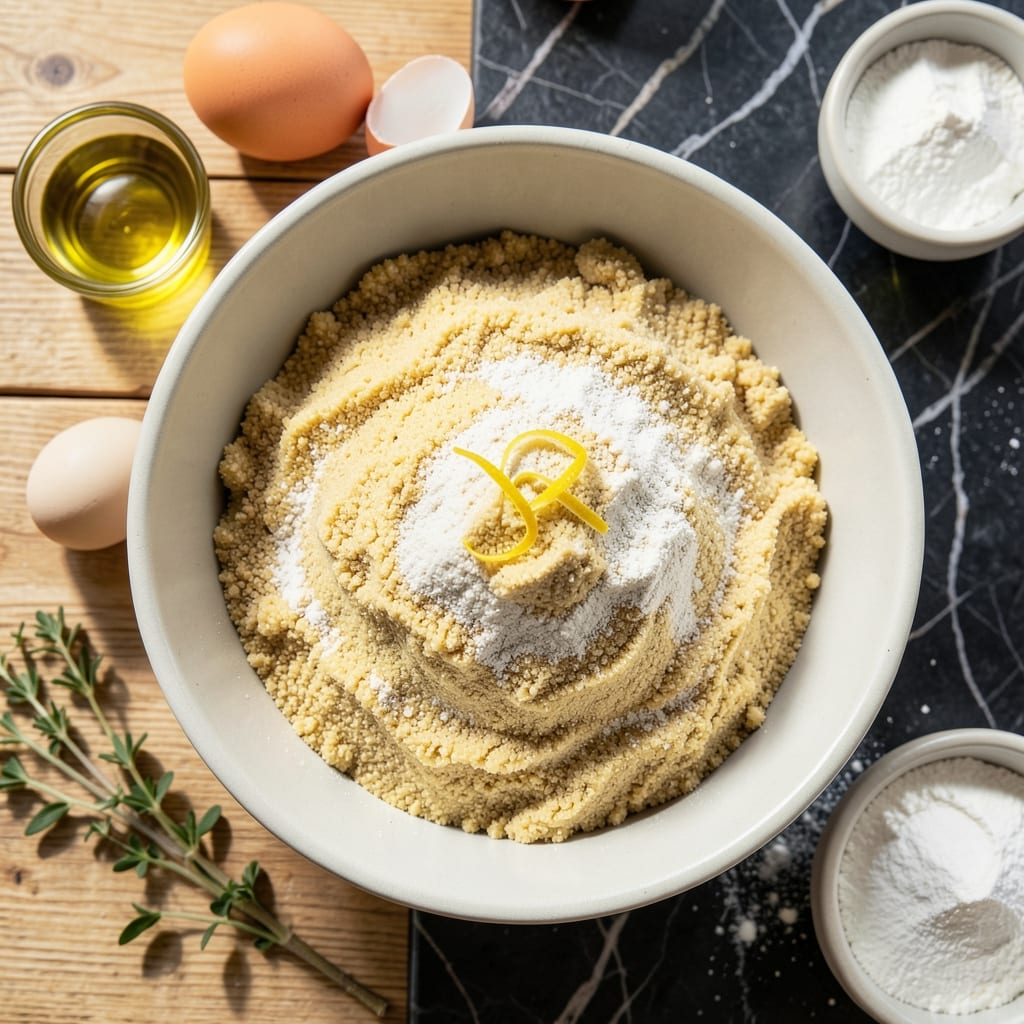
Homemade ravioli dough deserves better than all-purpose flour—semolina adds the perfect bite and golden hue. This proven technique delivers silky yet sturdy pasta that holds fillings beautifully, just like Nonna taught me.
With only four ingredients and 30 minutes of resting time, you’ll create a dough that rolls smooth as satin. The key is proper hydration and kneading until elastic, not sticky.
Once rolled thin, this dough forms pockets that cradle any filling without tearing. The semolina gives it structure while keeping the texture tender, never tough.
Use it for classic cheese ravioli or creative fillings. The results will speak for themselves.
Ingredients for Ravioli Pasta Dough Recipe Semolina
Semolina and eggs create a dough that rolls silky smooth with perfect structure.
| Ingredient | Amount | Notes |
|---|---|---|
| Semolina Flour 🌾 | 2 cups | Fine or medium grind |
| All-Purpose Flour 🌾 | 1 ½ cups | For balanced texture |
| Large Eggs 🥚 | 4 whole | Room temperature preferred |
| Extra-Virgin Olive Oil 🫒 | 1 tbsp | For dough elasticity |
| Sea Salt 🧂 | ½ tsp | Fine grain for even distribution |
| Water 💧 | 2 tbsp | As needed for hydration |
[recipe_ingredient_scaler]
The semolina is non-negotiable here. Bob’s Red Mill or King Arthur brands offer consistent quality with fine, even texture. Look for durum wheat semolina—it delivers that classic golden hue and firm bite. All-purpose flour balances the density; avoid bread flour, which can make the dough too tough. Room temperature eggs incorporate more evenly, so pull them out 30 minutes before starting.
No semolina? Replace with equal parts all-purpose flour, but expect a slightly softer texture. For egg-free versions, 1/4 cup water mixed with 1 tbsp oil per egg works, though the dough loses some richness. The olive oil can be swapped for avocado oil if needed, but extra-virgin adds a subtle depth. Salt quantity is flexible—adjust to taste after the first batch.
Fresh dough rests best wrapped tightly in plastic for 30 minutes at room temperature. Store unused portions in the fridge for 24 hours or freeze for 1 month. Thaw overnight before rolling to prevent cracking.
Why You’ll Love This Recipe
- No-Knead Magic: I just dump the semolina, all-purpose flour, eggs, and olive oil on the counter, mix, and it’s ready—no fancy equipment or kneading for ages.
- Rich, Earthy Bite: The semolina gives it this warm, nutty depth that plain flour dough just can’t touch.
- Freezer’s Best Friend: I make a double batch, freeze the sheets, and pull them out for quick weeknight ravioli whenever.
- Pocket-Change Pasta: A few eggs, two flours, and a drizzle of oil—this costs less than store-bought dough and tastes ten times better.
Step-by-Step Instructions for Ravioli Pasta Dough
Here’s the method. Straightforward, tested, works every time.
Step 1: Form the Flour Well and Add Wet Ingredients
On a clean work surface, mound the 2 cups Semolina Flour and 1.5 cups All-Purpose Flour together. Use your fingers to create a deep well in the center—this acts as your mixing bowl. The well should be wide enough to hold all your wet ingredients without spilling over.
Crack the 4 whole Large Eggs directly into the well. Add the 1 tbsp Extra-Virgin Olive Oil, 0.5 tsp Sea Salt, and 2 tbsp Water. I always use room temperature eggs for better emulsification with the flour. The water helps adjust the hydration level for the perfect texture.
Step 2: Gradually Incorporate the Flour
Using a fork, begin whisking the wet ingredients in a circular motion, slowly drawing in small amounts of flour from the inner rim of the well. This gradual incorporation prevents lumps and ensures even distribution of liquid throughout the flour.
Continue this process until the mixture becomes too thick to stir with the fork. At this point, the dough will start to come together in a shaggy mass. If it feels too dry, add water 1 teaspoon at a time—but with these proportions, you shouldn’t need more than the 2 tbsp Water specified.
Step 3: Knead to Develop the Gluten
Once the dough is too stiff for the fork, switch to your hands. Begin kneading by pushing the dough away with the heel of your hand, then folding it back toward you. Rotate the dough 90 degrees after each push-fold motion.
Knead for 8-10 minutes until the dough becomes smooth and elastic. You’ll know it’s ready when it springs back when pressed with your finger and has a silky texture. The Semolina Flour gives it a slightly grainy appearance at first, but it will smooth out with proper kneading.
Step 4: Rest the Dough for Optimal Workability
Wrap the kneaded dough tightly in plastic wrap and let it rest at room temperature for 30 minutes. This resting period allows the gluten strands to relax, making the dough much easier to roll out thinly without springing back.
During this time, the flour fully hydrates and the dough becomes more pliable. I’ve found that this specific combination of Semolina Flour and All-Purpose Flour creates a dough that’s sturdy enough for ravioli but still tender when cooked. Don’t skip this step—it’s crucial for achieving the perfect texture.
Step 5: Roll and Shape According to Your Ravioli Design
After resting, divide the dough into 4 equal portions for easier handling. Using a pasta machine or rolling pin, roll each portion to the desired thickness—typically about 1-2 millimeters for ravioli. The dough should be thin enough to see your hand through it but not so thin it tears.
Cut into your preferred ravioli shapes, fill with your chosen filling, and seal the edges tightly. The Extra-Virgin Olive Oil in the dough adds elasticity, making it more forgiving when stretching and shaping. Cook immediately or refrigerate for up to 24 hours before using.
Pro Tips For Making Ravioli Pasta Dough Recipe Semolina
- Knead Longer: I used to rush this part, but semolina dough needs a solid 8-10 minutes of kneading to develop the right elasticity—your arms will feel it, but the texture is worth it.
- Use Room-Temp Eggs: Sounds picky, but cold eggs can cause the olive oil to clump. Pull them out 30 minutes before mixing for a smoother, more uniform dough.
- Skip the Over-Flouring: Resist the urge to dump extra flour on the counter—semolina dough should feel slightly tacky at first. It firms up as it rests, and too much flour makes ravioli tough.
- Rest 30 Minutes: After kneading, wrap the dough tightly and let it sit. This relaxes the gluten, making it easier to roll thin without springing back—I learned this the hard way after fighting my pasta machine.
Best Sauces and Condiments for This ravioli pasta dough recipe semolina
Classic Brown Butter Sage
Brown ½ cup unsalted butter in a light-colored pan until nutty and golden, then add 8 fresh sage leaves. The semolina dough’s sturdiness holds up beautifully to this rich, aromatic sauce. I learned this pairing from my Nonna in our Boston kitchen.
Simple Tomato Basil
Simmer 2 cups San Marzano tomatoes with 3 minced garlic cloves and ¼ cup fresh basil for 20 minutes. The dough’s texture shines through this light, fresh sauce. Add a pinch of sugar to balance acidity—trust me on this.
Creamy Gorgonzola Walnut
Melt 4 oz Gorgonzola with ½ cup heavy cream, then stir in ¼ cup toasted walnuts. The salty cheese contrasts perfectly with the sweet, nutty elements. This is my go-to for impressive but easy weeknight dinners.
Add 1 tsp honey to mellow the Gorgonzola’s bite. 💛
Pesto Variations
Classic basil pesto works wonders, but try sundried tomato pesto for depth or arugula-walnut pesto for peppery notes. Toss with cooked ravioli and a splash of pasta water. I always keep Parmesan rind in my freezer for extra flavor.
Light Lemon Garlic
Whisk ¼ cup olive oil with 2 tbsp lemon juice, 1 minced garlic clove, and zest of 1 lemon. Drizzle over ravioli with fresh parsley. This bright, zesty sauce lets the semolina dough’s quality shine through. 🌟
Nutrition Facts
Frequently Asked Questions
Why use semolina instead of all-purpose flour?
Semolina adds a firmer bite and golden color while keeping the texture tender. It creates a sturdy dough that holds fillings better than all-purpose alone. The combination with all-purpose flour balances the texture perfectly.
What if my dough feels too dry?
Add water 1 teaspoon at a time until the dough comes together. Semolina absorbs liquid differently than regular flour, so small adjustments may be needed. Knead well after each addition.
Can I make this dough without a pasta machine?
Use a rolling pin to roll the dough as thin as possible, about 1-2 millimeters. It may take more effort, but the results will be just as delicious. Resting the dough first makes rolling easier.
How thick should the dough be for ravioli?
Aim for 1-2 millimeters thickness. The dough should be thin enough to see your hand through it but not so thin it tears when filling. This thickness ensures even cooking.

Trained in classic French technique but raised on slow-cooked ribs and spicy rubs, she blends culinary skill with smoke and soul.
- Recipe for Boneless Pork Chops in Cast Iron Skillet: Sear and Baste to Juicy Perfection - October 3, 2026
- Recipe for Boneless Cross Rib Roast: Slow-Roasted Beef with Herb Crust - October 3, 2026
- Hamburgers in Sauce Recipe Crock Pot: Slow-Cooked Savory Delight - October 3, 2026