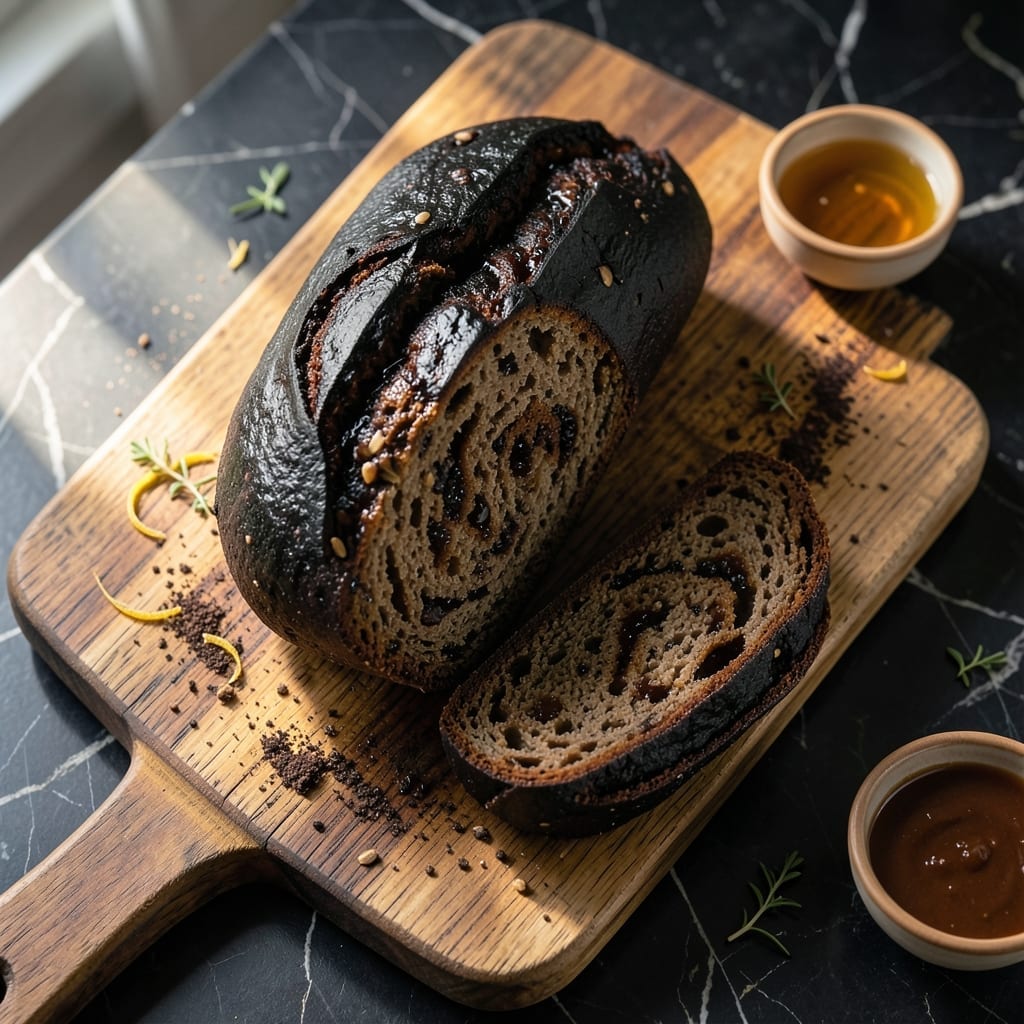
This traditional black bread captures the deep, earthy essence of rye that has sustained cultures for centuries. The dense texture and robust flavor come from a slow fermentation process that develops complexity naturally.
I’ve refined this method to balance the bitterness of dark rye with a touch of molasses, creating a loaf that’s rich without being heavy. The key is patience—letting the dough rise overnight allows the flavors to mature fully.
You’ll end up with a loaf that’s hearty enough to stand up to bold toppings yet mild enough to enjoy on its own. The crust forms a perfectly chewy barrier that gives way to a moist, dense crumb inside.
This bread keeps well for days, making it ideal for sandwiches, soups, or simply toasted with butter. Here’s how to bake this timeless classic at home.
Ingredients for Recipe for Black Bread
Rich, earthy flours and a touch of molasses create this timeless loaf with deep flavor.
| Ingredient | Amount | Notes |
|---|---|---|
| Dark Rye Flour 🌾 | 3 cups | Stone-ground preferred for texture |
| Bread Flour 🌾 | 1 cup | For structure and rise |
| Whole Wheat Flour 🌾 | ½ cup | Adds depth to flavor |
| Active Dry Yeast 🍞 | 2 ¼ tsp | One packet, proofed in warm water |
| Molasses 🍯 | ¼ cup | Unsulphured for best flavor |
| Cocoa Powder 🍫 | 2 tbsp | Unsweetened, for color and depth |
| Salt 🧂 | 2 tsp | Kosher or sea salt |
| Water 💧 | 1 ½ cups | Warm, for activating yeast |
| Vegetable Oil 🫒 | 2 tbsp | For greasing bowl and pan |
| Apple Cider Vinegar 🍏 | 1 tbsp | Balances sweetness of molasses |
| Caraway Seeds 🌿 | 1 tbsp | Optional, for traditional flavor |
| Honey 🍯 | 1 tbsp | Helps feed the yeast |
[recipe_ingredient_scaler]
The rye flour is non-negotiable for that signature deep, earthy flavor. Bob’s Red Mill or King Arthur are reliable brands at most supermarkets. Look for stone-ground if you can find it (the texture is better). Molasses adds richness and helps balance the bitterness—unsulphured is the way to go. Cocoa powder might seem odd, but it deepens the color and adds complexity without sweetness.
No molasses? Dark brown sugar mixed with a bit of water can work in a pinch, but the flavor won’t be quite the same. Skip the cocoa if you must, though the loaf will be a bit paler. Whole wheat flour at 100% can replace the bread flour, but the crumb might be denser. Caraway seeds are traditional, but leave them out if you’re not a fan—the bread’s still delicious.
This bread actually gets better with age. Wrap it tightly in plastic or foil—it’ll stay fresh for 5-7 days. For longer storage, slice and freeze for up to 3 months. Toasting revives it beautifully if it starts to dry out.
Why You’ll Love This Recipe
- One Bowl Wonder: I just mix the flours, yeast, and molasses in one bowl—no fancy equipment, no fuss.
- Deep, Rich Taste: The molasses and dark rye give it this earthy, slightly sweet depth that’s honestly hard to resist.
- Breakfast to Dinner: It’s just as good with morning jam as it is alongside a hearty stew at night.
- Stays Fresh: This loaf keeps for days, so I can bake once and enjoy it all week without waste.
Step-by-Step Instructions for Black Bread
This method delivers a rich, dense loaf with deep flavor and perfect texture.
Step 1: Activate the Yeast and Mix Wet Ingredients
In a large bowl, combine the 1.5 cups warm Water, 2.25 tsp Active Dry Yeast, 1 tbsp Honey, 0.25 cup Molasses, 1 tbsp Apple Cider Vinegar, and 2 tbsp Vegetable Oil. Stir gently and let sit for 5 minutes until the mixture becomes frothy and the yeast activates.
This step is crucial—you’ll see the yeast come alive as it feeds on the honey, creating bubbles. The molasses adds its signature deep, slightly bitter sweetness that defines this bread’s character.
Step 2: Combine Dry Ingredients and Form the Dough
In a separate bowl, whisk together the 3 cups Dark Rye Flour, 1 cup Bread Flour, 0.5 cup Whole Wheat Flour, 2 tbsp Cocoa Powder, 2 tsp Salt, and 1 tbsp Caraway Seeds. The cocoa powder deepens the color and adds subtle richness, while the caraway seeds bring that classic earthy note.
Gradually add the dry ingredients to the wet mixture, stirring until a thick, sticky dough forms. Don’t worry if it looks shaggy at first—rye dough is naturally dense and tacky, and it will come together as it rests.
Step 3: Knead and First Rise
Turn the dough onto a lightly floured surface and knead for 8-10 minutes until smooth and elastic. The dough will still be slightly sticky, but it should bounce back when pressed. This develops the gluten structure, ensuring your bread rises properly despite the heavy rye content.
Place the dough in a lightly oiled bowl, turning to coat all sides. Cover with a damp towel and let rise in a warm place for 1 to 1.5 hours, or until nearly doubled in size. Rye dough rises more slowly than wheat-based doughs, so patience is key here.
Step 4: Shape, Second Rise, and Bake
Punch down the risen dough and shape it into a round loaf. Place it on a parchment-lined baking sheet, cover, and let rise again for 45-60 minutes until slightly puffed. Preheat your oven to 375°F during the last 15 minutes of rising.
Bake for 40-45 minutes until the loaf sounds hollow when tapped on the bottom and the internal temperature reaches 200-205°F. The crust should be dark and firm, with a rich, almost burnt-sugar aroma filling your kitchen.
Step 5: Cool Completely Before Slicing
Transfer the bread to a wire rack and let it cool completely for at least 2 hours. I know it’s tempting to slice in right away, but rye bread needs this time to set properly—cutting too soon will result in a gummy texture.
Once cooled, the loaf will have a dense, moist crumb with a deep, complex flavor. The molasses and cocoa give it a dark, almost black hue, while the caraway seeds add little bursts of aroma with every bite.
Pro Tips For Making Recipe For Black Bread
- Proof the Yeast: Always bloom your active dry yeast in warm water with a pinch of sugar first—10 minutes is non-negotiable. I learned this the hard way after killing a batch with water that was too hot.
- Balance the Flours: Dark rye flour is dense, so cut it with bread flour to lighten the texture. My grandmother swore by a 2:1 ratio of rye to bread flour for that perfect chew.
- Warm the Molasses: Measure your molasses, then microwave it for 15-20 seconds to thin it out before mixing. Sounds weird, but it blends into the dough way easier.
- Don’t Rush the Rise: Rye dough needs time—give it a full 2 hours for the first rise, even if it looks slow. After burning three batches, I finally figured out rye just moves at its own pace.
Best Sauces and Condiments for This Dish
Butter and Honey
A simple spread of salted butter and local honey transforms this bread into a sweet-savory treat. The honey’s natural sweetness complements the earthy rye beautifully. I love using clover honey for its mild flavor. 🍯
Smoked Fish Pairing
Smoked salmon or whitefish with cream cheese creates an open-faced sandwich that’s a classic in delis. The smokiness of the fish contrasts perfectly with the bread’s deep, malty notes. Add capers and red onion for extra zing.
Herbed Cream Cheese
Mix 8 oz cream cheese with 1 tbsp fresh dill, 1 tsp lemon zest, and a pinch of black pepper. This tangy, herby spread cuts through the richness while enhancing the caraway in the loaf.
Spicy Mustard
A bold Dijon mustard or whole-grain mustard adds a sharp, tangy kick that stands up to this hearty bread. I like Maille brand for its smooth texture and robust flavor. It’s perfect for sandwiches or as a dipping sauce.
Pickled Vegetables
Pickled beets, red cabbage, or cucumbers add a bright, acidic crunch that balances the bread’s density. The vinegar’s tang cuts through the molasses sweetness beautifully. 🥗
Olive Oil Dip
Mix ¼ cup extra-virgin olive oil with 1 tsp balsamic vinegar and a pinch of flaky sea salt. This simple dip enhances the crust’s chewiness and brings out the bread’s nutty undertones.
Nutrition Facts
Frequently Asked Questions
Why is my bread so dense?
Rye flour has less gluten, so the dough won’t rise as much as wheat bread. Ensure you knead for 8-10 minutes and let it rise for the full 1 to 1.5 hours to develop structure. Overworking the dough can also cause density.
Can I make this without molasses?
Yes, but the flavor will differ. Substitute ¼ cup dark brown sugar mixed with 1 tbsp water for a similar sweetness. The bread may be slightly lighter in color and less complex in taste.
How do I store leftover bread?
Wrap tightly in plastic or foil and keep at room temperature for up to 5-7 days. For longer storage, slice and freeze for 3 months. Toast slices to revive freshness.

Trained in classic French technique but raised on slow-cooked ribs and spicy rubs, she blends culinary skill with smoke and soul.
- Recipe for Boneless Pork Chops in Cast Iron Skillet: Sear and Baste to Juicy Perfection - October 3, 2026
- Recipe for Boneless Cross Rib Roast: Slow-Roasted Beef with Herb Crust - October 3, 2026
- Hamburgers in Sauce Recipe Crock Pot: Slow-Cooked Savory Delight - October 3, 2026