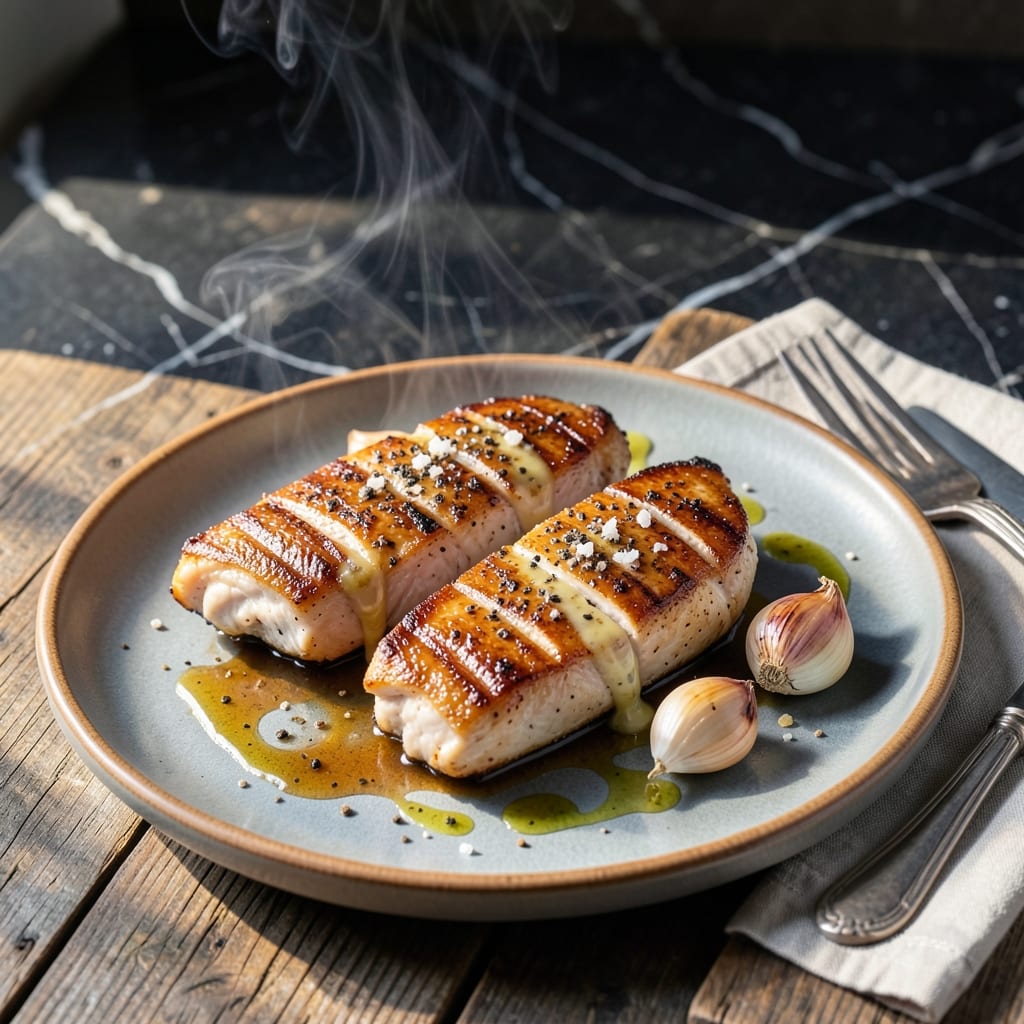
This pan-seared chicken fillet delivers restaurant-quality results with a simple but powerful technique. The key lies in achieving a golden crust while keeping the interior juicy and tender.
A hot pan and proper timing create that perfect sear on the outside. The garlic butter glaze adds rich, aromatic depth that elevates each bite without overpowering the chicken’s natural flavor.
You’ll end up with a tender, flavorful fillet that pairs beautifully with vegetables or rice. The glaze forms a glossy finish that looks as impressive as it tastes.
This method works reliably every time, making it ideal for both weeknight dinners and special occasions. The results speak for themselves.
Ingredients for Recipe for Chicken Fillet
Restaurant-quality ingredients for pan-seared chicken with garlic butter glaze and herbs.
| Ingredient | Amount | Notes |
|---|---|---|
| Chicken Breast Fillets 🍗 | 1 ½ lb | Boneless, skinless, pounded to even thickness |
| Kosher Salt 🧂 | 1 ½ tsp | Diamond Crystal preferred for even seasoning |
| Freshly Ground Black Pepper 🌶️ | 1 tsp | Coarse grind for texture |
| All-Purpose Flour 🌾 | ½ cup | For light dredging before searing |
| Unsalted Butter 🧈 | 6 tbsp | European-style for richer flavor |
| Garlic Cloves 🧄 | 4 cloves | Minced finely for even distribution |
| Fresh Thyme Sprigs 🌿 | 4 sprigs | Leaves stripped, stems discarded |
| Fresh Rosemary Sprig 🌿 | 1 sprig | Finely chopped for aromatic depth |
| Extra-Virgin Olive Oil 🫒 | 2 tbsp | High smoke point for searing |
| Chicken Stock 🥣 | ½ cup | Low-sodium preferred for controlled seasoning |
| Lemon 🍋 | ½ whole | Juiced for brightness in glaze |
| Dijon Mustard 🟡 | 1 tsp | Smooth variety for emulsifying glaze |
[recipe_ingredient_scaler]
The chicken fillets must be uniformly thick for even cooking. Whole Foods and Trader Joe’s carry high-quality, air-chilled breasts that stay juicier. For the butter, Plugrá or Kerrygold offer superior fat content (82-83%) which creates a glossier, more stable glaze. Fresh herbs are non-negotiable—dried simply won’t deliver the same aromatic impact.
No fresh thyme or rosemary? Use one-third the amount of dried, but add them earlier in cooking to rehydrate. For a nutty depth, swap half the butter with brown butter. Chicken stock can be substituted with white wine (dry variety) for acidity. If avoiding gluten, cornstarch or rice flour works for dredging.
Store raw chicken in its original packaging on a tray (to catch leaks) for up to 2 days. The garlic butter glaze can be made ahead and reheated gently—it keeps for 1 week refrigerated. Always bring chicken to room temperature before cooking for even doneness.
Why You’ll Love This Recipe
- Weeknight Rescue: I can go from fridge to plate in 20 minutes flat with just flour, butter, and seasonings.
- Crispy Perfection: That golden butter-flour crust with juicy chicken inside? Ridiculously good.
- Dinner or Lunch: I serve it with mashed potatoes for dinner, then slice leftovers for sandwiches the next day.
- Pantry Friendly: Honestly, I always have these five ingredients on hand, so it’s my go-to when the fridge looks bare.
Step-by-Step Instructions for Pan-Seared Chicken Fillet
Here’s the method. Straightforward, tested, works every time.
Step 1: Prepare and Season the Chicken Breast Fillets
Pat the 1.5 lb Chicken Breast Fillets completely dry with paper towels—this ensures proper browning. Season both sides evenly with the 1.5 tsp Kosher Salt and 1 tsp Freshly Ground Black Pepper, pressing gently to adhere.
Lightly dredge each fillet in the 0.5 cup All-Purpose Flour, shaking off any excess. The flour creates a delicate crust and helps the seasoning cling. Let the seasoned fillets rest at room temperature for 10 minutes while you prepare the pan.
Step 2: Sear the Chicken to Golden Perfection
Heat a large skillet over medium-high heat and add the 2 tbsp Extra-Virgin Olive Oil. Once the oil shimmers, add the floured chicken fillets. Cook undisturbed for 4-5 minutes per side until the crust is deep golden brown and the internal temperature reaches 160°F.
Resist the urge to move the fillets—letting them sear undisturbed develops maximum flavor and a crispy exterior. Use tongs to flip only once to maintain even cooking. The chicken should release easily from the pan when properly seared.
Step 3: Create the Garlic Butter Glaze
Reduce heat to medium and add 4 tbsp Unsalted Butter, the minced 4 cloves Garlic Cloves, stripped leaves from the 4 sprigs Fresh Thyme Sprigs, and chopped 1 sprig Fresh Rosemary Sprig. Sauté for 1-2 minutes until the butter foams and the garlic becomes fragrant.
Pour in the 0.5 cup Chicken Stock, juice from the 0.5 whole Lemon, and 1 tsp Dijon Mustard. Stir with a wooden spoon, scraping up any browned bits from the pan. Simmer for 2-3 minutes until the liquid reduces by half and thickens slightly.
Step 4: Finish and Serve
Return the cooked chicken to the skillet, spooning the garlic butter glaze over the fillets. Add the remaining 2 tbsp Unsalted Butter and swirl until melted. Cook for an additional 1-2 minutes, basting the chicken with the glaze to ensure full coverage.
Transfer the chicken to a serving platter, spooning the remaining glaze on top. The sauce should be velvety and cling to the chicken. Serve immediately while hot, with the pan juices drizzled over each portion for maximum flavor impact.
Pro Tips For Making Recipe For Chicken Fillet
- Pound the Fillets: Even thickness means even cooking—I learned this the hard way after too many dry, overdone edges. A quick pound with a rolling pin or pan to ½-inch thickness guarantees juicy chicken every time.
- Salt the Flour: Mix about 1 teaspoon of kosher salt into your all-purpose flour before dredging. Sounds weird, but it works: the seasoning sticks better and you’ll taste it in every bite.
- Hot Pan, Quick Flip: Crank the heat to medium-high and don’t touch the fillets for 3-4 minutes per side. After burning three batches, I finally figured out that moving them too soon ruins the crust.
- Rest Before Serving: Give it a solid 5 minutes under foil after cooking—yes, even if you’re impatient like me. My grandmother swore by this, and she was right: it locks in the juices.
Health Benefits of recipe for chicken fillet
Lean Protein Power
Chicken breast is one of the best sources of lean protein, with a 6-ounce fillet providing about 53 grams—that’s over 100% of the daily value for protein in one meal. I love how it keeps me full for hours without any heavy feeling. 💪
Low in Saturated Fat
Unlike red meat, chicken breast contains just 1 gram of saturated fat per 3-ounce serving. This makes it an excellent choice for heart health and weight management. The pan-searing method here keeps it delicious without adding excess fat.
Rich in B Vitamins
You’ll get a boost of B6 and B12 from this dish, which support energy metabolism and brain function. A single fillet provides about 30% of your daily B6 needs and 20% of B12—essential for keeping energy levels high.
Selenium and Phosphorus
Chicken breast is packed with selenium, a powerful antioxidant that supports thyroid function, and phosphorus, which helps maintain strong bones. These minerals work together to keep your body functioning at its best.
Versatile Nutrition
The garlic and herbs in this preparation add more than flavor—they bring antioxidants and anti-inflammatory benefits. Garlic, in particular, has been shown to support immune health. This dish truly nourishes from the inside out. ✨
Nutrition Facts
Frequently Asked Questions
What’s the best way to pound chicken fillets evenly?
Place fillets between plastic wrap and use a meat mallet or rolling pin. Pound gently to 1/2-inch thickness for even cooking. This prevents dry spots and ensures consistent doneness.
Can I use frozen chicken for this method?
Thaw completely in the fridge overnight first. Cooking from frozen leads to uneven results and a rubbery texture. Pat very dry before seasoning to avoid steaming.
How do I know when the chicken is perfectly cooked?
Use a meat thermometer for accuracy. The safe internal temp is 165°F, but removing at 160°F lets it rise to perfection while resting. The juices should run clear, not pink.
What can I substitute for Dijon mustard in the glaze?
Try 1 tsp whole-grain mustard for texture or 1 tsp white wine vinegar for tang. Both maintain the glaze’s balance without overpowering the garlic butter flavor.

Trained in classic French technique but raised on slow-cooked ribs and spicy rubs, she blends culinary skill with smoke and soul.
- Smoked Teriyaki Beef Jerky Recipe: Umami-Deep Flavor in Every Chewy Bite - October 15, 2026
- Stewed Beef Brisket Recipe: Deep-Rich Flavor After 8 Hours of Slow Simmering - October 15, 2026
- Beef Brisket Rolls Recipe: Flaky Layers and Smoky Sweet Filling - October 15, 2026