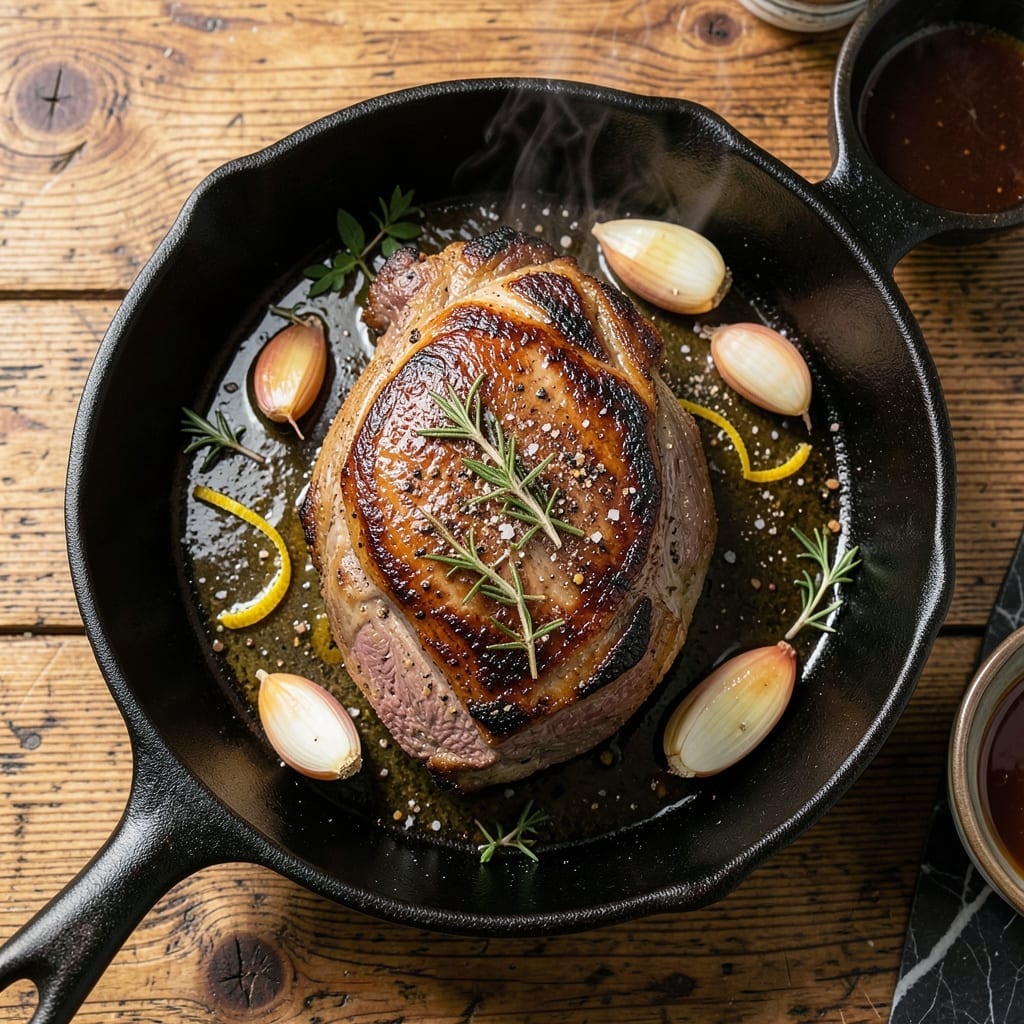
This budget-friendly beef roast delivers the rich, tender experience of prime rib without the premium price. I developed this method after years of testing cuts and techniques to replicate that melt-in-your-mouth texture affordably.
The secret lies in selecting the right cut and using a slow, dry-heat cooking process. A well-marbled chuck roast transforms into something extraordinary with proper seasoning and patience. This approach guarantees restaurant-quality results at a fraction of the cost.
You’ll achieve a beautifully crusted exterior with juicy, flavorful meat inside. The aroma alone will have everyone gathering around the table before it’s even sliced. It’s the perfect centerpiece for Sunday family dinners.
No fancy equipment required—just your oven, a roasting pan, and this proven technique. The results speak for themselves.
Ingredients for Recipe for Poor Man’s Prime Rib
A well-marbled chuck roast plus pantry spices create restaurant-quality beef at home.
| Ingredient | Amount | Notes |
|---|---|---|
| Chuck Roast 🥩 | 3 lb | Well-marbled, boneless preferred |
| Kosher Salt 🧂 | 2 tbsp | Diamond Crystal or Morton |
| Black Pepper 🌶️ | 2 tsp | Freshly ground preferred |
| Garlic Powder 🧄 | 1 tbsp | Not garlic salt |
| Onion Powder 🧅 | 1 tbsp | Fine grind for even coating |
| Dried Rosemary 🌿 | 1 tbsp | Crushed between fingers |
| Dried Thyme 🍃 | 1 tbsp | Rubbed to release oils |
| Smoked Paprika 🌶️ | 1 tsp | Adds depth and color |
| Olive Oil 🫒 | 2 tbsp | For searing and crust |
| Beef Broth 💧 | 1 cup | Low-sodium preferred |
| Yellow Onion 🧅 | 1 whole | Roughly chopped for roasting |
| Carrots 🥕 | 3 whole | Peeled, cut into chunks |
| Russet Potatoes 🥔 | 2 whole | Peeled, quartered |
[recipe_ingredient_scaler]
The chuck roast is non-negotiable here. Costco has the best marbling at a decent price, but any grocery store butcher can point you to a good cut. Look for vibrant red color with plenty of white fat streaks—this is what keeps it moist. I always buy a few extra pounds and freeze it, since a good chuck roast is the foundation of this dish (and many others).
No chuck roast? Bottom round roast works but needs more time to get tender. Out of fresh rosemary? Dried at half the amount is fine. For the beef broth, Better Than Bouillon paste mixed with water is a great shortcut—just as rich as homemade. The smoked paprika adds that deep, almost prime rib flavor, so don’t skip it (unless you’re out, then regular paprika in a pinch).
Leftovers reheat beautifully—slice thin and broil for a minute to crisp up the edges. Keeps in the fridge for 4-5 days, freezes for 3 months. The veggies soak up all the juices, so don’t toss them (they’re the best part of lunch the next day).
Why You’ll Love This Recipe
- I’ll be real: it delivers that fancy steakhouse vibe for a fraction of the cost.
- Set It and Forget: Honestly, it’s just season and slow-roast—no babysitting required.
- Rich Beefy Flavor: That chuck roast with garlic and onion powder tastes shockingly close to prime rib.
- Feeds a Hunger: Between us, this is my go-to for Sunday dinner or packing leftovers for lunch all week.
Step-by-Step Instructions for Poor Man’s Prime Rib
Here’s my method for transforming this budget cut into a showstopping roast with prime rib flavor.
Step 1: Season and Sear the Chuck Roast
Pat the 3 lb Chuck Roast completely dry with paper towels—this ensures a proper sear. In a small bowl, combine the 2 tbsp Kosher Salt, 2 tsp Black Pepper, 1 tbsp Garlic Powder, 1 tbsp Onion Powder, 1 tbsp Dried Rosemary, 1 tbsp Dried Thyme, and 1 tsp Smoked Paprika.
Rub this mixture all over the roast, pressing firmly to create a thick, even crust. Heat the 2 tbsp Olive Oil in a Dutch oven or heavy pot over medium-high heat. Sear the roast on all sides for 3-4 minutes per side until deeply browned. This builds the rich, beefy foundation of flavor.
Step 2: Deglaze and Add Aromatics
Remove the roast and set it aside. In the same pot, add the roughly chopped 1 whole Yellow Onion, 3 whole Carrots (peeled and cut into chunks), and 2 whole Russet Potatoes (peeled and quartered). Cook for 5 minutes, stirring occasionally, until the vegetables begin to caramelize at the edges.
Pour in the 1 cup Beef Broth and scrape up all the browned bits from the bottom of the pot with a wooden spoon. These fond bits are pure flavor. Return the seared roast to the pot, nestling it among the vegetables. The liquid should come about halfway up the roast.
Step 3: Slow Roast to Tenderness
Cover the pot tightly and transfer it to a preheated 325°F oven. Roast for 3 to 3½ hours, turning the roast once halfway through cooking. You’ll know it’s done when a meat thermometer inserted into the thickest part reads 195-200°F and the meat pulls apart easily with a fork.
Resist the urge to peek too often—every time you open the oven, you lose precious heat. The low and slow method breaks down the connective tissue in the chuck roast, transforming it into melt-in-your-mouth tenderness that rivals prime rib.
Step 4: Rest and Serve
Carefully transfer the roast to a cutting board and tent it loosely with foil. Let it rest for 15-20 minutes before slicing. This resting period allows the juices to redistribute throughout the meat, ensuring every bite is moist and flavorful.
Slice the roast against the grain into thick slices. Arrange on a platter with the roasted vegetables and spoon some of the cooking liquid over the top. The vegetables will have absorbed all the beefy, aromatic goodness from the roast, making them the perfect accompaniment.
Pro Tips For Making Recipe For Poor Man’S Prime Rib
- Dry the Roast: Pat the chuck roast completely dry with paper towels before seasoning—this guarantees a proper crust and even browning, not a steamed exterior.
- Salt Generously: Use more kosher salt than you think, especially on a thick chuck roast. I learned this the hard way after my first few came out bland.
- Start Hot, Finish Low: Sear the roast in a screaming hot pan for 2-3 minutes per side, then transfer to a 275°F oven for slow, even cooking.
- Let It Rest: Give the roast a solid 15-20 minutes under foil after cooking—it keeps the juices inside instead of on your cutting board.
Common Mistakes When Making This Dish
Skipping the Dry
Never skip patting the 3 lb Chuck Roast completely dry with paper towels. I learned this the hard way—wet meat steams instead of sears, and you’ll lose that beautiful crust everyone loves. Even a little moisture prevents proper browning. 🌡️
Rushing the Sear
Don’t rush the searing step over medium-high heat. Each side needs 3-4 minutes to develop a deep, rich crust. I’ve seen home cooks lift the meat too soon, and the result is pale, flavorless meat. Patience here pays off in every bite.
Overcrowding the Pot
When searing, leave space around the roast in your Dutch oven. Crowding drops the temperature and causes steaming. If your pot is too small, sear the roast in batches or use a larger pan. This ensures a proper Maillard reaction.
Ignoring the Thermometer
Never guess doneness—always use a meat thermometer. Pull the roast at 195-200°F internal temperature for perfect tenderness. I’ve ruined too many roasts by relying on time alone. The thermometer is your best tool for consistency.
Skipping the Rest
Letting the roast rest for 15-20 minutes is non-negotiable. Slicing too soon causes all the juices to spill out, leaving dry meat. Tent it loosely with foil to keep it warm while the juices redistribute. This step separates good roasts from great ones.
Using Low-Quality Broth
Avoid weak or watery 1 cup Beef Broth—it dilutes the flavor. I recommend Better Than Bouillon for depth. The liquid should be rich and savory to complement the roast. This small upgrade makes a noticeable difference in the final dish.
Nutrition Facts
Frequently Asked Questions
Why use a chuck roast instead of prime rib?
Chuck roast is far more affordable while still offering excellent marbling. With slow cooking, it becomes just as tender and flavorful as prime rib. The difference is mostly in the cut and price point, not the final taste.
Can I cook this in a slow cooker instead?
Yes! Sear the roast first, then transfer to your slow cooker with the broth and vegetables. Cook on low for 8-10 hours or high for 5-6 hours. The texture will be slightly different but still delicious.
What if my roast isn’t tender after cooking?
It likely needs more time. Return it to the oven or slow cooker and check every 30 minutes until it reaches 195-200°F internally. The connective tissue must fully break down for that melt-in-your-mouth texture.

Trained in classic French technique but raised on slow-cooked ribs and spicy rubs, she blends culinary skill with smoke and soul.
- Smoked Teriyaki Beef Jerky Recipe: Umami-Deep Flavor in Every Chewy Bite - October 15, 2026
- Stewed Beef Brisket Recipe: Deep-Rich Flavor After 8 Hours of Slow Simmering - October 15, 2026
- Beef Brisket Rolls Recipe: Flaky Layers and Smoky Sweet Filling - October 15, 2026