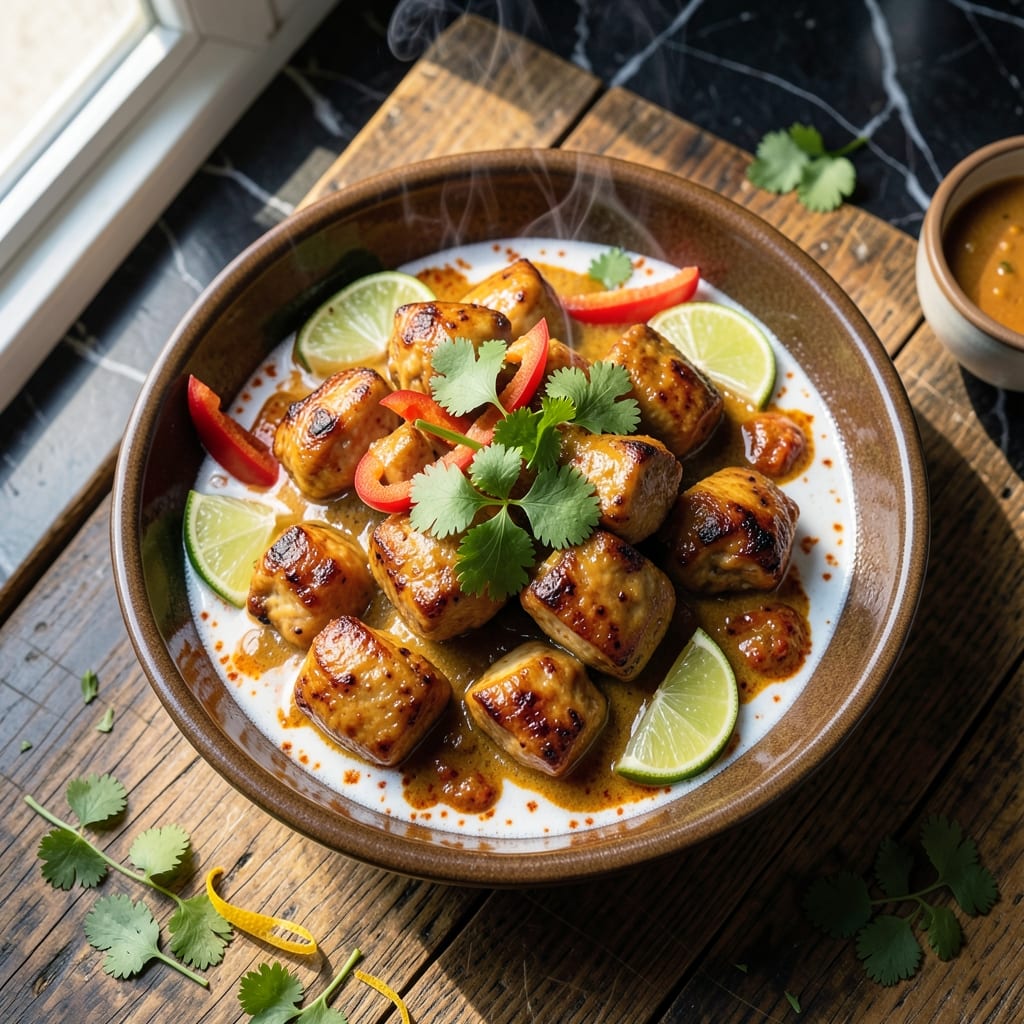
There’s a reason chicken satay curry has become a global favorite—its rich, peanut-spiced coconut sauce transforms simple ingredients into something extraordinary. I developed this version after years of testing, balancing the satay’s signature flavors with a velvety texture that coats every piece of chicken.
The key lies in the marinade and sauce. A short soak in aromatic spices ensures the chicken stays tender and flavorful, while the coconut-peanut sauce builds depth through careful layering of ingredients. This isn’t just a curry; it’s a symphony of Southeast Asian flavors.
What emerges is restaurant-quality satay curry with juicy chicken pieces swimming in a luxurious sauce. The peanut butter melts into the coconut milk, creating a smooth, slightly sweet base that’s perfectly balanced with lime and spices.
Serve with steamed jasmine rice and fresh cilantro for a complete meal. This dish brings together complex flavors without complicated techniques.
Ingredients for Recipe for Chicken Satay Curry
Transform simple proteins and aromatics into this velvety, peanut-spiced masterpiece with these curated ingredients.
| Ingredient | Amount | Notes |
|---|---|---|
| Boneless, Skinless Chicken Thighs 🍗 | 1 ½ lb | Cut into bite-sized pieces |
| Creamy Peanut Butter 🥜 | ¾ cup | Unsweetened, natural preferred |
| Full-Fat Coconut Milk 🥥 | 1 can | 13.5 oz can, well-shaken |
| Red Curry Paste 🌶️ | 2 tbsp | Thai-style, check for shrimp-free |
| Soy Sauce 🫒 | 2 tbsp | Low-sodium or tamari for gluten-free |
| Fresh Lime 🍋 | 1 whole | Zest and juice separated |
| Garlic Cloves 🧄 | 4 cloves | Minced finely for marinade |
| Fresh Ginger Root 🌿 | 1 tbsp | Peeled and grated |
| Ground Cumin 🌿 | 1 tsp | Toasted for deeper aroma |
| Ground Coriander 🌿 | 1 tsp | Freshly ground preferred |
| Brown Sugar 🧂 | 1 tbsp | Light or dark works |
| Fish Sauce 🐟 | 1 tbsp | Vegan fish sauce if needed |
| Jasmine Rice 🍚 | 1 ½ cups | Uncooked, rinsed before use |
| Fresh Cilantro 🌿 | ½ cup | Roughly chopped for garnish |
| Vegetable Oil 🫒 | 2 tbsp | Neutral-flavored, for sautéing |
[recipe_ingredient_scaler]
The peanut butter is non-negotiable—natural, unsweetened brands like Smucker’s or Crazy Richard’s deliver the cleanest flavor without added sugars interfering with the balance. For the coconut milk, Thai Kitchen or Chaokoh are reliable (avoid light versions, as they lack the necessary fat for silkiness). Chicken thighs outperform breasts here, their higher fat content keeping the meat moist during cooking. Source them from Whole Foods or your local butcher for consistent quality.
No peanut butter? Almond or cashew butter at a 1:1 ratio works, though the flavor shifts slightly. Missing red curry paste? Panang curry paste adds a sweeter note, or blend 1 tbsp tomato paste with 1 tsp each curry powder and chili flakes. For a vegetarian twist, swap chicken for extra-firm tofu (pressed and cubed). The fish sauce can be omitted, but add an extra pinch of salt to compensate. Fresh ginger is ideal, but ground ginger at half the amount saves time.
The coconut milk and peanut butter mixture thickens as it cools. Reheat gently with a splash of water to restore its luxurious texture. Leftovers keep 4-5 days in an airtight container, and the flavors deepen over time. Freeze portions for up to 3 months—perfect for quick meals later.
Why You’ll Love This Recipe
- I’ll be real: it tastes even better the next day, and the flavors deepen overnight.
- One Pan Wonder: I just toss the chicken thighs in the pan, stir in peanut butter and coconut milk—no fancy steps, no mess.
- Flavor Bomb: That mix of creamy peanut butter and spicy red curry paste? Ridiculously good, with just the right kick.
- Weeknight Hero: Honestly, it’s my go-to for busy evenings—ready before the kids start asking what’s for dinner.
Instructions
Master the technique for this rich, aromatic dish with professional precision and layered flavors.
Step 1: Marinate the Chicken
Cut the 1.5 lb Boneless, Skinless Chicken Thighs into bite-sized pieces and place them in a large bowl. Add the 2 tbsp Soy Sauce, 1 tbsp Fish Sauce, zest of the 1 whole Fresh Lime, 4 cloves minced Garlic Cloves, and 1 tbsp grated Fresh Ginger Root.
Mix everything thoroughly to ensure the chicken is fully coated. I always let this marinate for at least 15-20 minutes at room temperature—this allows the flavors to penetrate the meat deeply. The chicken should turn slightly opaque at the edges when it’s ready to cook.
Step 2: Build the Curry Base
Heat the 2 tbsp Vegetable Oil in a large, deep skillet over medium heat. Add the 2 tbsp Red Curry Paste and stir for 1-2 minutes until it becomes fragrant and the oil starts to separate slightly at the edges. This blooms the spices and deepens their aroma.
Immediately add the 1 tsp Ground Cumin and 1 tsp Ground Coriander, stirring constantly for 30 seconds to toast the spices. Pour in the 1 can Full-Fat Coconut Milk (well-shaken) and 1 tbsp Brown Sugar, then stir until the mixture is smooth and begins to simmer gently.
Step 3: Cook the Chicken in the Sauce
Add the marinated chicken and all its juices to the skillet. Stir well to coat the pieces evenly in the sauce. Reduce the heat to medium-low and let it simmer uncovered for 12-15 minutes, stirring occasionally.
The chicken is done when it’s no longer pink inside and the sauce has thickened slightly. You’ll notice the oil starting to rise to the surface—that’s your visual cue that the curry base is properly emulsified.
Step 4: Finish with Peanut Butter and Lime
Reduce the heat to low and stir in the 0.75 cup Creamy Peanut Butter until it’s fully incorporated and the sauce becomes velvety smooth. This may take 2-3 minutes of constant stirring to prevent clumping.
Squeeze in the juice from the 1 whole Fresh Lime and stir to combine. Taste and adjust seasoning if needed—the balance should be rich, slightly sweet, with a bright citrus finish. The sauce should coat the back of a spoon thickly but still drizzle easily.
Garnish with 0.5 cup roughly chopped Fresh Cilantro just before serving. Serve hot over steamed 1.5 cups Jasmine Rice for a complete meal.
Pro Tips For Making Recipe For Chicken Satay Curry
- Sear Chicken First: Brown the chicken thighs in batches over medium-high heat before adding the curry paste—this builds a deep flavor base that the peanut sauce will cling to.
- Thin the Peanut Butter: Whisk the peanut butter with 2-3 tablespoons of warm coconut milk before adding it to the pot to prevent clumping and ensure a silky smooth sauce.
- Skip the Boil: Once the chicken is cooked through, keep the curry at a gentle simmer—boiling can cause the peanut butter to separate and leave you with a greasy, broken sauce.
- Use Natural Peanut Butter: I learned this the hard way—regular creamy peanut butter works better than natural here, as the added stabilizers help it blend smoothly into the coconut milk without turning oily.
Health Benefits of These Flavors
Protein-Packed Meal
The chicken in this dish provides high-quality protein—about 35 grams per serving—essential for muscle repair and overall health. Chicken thighs are particularly rich in iron and zinc, which support immune function. David always comments on how satisfying this meal is after a long day. 💪
Healthy Fats Source
Peanut butter and coconut milk deliver healthy fats that keep you full and energized. A serving offers about 20 grams of beneficial unsaturated fats from the peanut butter alone. These fats support heart health and help your body absorb fat-soluble vitamins in the meal.
Coconut milk adds medium-chain triglycerides, which are metabolized differently than other fats, providing quick energy.
Rich in Antioxidants
The spices in this curry—ginger, garlic, cumin, and coriander—are packed with antioxidants that combat inflammation. Ginger, in particular, contains gingerol, a compound with powerful anti-inflammatory and digestive benefits. A 1 tbsp serving of fresh ginger provides noticeable health perks.
Vitamin and Mineral Boost
Fresh lime juice adds a healthy dose of vitamin C, supporting immune function and collagen production. The dish also provides iron from the chicken and manganese from the spices, which aid in metabolism and bone health. 💛
Low-Carb Option
For a lower-carb version, serve this over cauliflower rice instead of jasmine rice. You’ll still get all the rich flavors and protein benefits while reducing the carb count significantly. This swap works perfectly without compromising taste or texture.
Nutrition Facts
Frequently Asked Questions
Can I use chicken breast instead of thighs?
Yes, but thighs stay juicier during cooking. If using breast, reduce simmering to 8-10 minutes to prevent dryness. The higher fat in thighs also enriches the sauce flavor.
How do I prevent the peanut butter from clumping?
Stir constantly over low heat and add peanut butter in small spoonfuls. The warmth and movement help it melt smoothly into the coconut milk.
What if my sauce is too thin?
Simmer uncovered for 3-5 minutes longer to reduce. For immediate thickening, mix 1 tsp cornstarch with water and stir in. The sauce will thicken as it cools too.
Can I make this ahead of time?
The flavors deepen overnight. Store in an airtight container for up to 5 days. Reheat gently with a splash of water.

Trained in classic French technique but raised on slow-cooked ribs and spicy rubs, she blends culinary skill with smoke and soul.
- Best Smoked Oxtail Recipe: Deep-Rich Flavor After Low-and-Slow Cooking - October 14, 2026
- Pit Boss Smoked Prime Rib Roast Recipe: Bark-to-Bone Crispness in 4 Hours - October 14, 2026
- Smoked Tuna Steak Recipe: Seared Crust Meets Silky Centers - October 14, 2026