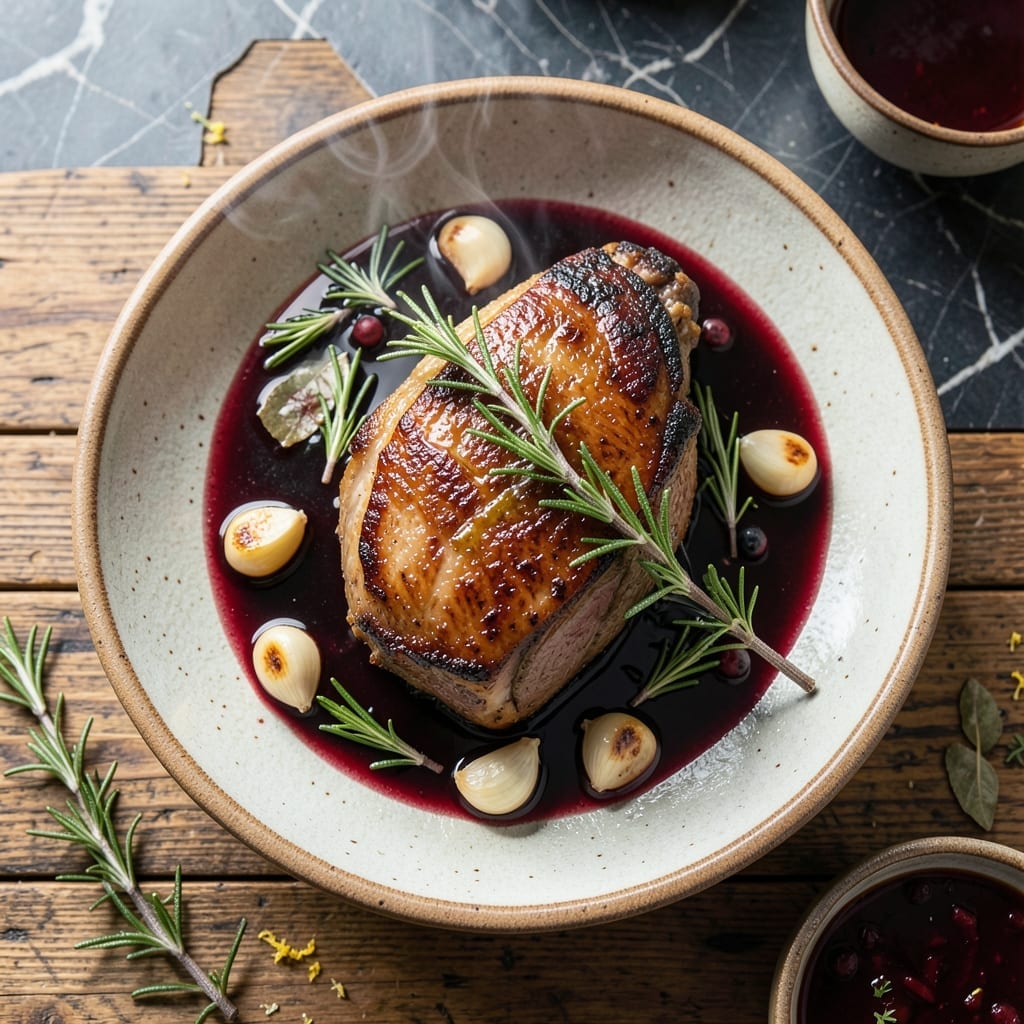
Wild game requires a different approach, and this slow-roasted method transforms elk into tender, fall-apart perfection. I developed this technique after years of testing with various tough cuts, learning that patience and low heat are key to breaking down those robust fibers.
Unlike beef, elk benefits from a longer cooking time at a lower temperature to preserve moisture while achieving that desirable pull-apart texture. A simple marinade of red wine, garlic, and rosemary infuses the meat with depth before it even hits the oven.
The result is a roast that’s rich and flavorful without being gamey, with a tender interior that rivals any prime rib. The slow roasting process allows the natural juices to redistribute throughout the meat, ensuring every bite is succulent.
Serve this with roasted root vegetables or mashed potatoes to soak up every drop of the savory au jus. This method works every time.
Ingredients for Recipe for Elk Roast
A handful of bold ingredients transform wild game into restaurant-quality perfection every time.
| Ingredient | Amount | Notes |
|---|---|---|
| Elk Roast 🦌 | 3 lb | Boneless, from hindquarter preferred |
| Red Wine 🍷 | 1 ½ cups | Dry variety like Cabernet |
| Garlic Cloves 🧄 | 6 cloves | Smashed, not minced |
| Fresh Rosemary 🌿 | 3 tbsp | Chopped, stems removed |
| Olive Oil 🫒 | ¼ cup | Extra-virgin for marinade |
| Kosher Salt 🧂 | 1 ½ tbsp | Diamond Crystal preferred |
| Black Pepper 🌶️ | 1 tbsp | Freshly cracked for depth |
| Juniper Berries 🫒 | 1 tsp | Lightly crushed for aroma |
| Bay Leaves 🍃 | 2 whole | Dried, for slow roasting |
| Beef Stock 🥩 | 1 cup | Low-sodium for reduction |
| Carrots 🥕 | 3 whole | Large, cut into chunks |
| Yellow Onion 🧅 | 1 whole | Quartered for roasting pan |
| Celery Stalks 🥬 | 3 whole | Cut into 2-inch pieces |
| All-Purpose Flour 🌾 | 2 tbsp | For thickening au jus |
[recipe_ingredient_scaler]
The elk roast itself is non-negotiable for texture—hindquarter cuts from reputable game processors like Wild Fork Foods or local butchers yield the most consistent results. Look for deep red color with good marbling (yes, wild game can have it). The red wine in the marinade should be something you’d drink; Cabernet Sauvignon or Merlot add the right tannic backbone without overpowering.
No red wine? Substitute with beef stock plus 1 tbsp balsamic vinegar for acidity. Fresh rosemary is ideal, but dried at one-third the amount works in a pinch (just rehydrate in warm water first). If juniper berries are elusive, 1 tsp crushed coriander seeds offers a similar piney note. For the stock, homemade is best, but Better Than Bouillon base dissolved in water is a solid backup.
Marinate the elk overnight for maximum tenderness—12-24 hours is ideal. The roast can be prepped and refrigerated a day ahead. Leftovers (if there are any) keep 4-5 days in the fridge or 3 months frozen. Reheat gently in the au jus to prevent drying out.
Why You’ll Love This Recipe
- Set It & Forget: I toss the elk roast with red wine, garlic, and rosemary, then let the oven do the work.
- Rich & Deep: The red wine soaks into the meat, while garlic and rosemary add layers of flavor that taste like a fancy restaurant dish.
- Sunday Dinner Hero: This is the dish I pull out for family gatherings or when I want to impress without stressing.
- Leftovers for Days: Honestly, the flavors taste even better the next day, and it stretches to fill lunches all week.
Step-by-Step Instructions for Elk Roast
This method ensures fall-apart tenderness while preserving the rich, gamey character of the elk.
Step 1: Marinate the Elk Roast Overnight
In a large bowl, whisk together the 1.5 cups red wine, 0.25 cup olive oil, 3 tbsp fresh rosemary, 6 cloves garlic cloves, 1.5 tbsp kosher salt, 1 tbsp black pepper, 1 tsp juniper berries, and 2 whole bay leaves until fully combined.
Place the 3 lb elk roast in the marinade, turning to coat all sides. Cover and refrigerate for 12-24 hours. The acidity in the wine and the aromatic compounds in the rosemary and juniper will begin breaking down the tough fibers in the elk, ensuring a more tender result.
Turn the roast in the marinade every 6 hours for even flavor distribution. The meat should take on a deep, wine-infused color by the time it’s ready to cook.
Step 2: Prepare the Roasting Pan with Aromatic Vegetables
Preheat your oven to 325°F. Remove the elk roast from the marinade, reserving the liquid, and pat it dry with paper towels. This step is crucial for achieving a proper sear and preventing the meat from steaming in the oven.
Arrange the 3 whole carrots, 1 whole yellow onion, and 3 whole celery stalks in the bottom of a roasting pan. These vegetables will create a natural rack for the roast while infusing the cooking liquid with additional depth of flavor.
Place the elk roast on top of the vegetables, ensuring it is elevated to allow for even heat circulation.
Step 3: Slow-Roast to Perfection
Pour the reserved marinade over the roast and vegetables. Cover the pan tightly with foil or a lid and transfer it to the preheated oven. Roast for 3-4 hours, basting the roast with the pan juices every 45 minutes.
The elk is ready when an instant-read thermometer inserted into the thickest part of the roast registers 145°F for medium-rare. The meat should pull away easily from a fork and have a uniformly tender texture throughout.
The vegetables should be soft and caramelized, and the cooking liquid will have reduced slightly, concentrating the flavors.
Step 4: Create the Au Jus and Rest the Meat
Transfer the elk roast to a cutting board and tent it loosely with foil. Let it rest for 20-30 minutes to allow the juices to redistribute, ensuring every slice remains moist and flavorful.
Strain the pan juices into a saucepan, discarding the solids. Skim off any excess fat from the surface. Bring the liquid to a simmer over medium heat and whisk in the 2 tbsp all-purpose flour to thicken it slightly. Simmer for 3-5 minutes until the au jus reaches your desired consistency.
Strain the au jus once more if needed to remove any lumps, then pour it into a gravy boat for serving alongside the sliced elk roast.
Pro Tips For Making Recipe For Elk Roast
- Sear It Hard: Get your pan screaming hot before adding the elk—about 2 tablespoons of olive oil, then sear until you’ve got a deep brown crust on all sides. I learned this the hard way after serving gray, steamed elk to very polite guests.
- Tenderize with Wine: Use a full-bodied red wine like Cabernet for the braise, and give it at least 2 hours to break down the elk’s toughness. Skimping on time here leaves you with a roast that’s chewy, not melt-in-your-mouth.
- Skip the Cold Garlic: Slice your garlic cloves instead of mincing—they’ll infuse the oil and wine without burning, and you avoid that bitter, acrid kick that ruins the sauce.
- Rest Before Slicing: Pull the roast 10 degrees below your target temp, tent it loosely with foil, and let it rest 15 minutes. I was skeptical until I tried it—now my slices stay juicy instead of bleeding all over the platter.
Creative Variations of This recipe for elk roast
Herb-Crusted Version
Create a paste with 3 tbsp Dijon mustard, 2 tbsp olive oil, and 1 tbsp chopped fresh thyme. Coat the elk roast before marinating for an extra herbaceous crust that forms a beautiful golden-brown exterior during slow roasting. 🌿
Balsamic Glaze Finish
Reduce ½ cup balsamic vinegar with 1 tbsp honey until syrupy. Drizzle over the roast during the last 30 minutes of cooking, then brush on more after resting. The sweet-tart glaze complements the rich game meat perfectly.
Smoked Paprika Rub
Before marinating, rub the roast with a mix of 1 tbsp smoked paprika, 1 tsp cumin, and 1 tsp brown sugar. This adds a subtle smoky depth that echoes traditional game preparation methods.
Mushroom and Red Wine
Add 8 oz sliced cremini mushrooms to the roasting pan with the vegetables. The mushrooms absorb the red wine marinade, creating an earthy, umami-rich side dish that pairs beautifully with the elk. 🍷
Coffee-Infused Marinade
Replace ½ cup of the red wine with ½ cup strong brewed coffee in the marinade. The coffee enhances the meat’s natural richness without overpowering it, a trick I learned from a Colorado hunting lodge chef.
Asian-Inspired Twist
Swap the red wine marinade for a mix of ½ cup soy sauce, ¼ cup rice vinegar, 2 tbsp sesame oil, and 1 tbsp grated ginger. This version works surprisingly well with elk’s robust flavor profile.
Nutrition Facts
Frequently Asked Questions
What’s the ideal cooking temperature for elk?
Slow-roast at 325°F for perfect tenderness. Higher heat can dry out this lean game meat.
Can I substitute venison in this recipe?
Yes! Use the same method but marinate for 24 hours since venison can be tougher. The wine and rosemary work just as well.
How do I prevent dryness in game meat?
Never skip the marinade or resting time. The 20-30 minute rest lets juices redistribute for moist slices.
What’s the best way to store leftovers?
Keep in an airtight container with au jus for 4-5 days. Reheat gently to avoid drying out.

Trained in classic French technique but raised on slow-cooked ribs and spicy rubs, she blends culinary skill with smoke and soul.
- Beef Brisket Rolls Recipe: Flaky Layers and Smoky Sweet Filling - October 15, 2026
- Masterbuilt Smoker Beef Brisket Recipe: Bark-To-Meat Ratio Hack for Unmatched Flavor - October 15, 2026
- Costco Beef Brisket Recipe: Low-and-Slow Masterpiece With Molasses-Kissed Crust - October 15, 2026