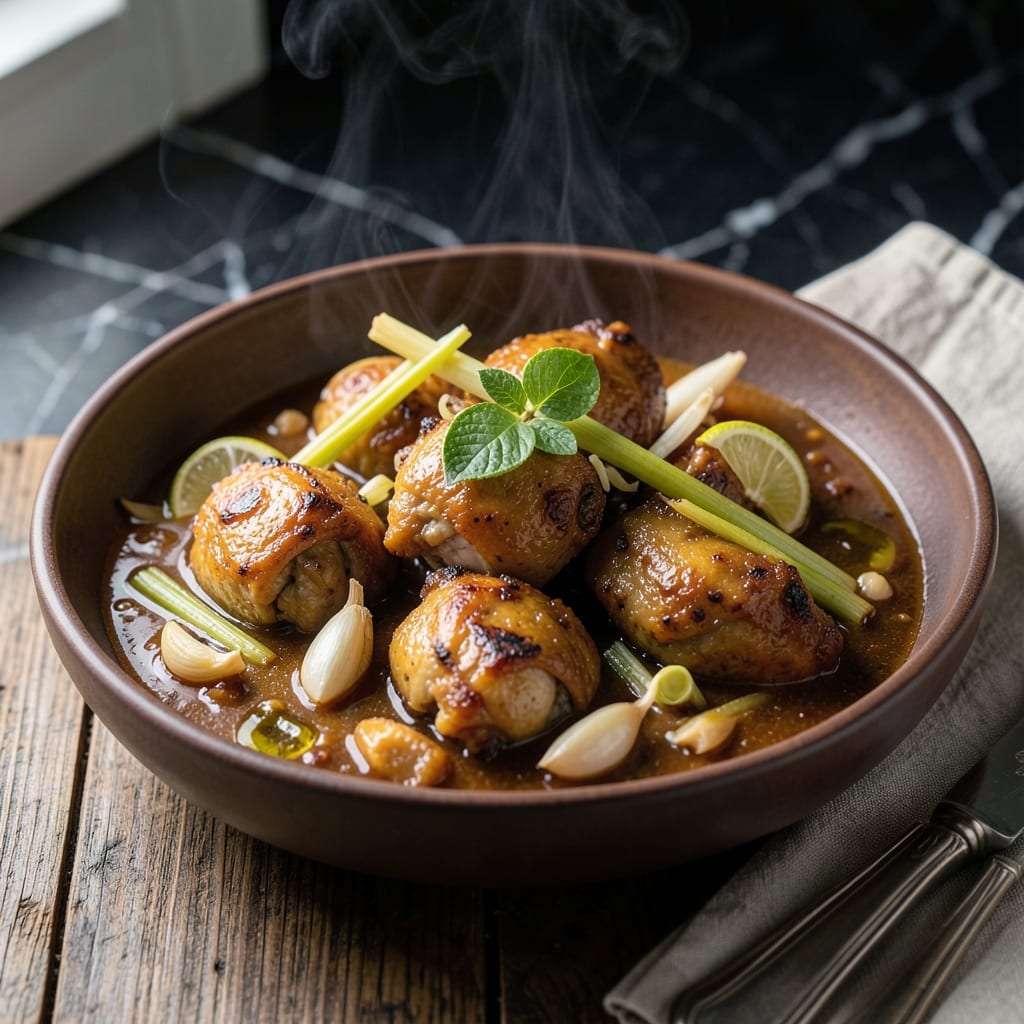
Peranakan cuisine captures the vibrant fusion of Chinese and Malay flavors that define the Straits Chinese heritage. This dish brings that rich culinary tradition to your home kitchen with authentic techniques and bold spices.
I’ve streamlined traditional methods to make these flavors accessible without compromising authenticity. Lemongrass, galangal, and shrimp paste form the aromatic foundation, while a balance of sweet, sour, and spicy notes creates depth.
The result is a dish that’s as rich in history as it is in taste—fragrant, complex, and deeply satisfying. Each bite tells a story of cultural exchange and culinary craftsmanship.
With simple steps and a well-stocked pantry, you’ll achieve restaurant-quality Peranakan flavors at home. Let’s bring these traditions to life.
Ingredients for Recipe for Peranakan Food
Authentic Peranakan flavors start with fresh lemongrass, galangal, and bold spices in your kitchen.
| Ingredient | Amount | Notes |
|---|---|---|
| Chicken Thighs 🍗 | 1 ½ lb | Boneless, skin-on preferred |
| Lemongrass Stalks 🌿 | 3 whole | Bruised and cut into 2-inch pieces |
| Galangal Root 🌱 | 1 whole | Peeled and sliced thinly |
| Shrimp Paste 🦐 | 1 tbsp | Belacan or Terasi variety |
| Shallots 🧅 | 6 whole | Peeled and thinly sliced |
| Garlic Cloves 🧄 | 4 cloves | Peeled and minced |
| Red Chili Peppers 🌶️ | 4 whole | Fresh, seeded and sliced |
| Tamarind Paste 🍋 | 2 tbsp | Dissolved in warm water |
| Palm Sugar 🥥 | 2 tbsp | Or substitute brown sugar |
| Fish Sauce 🐟 | 2 tbsp | Use quality Vietnamese or Thai brand |
| Coconut Milk 🥥 | 1 can | Full-fat for richness |
| Kaffir Lime Leaves 🍃 | 6 pieces | Fresh, torn slightly |
| Candlenuts 🥜 | 4 whole | Or substitute macadamia nuts |
| Turmeric Powder 🌶️ | 1 tsp | Ground, for color and earthiness |
| Coriander Powder 🌿 | 1 tsp | Ground, for aromatic depth |
[recipe_ingredient_scaler]
The shrimp paste is non-negotiable for authentic flavor—Belacan is the gold standard, but Terasi works too. Find it at Asian grocery stores or online. Galangal looks like ginger but tastes totally different (more citrusy, floral). Freeze extras—it keeps for months. Lemongrass should be firm with tight layers; avoid dry, woody stalks. Chicken thighs stay juicy during the longer cooking time (breasts dry out).
No shrimp paste? Miso paste with a dash of fish sauce gets you close but not identical. Fresh galangal can be swapped for ginger in a pinch (use double the amount). Candlenuts? Macadamia nuts or raw cashews work fine. Tamarind not available? Lime juice with a touch of brown sugar mimics the tangy-sweet balance. Coconut milk must be full-fat (the light stuff splits).
Lemongrass and galangal freeze beautifully for up to 3 months. Shrimp paste keeps indefinitely in the fridge. Make a double batch of the paste base (lemongrass, galangal, shallots, chili)—it’s the aromatic foundation for many Peranakan dishes. Store in airtight containers for 1 week in the fridge or 6 months frozen.
Why You’ll Love This Recipe
- One Pot Wonder: I toss everything in—chicken thighs, lemongrass, galangal—and let the oven do the work.
- Umami Bomb: That shrimp paste and shallot combo hits with a depth that’s ridiculously good.
- Feeds a Crowd: I make a big batch and it’s even better the next day for lunch.
- Budget Friendly: Chicken thighs stay cheap, and a little galangal goes a long way.
Step-by-Step Instructions for Peranakan Chicken Curry
Here’s the method I use to build layers of authentic Straits Chinese flavor in this dish.
Step 1: Prepare the Aromatic Paste Base
In a food processor or mortar and pestle, combine the 6 whole Shallots, 4 cloves Garlic Cloves, 4 whole Red Chili Peppers, 1 tbsp Shrimp Paste, 4 whole Candlenuts, 1 tsp Turmeric Powder, and 1 tsp Coriander Powder. Process until you achieve a fine, uniform paste consistency.
This paste forms the flavor foundation of your creation. I’ve found that candlenuts add a unique richness that’s characteristic of Peranakan cooking. If your mixture seems too dry, add a splash of the coconut milk to help it blend smoothly.
Step 2: Bloom the Spices and Build Depth
Heat a heavy-bottomed pot over medium heat and add the prepared paste. Cook for 5-7 minutes, stirring constantly, until the mixture darkens slightly and releases its fragrance. This blooming process is crucial—it transforms raw spices into a complex, aromatic base.
Add the 3 whole Lemongrass Stalks (bruised and cut), 1 whole Galangal Root (sliced thinly), and 6 pieces Kaffir Lime Leaves (torn slightly). Stir for another 2 minutes until everything is well coated with the paste and the kitchen fills with an intoxicating aroma.
Step 3: Balance the Flavors with Sweet and Sour
Stir in the 2 tbsp Tamarind Paste (dissolved in warm water), 2 tbsp Palm Sugar, and 2 tbsp Fish Sauce. Cook for 3-4 minutes until the mixture thickens slightly and the palm sugar fully dissolves.
This step creates the signature sweet-sour-salty profile of Peranakan cuisine. I always taste at this point—you should detect a perfect balance between the tang of tamarind, the sweetness of palm sugar, and the umami depth of fish sauce. Adjust if needed, but remember the flavors will mellow as they cook.
Step 4: Simmer the Chicken to Tenderness
Add the 1.5 lb Chicken Thighs to the pot, coating them thoroughly in the spice mixture. Pour in the 1 can Coconut Milk and bring to a gentle simmer. Reduce heat to low and cook uncovered for 30-35 minutes, stirring occasionally.
The chicken is done when it reaches an internal temperature of 165°F and the sauce has thickened enough to coat the back of a spoon. You’ll notice the oil from the coconut milk starting to separate slightly at the edges—that’s your visual cue that the curry is ready. The chicken should be fall-apart tender, absorbing all those incredible flavors.
Pro Tips For Making Recipe For Peranakan Food
- Bruise the Lemongrass: Smash the lemongrass stalks with the side of your knife before adding them to the pot—this releases the oils and actually changes the outcome of your broth’s aroma.
- Toast the Shrimp Paste: Cook the shrimp paste in oil for 1-2 minutes until fragrant before adding other ingredients; I learned this the hard way after my first few batches tasted raw and bitter.
- Skip the Skinless Thighs: Use bone-in, skin-on chicken thighs for richer flavor and juicier meat—this isn’t the prettiest method, but it’s the tastiest.
- Grind the Galangal: After burning three batches, I finally figured out that finely grinding the galangal root (not just slicing) makes a real difference in how its flavor infuses the dish.
Make-Ahead Tips for This recipe for peranakan food
Prep Ahead Paste
The aromatic paste (shallots, garlic, chili, shrimp paste, candlenuts, turmeric, coriander) can be made 2 days ahead. Store in an airtight container in the fridge. This actually improves as flavors meld overnight. I always double the batch for future Peranakan dishes. 💡
Freeze Lemongrass & Galangal
Both freeze beautifully for up to 3 months. Slice galangal thin and store in a sealed bag. For lemongrass, bruise stalks and freeze whole. No thawing needed—just add directly to your dish when cooking. This saves last-minute grocery runs.
Pre-Cut Chicken
Trim and portion 1.5 lb chicken thighs the night before. Store in a sealed container with a paper towel to absorb moisture. This small step makes weekday cooking much smoother. I find skin-on thighs stay juicier when prepped ahead.
Coconut Milk Tip
If using canned coconut milk, shake well and measure what you need, then transfer the rest to an ice cube tray. Freeze for 1 month. Pop out cubes as needed—they melt perfectly into sauces.
Complete Make-Ahead
You can fully assemble this dish 1 day ahead through step 3 (before adding chicken). Refrigerate the sauce base, then simmer with chicken the next day. The flavors deepen beautifully overnight. Just add 5-10 minutes to cooking time. ⏰
Reheating Leftovers
Store cooked curry in the fridge for up to 4 days. Reheat gently on the stove with a splash of water to restore creaminess. Avoid microwaving as it can separate the coconut milk. The flavors taste even better the second day.
Nutrition Facts
Frequently Asked Questions
Where can I find shrimp paste for this dish?
Look for Belacan or Terasi at Asian grocery stores or online. It’s typically sold in small blocks or jars near other Southeast Asian ingredients.
Can I substitute ginger for galangal?
Yes, use double the amount of ginger if galangal isn’t available. The flavor will be slightly different but still aromatic and warming.
How do I know when the chicken is fully cooked?
Use a meat thermometer to check for 165°F internally. The sauce should also thicken, and the chicken will pull apart easily with a fork.
Can I make this dish vegetarian?
Swap chicken for tofu or hearty vegetables like eggplant and mushrooms. Use soy sauce or miso paste instead of fish sauce for a plant-based version.

Trained in classic French technique but raised on slow-cooked ribs and spicy rubs, she blends culinary skill with smoke and soul.
- Stewed Beef Brisket Recipe: Deep-Rich Flavor After 8 Hours of Slow Simmering - October 15, 2026
- Beef Brisket Rolls Recipe: Flaky Layers and Smoky Sweet Filling - October 15, 2026
- Masterbuilt Smoker Beef Brisket Recipe: Bark-To-Meat Ratio Hack for Unmatched Flavor - October 15, 2026