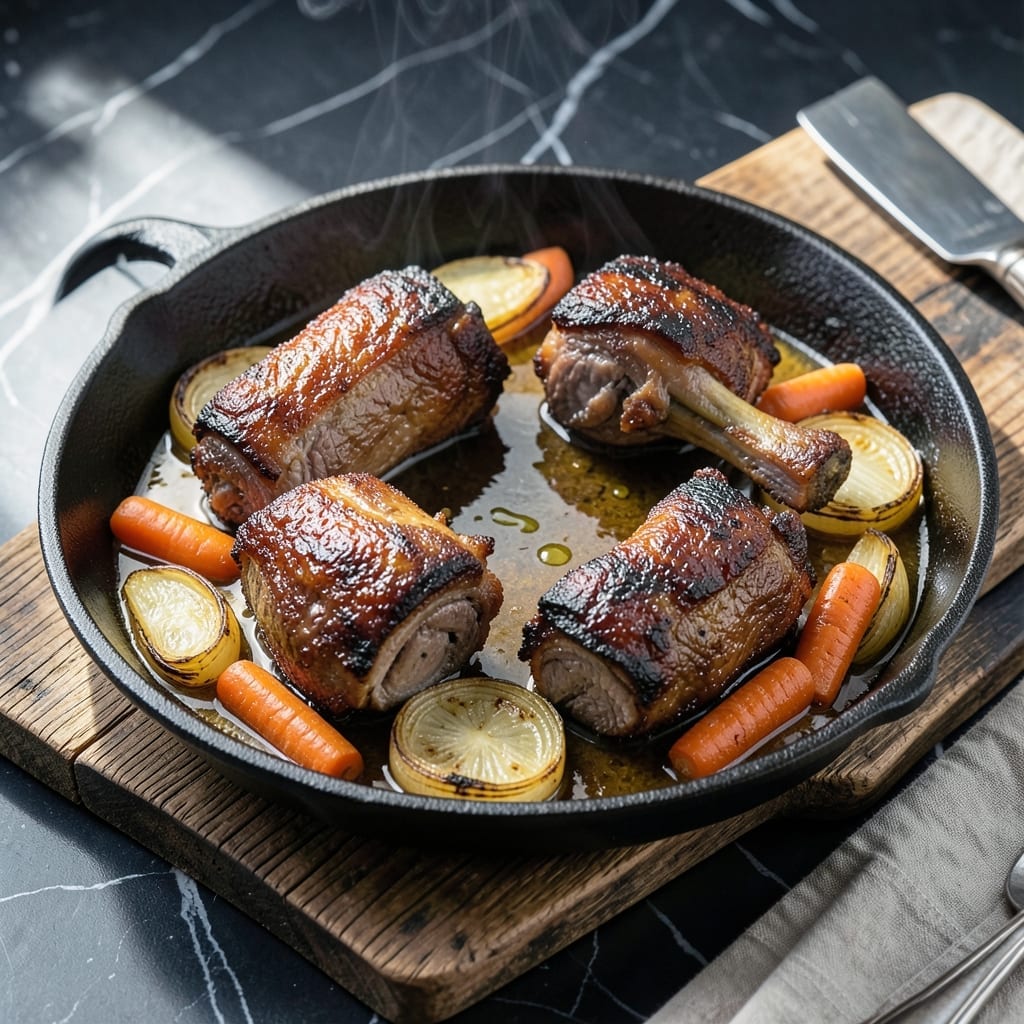
This slow-braised pork hock recipe transforms a humble cut into a tender, collagen-rich masterpiece that falls off the bone. The long cooking process breaks down tough connective tissue, yielding meat so succulent it nearly melts in your mouth.
I’ve refined this method to ensure perfect results every time, using a combination of aromatics and liquid to create a deeply flavorful braising environment. The key is patience—low and slow is the only way to achieve that ideal texture.
What emerges is a dish that’s both rustic and refined, with meat so tender it requires little more than a nudge from your fork. The braising liquid reduces into a rich, velvety sauce that’s begging to be soaked up with crusty bread.
Serve this as a hearty main course with sides that complement its robustness. Here’s how to make it.
Ingredients for Recipe for Pork Hocks
Transform humble pork hocks into a collagen-rich, melt-in-your-mouth masterpiece with these ingredients.
| Ingredient | Amount | Notes |
|---|---|---|
| Pork Hocks 🐖 | 4 whole | Skin-on, about 1.5 lb each |
| Kosher Salt 🧂 | 2 tbsp | Plus more to taste |
| Black Peppercorns 🌶️ | 1 tbsp | Freshly cracked |
| Olive Oil 🫒 | 2 tbsp | Divided for searing |
| Yellow Onion 🧅 | 1 whole | Large, roughly chopped |
| Carrots 🥕 | 3 whole | Peeled, cut into chunks |
| Celery Stalks 🥬 | 3 whole | Cut into large pieces |
| Garlic Cloves 🧄 | 6 cloves | Smashed, peeled |
| Bay Leaves 🌿 | 2 whole | Dried, for braising liquid |
| Thyme Sprigs 🍃 | 4 whole | Fresh, or 1 tsp dried |
| Red Wine Vinegar 🍷 | ¼ cup | For acidity balance |
| Chicken Stock 🍲 | 4 cups | Low-sodium preferred |
| Crushed Tomatoes 🍅 | 1 can | 28 oz can, with juices |
| Dijon Mustard 🟡 | 1 tbsp | For depth of flavor |
[recipe_ingredient_scaler]
The pork hocks are the star—look for skin-on cuts (about 1.5 lb each) at a reputable butcher or the meat counter at Whole Foods. Ask them to cut the hocks into manageable pieces if they’re too large. The connective tissue is what makes this dish special, so don’t trim it away. For the stock, low-sodium chicken stock lets you control the seasoning.
No red wine vinegar? Apple cider vinegar works in a pinch. Out of fresh thyme? Use dried thyme at one-third the amount. If you can’t find pork hocks, pork shanks are a decent substitute (adjust cooking time). The tomatoes can be fresh if they’re in season—just use about 1.5 lbs, roughly chopped. For extra richness, add a splash of red wine to the braising liquid.
The braised pork keeps beautifully in the fridge for 4-5 days and freezes for up to 3 months. Store in its cooking liquid to maintain moisture. Reheat gently on the stove, adding a splash of water or stock if needed. The flavor deepens over time, making leftovers even better.
Why You’ll Love This Recipe
- One Pot Wonder: I toss the pork hocks, onion, and spices in a single pot and let the oven do the work.
- Fallback Comfort: That slow-cooked tenderness with crispy edges from the olive oil? Pure satisfaction.
- Feeds a Crowd: Honestly, it’s my go-to for Sunday dinners—everyone leaves happy and full.
- Budget Stretcher: A few affordable ingredients turn into multiple meals, and the leftovers taste even better the next day.
Step-by-Step Instructions for Slow-Braised Pork Hocks
This method transforms tough cuts into fall-off-the-bone tenderness with rich, developed flavors.
Step 1: Season and Sear the Pork Hocks
Pat the 4 whole Pork Hocks dry with paper towels. This ensures a proper sear. Season generously with the 2 tbsp Kosher Salt and freshly cracked 1 tbsp Black Peppercorns, rubbing the spices into the skin and meat. Let the seasoned hocks sit at room temperature for 30 minutes.
Heat 1 tbsp Olive Oil in a large Dutch oven over medium-high heat. Working in batches if needed, sear the hocks for 4-5 minutes per side until the skin is deep golden brown and crispy. Transfer to a plate and set aside.
Step 2: Sauté the Aromatic Vegetables
In the same pot, add the remaining 1 tbsp Olive Oil. Add the roughly chopped 1 whole Yellow Onion, 3 whole Carrots, and 3 whole Celery Stalks. Cook for 8-10 minutes, stirring occasionally, until the vegetables soften and begin to caramelize at the edges.
Stir in the 6 cloves Garlic Cloves and cook for 1 minute until fragrant. Be careful not to let the garlic burn, as it will impart a bitter flavor to the final dish.
Step 3: Deglaze and Build the Braising Liquid
Pour in the 0.25 cup Red Wine Vinegar and scrape the browned bits from the bottom of the pot with a wooden spoon. This step adds depth and balances the richness of the dish. Let the vinegar reduce by half, about 2-3 minutes.
Add the 4 cups Chicken Stock, 1 can Crushed Tomatoes with juices, 2 whole Bay Leaves, 4 whole Thyme Sprigs, and 1 tbsp Dijon Mustard. Stir to combine all the ingredients thoroughly.
Step 4: Braise Until Tender
Return the seared pork hocks to the pot, ensuring they are mostly submerged in the liquid. Bring to a gentle simmer, then reduce the heat to low. Cover and braise for 2.5 to 3 hours, turning the hocks occasionally, until the meat is fork-tender and easily pulls away from the bone.
The collagen in the hocks will melt into the braising liquid, creating a rich, velvety sauce. Check the pot occasionally and add a splash of water if the liquid reduces too much during cooking.
Step 5: Rest and Serve
Once the hocks are tender, remove them from the pot and set aside. Skim any excess fat from the surface of the braising liquid. If the sauce is too thin, simmer it uncovered for 5-10 minutes to thicken slightly.
Return the pork hocks to the pot to coat them in the sauce. Let them rest in the liquid for 10 minutes before serving. This allows the flavors to meld and the meat to reabsorb some of the juices, ensuring every bite is moist and flavorful.
Pro Tips For Making Recipe For Pork Hocks
- Pre-Salt Overnight: Rub the pork hocks with kosher salt at least 12 hours before cooking—it penetrates deep and seasons the meat all the way through, not just the surface. I learned this the hard way after too many bland bites.
- Sear Patiently: Use medium-high heat and don’t move the hocks for 3-4 minutes per side to get a deep brown crust. Sounds weird, but it works: that crust is pure flavor for the braise.
- Skip Boiling Water: Start the hocks in cold water if simmering, or you’ll tighten the meat and lose tenderness. My grandmother swore by this, and she was right: cold start, slow heat.
- Save Onion Skins: Toss the yellow onion skins in with the hocks while cooking—they add a subtle sweetness and rich color to the broth. I was skeptical until I tried it.
Regional Styles of This Dish
German Schweinshaxe
In Bavaria, pork hocks become Schweinshaxe, a crispy-skinned, slow-roasted specialty. The skin is scored in a diamond pattern before roasting at 375°F for 2-3 hours. I brush mine with beer and caraway seeds every 30 minutes for authentic flavor. 🗺️
Southern US Style
Down South, pork hocks are often smoked or braised with apple cider vinegar and brown sugar. I love the version from North Carolina that includes collard greens and hot sauce. The meat becomes incredibly tender after 3-4 hours of low cooking.
Asian Braised Hocks
Chinese-style pork hocks are braised with soy sauce, star anise, and rock sugar. The result is a sweet-savory dish with melt-in-your-mouth texture. I add hard-boiled eggs to absorb the rich sauce during the final 30 minutes of cooking.
Italian Zampone
In Modena, pork hocks are stuffed into natural casings with ground pork and spices to make Zampone. It’s traditionally served with lentils on New Year’s Eve. I’ve had incredible versions that include pistachios for extra crunch.
Filipino Adobo
Filipino adobo-style pork hocks are braised in soy sauce, vinegar, and garlic. The tangy, salty sauce pairs perfectly with steamed rice. I cook mine for at least 2 hours to achieve that signature fall-off-the-bone tenderness.
Caribbean Jerk
Jamaican jerk pork hocks get marinated in scotch bonnet peppers, allspice, and thyme before grilling. The smoky, spicy flavor is balanced by a touch of brown sugar. I recommend grilling over pimento wood for authentic flavor. 🔥
Nutrition Facts
Frequently Asked Questions
Do I need to soak pork hocks before cooking?
If using salt-cured hocks, soak them in cold water for 12-24 hours to remove excess salt. For fresh hocks, soaking isn’t necessary.
How do I know when pork hocks are done?
The meat should pull away from the bone easily with a fork. For braised hocks, this typically takes 2.5 to 3 hours at a gentle simmer.
Can I cook pork hocks in a slow cooker?
Yes! Sear them first, then cook on low for 8-10 hours or high for 5-6 hours with your braising liquid. The texture will be just as tender.
What sides pair well with braised pork hocks?
Try mashed potatoes, sauerkraut, or crusty bread to soak up the rich sauce. Polenta or roasted root vegetables also complement it well.

Trained in classic French technique but raised on slow-cooked ribs and spicy rubs, she blends culinary skill with smoke and soul.
- Beef Brisket Rolls Recipe: Flaky Layers and Smoky Sweet Filling - October 15, 2026
- Masterbuilt Smoker Beef Brisket Recipe: Bark-To-Meat Ratio Hack for Unmatched Flavor - October 15, 2026
- Costco Beef Brisket Recipe: Low-and-Slow Masterpiece With Molasses-Kissed Crust - October 15, 2026