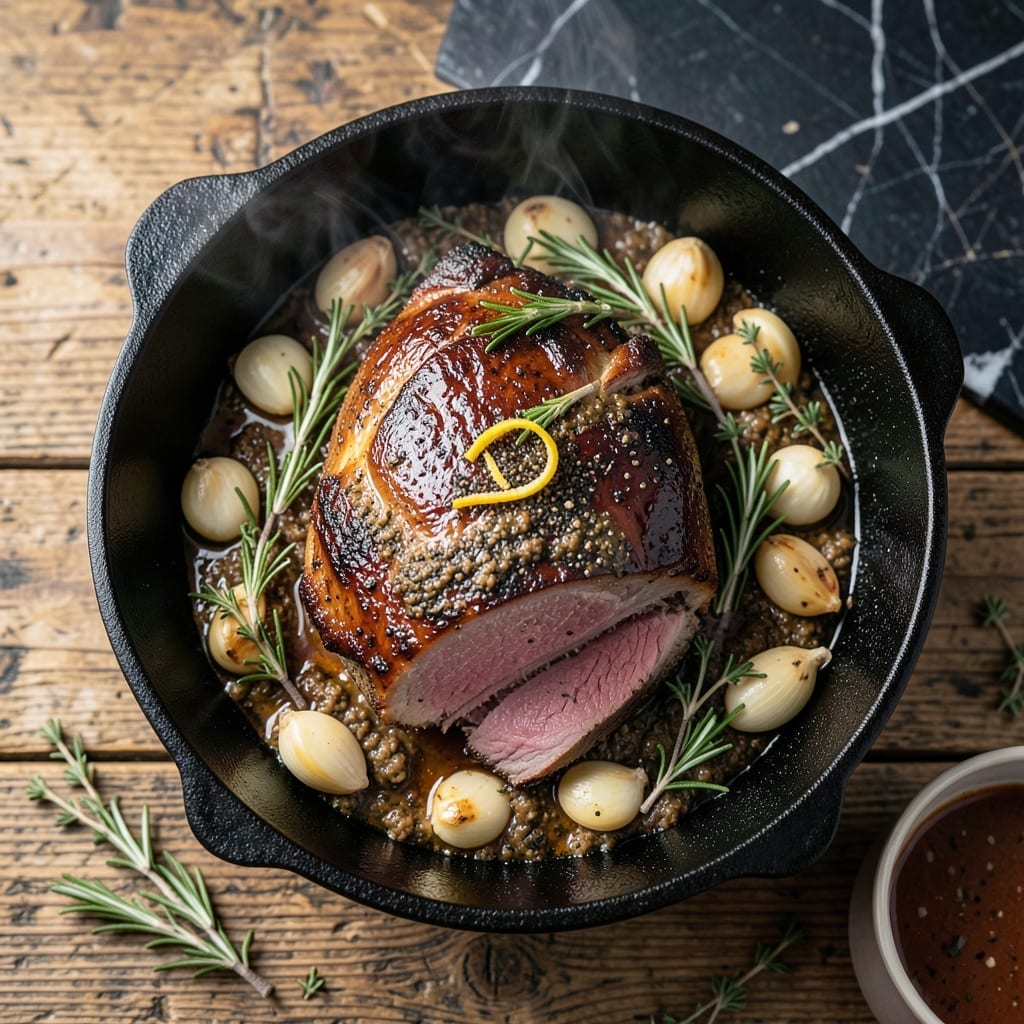
High-heat roasting transforms a humble rump roast into a showstopping centerpiece with a deeply crispy crust and juicy interior. This method leverages the oven’s 500°F intensity to create a caramelized exterior while locking in natural beef flavors.
The key lies in proper preparation—patting the roast dry ensures maximum browning, while a simple seasoning blend enhances the beef’s natural richness. Searing before roasting builds additional flavor layers that permeate every bite.
After resting, you’ll have a roast with a perfectly browned exterior giving way to tender, flavorful meat inside. The high-heat technique guarantees a crust that crackles with each slice, making this dish worthy of special occasions.
Serve with roasted vegetables or mashed potatoes to complete the meal. The results speak for themselves.
Ingredients for Rump Roast Recipe Oven 500 Degrees
High-heat roasting transforms humble beef into an extraordinary centerpiece with these ingredients.
| Ingredient | Amount | Notes |
|---|---|---|
| Rump Roast 🥩 | 3 lb | Well-marbled, trimmed of excess fat |
| Kosher Salt 🧂 | 1 ½ tbsp | Diamond Crystal preferred for texture |
| Coarsely Ground Black Pepper 🌶️ | 1 tbsp | Freshly cracked for best flavor |
| Garlic Cloves 🧄 | 6 cloves | Peeled and smashed for maximum impact |
| Fresh Rosemary Sprigs 🌿 | 4 sprigs | Stems removed, finely chopped |
| Fresh Thyme Sprigs 🍃 | 4 sprigs | Leaves stripped from stems |
| Olive Oil 🫒 | 3 tbsp | High smoke point preferred |
| Dijon Mustard 🟡 | 2 tbsp | For crust formation and depth |
| Red Wine 🍷 | ½ cup | Dry variety like Cabernet Sauvignon |
| Beef Stock 🥣 | 1 cup | Low-sodium for controlled seasoning |
| Unsalted Butter 🧈 | 2 tbsp | For finishing and richness |
| Yellow Onion 🧅 | 1 whole | Large, roughly chopped |
| Carrots 🥕 | 3 whole | Peeled and cut into large pieces |
| Celery Stalks 🌱 | 2 whole | Cut into 2-inch pieces |
[recipe_ingredient_scaler]
The rump roast quality is paramount. Select USDA Choice or Prime with abundant marbling—this fat renders during roasting, basting the meat from within. Costco or Whole Foods typically carry well-marbled cuts. Avoid pre-cut steaks; a whole roast ensures even cooking and better crust formation. Pat the surface meticulously dry before seasoning to achieve that signature crisp exterior.
No red wine? Beef broth with a teaspoon of balsamic vinegar provides comparable depth. Fresh herbs are ideal but dried at one-third the quantity works in a pinch. For the Dijon, whole-grain mustard adds textural interest. If beef stock isn’t available, low-sodium chicken stock can substitute, though the flavor profile will be slightly different.
The roast benefits from resting at room temperature for 30 minutes before cooking. Store raw beef in the coldest part of the refrigerator for up to 3 days or freeze for 6-12 months. Leftovers reheat beautifully—slice thin and warm gently in the au jus to preserve moisture.
Why You’ll Love This Recipe
- I’ll be real: this roast stretches for sandwiches, tacos, or a proper Sunday dinner with minimal extra effort.
- One Pan Magic: Honestly, I just rub the roast with salt, pepper, garlic, and rosemary, then let the oven do the rest—no flipping, no fuss.
- Crispy Herb Crust: That high heat turns the garlic and rosemary into a fragrant, crackly crust that’s ridiculous with every bite.
- Feeds My Crew: I’ll be real: this roast stretches for sandwiches, tacos, or a proper Sunday dinner with minimal extra effort.
Step-by-Step Instructions for Rump Roast Oven 500 Degrees
This high-heat method creates a deeply caramelized crust while keeping the meat tender and juicy.
Step 1: Prepare the Herb Crust
Finely chop the leaves from the 4 sprigs fresh rosemary and strip the leaves from the 4 sprigs fresh thyme. In a small bowl, combine these with the 1.5 tbsp kosher salt, 1 tbsp coarsely ground black pepper, 2 tbsp Dijon mustard, and 3 tbsp olive oil to form a thick paste.
Pat the 3 lb rump roast completely dry with paper towels. This ensures the herb mixture adheres properly and promotes even browning. Rub the paste evenly over all surfaces of the roast, pressing it in firmly to create a flavorful crust.
Step 2: Sear and Build the Braising Liquid
Place a large oven-safe pot or Dutch oven over medium-high heat. When hot, add the 1 whole yellow onion (roughly chopped), 3 whole carrots (peeled, cut into large pieces), and 2 whole celery stalks (cut into 2-inch pieces). Sauté for 4-5 minutes until the vegetables begin to brown.
Push the vegetables to the sides of the pot and place the seasoned rump roast in the center. Sear for 2-3 minutes per side until deeply browned. This high-heat sear develops the Maillard reaction, creating complex flavors in the finished dish.
Step 3: Deglaze and Begin Roasting
Add the 6 cloves garlic (peeled and smashed) to the pot. Pour in the 0.5 cup red wine and 1 cup beef stock, scraping up any browned bits from the bottom of the pot. These fond bits dissolve into the liquid, creating a rich, flavorful base for the roast.
Bring the liquid to a simmer, then remove the pot from the heat. The liquid should come about halfway up the sides of the roast. This braising environment ensures the meat stays moist during the high-heat roasting process.
Step 4: High-Heat Roast to Perfection
Preheat your oven to 500°F. Once preheated, carefully transfer the pot to the oven. Roast uncovered for 20 minutes to develop the initial crust.
After 20 minutes, reduce the oven temperature to 325°F and continue roasting for 1.5 to 2 hours, or until the internal temperature reaches 135°F for medium-rare. Baste the roast with the pan juices every 30 minutes to keep it moist and enhance flavor development.
Step 5: Rest and Finish with Butter
Transfer the rump roast to a cutting board and tent loosely with foil. Let it rest for 15-20 minutes before slicing. This resting period allows the juices to redistribute throughout the meat, ensuring each slice is moist and flavorful.
While the roast rests, skim any excess fat from the braising liquid and stir in the 2 tbsp unsalted butter to create a glossy, rich sauce. Serve the roast sliced against the grain, with the vegetables and sauce spooned over the top.
Pro Tips For Making Rump Roast Recipe Oven 500 Degrees
- Sear First, Roast Second: I learned this the hard way—sear the rump roast in a screaming hot pan for 2-3 minutes per side before transferring to the 500°F oven. This builds a crust that actually changes the outcome.
- Slash the Garlic: Cut deep slits into the roast and stuff whole garlic cloves inside so the flavor penetrates, not just sits on top. Sounds weird, but it works.
- Pull at 130°F: Resist the urge to wait for 145°F—rump roast keeps cooking as it rests, and I ruined two dinners before figuring this out.
- Rosemary Under Meat: Place fresh rosemary sprigs under the roast in the pan, not on top, so the heat releases the oils without burning the herbs. My grandmother swore by this, and she was right.
Troubleshooting Perfect Results
Uneven Cooking
If your roast has uneven doneness, check your oven’s hot spots first. Rotate the pot 180 degrees halfway through cooking. I also recommend using a rimmed baking sheet under the pot to ensure even heat distribution at 500°F. 🌡️
Dry Exterior
This usually happens if the roast wasn’t properly patted dry before seasoning. Also, avoid overcrowding the pot with too many vegetables—they can steam the meat instead of searing it. For extra insurance, brush the crust with 1 tbsp olive oil before the final 20-minute high-heat blast.
Tough Texture
Overcooking is the most common culprit. Pull the roast at 130-135°F for medium-rare, as the temperature will rise 5-10°F during resting. If it’s already overdone, slice thin and serve with extra au jus to compensate.
Weak Crust
For a better crust, ensure your Dijon paste is thick enough to cling. Add 1 tsp cornstarch to the rub if needed. Also, don’t skip the initial 2-3 minute sear on each side—this builds the foundation for that coveted crisp exterior.
Thin Sauce
If your braising liquid is too thin, remove the roast and reduce it on the stovetop for 5-7 minutes. A splash of red wine or a cornstarch slurry can also thicken it quickly. I prefer reducing for deeper flavor concentration.
Smoky Oven
At 500°F, drippings can smoke. Place a drip pan with 1 inch of water on the lower rack to catch drippings. Also, trim excess fat from the roast before cooking to minimize smoke. ✨
Nutrition Facts
Frequently Asked Questions
Why start at such a high temperature?
The initial 500°F blast creates a deep, caramelized crust through the Maillard reaction, sealing in juices. This high heat jumpstarts the cooking process for a perfect exterior.
Can I use a different cut of beef?
Yes, but choose well-marbled cuts like chuck roast or bottom round. Avoid lean cuts like eye of round—they’ll dry out at high heat. Adjust cooking time based on the cut’s size and fat content.
How do I know when it’s done?
Use a meat thermometer: 135°F for medium-rare, 145°F for medium. Remember the temperature rises 5-10°F during resting, so pull it early.
Should I cover it while roasting?
No, leave it uncovered to allow the crust to crisp properly. Covering traps steam, which softens the crust and prevents proper browning.

Trained in classic French technique but raised on slow-cooked ribs and spicy rubs, she blends culinary skill with smoke and soul.
- Beef Brisket Rolls Recipe: Flaky Layers and Smoky Sweet Filling - October 15, 2026
- Masterbuilt Smoker Beef Brisket Recipe: Bark-To-Meat Ratio Hack for Unmatched Flavor - October 15, 2026
- Costco Beef Brisket Recipe: Low-and-Slow Masterpiece With Molasses-Kissed Crust - October 15, 2026